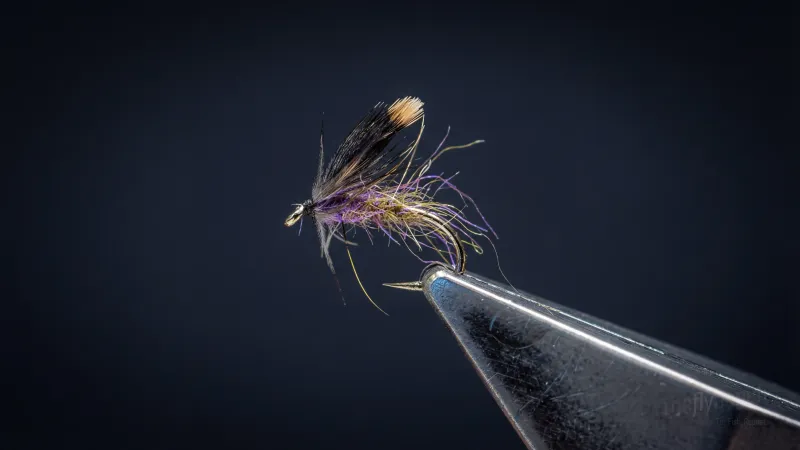
Dry FliesBloody Bibio
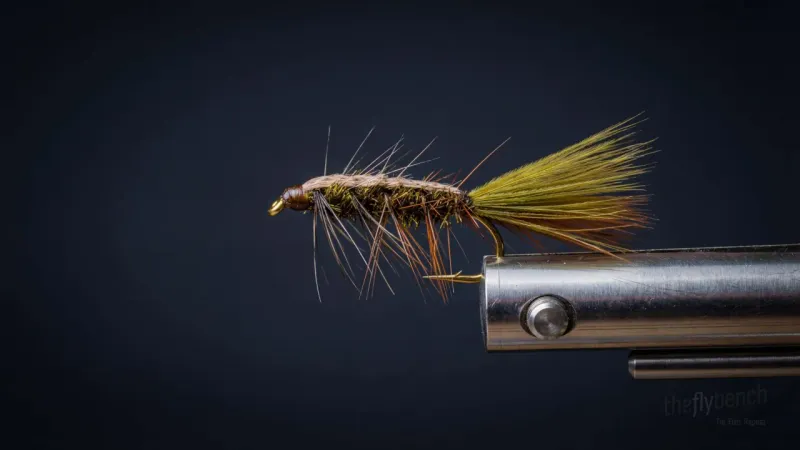
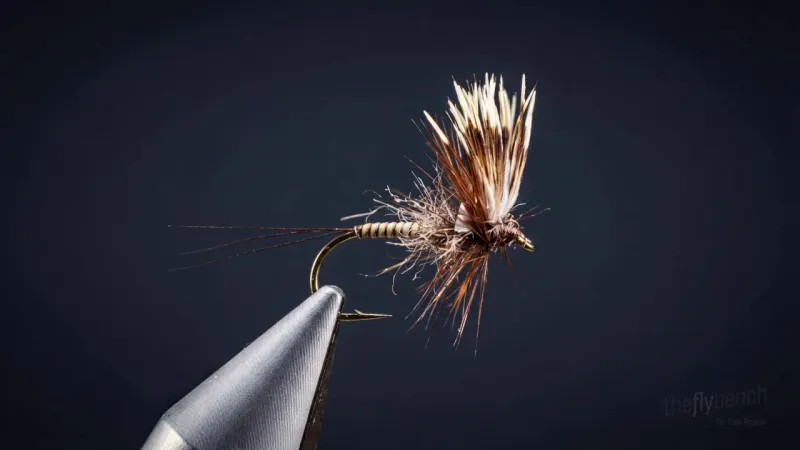
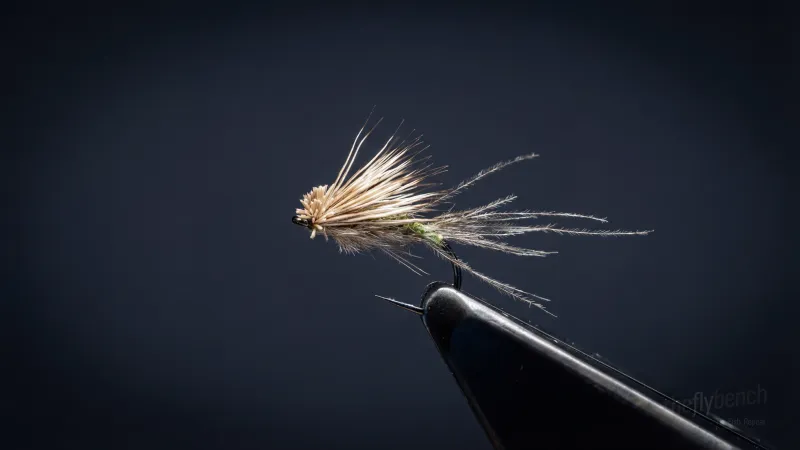
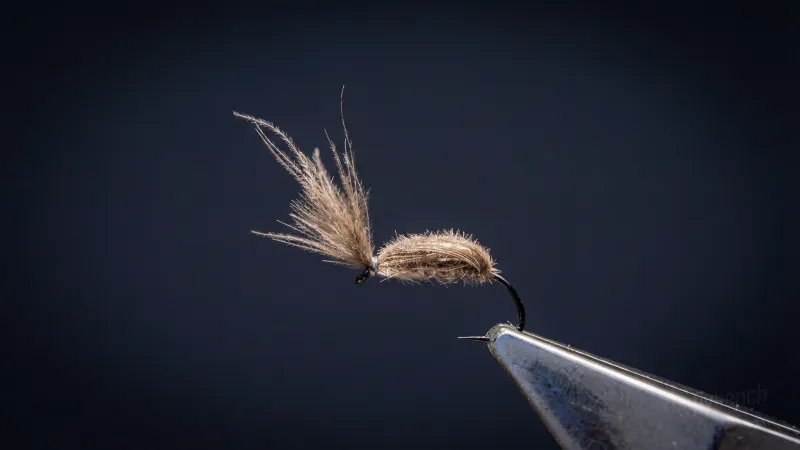
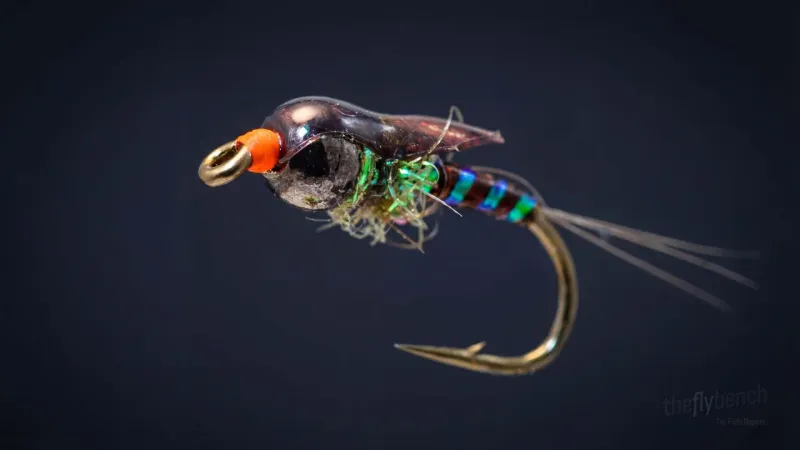
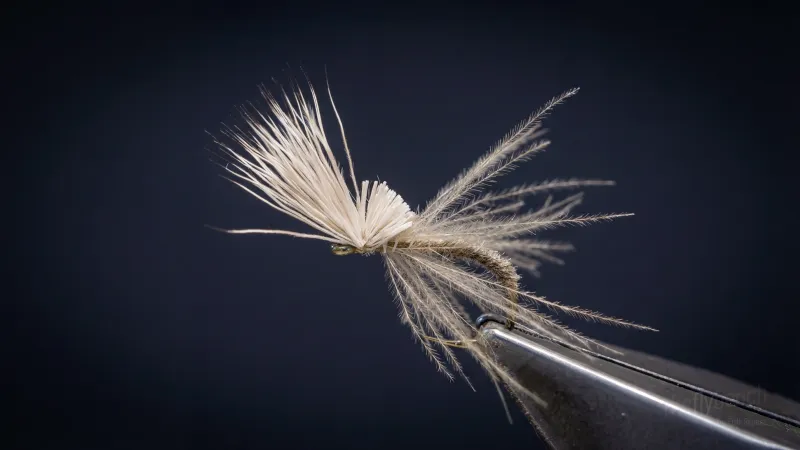
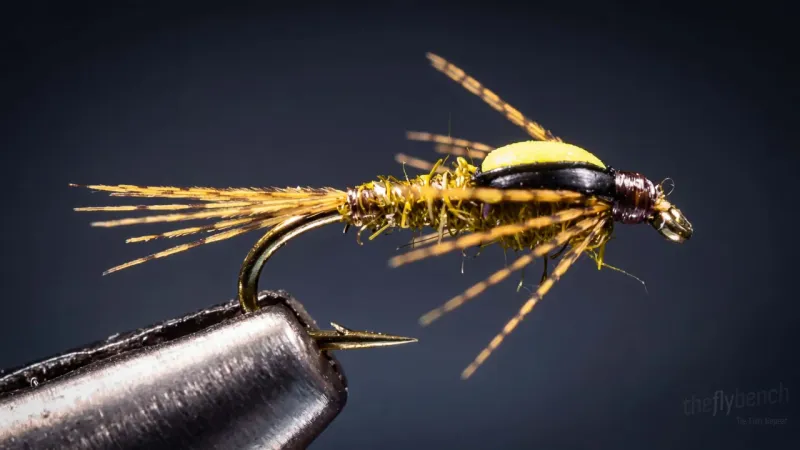
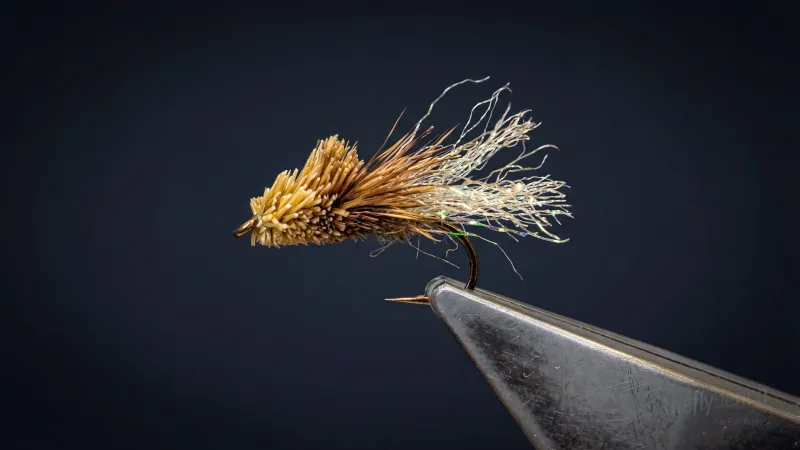
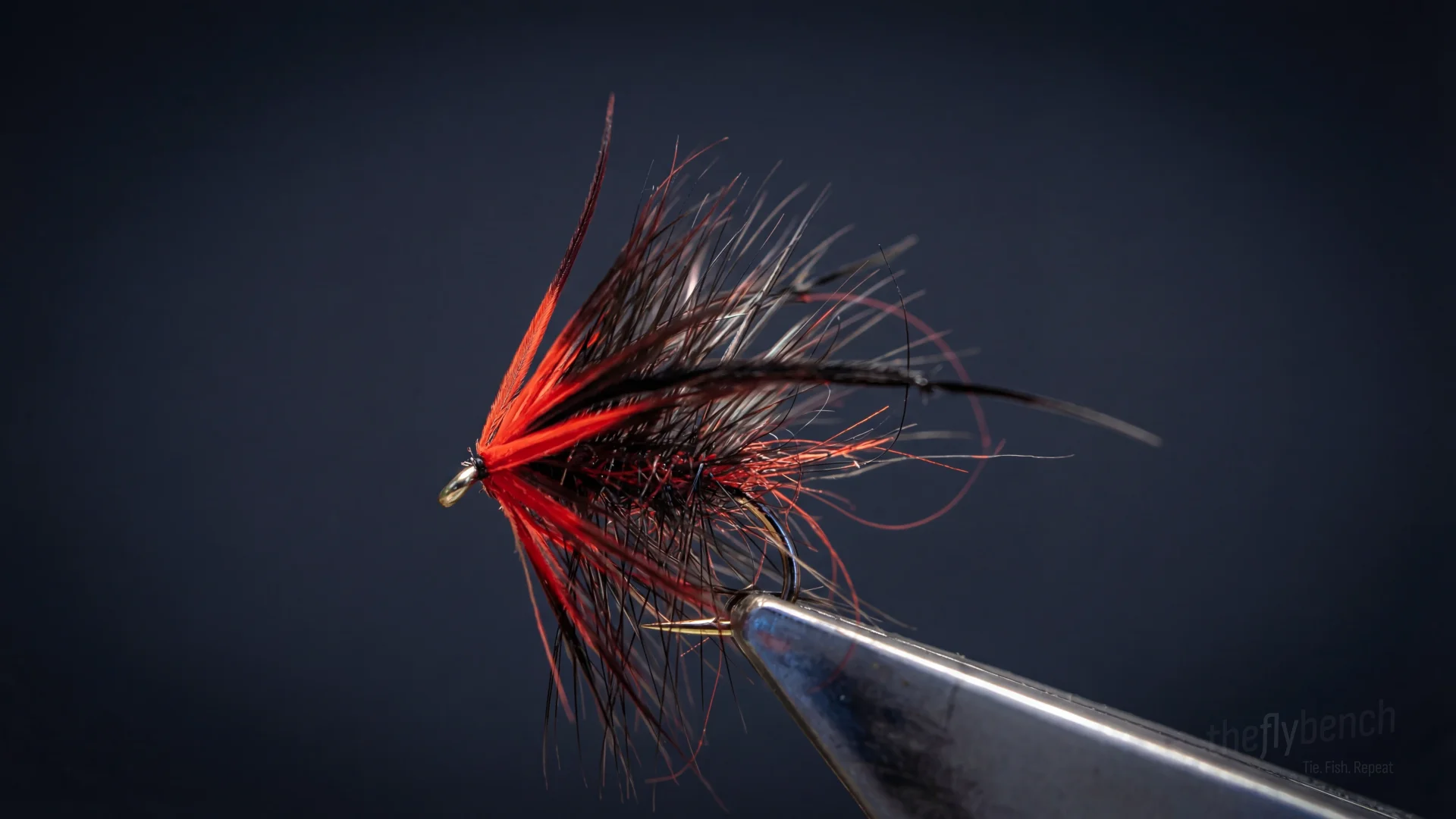
Hans Weilenmann's Bloody Bibio combines a black-and-red seal's fur body, palmered with a black cock saddle hackle, and knotted magpie-barb legs for movement, finished with a scarlet Whiting feather at the head. A fine silver wire rib holds the hackle in place. Its bold coloring stands out during dense caddis hatches on moving water and stillwater.
Spring, Summer, Fall
Beginner
Trout
Feb 2026
Overview
Weilenmann spun the seal's fur body in split thread, mixing red into the black to create a mottled, high-contrast look rather than a solid color, then palmered a black cock saddle hackle the length of the body for bulk and movement. Knotted magpie tail barbs form jointed legs, and a scarlet Whiting popper pack feather at the head gives the fly a bright trigger point. Tied on a size 12 Kamasan B175, it's an easy pattern for newer tyers and a reliable searcher when caddis are hatching in numbers.
Where to Buy This Fly
We only link to fly shops we trust. Some links are referral links, which may earn us a commission at no extra cost to you.
Materials
- Hook:
- Kamasan B175 #12
- Thread:
- Benecchi 12/0, black
- Hackle:
- Whiting popper pack feather, dyed scarlet
- Body Hackle:
- Cock saddle, natural black (or dyed black)
- Rib:
- Wire, fine silver
- Body:
- Seal's fur, black and red (or substitute) - in split thread
- Legs:
- Magpie barbs, knotted
Behavior & Presentation
Natural Behavior: Caddis emerge in dense blanket hatches where dozens dot the surface simultaneously, creating sustained feeding opportunities during favorable conditions.
Where Trout Eat It: Fish feed selectively during mass emergences in runs, along riffle edges, and in tail-outs where newly emerged adults concentrate.
How to Fish It: Dead drift through hatch lanes with occasional twitches. The red tag provides a subtle trigger during selective feeding.
Best Water: Target riffle edges with emergence activity, seams collecting insects, tail-outs, and runs.
Strike Type: Expect confident rises or subtle sips during heavy hatch activity as fish become selective.
Fishing Strategy
Rigging Suggestions: Use a 9-12 foot leader tapering to 5X tippet for delicate presentations. Apply floatant to the body and hackle.
Seasonal Timing: Most effective during peak feeding periods at dawn and dusk. Water temperatures between 45-65°F typically produce best results.
Pro Tips: The red tail acts as a trigger point. When fish are being selective, the Bloody Bibio's unconventional profile can outperform exact imitations.
Entomology
Caddis emerge en masse during favorable conditions, creating blanket hatches where dozens of adults dot the surface simultaneously while drying their wings. Fish become fixated on these dense concentrations because the sheer volume of available insects allows for efficient feeding with minimal effort expended per capture.
- Order
- Trichoptera
- Common Name
- Caddisfly
- Organism Type
- insect
- Life Stage
- adult