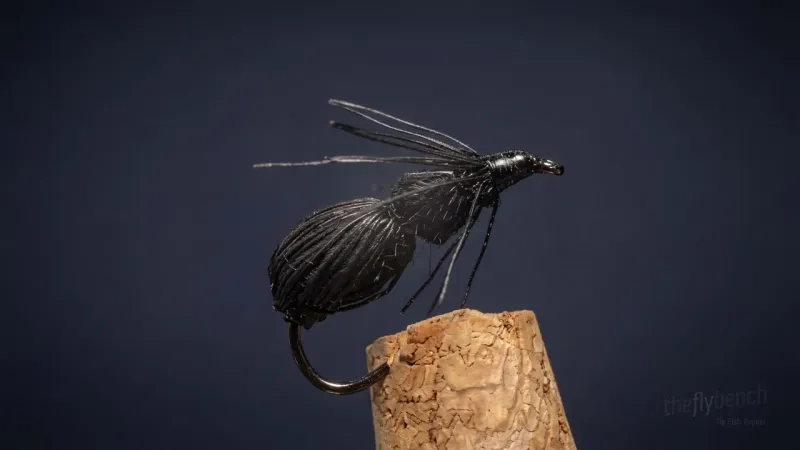
Dry FliesKate McLaren Variant
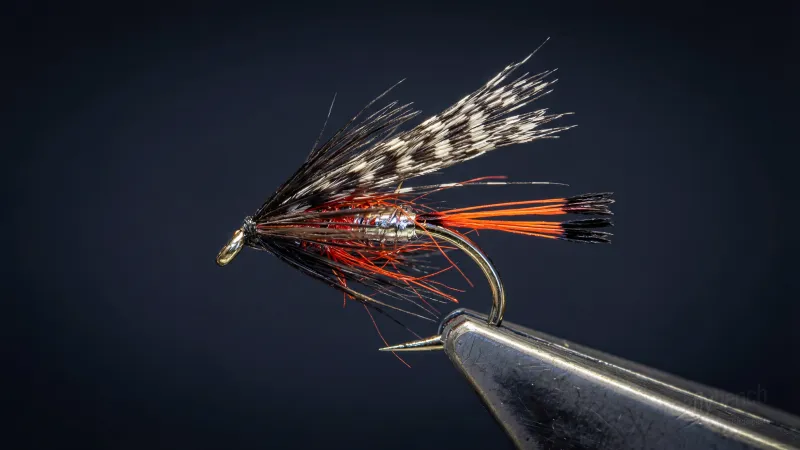
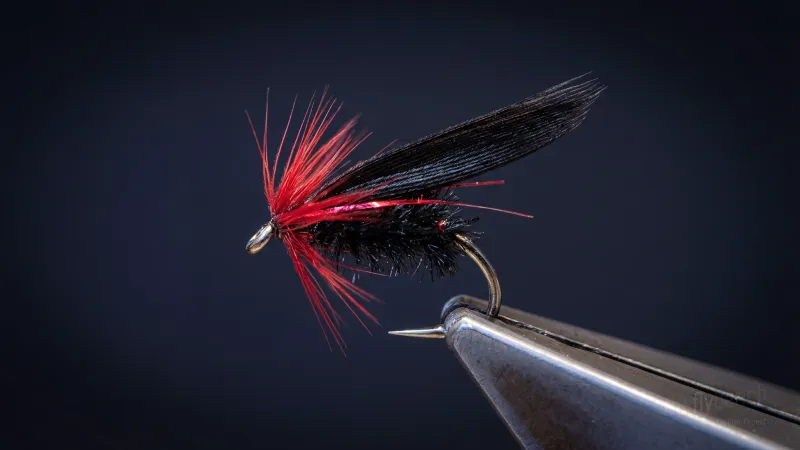
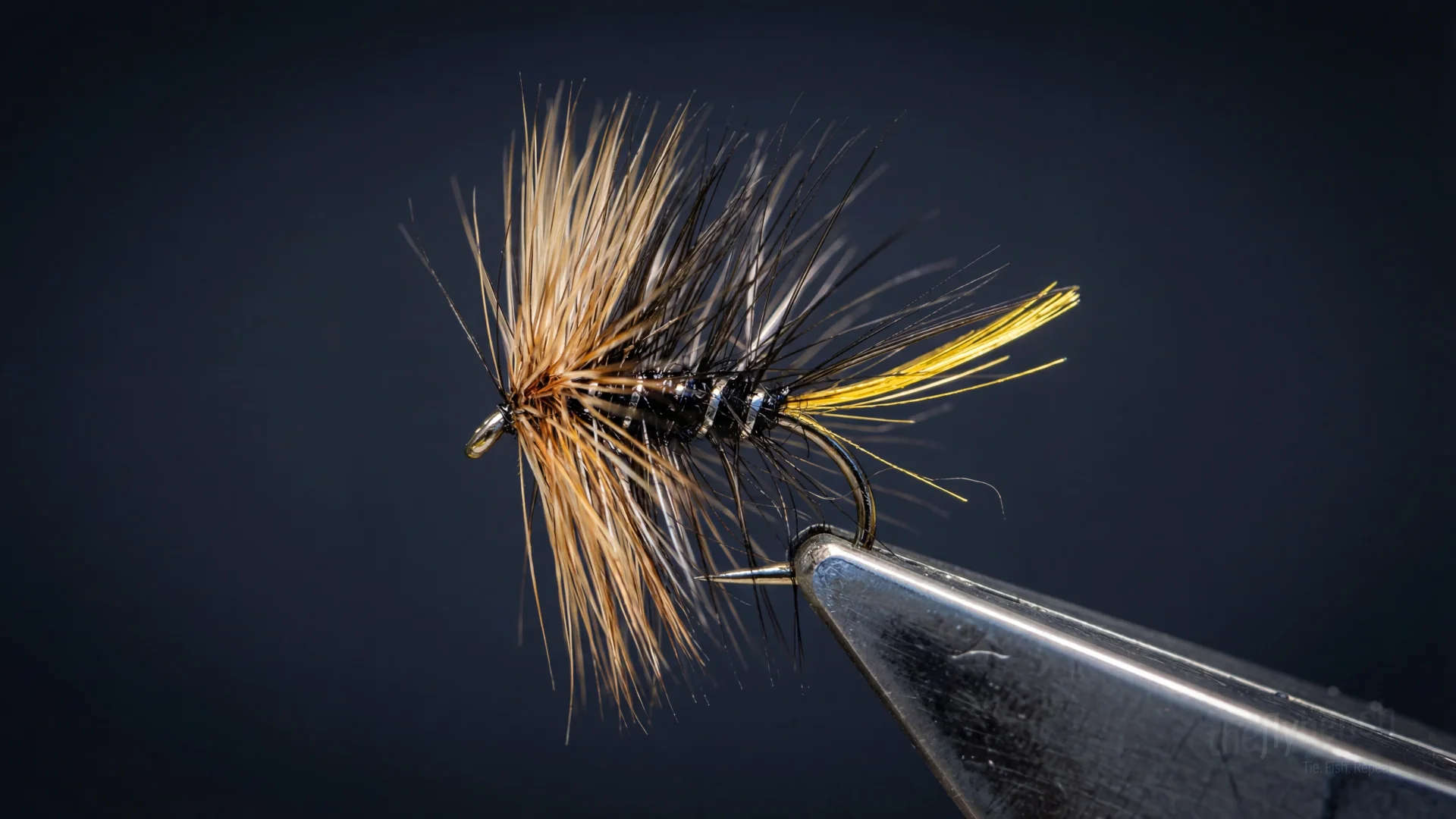
The Kate McLaren is a traditional Scottish loch fly, and this dressing is Hans Weilenmann's variant on it. A black seal's fur body under a palmered black cock hackle sits beneath a golden pheasant crest tail, oval silver tinsel rib, and a front hackle of cree cock. It is fished as an attractor rather than tied to any specific insect.
Spring, Summer, Fall
Intermediate
Trout
Feb 2026
Overview
The black seal's fur body is ribbed in oval silver tinsel and palmered its full length with black cock hackle, then finished with a cree cock hackle at the head and a golden pheasant crest tail for movement and flash. That double hackle lets the fly ride in or just under the surface rather than sit fully awash like a plain wet fly. Hans Weilenmann built this as a variant on the traditional Kate McLaren, a longstanding loch-style pattern rather than an imitation of any single insect. It works as a searching attractor on stillwater and moving water alike, often fished as part of a team of flies rather than alone.
Where to Buy This Fly
We only link to fly shops we trust. Some links are referral links, which may earn us a commission at no extra cost to you.
Materials
- Hook:
- Kamasan B175 #12
- Thread:
- Benecchi 12/0, black
- Hackle:
- Cock, cree
- Rib:
- Tinsel, oval silver
- Tail:
- GP Crest
- Body:
- Seal, black
- Body Hackle:
- cock, black
Behavior & Presentation
Natural Behavior: The Kate McLaren imitates no single natural insect; its flash, movement, and dark silhouette are built to trigger a strike as a general attractor rather than to match a specific hatch.
Where Trout Eat It: Fish take it in the same lies where they take any searching pattern, along drop-offs, over structure, and in the surface chop on stillwaters, or in faster runs and pools on rivers.
How to Fish It: Traditionally fished on the top dropper of a loch-style leader and dibbled across the surface in the last few feet of the retrieve, so the palmered hackle pushes a wake; on rivers it also works swung or twitched across current.
Best Water: Wave-chopped stillwaters and loch-style boat fishing, plus faster runs on rivers where a searching wet fly gets noticed.
Strike Type: Takes to a dibbled fly are often an aggressive surface slash rather than a subtle sip, since the fish is reacting to movement and silhouette rather than inspecting a natural insect.
Fishing Strategy
Rigging Suggestions: Fish it as the top dropper on a multi-fly loch leader, or as a single searching wet fly on a short leader when covering river runs.
Seasonal Timing: Useful through the open water season on stillwaters, with no tie to a particular hatch window.
Pro Tips: On stillwaters, work the boat so the retrieve finishes with the fly dibbling in the surface chop, since much of this pattern's action comes from that wake rather than the drift itself.