


Overview
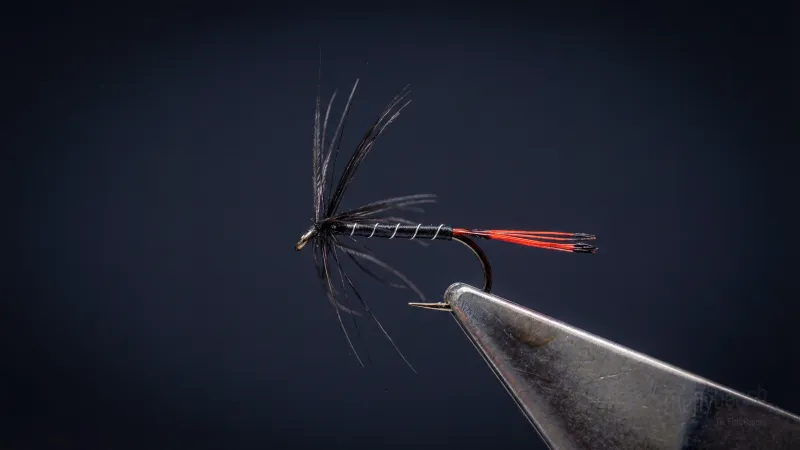
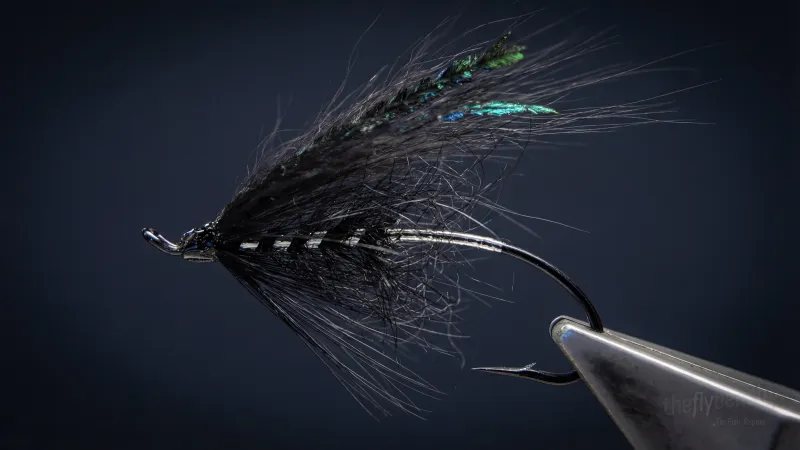
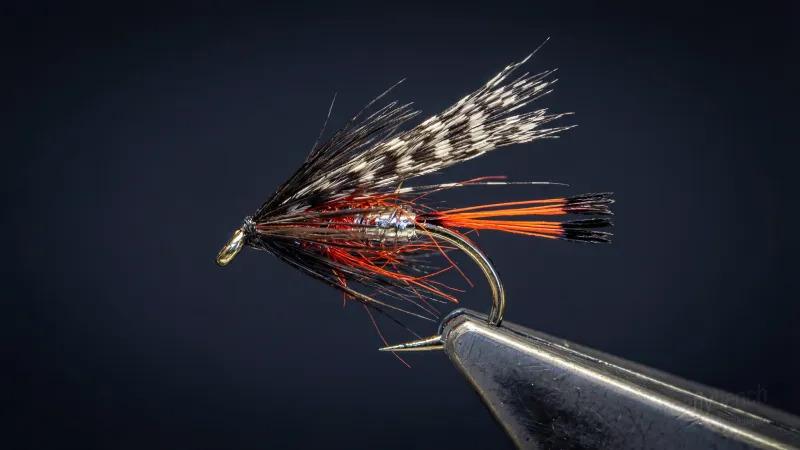
The black seal's fur body is ribbed with silver wire and set off by a scarlet Danville butt at the tail, adding a small hot spot where the golden pheasant crest tail begins. A black hen hackle and a throat of blue-dyed partridge add motion and a contrasting flash of color low on the fly, while a bronze mallard wing lies over the back. It imitates no natural insect; it works as an attractor, its dark body and color breaks triggering strikes rather than matching a hatch. Fish it subsurface on a team of wet flies across loch and river alike.
Related patterns
Behavior & presentation
- Natural Behavior
- The bronze mallard wing sheds water and holds its shape on the pull, while the black seal's fur body traps air and glints as it moves, giving the fly a lifelike pulse. A hint of scarlet at the butt and blue partridge at the throat add flashes of color against the dark body.
- Where Trout Eat It
- Fished on a loch-style team, it takes fish cruising near the surface in wave and along shoreline drop-offs where the silhouette stands out against the sky.
- How to Fish It
- Cast down and across the wind, retrieving in a steady figure-eight or short pulls to keep the wing and hackle working; it fishes well as a middle dropper.
- Best Water
- Focus on wind-blown shorelines, shoal edges, weed edges, and drop-offs where waves concentrate baitfish and invertebrates.
- Strike Type
- Expect a solid pull or swirl as fish take the fly on the move; hold the rod tip low and let them turn with it before setting.
Fishing strategy
- Rigging Suggestions
- Fish as part of a three-fly team on a floating line with a 12-14 foot leader, spacing flies about four feet apart.
- Seasonal Timing
- Productive through spring, summer, and fall wherever wave action keeps fish looking up and moving.
- Pro Tips
- A steady drift across the wind covers more holding water than anchoring in one spot; let the boat's drift do the work of the retrieve.
Pattern details
- Moving Water
- Stillwater
- Europe
- United Kingdom
- dead-drift
- classic