Dry FliesBog Fly Variant
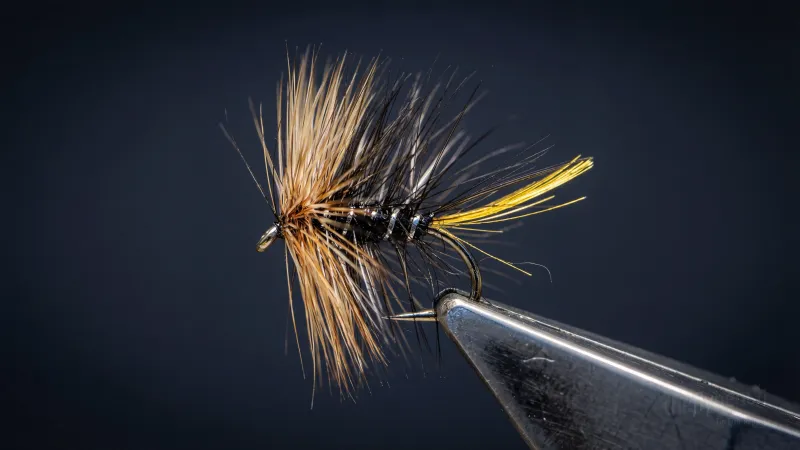
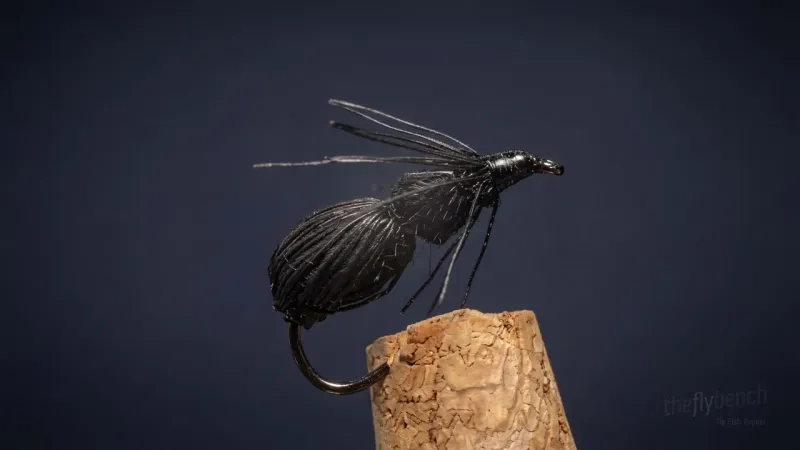
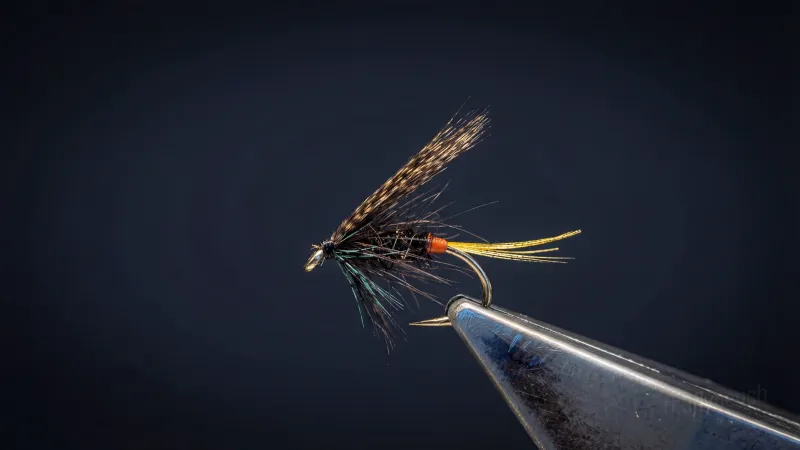
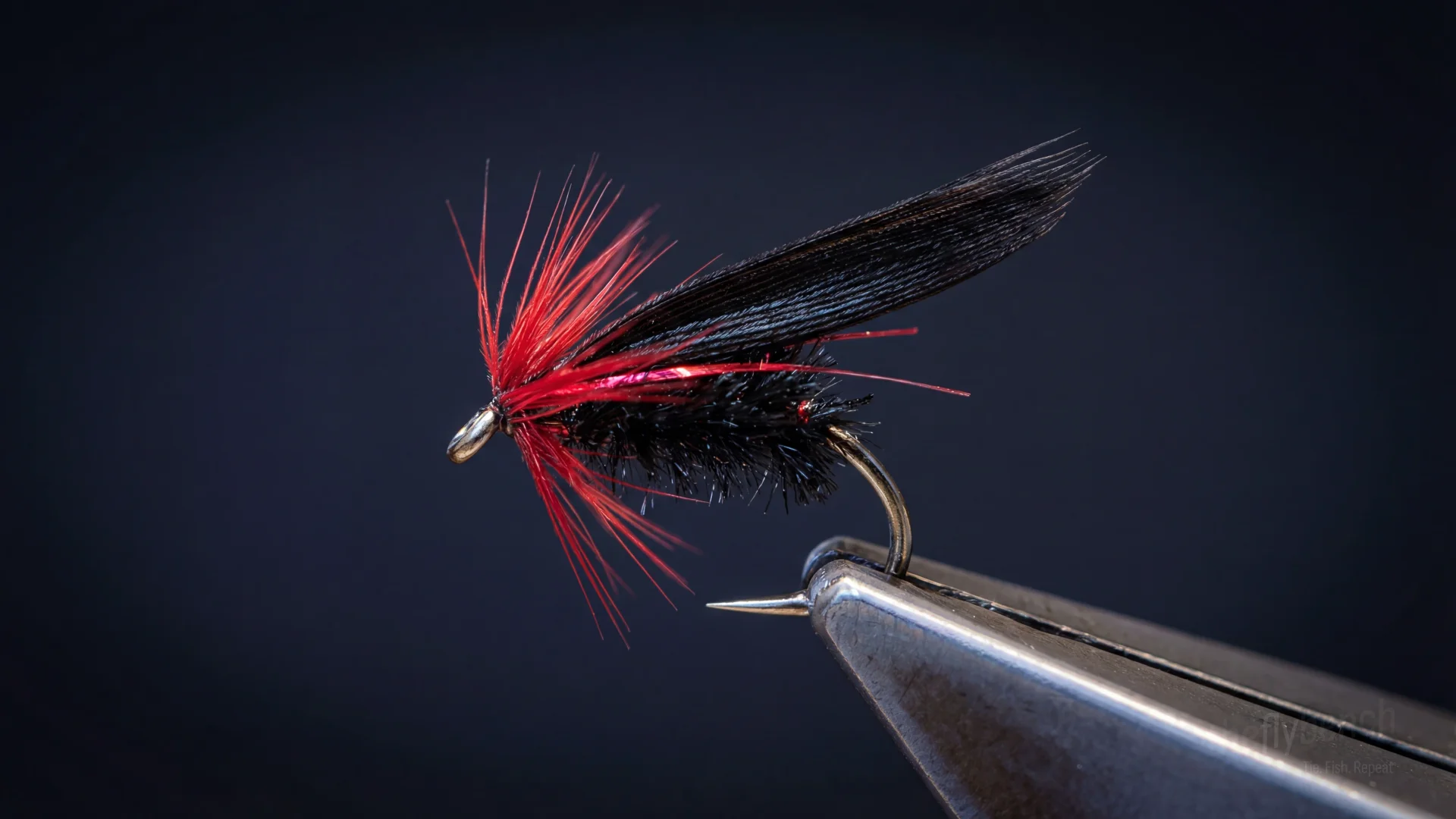
A traditional wet fly built for a team on loch or river, not tied to any single natural. Black ostrich herl and red flash twist into a segmented body, with a magpie wing and red hen collar giving flash and color contrast trout key on as an attractor.
Spring, Summer, Fall
Intermediate
Trout
Feb 2026
Overview
The body cord twists black ostrich herl with red flash into a glossy, segmented rope, giving the fly bulk and movement without any dubbing. Magpie tail slips lie flat over the back as a low wing, while a red hen collar and matching flash cheeks add a bright trigger point against the dark body. As an attractor pattern it imitates no specific insect; its contrast of black body and red accents is what draws strikes. Fish it subsurface, typically as one fly on a team of wets, across moving water and stillwater lochs.
Where to Buy This Fly
We only link to fly shops we trust. Some links are referral links, which may earn us a commission at no extra cost to you.
Materials
- Hook:
- Kamasan B175 #12
- Thread:
- Benecchi 12/0, black
- Body:
- Ostrich herl, dyed black; flash, red - twisted into a rope
- Wing:
- Magpie tail slips
- Cheek:
- Flash, red
- Collar:
- Hen, dyed red
Behavior & Presentation
Natural Behavior: The soft red hen collar pulses and breathes with every pull of the retrieve, while the twisted ostrich herl body flares and collapses in the current, throwing a dark, mobile silhouette. Strands of red flash in the body and cheeks catch light with each swing.
Where Trout Eat It: Fished as part of a team on loch-style boat tackle, it draws fish holding near wave-drift lines and along drop-offs where they intercept a moving target rather than a drifting one.
How to Fish It: Work it across and down on a floating or intermediate line, retrieving in short pulls so the herl and hackle keep moving; fish it as a middle or top dropper alongside other team flies.
Best Water: Target wind lanes, drop-offs, shoal margins, and current breaks where wave action pushes food and holds fish tight to structure.
Strike Type: Takes tend to be a firm pull felt through the line as fish chase and grab the moving fly, rather than a visible surface rise.
Fishing Strategy
Rigging Suggestions: Fish it on a team of three flies on a floating or slow intermediate line, spaced roughly four feet apart on a leader testing 6-8 lb.
Seasonal Timing: Most productive from spring through fall when fish are actively working near the surface and chasing moving flies in a wave.
Pro Tips: Keep the boat drifting broadside to the wind so the flies sweep naturally across likely holding water, and vary retrieve speed until fish show a preference.