Dry FliesBee Sting
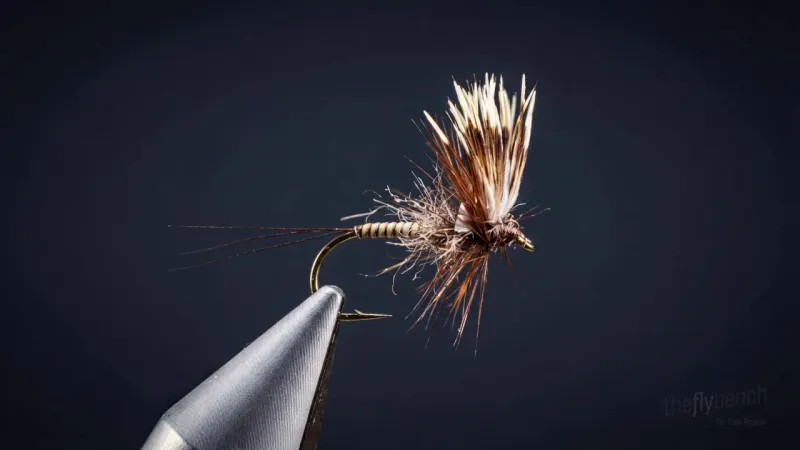
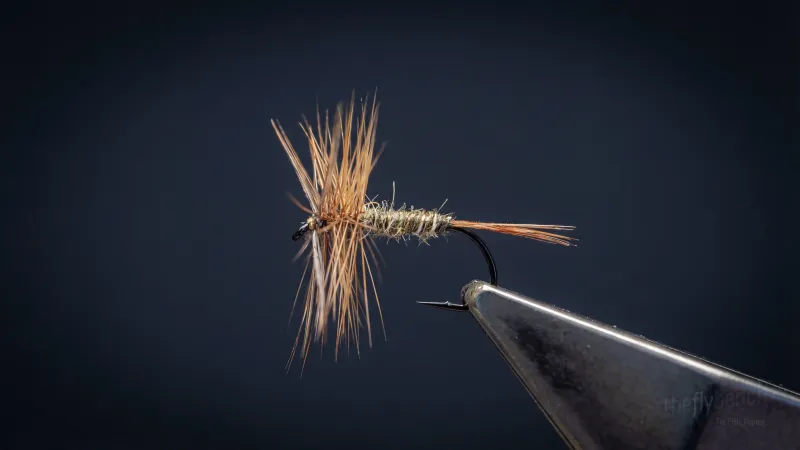
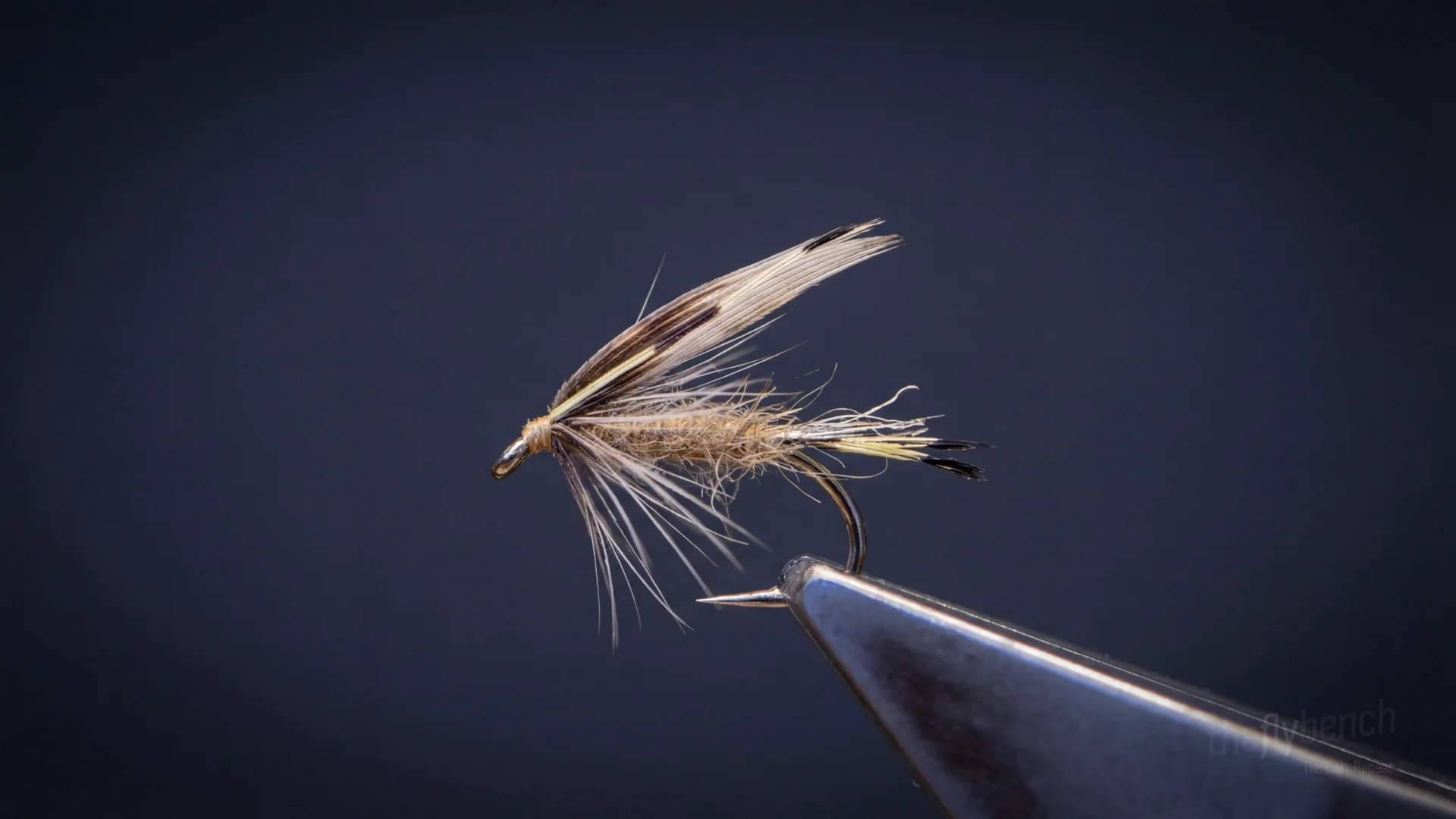
Hans Weilenmann builds the Bee Sting on a pale olive SLF Finesse body under a doubled pheasant hen-slip wing and soft Coq de Leon hen hackle, with fluorescent yellow Lady Amherst tippet fibers marking the tail and cheeks. The bright accents keep it visible while the soft hackle and doubled wing settle it low on the surface like a resting caddis.
Spring, Summer, Fall
Intermediate
Trout
Feb 2026
Overview
Tan Benecchi thread anchors the pale olive SLF Finesse body, and a doubled slip of pheasant hen feather forms the wing over soft Whiting Coq de Leon hackle, giving the fly a low, natural posture rather than a stiff, high-riding one. Fluorescent yellow Lady Amherst tippet fibers at the tail and a silver Z-Lon strand add a visual marker for the angler without changing the fly's profile on the water. That build suits caddis that hover over riffles and touch down repeatedly during mating swarms, when fish key on the brief surface contact rather than a drifting silhouette. It fishes moving water and stillwater from spring through fall wherever caddis activity concentrates over riffled current.
Where to Buy This Fly
We only link to fly shops we trust. Some links are referral links, which may earn us a commission at no extra cost to you.
Materials
- Hook:
- Kamasan B175 #12
- Thread:
- Benecchi 12/0, tan
- Tail:
- Lady Amherst tippets, dyed fluor. yellow; Z-Lon, silver
- Body:
- SLF Finesse, pale olive
- Hackle:
- Whiting Coq de Leon hen
- Wing:
- Pheasant hen slip, doubled
- Cheek:
- Lady Amherst tippets, dyed fluor. yellow
Behavior & Presentation
Natural Behavior: Caddis periodically touch down during mating swarms, creating brief contact points that ripple the surface. Dense swarms produce sustained surface activity.
Where Trout Eat It: Fish key on caddis touching down in riffles, over runs, and along seams where swarms concentrate during warm afternoons.
How to Fish It: Dead drift with occasional subtle movements to imitate landing and takeoff behavior. Focus on areas with visible swarm activity.
Best Water: Target riffle edges beneath swarms, seams where caddis concentrate, current breaks, and tail-outs.
Strike Type: Watch for confident rises or splashy takes as fish react to surface disturbances.
Fishing Strategy
Rigging Suggestions: Use a 9-12 foot leader tapering to 5X tippet for delicate presentations. Apply floatant to the body and hackle.
Seasonal Timing: Most effective during peak feeding periods at dawn and dusk. Water temperatures between 45-65°F typically produce best results.
Pro Tips: Floats well with proper floatant application. The natural materials provide good visibility without spooking wary fish.
Entomology
Caddisflies hover over riffles during mating swarms and periodically touch down on the surface, creating brief contact points that send ripples across the current. These fleeting surface touches accumulate into feeding opportunities when swarms are dense, conditioning trout to watch for the subtle disturbances of egg-laying or resting adults.
- Order
- Trichoptera
- Common Name
- Caddisfly
- Organism Type
- insect
- Life Stage
- adult