NymphCaddis Quill Larva
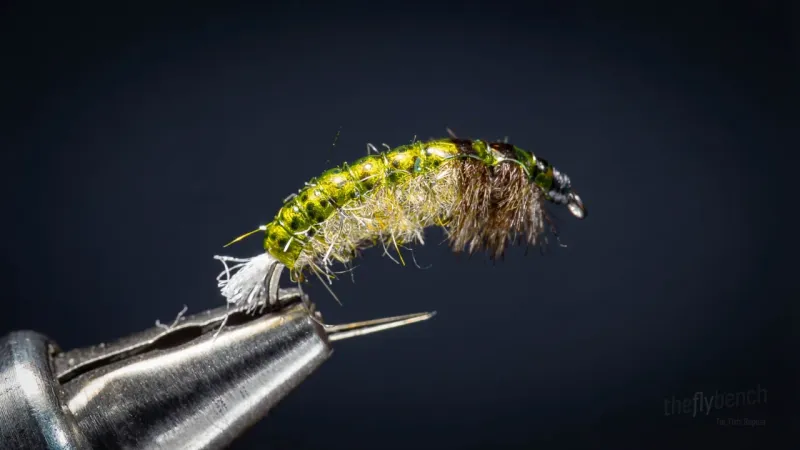
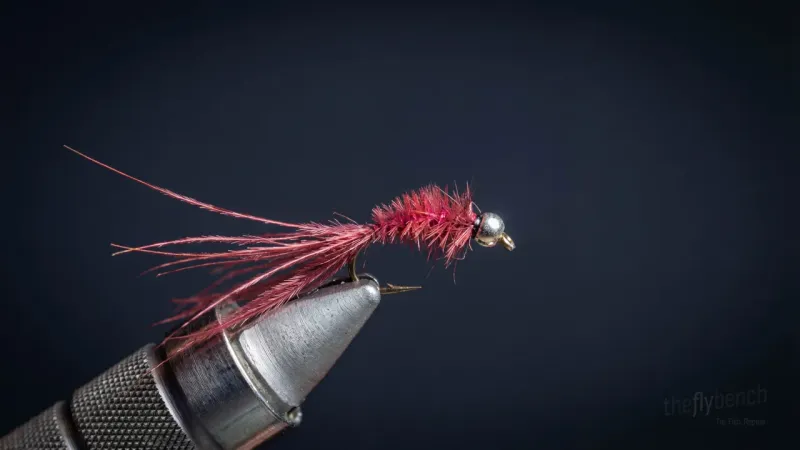
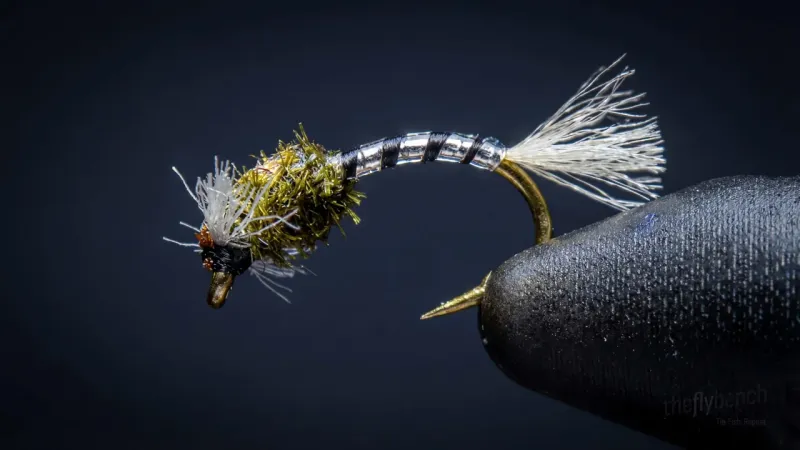
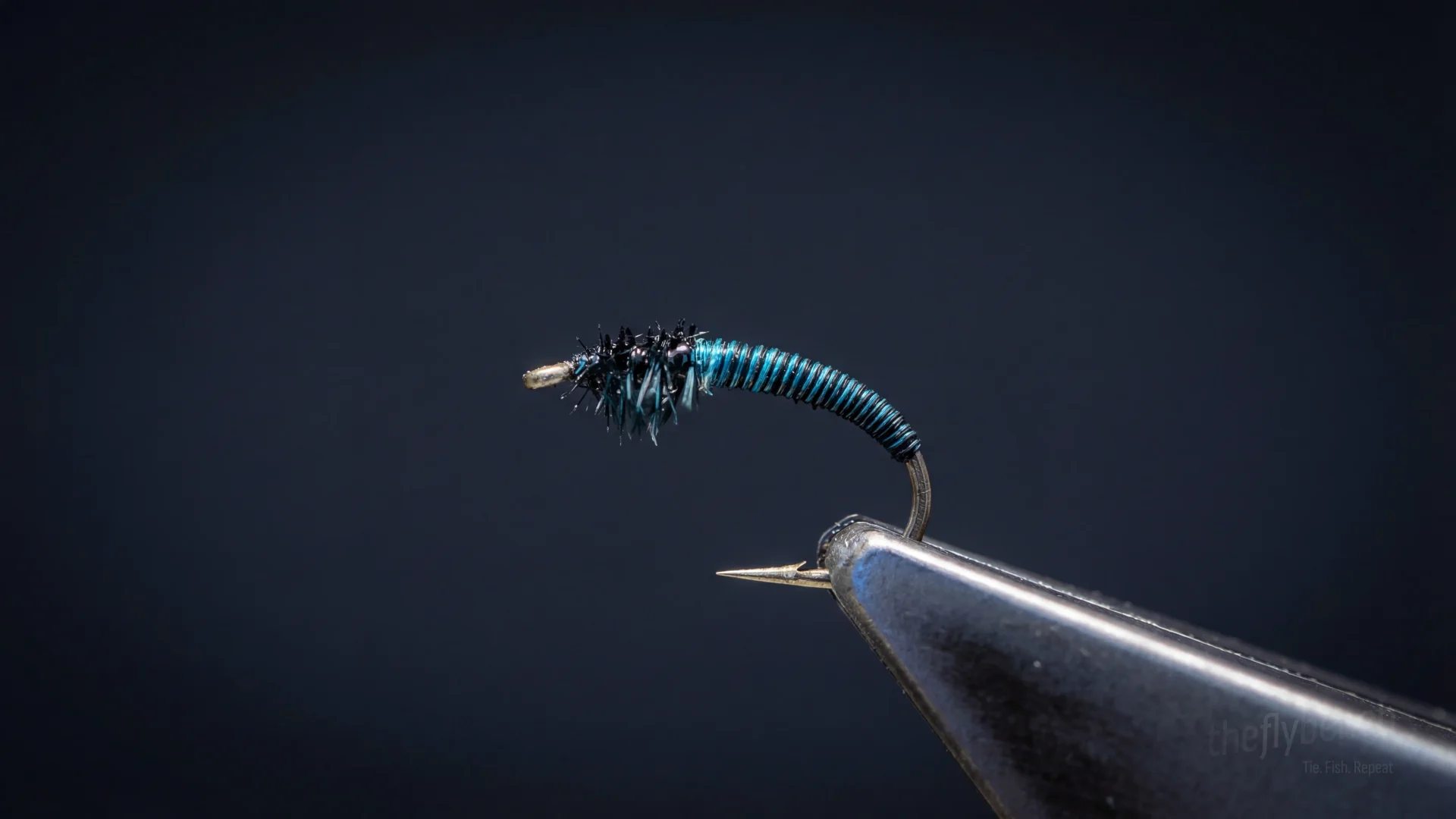
A.K. Best's Caddis Quill Larva strips and stains a hackle quill green for the segmented abdomen of a free-living caddis larva, finished with a trimmed ostrich herl thorax for a touch of leggy movement. The slim, low-bulk build sinks quickly and holds its shape well when nymphed near the bottom.
Spring, Summer, Fall
Intermediate
Trout
Feb 2026
Overview
Originated by A.K. Best, this larva imitation gets its segmentation from a stripped and marker-stained quill rather than dubbing, giving a clean, translucent banding that's hard to match with fur. The ostrich herl at the thorax can be swapped to black if a darker natural is on the bottom. Fish it dead-drift on a short dropper or tandem rig where caddis larvae tumble free of their cases.
Where to Buy This Fly
We only link to fly shops we trust. Some links are referral links, which may earn us a commission at no extra cost to you.
Materials
- Hook:
- Umpqua U201 #14
- Thread:
- Benecchi 12/0, black
- Abdomen:
- Hackle quill, stripped - stained green with permanent marker
- Thorax/Legs:
- Ostrich herl, dyed dark green (or black) - top and sides trimmed
Behavior & Presentation
Natural Behavior: Caddis larvae tumble helplessly after being dislodged from protective cases by floods or while moving between feeding sites on rocky substrates.
Where Trout Eat It: Fish hunt drifting larvae tumbling near bottom through runs, in pocket water, and along riffle edges where current dislodges them.
How to Fish It: Dead drift along bottom using high-stick or Euro techniques. Maintain contact while allowing natural tumbling action through structure.
Best Water: Target pocket water behind boulders, seams along structure, riffle edges with rocky bottom, and runs.
Strike Type: Detect subtle ticks, indicator hesitations, or slight tension changes rather than aggressive grabs.
Fishing Strategy
Rigging Suggestions: Use a 9-10 foot leader with 4X-5X tippet. Add split shot 8-12 inches above the fly and a strike indicator.
Seasonal Timing: Most effective during peak feeding periods at dawn and dusk. Water temperatures between 45-65°F typically produce best results.
Pro Tips: Caddis larvae frequently tumble and drift during their active periods. Focus on seams, pocket water, and along bottom structure where natural drift occurs.
Entomology
Caddisfly larvae drift helplessly in the current after being dislodged from their protective cases by floods or while moving between feeding sites on the stream bottom. Fish actively hunt these soft-bodied morsels as they tumble along vulnerable and exposed near the substrate.
- Order
- Trichoptera
- Common Name
- Caddisfly
- Organism Type
- insect
- Life Stage
- general