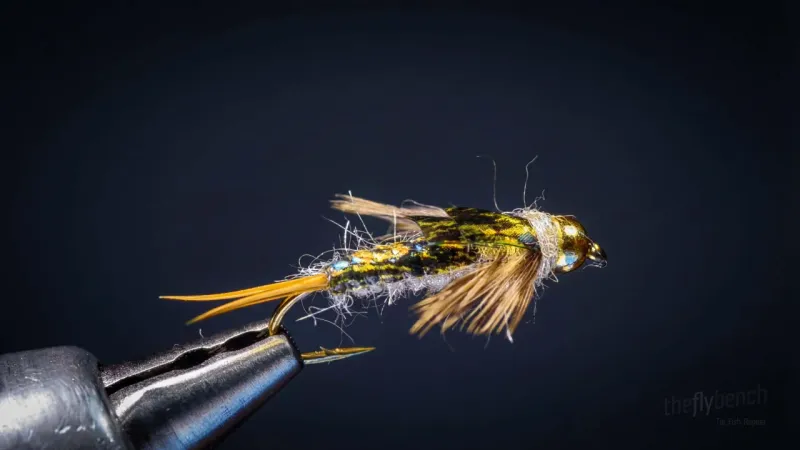
NymphWet-wire Royal Coachmen
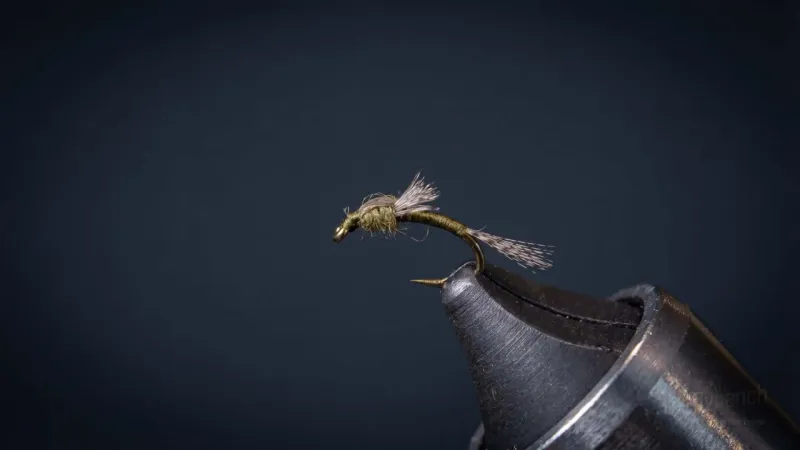
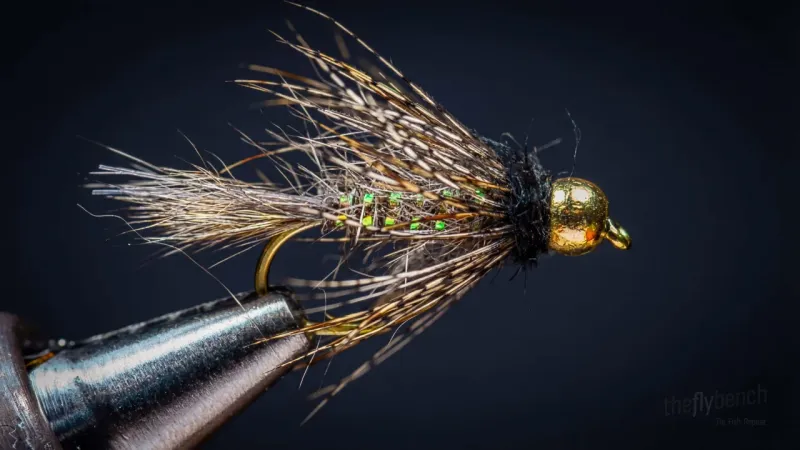
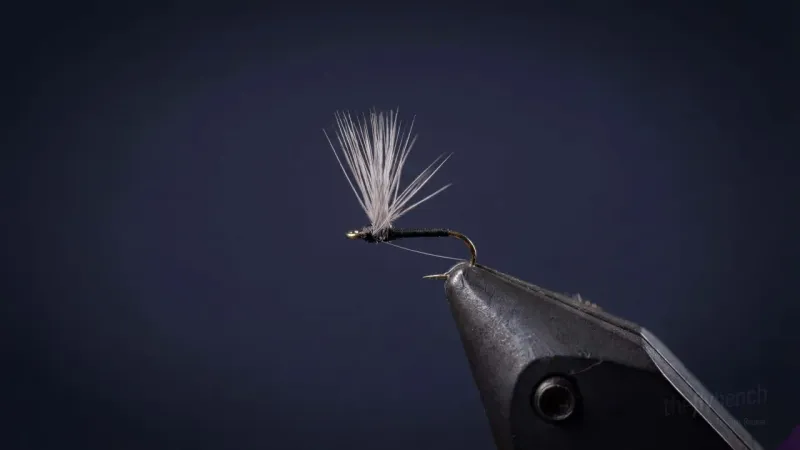
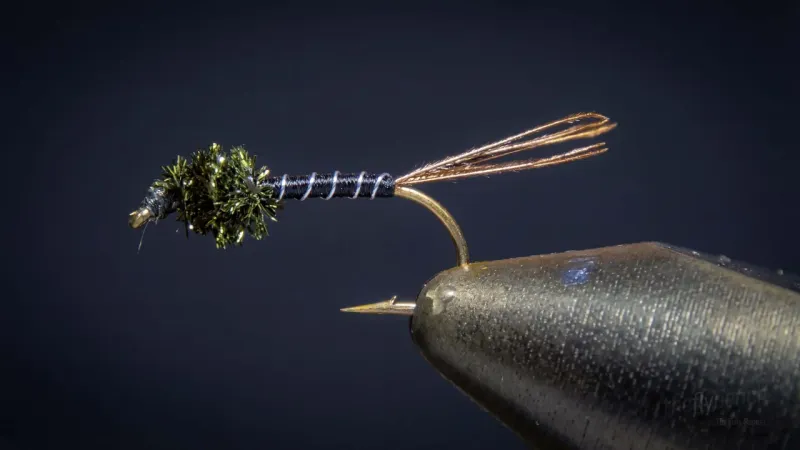
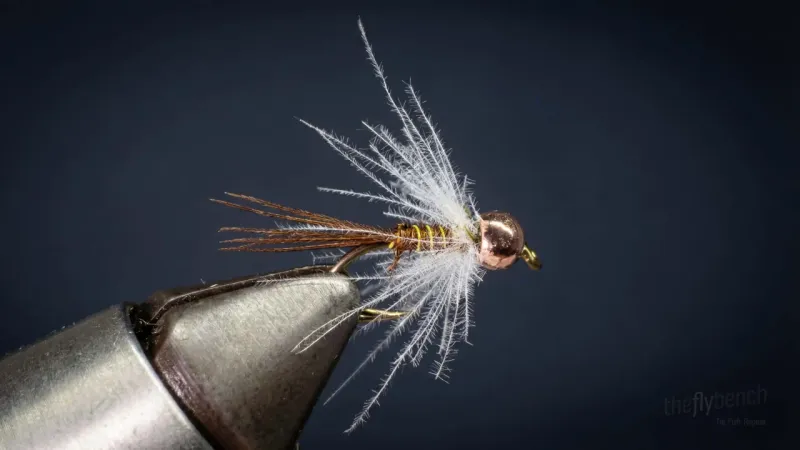
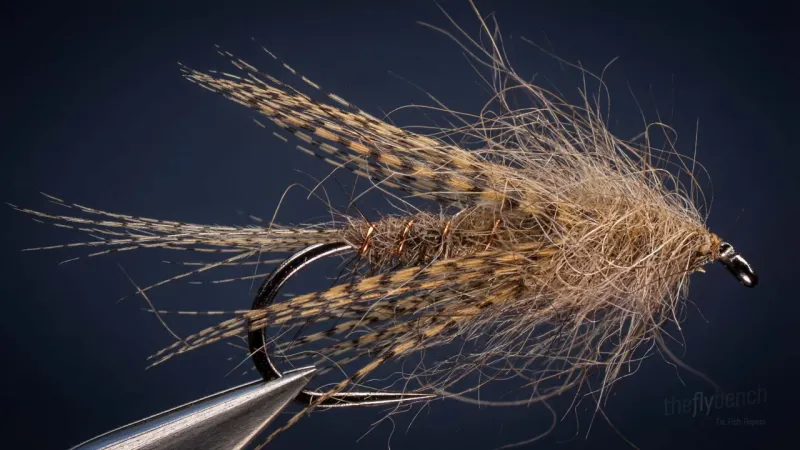
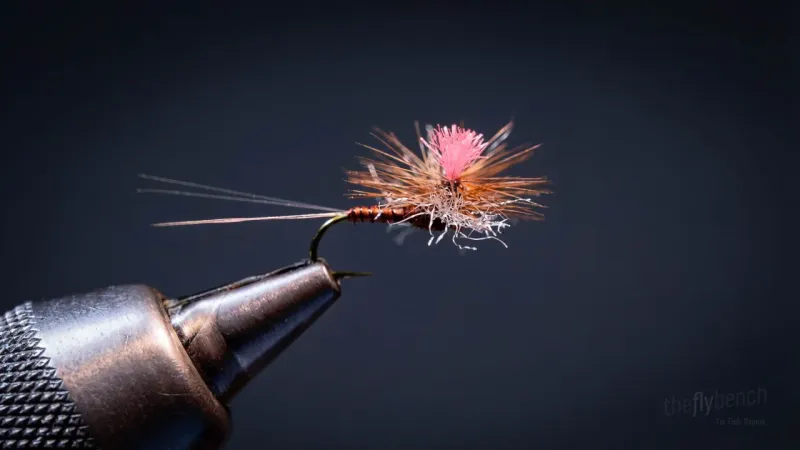
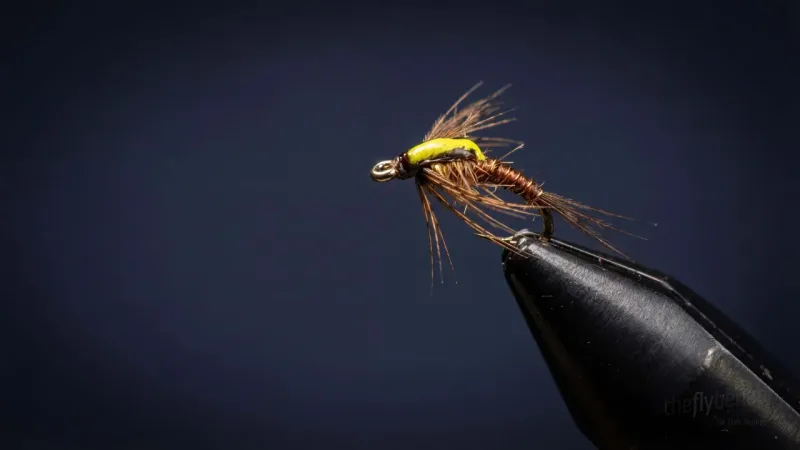
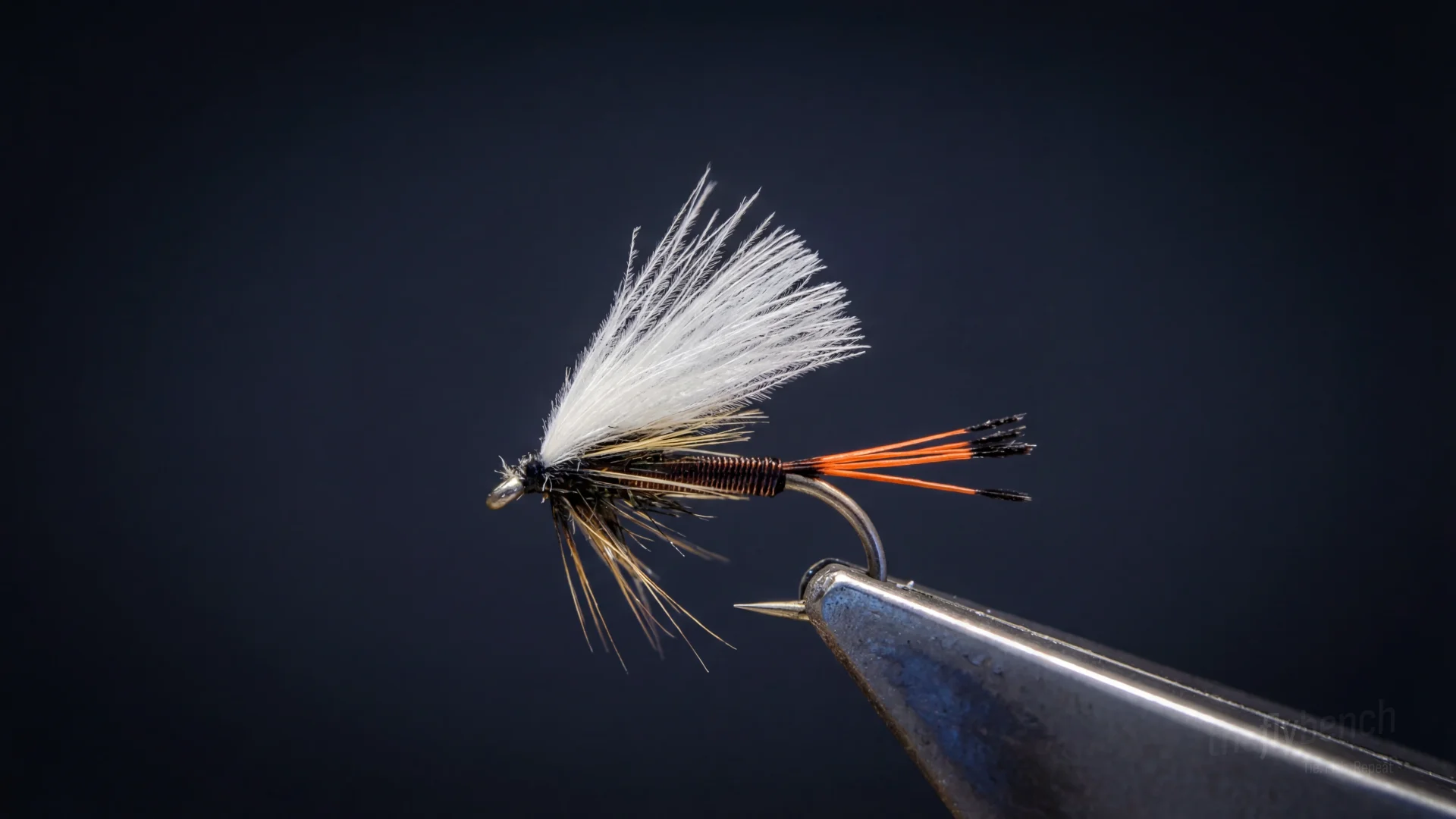
Dennis Collier's take on the Royal Coachman wraps a dark copper wire abdomen under a peacock herl thorax, with a hot orange Lady Amherst tippet tail adding a bright accent point and a white CDC wing for visibility. A furnace hen hackle finishes the collar, giving the fly a soft, buggy profile that reads as a mayfly nymph in moving water and stillwaters.
Spring, Summer, Fall
Intermediate
Trout
Feb 2026
Overview
Swapping in copper wire for the abdomen instead of the usual peacock and red floss builds a slimmer, more durable body while keeping the peacock herl thorax that gives the Royal Coachman family its signature dark, iridescent core. The dyed orange Lady Amherst tail departs from the traditional golden pheasant tippet, adding a hotter trigger point without changing the fly's overall silhouette. Collier's version fishes well as a searching nymph or, with its CDC wing, can be greased and fished in the surface film.
Where to Buy This Fly
We only link to fly shops we trust. Some links are referral links, which may earn us a commission at no extra cost to you.
Materials
- Hook:
- Wet fly 1XL #14
- Thread:
- Benecchi 12/0, black
- Hackle:
- Hen, furnace
- Abdomen:
- Copper wire, dark
- Tail:
- Lady Amherst tippet, dyed hot orange
- Thorax:
- Peacock herl
- Wing:
- CDC, natural white
Behavior & Presentation
Natural Behavior: Pre-emergent mayfly nymphs exhibit increased activity and nervous movements in the hours before major hatches, frequently repositioning and making short swimming bursts. Trout recognize this behavioral shift as a precursor to surface activity, feeding heavily on restless nymphs before the hatch intensifies.
Where Trout Eat It: Mid-depth in moderate runs and riffles, with trout positioned in current seams and pocket water intercepting restless nymphs making pre-emergence swimming movements.
How to Fish It: Traditional wet fly swing downstream with occasional rod lifts to animate the pattern, imitating the active swimming movements of pre-emergent nymphs during the critical hours before hatches peak.
Best Water: Pocket water and riffles where restless nymphs stage before emergence, current seams funneling pre-emergent activity, and tail-outs collecting concentrated nymph movements before surface hatches.
Strike Type: Firm resistance during the swing as trout intercept animated nymphs, requiring immediate strip-set when line hesitation or weight indicates a take.
Fishing Strategy
Rigging Suggestions: Fish on a 9-11 foot leader with 4X or 5X tippet. Add split shot 12-18 inches above the fly to reach deeper water columns.
Seasonal Timing: Effective from March through November with best results during periods when attractor patterns trigger aggressive strikes. Peak months are April-May and September-October.
Pro Tips: The classic attractor design triggers strikes based on visibility and movement rather than exact imitation. Excellent choice for exploring new water.
Entomology
Mayfly nymphs become increasingly active and visible in the hours before major hatches, exhibiting nervous movements and frequent position changes. Fish begin feeding heavily on these pre-emergent nymphs, recognizing the behavioral shift as a precursor to abundant surface activity.
- Order
- Ephemeroptera
- Common Name
- Mayfly
- Organism Type
- insect
- Life Stage
- nymph