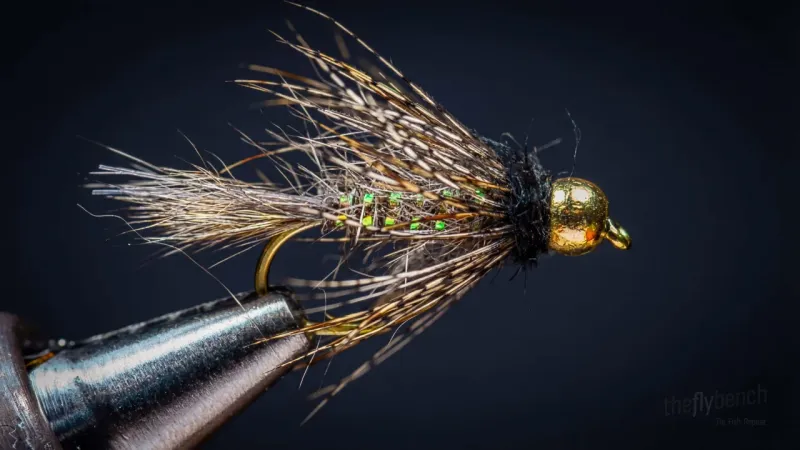
NymphRoyal Lightning Bug
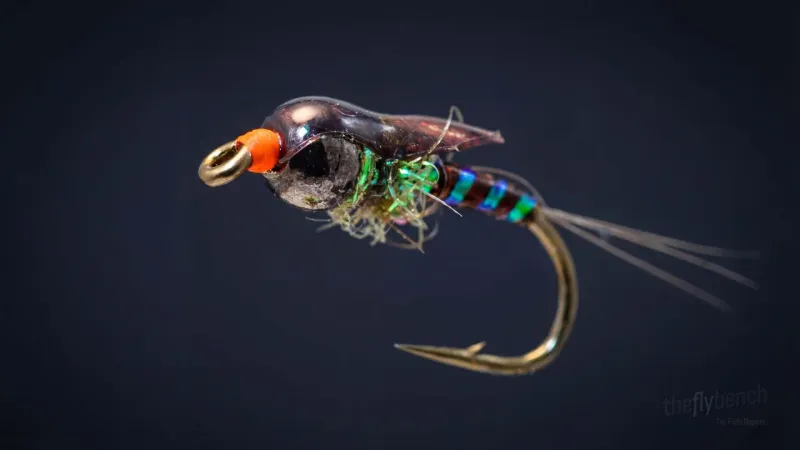
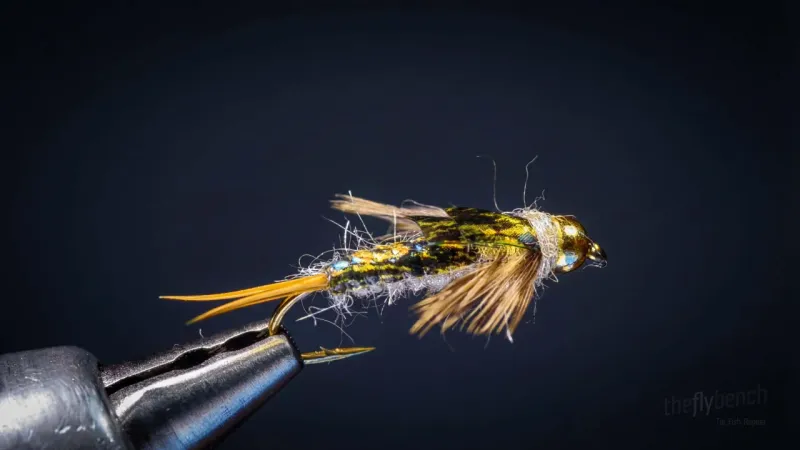
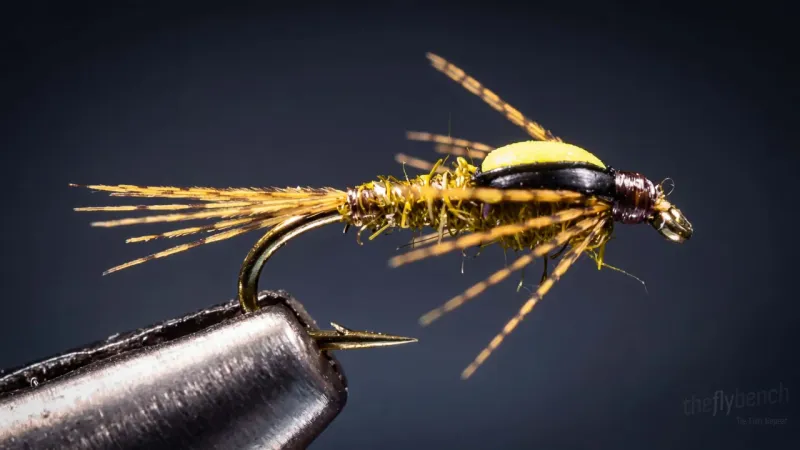
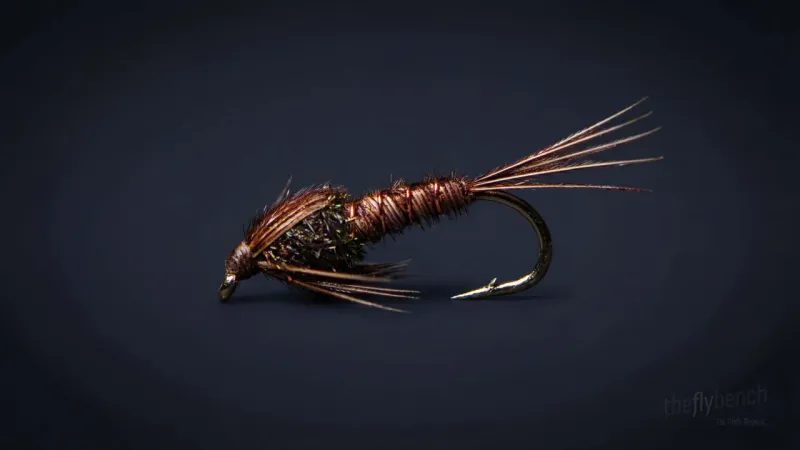
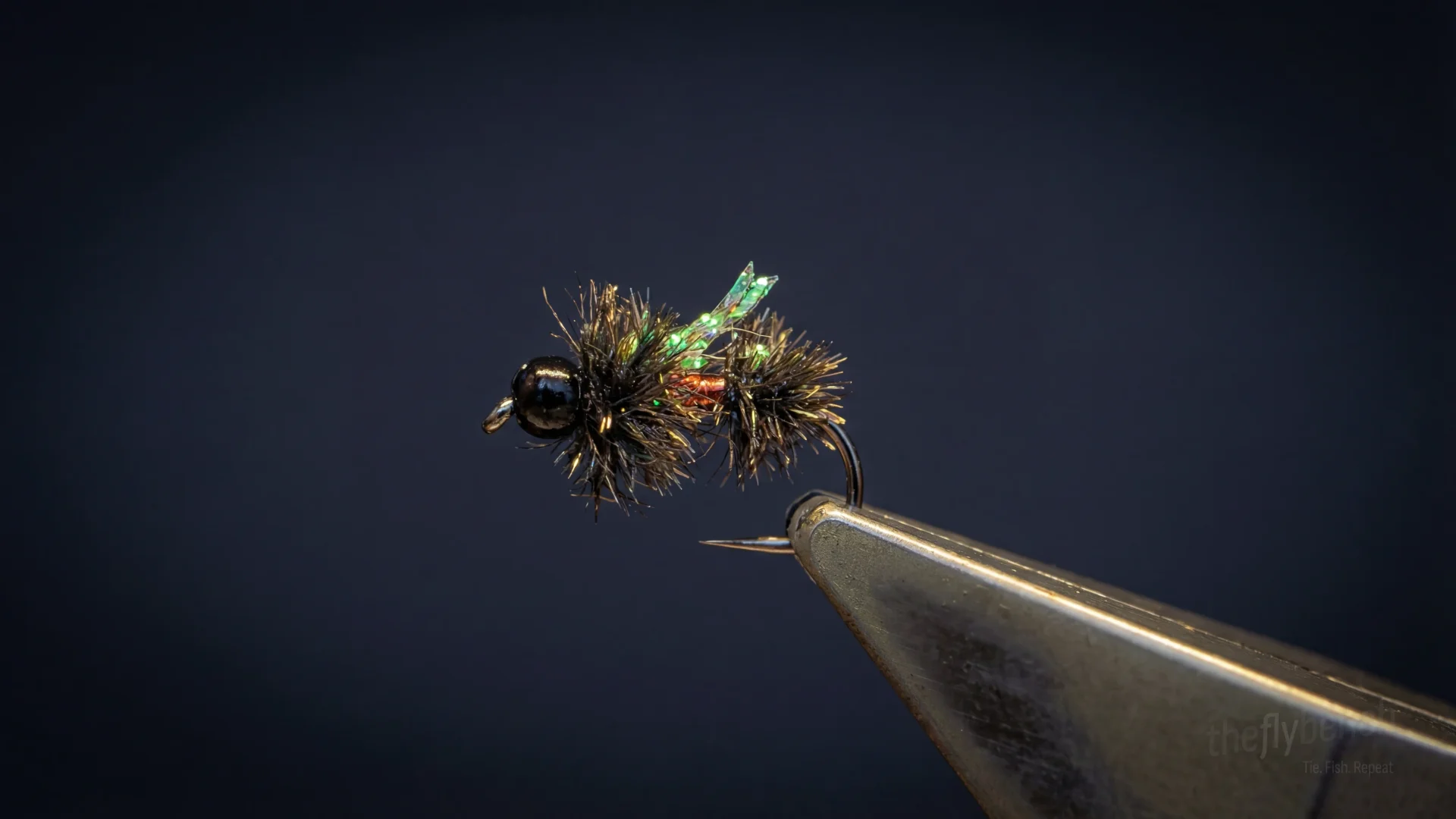
A tungsten bead weights the head of this variation on the Lightning Bug, its peacock herl body split by a band of red flash for a segmented look reminiscent of a Royal Wulff's red band. Pearl or chartreuse Krystal Flash forms the wing, giving the fly extra shimmer as it moves through the water column.
Spring, Summer, Fall
Intermediate
Trout
Feb 2026
Overview
John Mundinger originated this Royal-striped take on the Lightning Bug; the tying here follows Hans Weilenmann's video. The 2.3mm black tungsten bead gives the fly some heft up front, letting anglers fish it under an indicator or as the point fly in a dropper rig without added split shot. Its flash-heavy build makes it a strong searching pattern in stained or fast water where a subtler fly would go unnoticed, tied small on a size 14, 1XL wet fly hook for a natural profile despite the added flash.
Where to Buy This Fly
We only link to fly shops we trust. Some links are referral links, which may earn us a commission at no extra cost to you.
Materials
- Hook:
- Grip 12804BL #14 (or equivalent 1XL wet fly hook)
- Bead:
- Tungsten, black 2.3mm
- Thread:
- Benecchi 12/0, black
- Wing:
- Krystal Flash, pearl (or chartreuse)
- Body:
- Peacock herl; flash, red; peacock herl
Behavior & Presentation
Natural Behavior: The tungsten bead drives the fly quickly to depth, while the peacock herl body pulses and the krystal flash wing flickers with each tumble through the current, exaggerating the natural nymph's profile.
Where Trout Eat It: Fish take this near the bottom in the main current or along drop-offs, drawn by the flash as much as by the general nymph shape.
How to Fish It: Dead drift it under an indicator or tight-line it with enough weight to bounce near bottom, keeping contact through the drift.
Best Water: Target current seams, drop-offs, pocket water, and deeper runs where the flash stands out against darker water.
Strike Type: Watch for an indicator pause or feel a firm pull through a tight line as fish take the fly near bottom.
Fishing Strategy
Rigging Suggestions: Fish on a 9-12 foot leader with 4X-5X tippet, using the tungsten bead's weight to reach depth without added split shot in most runs.
Seasonal Timing: Effective year-round, with the best results during spring and fall mayfly activity when nymphs are most active.
Pro Tips: Fish it as the point fly below a bigger, buggier nymph to give fish a visual attractor and a natural silhouette in the same drift.
Entomology
Mayfly nymphs drift and tumble along the streambed, especially after being dislodged by current or feeding activity, giving trout a steady stream of subsurface food. Their segmented bodies and subtle movement make them a dependable target whenever fish are holding near bottom.
- Order
- Ephemeroptera
- Common Name
- Mayfly
- Organism Type
- insect
- Life Stage
- nymph