Overview
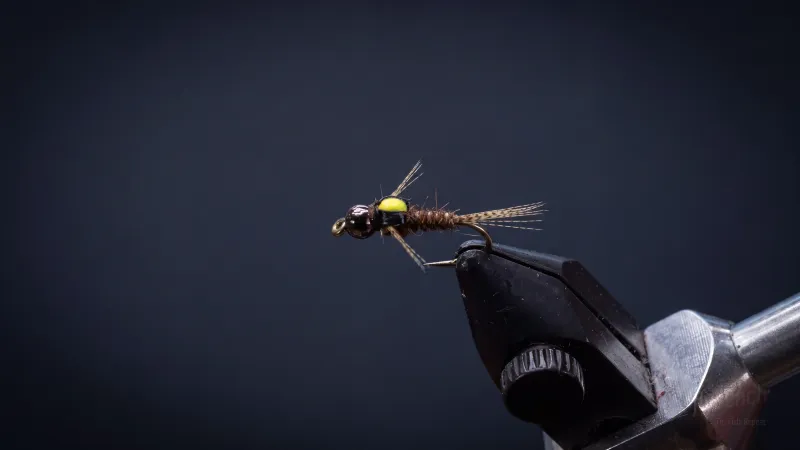
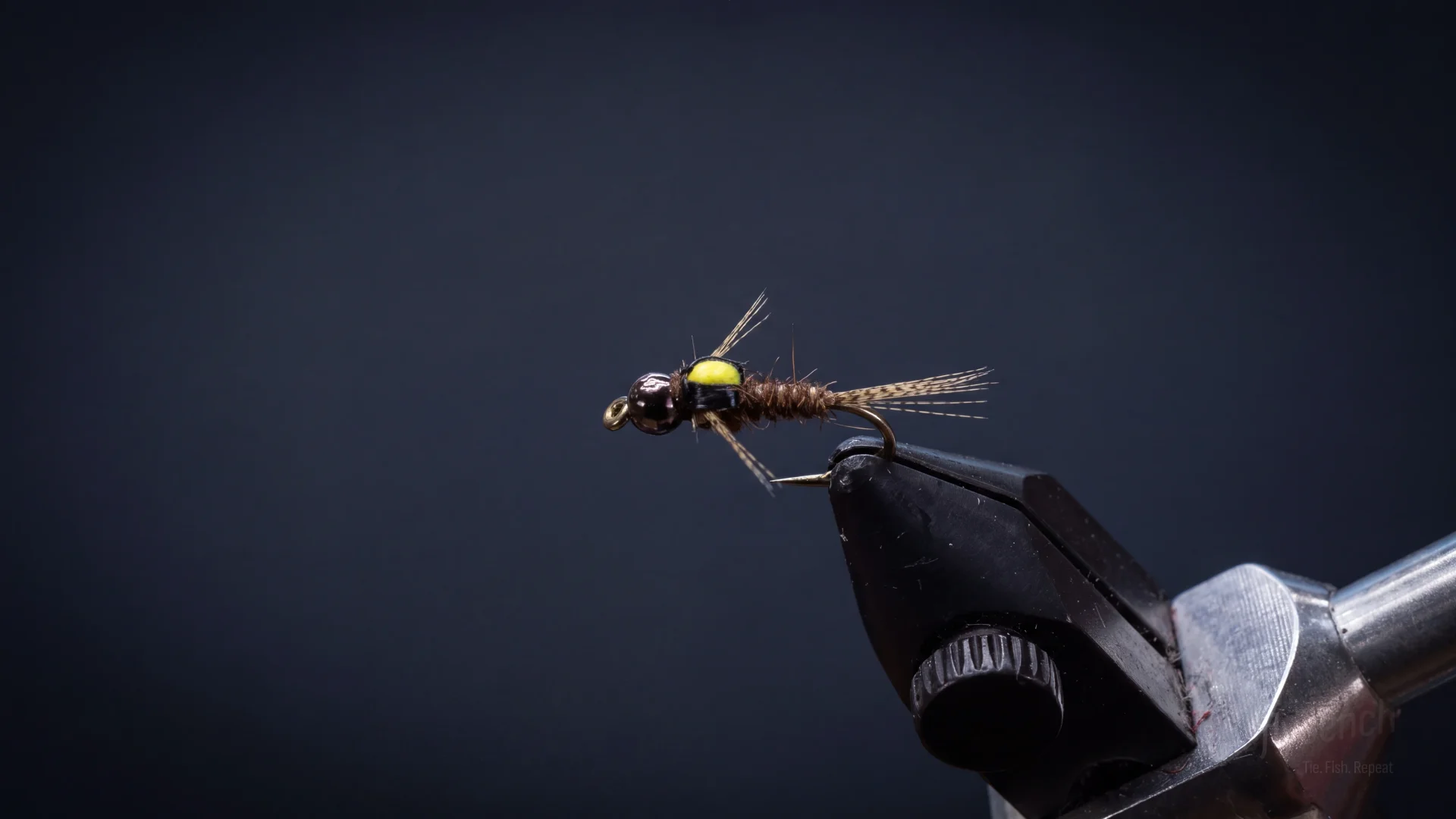
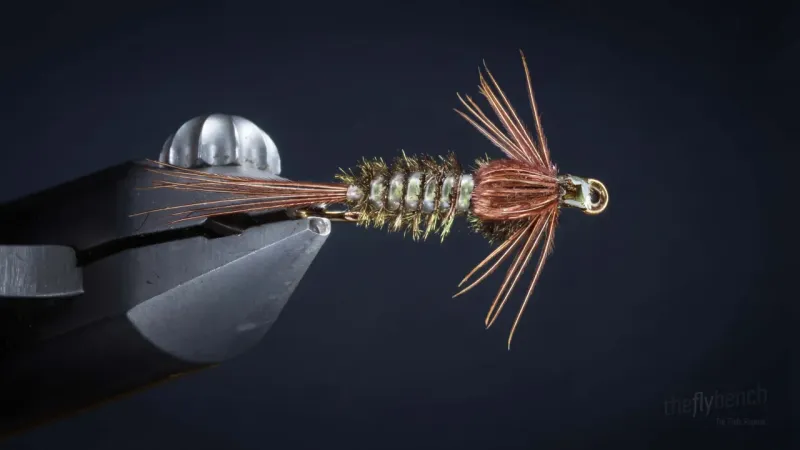
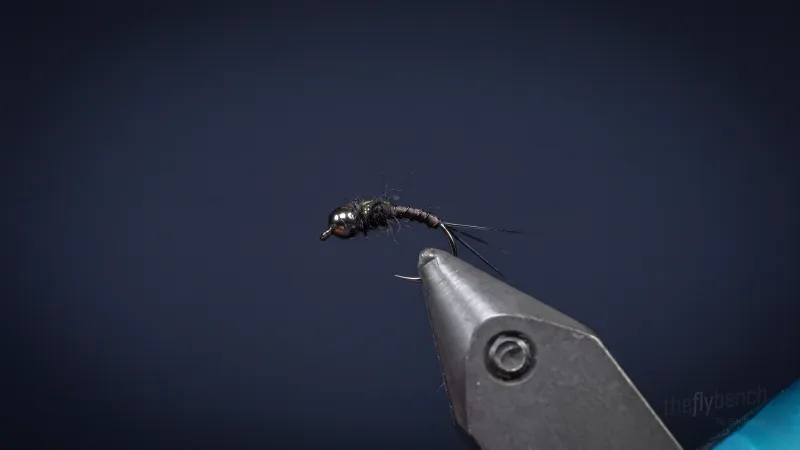
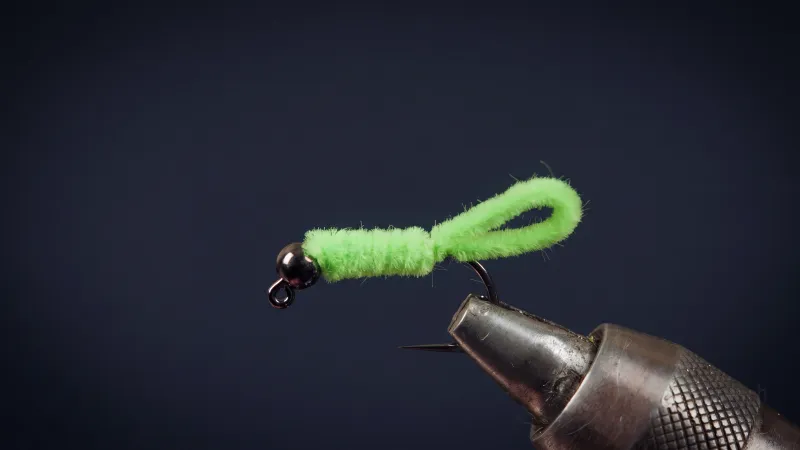
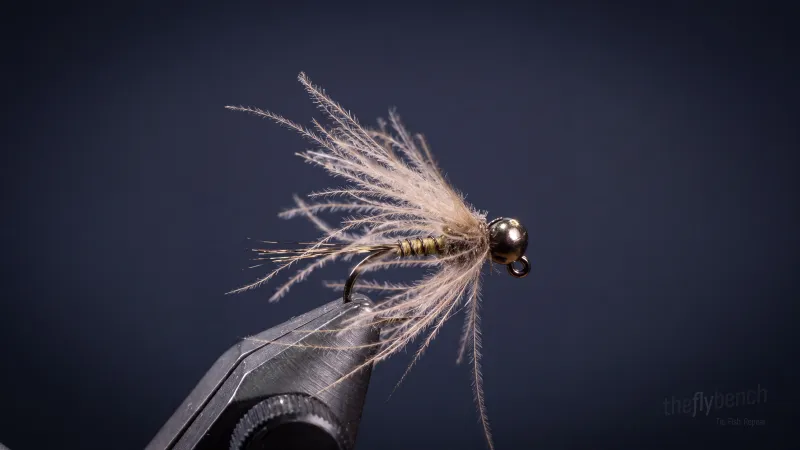
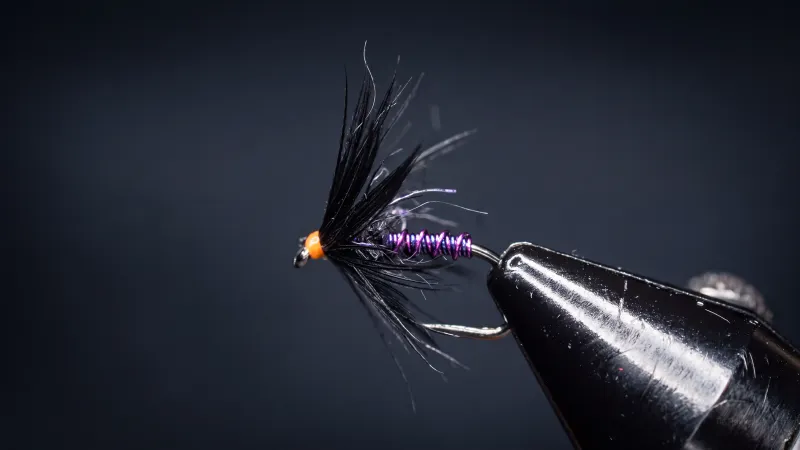
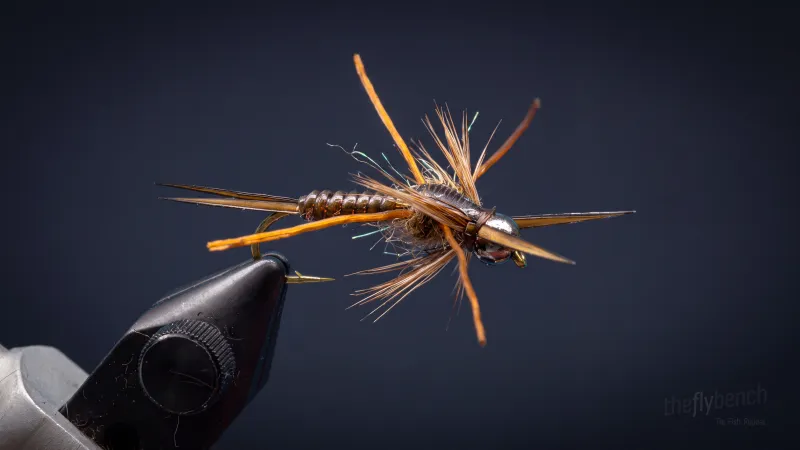
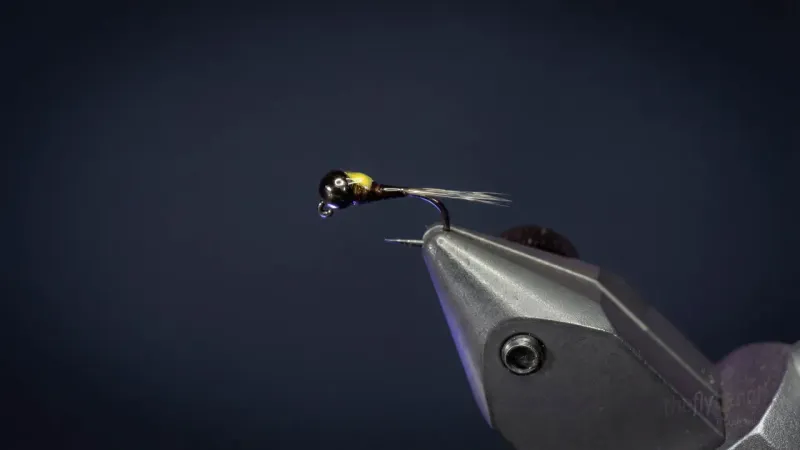
The Split Case design is credited to Joe Mitchell, a guide from Heber City, Utah, who worked it out on the Provo River, and Solitude Flies sells it commercially. The yellow foam showing between two black goose biots stands in for a wing pushing out of the case, and changing the gap between the biots shows more or less yellow. This version uses a black nickel tungsten bead and a 3769 nymph hook in sizes 12-18. Tie the body in dark olive to cover Baetis.
Related patterns
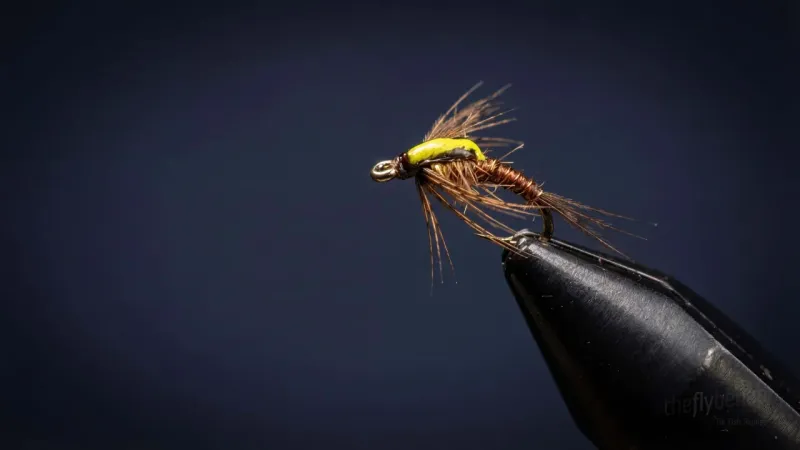
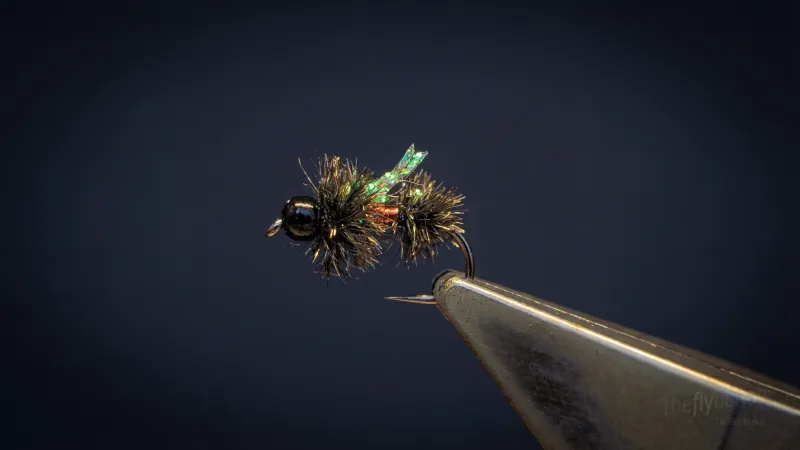
Behavior & presentation
- Natural Behavior
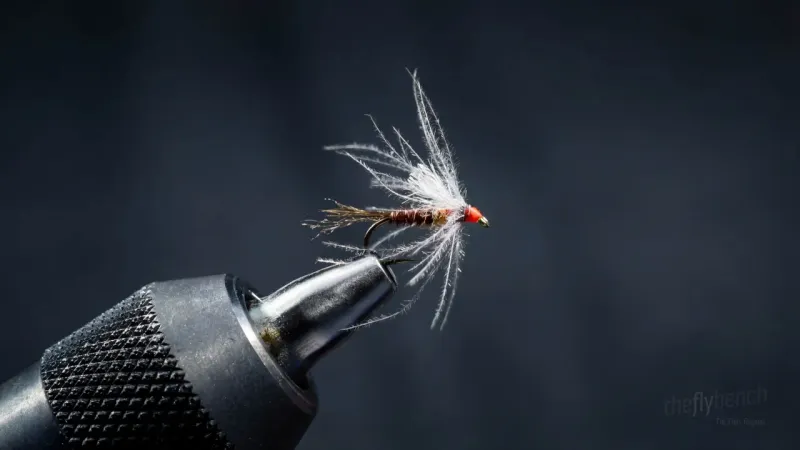
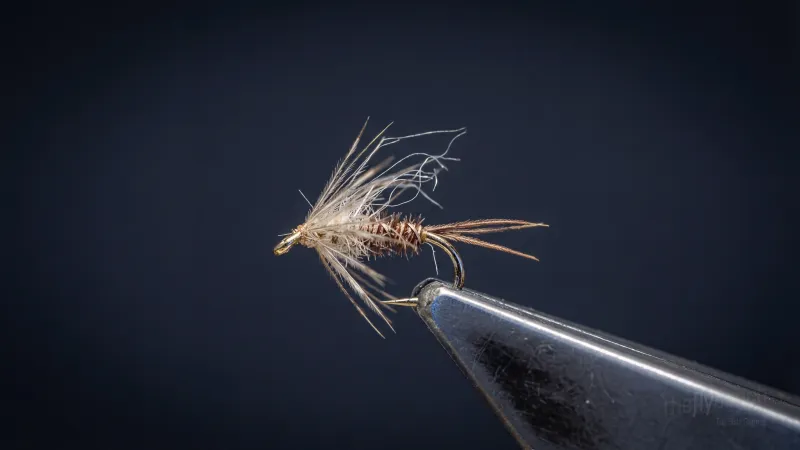
- Mature PMD nymphs darken and get restless before emergence, letting go of the cobble and drifting up through the current as the wingcase splits and the wing starts to show.
- Where Trout Eat It
- Trout hold low in moderate riffles and the heads of runs late in the morning, eating nymphs that lift off the bottom in the hour before duns appear.
- How to Fish It
- Dead-drift it under an indicator or below a dry, then let the line tighten at the end of the drift so the fly swings up like a nymph heading for the surface.
- Best Water
- Cobble riffles 1-3 feet deep, the seam where a riffle drops into a run, and weedy tail-outs on tailwaters where PMDs are thick.
- Strike Type
- Often a quick dip of the dry or indicator mid-drift, and a firmer grab when the fly rises at the end of the swing.
Fishing strategy
- Rigging Suggestions
- Hang it 18-30 inches off the bend of a high-floating dry on 5X fluorocarbon for a dry-dropper, or run it as the lower fly under an indicator with a heavier nymph above. The tungsten bead usually gets it down without extra split shot in moderate water.
- Seasonal Timing
- Best from late May through August while PMDs hatch, peaking from late morning into early afternoon before the duns come off.
- Pro Tips
- Keep a few tied in dark olive for Baetis days. If trout start rising during the hatch, switch the dry to a PMD dun and leave this nymph on as the dropper.
Entomology
Pale Morning Dun nymphs crawl among cobble and weed in riffles and moderate runs. As emergence nears, the wingcase darkens and splits, and the nymphs drift up toward the surface, where trout feed heavily on them before the duns hatch.
- Order
- Ephemeroptera
- Family
- Ephemerellidae
- Common name
- Pale Morning Dun
- Organism
- insect
- Life stage
- nymph
Pattern details
- Moving Water
- Rocky Mountain
- dead-drift
- indicator-nymph
- dry-dropper
- guide-fly
- tailwater