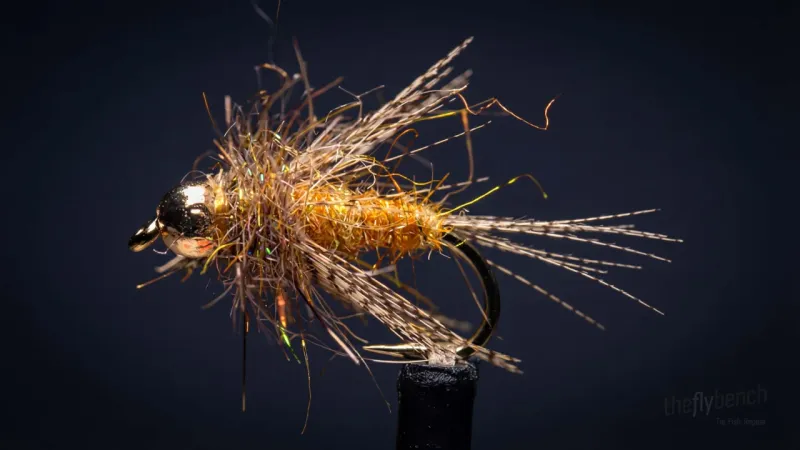
Overview
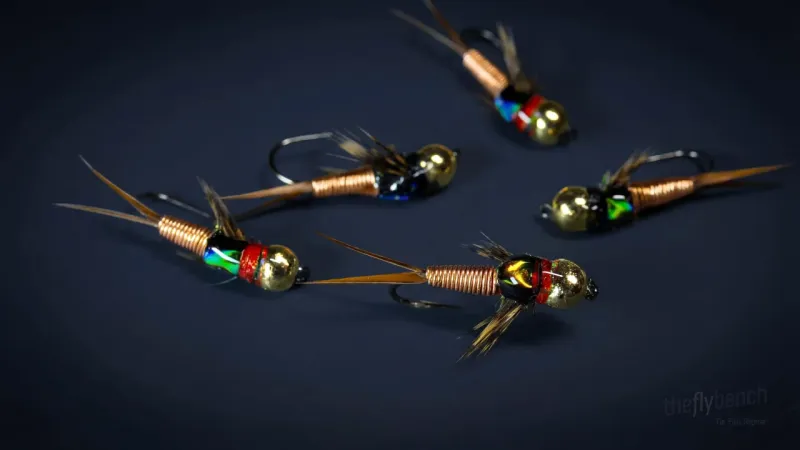
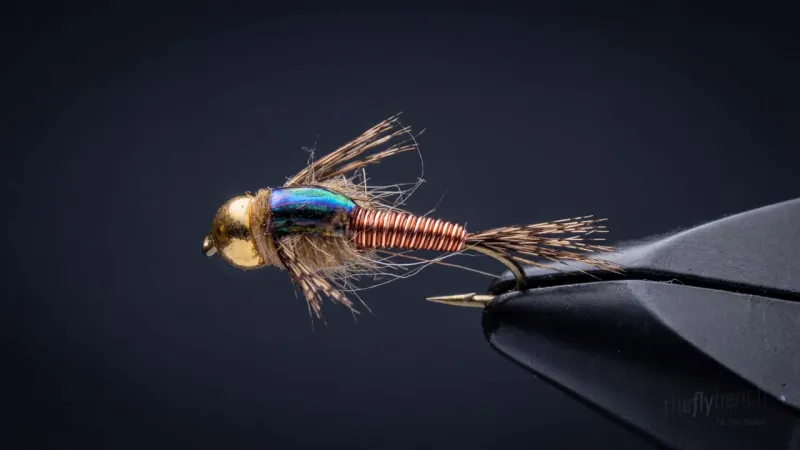
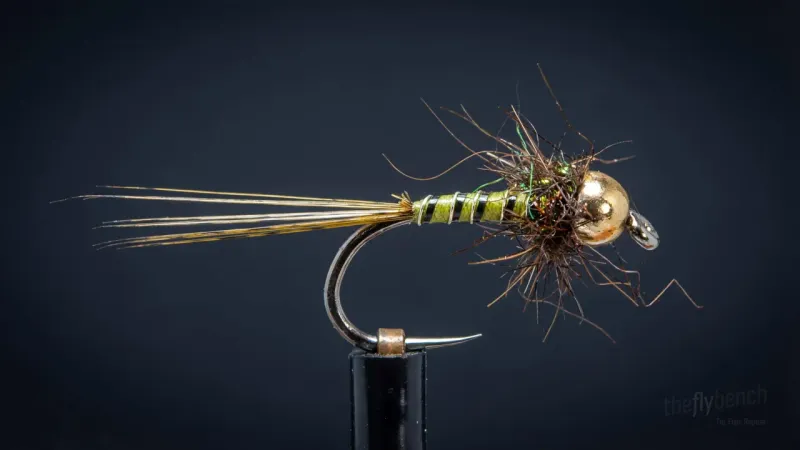
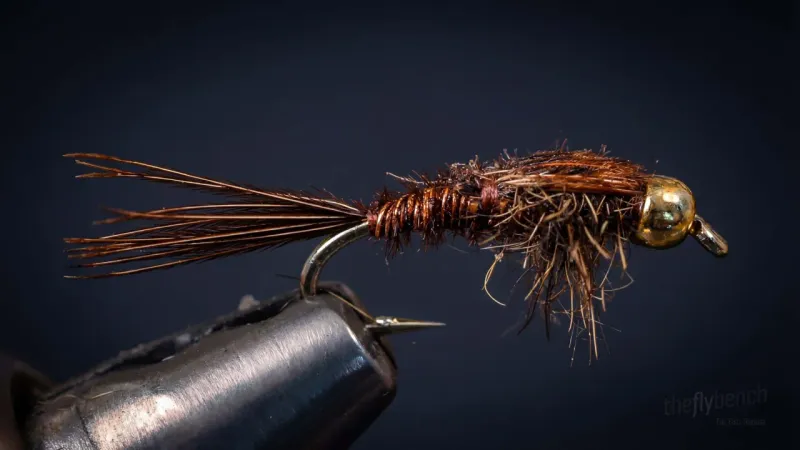
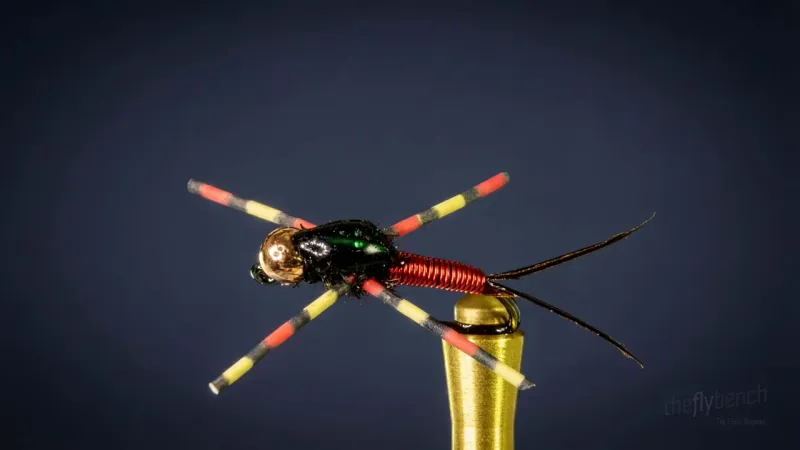
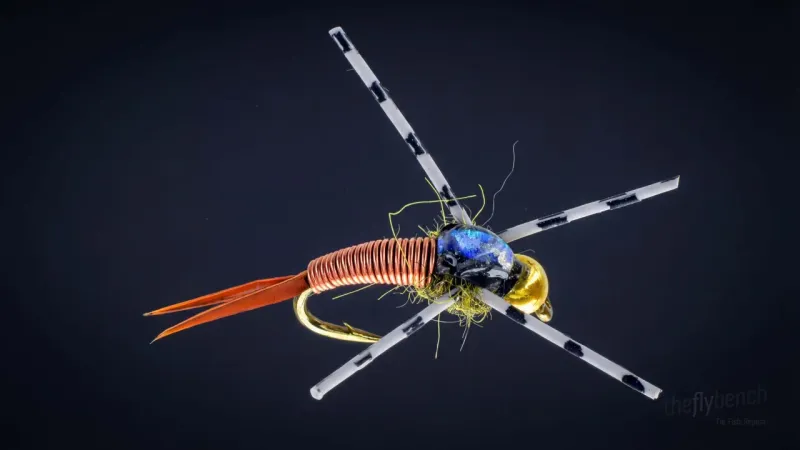
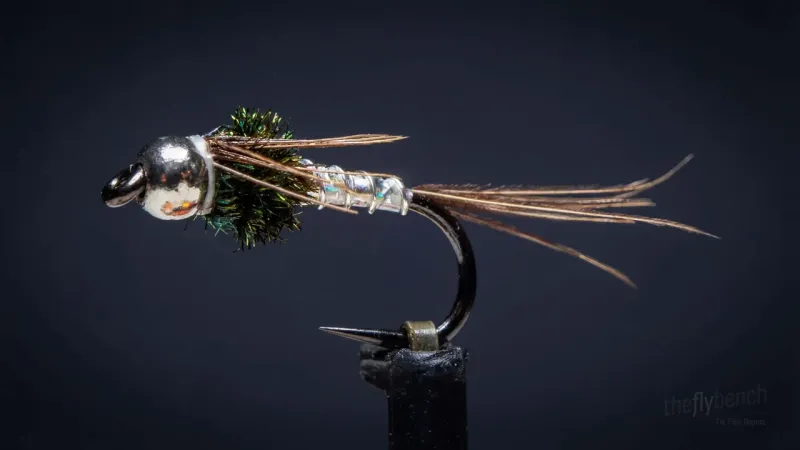
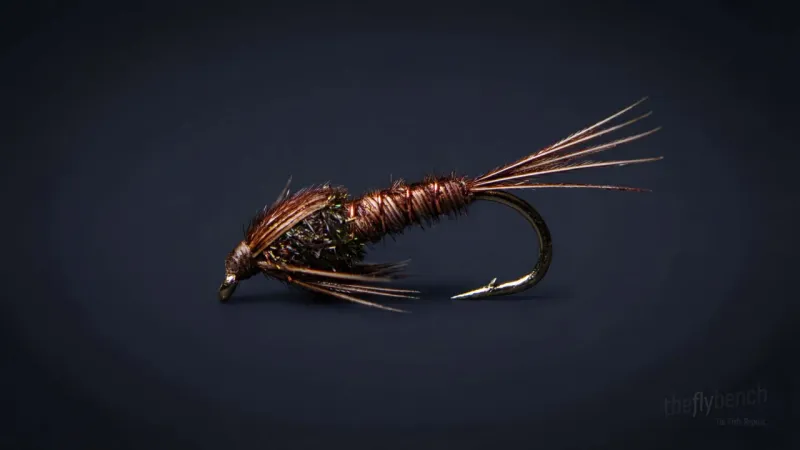
Tied with a copper wire abdomen, a split goose biot tail, a peacock herl thorax, and a wingcase of Thin Skin coated with UV resin for a glossy finish, this modern nymph gets its flash from the wire body. Sparse partridge feather legs and wraps of lead wire under the body round it out, giving it a fast, steady sink rate-ideal for deep nymphing.
Related patterns
Behavior & presentation
- Natural Behavior
- Heavy-bodied stonefly nymphs maintain grip on cobble substrates until high flows or foraging activity dislodges them, sending them tumbling downstream with legs extended in characteristic dead-drift posture. These substantial nymphs sink quickly, bouncing along the bottom where fish intercept them.
- Where Trout Eat It
- Tumbling along bottom structure in runs, pocket water, and current breaks where stoneflies naturally lose their grip and drift.
- How to Fish It
- Dead drift near bottom, allowing the weighted fly to bounce naturally through feeding lanes where nymphs tumble in current.
- Best Water
- Most productive in riffle edges, pocket water, and tail-outs where stonefly nymphs drift after dislodgment.
- Strike Type
- Feel subtle ticks, line hesitation, or indicator dips as fish intercept the tumbling nymph.
Fishing strategy
- Rigging Suggestions
- Try fishing this fly on a dead drift, either under an indicator or as part of a Euro nymphing rig.
- Seasonal Timing
- The Copper John can be effective year-round, but it's especially productive in spring and summer when stoneflies and mayflies are active. Use the Copper John when you need to get down deep quickly, or when fish are keying in on stoneflies or mayfly nymphs.
- Pro Tips
- The Copper John sinks quickly and is designed to be fished near the bottom. The use of a UV resin on the wingcase gives it a glossy finish that can catch the light and attract fish.
Where to fish it
Rivers anglers pair with this fly, with local shops that stock it.
River details and fly shops from River & Run, our sister site.
Entomology
Stonefly nymphs grip tightly to cobble substrates using tarsal claws, periodically losing their hold during high flows or when foraging, tumbling downstream in a distinctive dead-drift with legs splayed outward. Their heavy, compact bodies sink quickly toward the bottom, bouncing along substrate during drift events. Fish key on these robust nymphs because their year-round presence and substantial size provide high calorie rewards, especially during pre-runoff periods when nymphs become more mobile before emergence migrations.
- Order
- Plecoptera
- Common name
- Stonefly
- Organism
- insect
- Life stage
- nymph
Pattern details
- Stillwater
- Moving Water
- Rocky Mountain
- dead-drift
- indicator-nymph
- baetis-hatch
- stonefly-hatch
- copper-john-family
- modern
- attractor
- searching-pattern
- low-clear-water