Dry FliesRed Ass Bumble
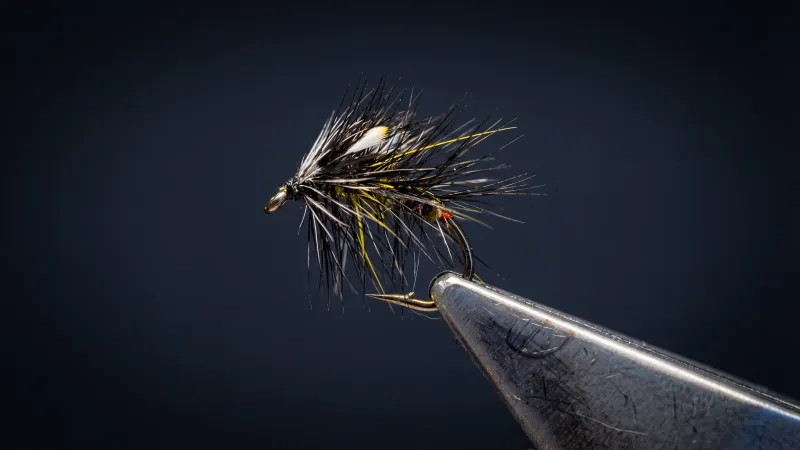
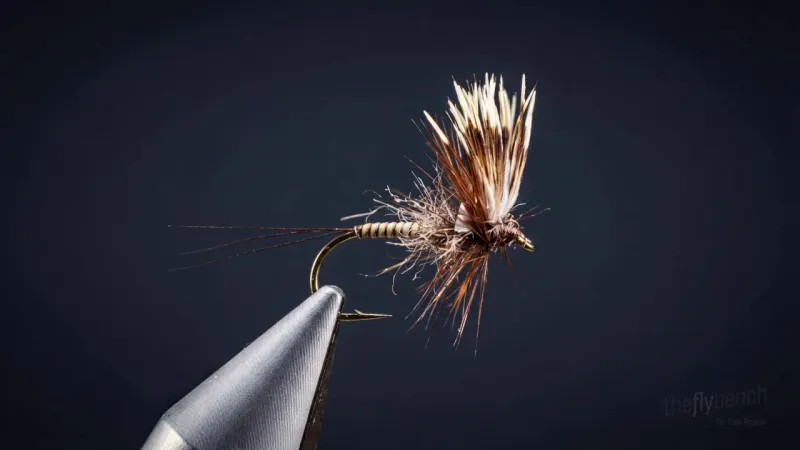
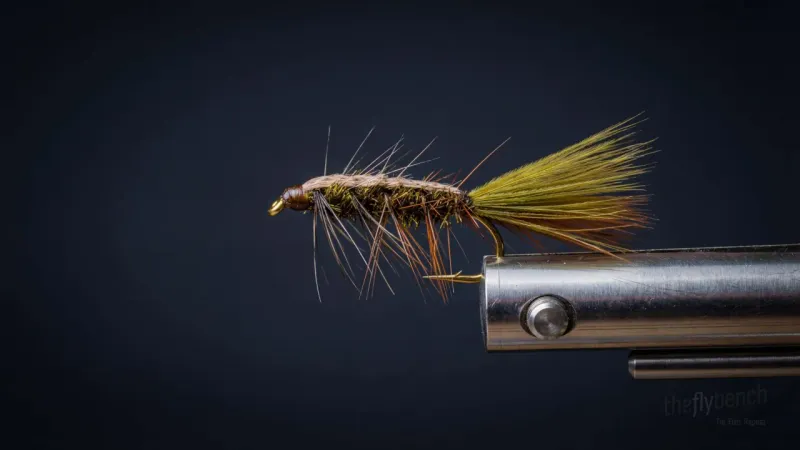
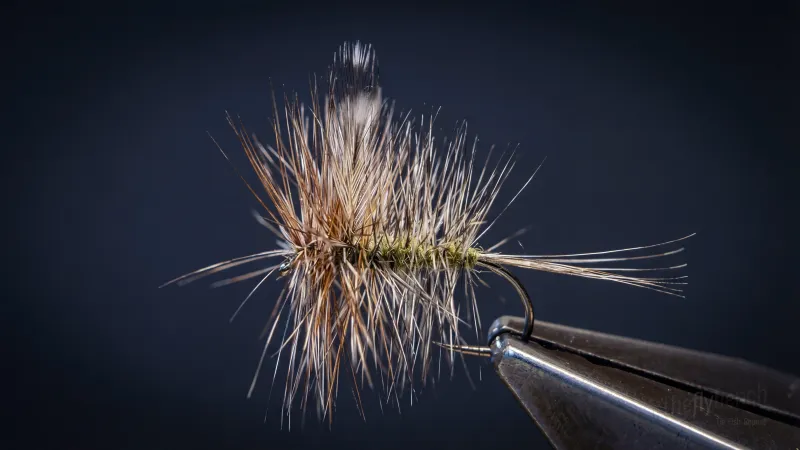
Hans Weilenmann's Red Ass Bumble builds a dark olive Argentinean hare body under palmered olive-dyed hen hackle, with a second hackle of olive French partridge in front for extra movement. A red thread butt at the base of the tail gives the fly its name and a small trigger point against the dark body.
Spring, Summer, Fall
Intermediate
Trout
Feb 2026
Overview
The body is dubbed from dark olive Argentinean hare fur over a gold wire rib, set off by a butt of exposed red tying thread at the base of the tail and a tail of olive-dyed pintail barbs. Olive-dyed hen hackle is palmered through the body for a bushy, mobile hackle, and a second hackle of olive French partridge is wound in front for a softer, buggier collar. The dark, palmered profile with a flash of red at the rear suggests a range of mayflies and caddis rather than one specific insect. It works as a searching pattern in moving water and stillwater through the open-water season.
Where to Buy This Fly
We only link to fly shops we trust. Some links are referral links, which may earn us a commission at no extra cost to you.
Materials
- Hook:
- Grip 14723BL #12
- Thread:
- Danville Flymaster 6/0, red
- Hackle:
- French partridge, dyed olive
- Body Hackle:
- Hen, dyed dark olive
- Rib:
- Wire, gold
- Tail:
- Pintail barbs, dyed olive
- Butt:
- Tying thread
- Body:
- Argentinean hare, dark olive
Behavior & Presentation
Natural Behavior: Large caddis species beat their wings audibly on the surface while attempting liftoff after egg-laying, sounding like tiny helicopters. The noise and vibration carry underwater, attracting fish from distance who associate these signals with oversized, energy-rich prey.
Where Trout Eat It: Designed for freestone streams with broken water and pocket water where trout make quick feeding decisions. The bushy profile handles turbulent currents while maintaining surface position.
How to Fish It: Cast upstream into pocket water and broken runs. The bright red trigger point and bushy profile attract aggressive strikes from opportunistic feeders in fast water.
Best Water: Best for prospecting pockets and runs where trout respond to bold, impressionistic presentations rather than exact imitations. The high-visibility design excels during opportunistic feeding periods.
Strike Type: In broken water, fish often attack this pattern aggressively with splashy, impulsive strikes. The bushy hackle triggers quick decisions—expect sudden surface eruptions or slashing takes in pocket water and fast runs.
Fishing Strategy
Rigging Suggestions: Fish on 7.5-9 foot leader with 3X-4X tippet. Heavier tippet matches aggressive nature and supports the bushy pattern through turbulent pocket water.
Seasonal Timing: Most effective during high-water periods April through June and terrestrial season July through September when water temperatures range 50-65°F. Aggressive feeding during mid-day periods produces reliable results with attractor presentations.
Pro Tips: Bright red floss triggers aggressive curiosity strikes in fast water where trout make instant feeding decisions. The palmered hackle creates large surface footprint that remains visible in choppy conditions where exact imitations disappear.
Entomology
Large caddis species beat their wings audibly on the surface while attempting liftoff after egg-laying, sounding like tiny helicopters. The noise and vibration carry underwater, attracting fish from distance who associate these signals with oversized, energy-rich prey.
- Order
- Trichoptera
- Common Name
- Caddisfly
- Organism Type
- insect
- Life Stage
- adult