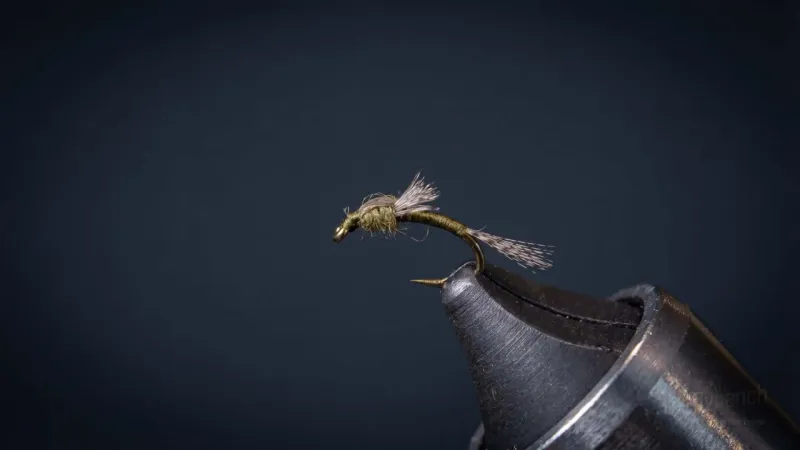
NymphRed Fox Squirrel Nymph
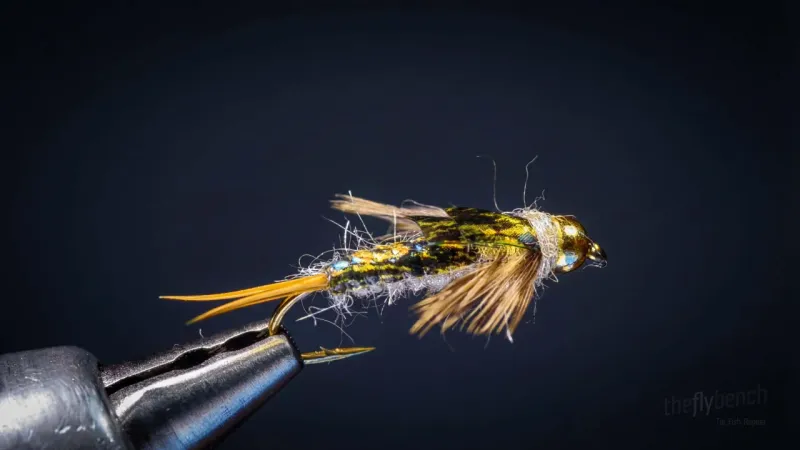
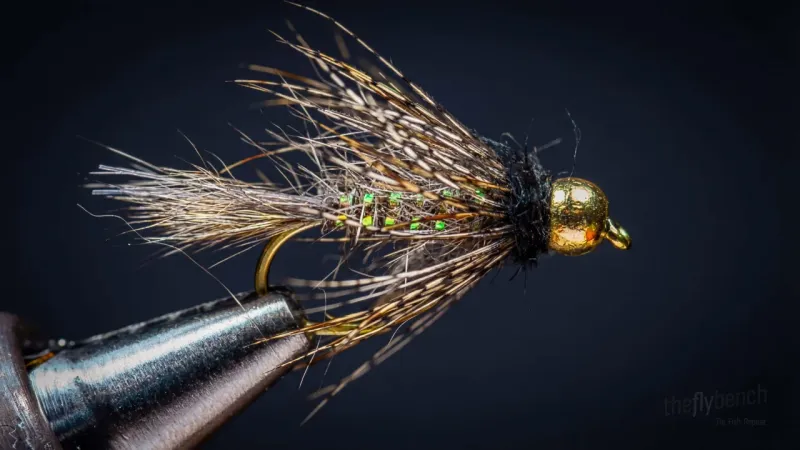
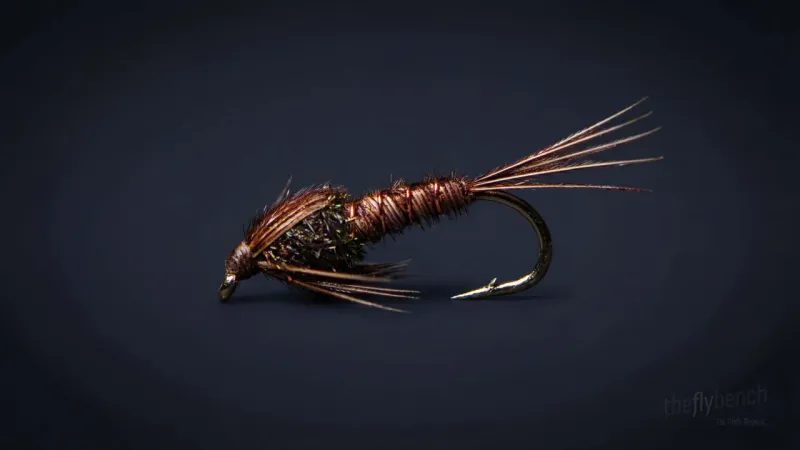
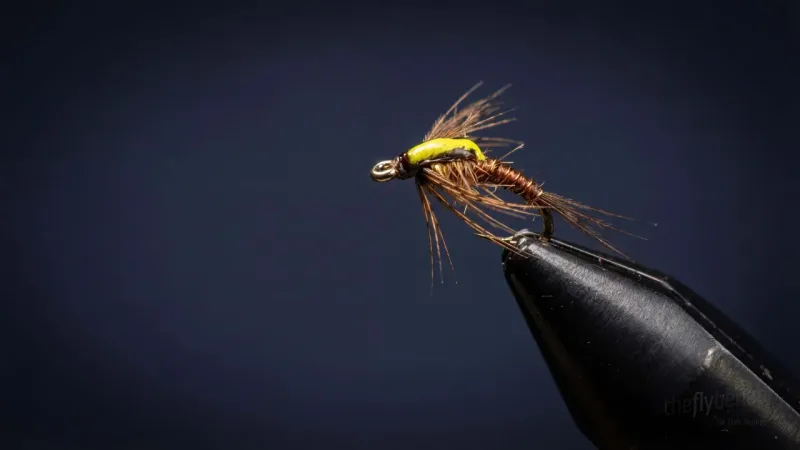
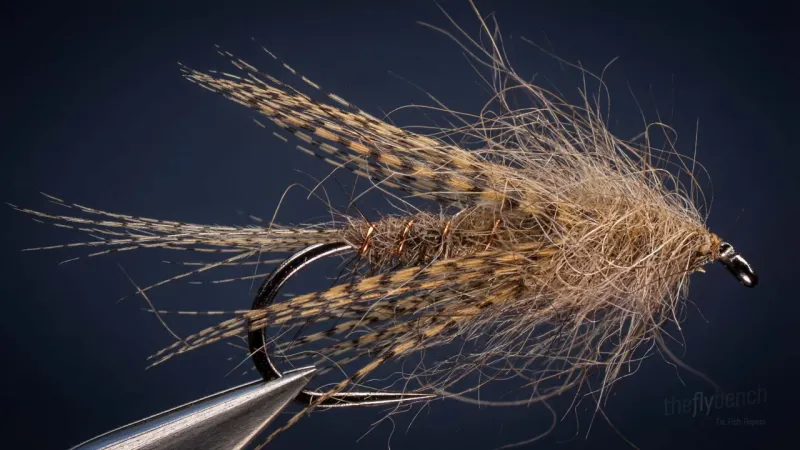
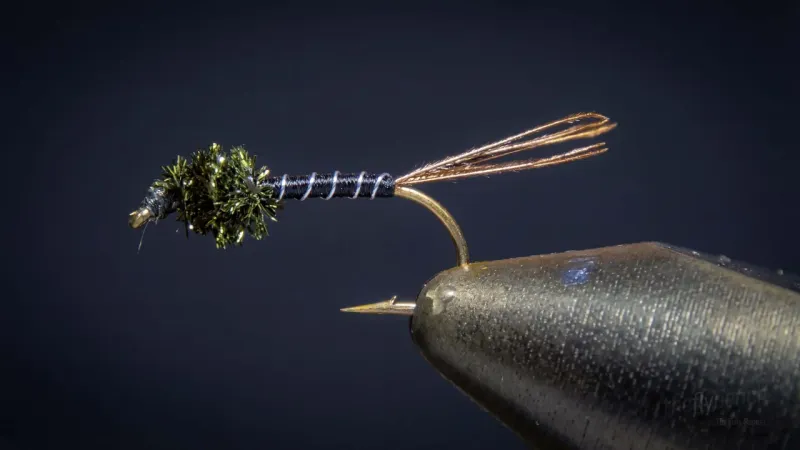
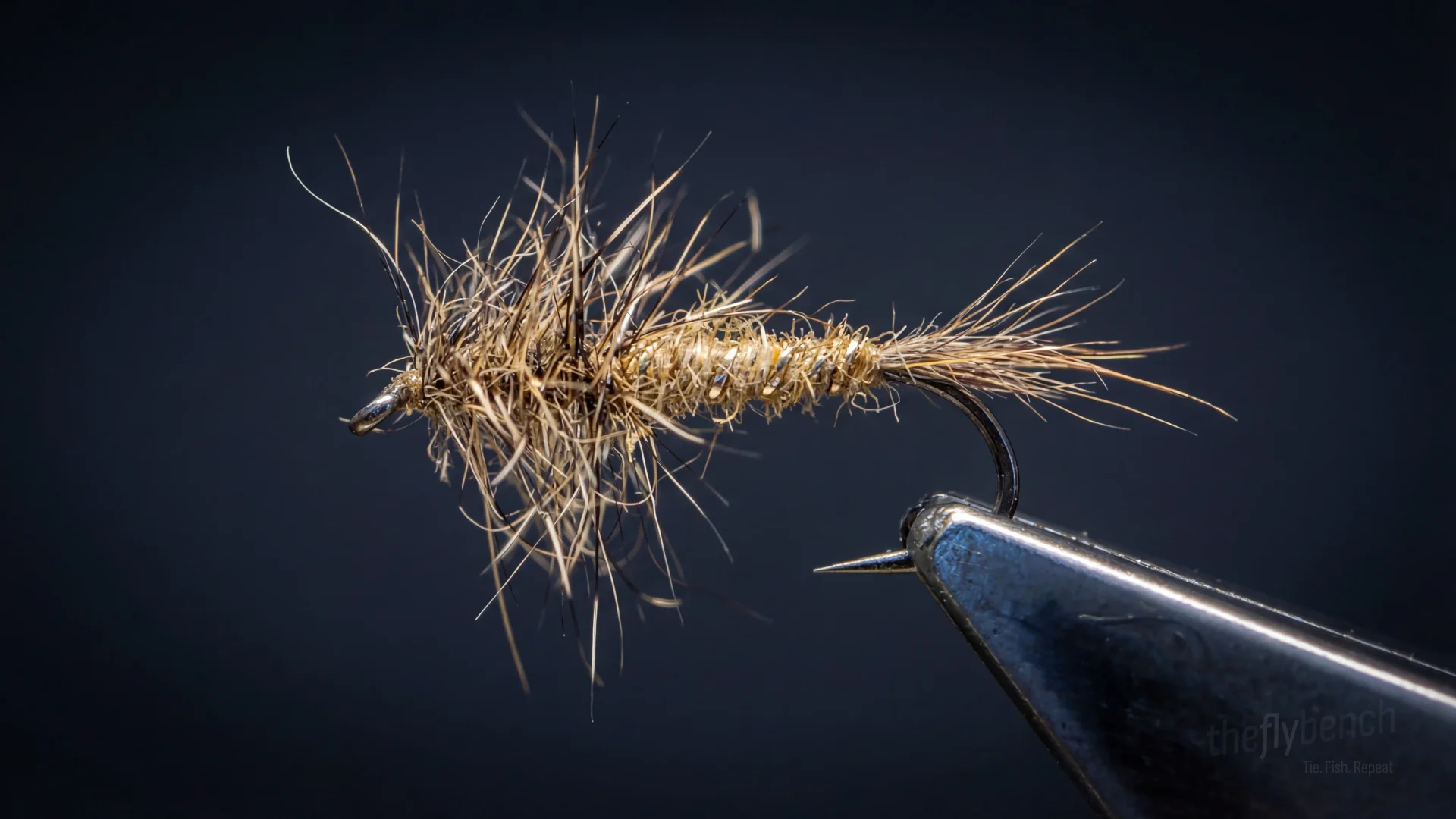
Dave Whitlock's Red Fox Squirrel Nymph blends the guard hairs and underfur of the namesake animal with pale olive SLF Finesse dubbing and amber antron for a naturally mottled abdomen. A sparse tail of squirrel guard hairs and a split-thread squirrel thorax give the fly a rough, buggy texture, with brown partridge legs optional for added movement.
Spring, Summer, Fall
Advanced
Trout
Feb 2026
Overview
Whitlock developed this fly to capture the natural blend of colors found in red fox squirrel fur, a mottled effect that's hard to replicate with synthetic dubbing alone; this recipe follows Hans Weilenmann's tying of the pattern. Fine gold oval tinsel ribs the abdomen for segmentation and a bit of flash without overpowering the dubbing underneath. It works as a general mayfly nymph searching pattern, fished dead drift along the bottom in freestone rivers.
Where to Buy This Fly
We only link to fly shops we trust. Some links are referral links, which may earn us a commission at no extra cost to you.
Materials
- Hook:
- Nymph hook 3XL #14
- Thread:
- Benecchi 12/0, tobacco
- Rib:
- Tinsel, gold fine oval
- Tail:
- Red Fox Squirrel guard hairs - sparse
- Abdomen:
- Red Fox Squirrel; SLF Finesse, pale olive; amber antron - mixed
- Thorax:
- Red Fox Squirrel - in split thread
- Legs (optional):
- Brown partridge
Behavior & Presentation
Natural Behavior: Mayfly nymphs drift helplessly in the current after being dislodged from rocks during floods or angler wading, tumbling along without control. Fish position themselves in feeding lanes to intercept these involuntary drifters who cannot resist being swept directly into waiting mouths.
Where Trout Eat It: Highly productive in freestone streams with rocky substrates, tailwaters with consistent flows, spring creeks, and lake near rocky shoals or weed beds.
How to Fish It: Dead drift at depth, maintaining constant contact with the fly through high-sticking or tight-line techniques. Use a slight upstream cast and follow the drift with your rod tip to detect subtle takes.
Best Water: Highly productive in freestone streams with rocky substrates, tailwaters with consistent flows, spring creeks, and lake near rocky shoals or weed beds.
Strike Type: Watch for subtle indicator taps, brief pauses, or slight line tightening as fish mouth the drifting nymph. The spiky dubbing profile generates takes that may feel soft initially but become more distinct as trout close their mouths.
Fishing Strategy
Rigging Suggestions: Fish on a 9-12 foot leader with 4X-5X tippet. Add split shot 12-18 inches above the fly to reach the bottom quickly. Use a strike indicator in deeper runs or euro-nymphing techniques in pocket water.
Seasonal Timing: Productive year-round with peak effectiveness from April through October. Particularly effective during runoff (May-June) and feeding periods (September-November) when trout feed aggressively on large mayfly nymphs.
Pro Tips: The buggy profile and natural fox squirrel dubbing creates excellent movement in the current. Vary retrieve speed in lake to imitate swimming nymphs. Sizes 8-14 cover most situations.
Entomology
Mayfly nymphs drift helplessly in the current after being dislodged from rocks during floods or angler wading, tumbling along without control. Fish position themselves in feeding lanes to intercept these involuntary drifters who cannot resist being swept directly into waiting mouths.
- Order
- Ephemeroptera
- Common Name
- Mayfly
- Organism Type
- insect
- Life Stage
- nymph