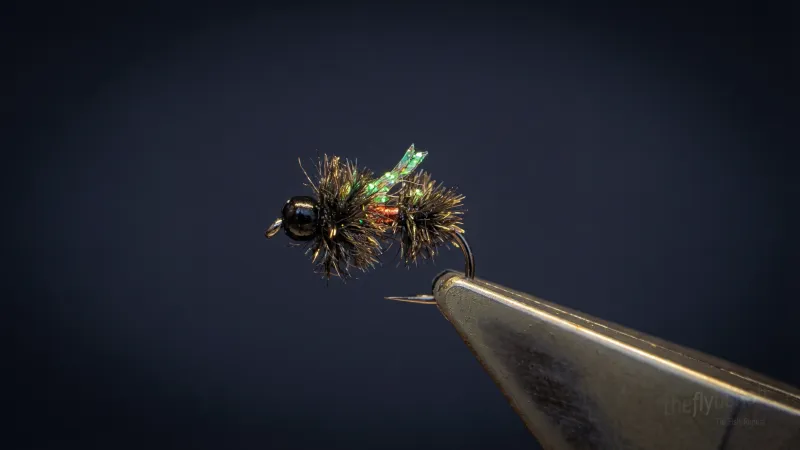
NymphSawyer Pheasant Tail Nymph
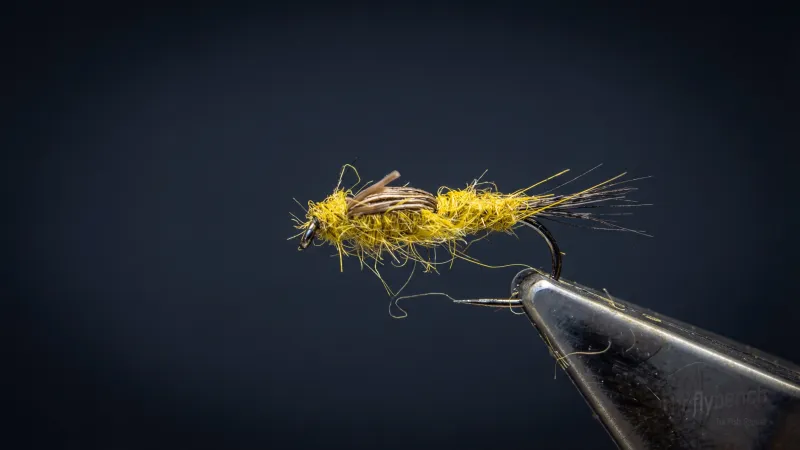
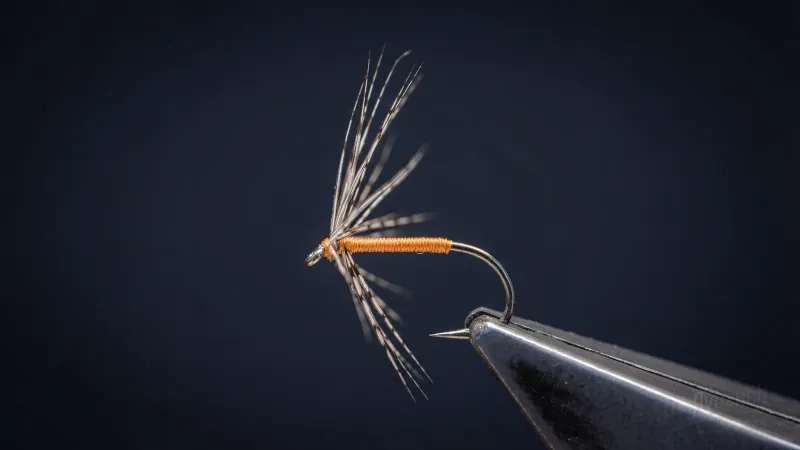
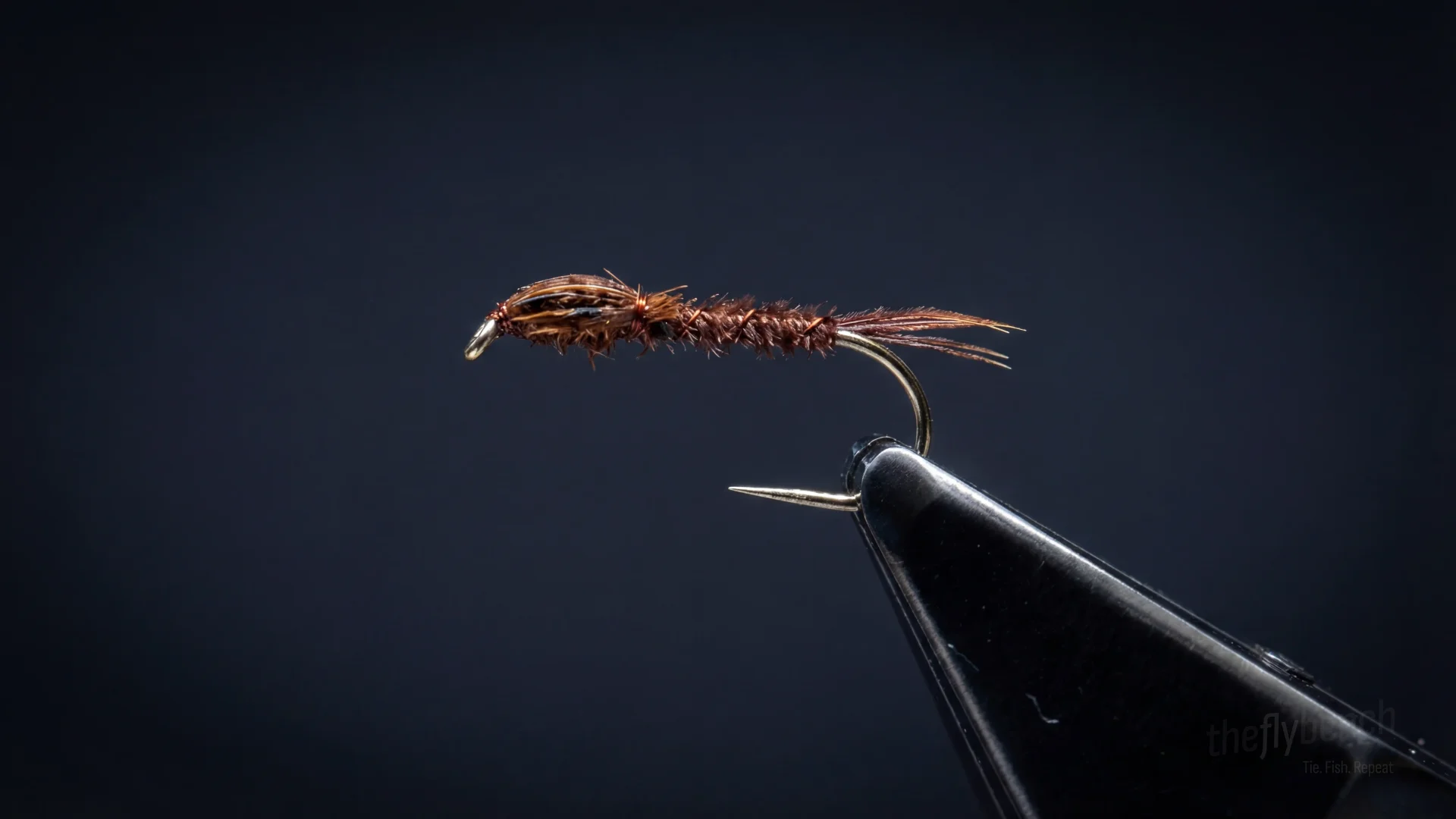
The Sawyer Pheasant Tail Nymph reduces the mayfly nymph to two materials: pheasant tail barbs wound over bare copper wire, with no tying thread at all. Frank Sawyer built it that way to sink fast and sit slim in clear water. The wire itself forms the segmented body, rib, and weight in one piece.
Spring, Summer, Fall
Intermediate
Trout
Feb 2026
Overview
Copper wire wound directly onto a barbless Partridge hook builds thread, weight, and rib together, while pheasant tail barbs form the tail, abdomen, thorax, and wingcase from a single wrapped material. That construction gives a slim, quick-sinking profile with none of the bulk a dubbed body would add. Frank Sawyer designed it to imitate mayfly nymphs drifting near the streambed on English chalkstreams. A slow lift of the rod partway through the drift twitches the fly upward, imitating a nymph swimming toward the surface.
Where to Buy This Fly
We only link to fly shops we trust. Some links are referral links, which may earn us a commission at no extra cost to you.
Materials
- Hook:
- Partridge BIN (Barbless Ideal Nymph) #10-#18
- 'Thread'/weight/rib:
- Copper wire, dark
- Tail/abdomen/thorax/wingcase:
- Pheasant tail barbs
Behavior & Presentation
Natural Behavior: Mayfly nymphs cling to rocks and weed beds in the current, releasing their grip and drifting when currents shift or when nearing emergence, then swimming toward the surface in short pulses.
Where Trout Eat It: Trout hold in seams and current lanes close to the bottom, picking off nymphs as they tumble free of the substrate or begin their swim upward.
How to Fish It: Dead-drift it near the bottom on a light leader, or lift the rod tip gently partway through the drift to swing the fly upward and trigger a take on the rise.
Best Water: Moving water with clean gravel or weed growth, plus stillwater margins where nymphs migrate along the bottom before a hatch.
Strike Type: Trout typically take with a subtle sip or a firm pull as the nymph rises, often signaled only by a twitch of the leader rather than a visible rise.
Fishing Strategy
Rigging Suggestions: Fish it on a fine tippet under a strike indicator or on a tight-line nymphing rig, sized #10-18 to match the natural nymphs present.
Seasonal Timing: Effective from spring through fall whenever mayfly nymphs are active and moving toward the banks or surface ahead of a hatch.
Pro Tips: Watch the leader instead of a strike indicator when possible; a slight pause or twitch signals a take on the lift, the moment Sawyer designed the pattern to exploit.
Entomology
Mayfly nymphs crawl over submerged gravel and vegetation, holding position in the current, and swim in short wiggling bursts when dislodged or preparing to emerge.
- Order
- Ephemeroptera
- Common Name
- Mayfly
- Organism Type
- insect
- Life Stage
- nymph