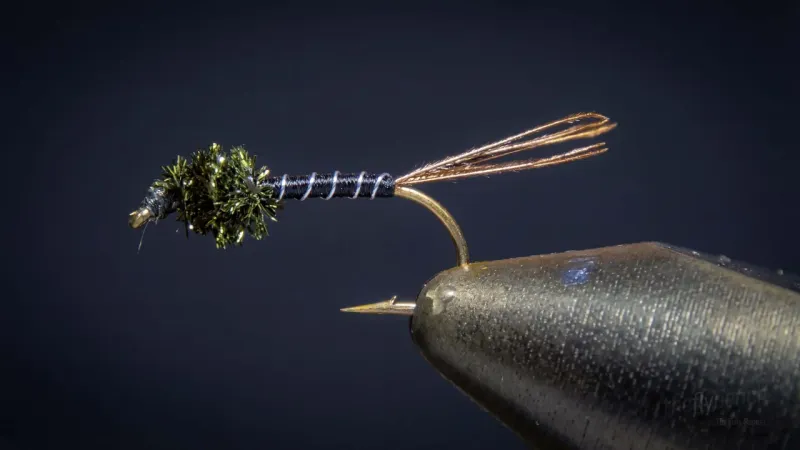
NymphSofthackle with Split Thread Ribbing and Thorax
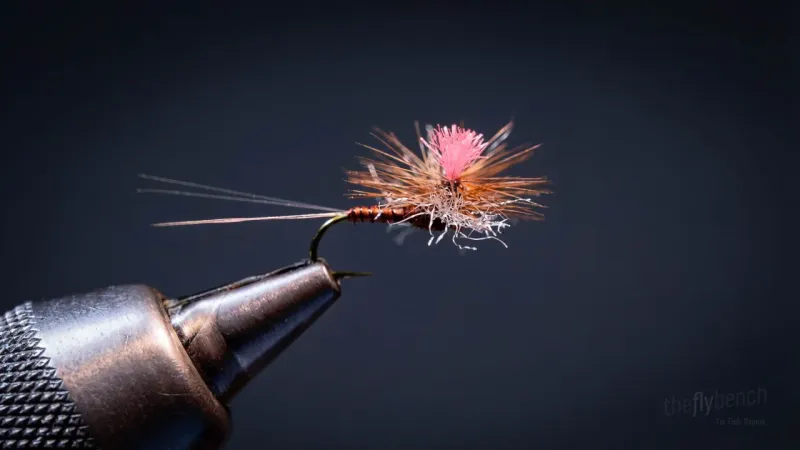
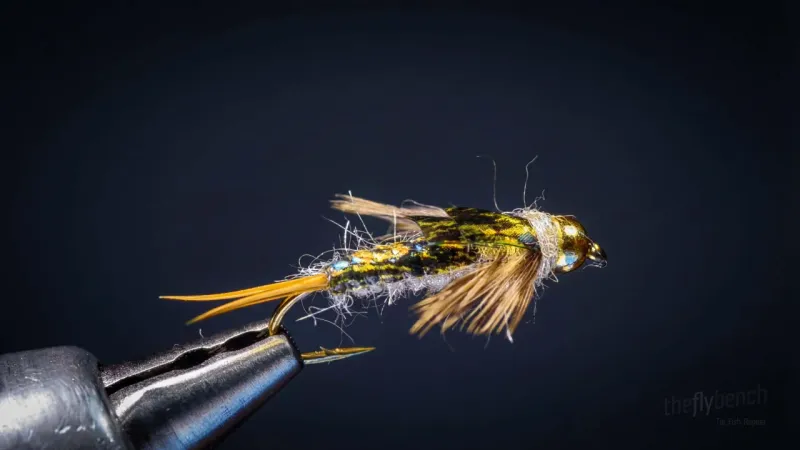
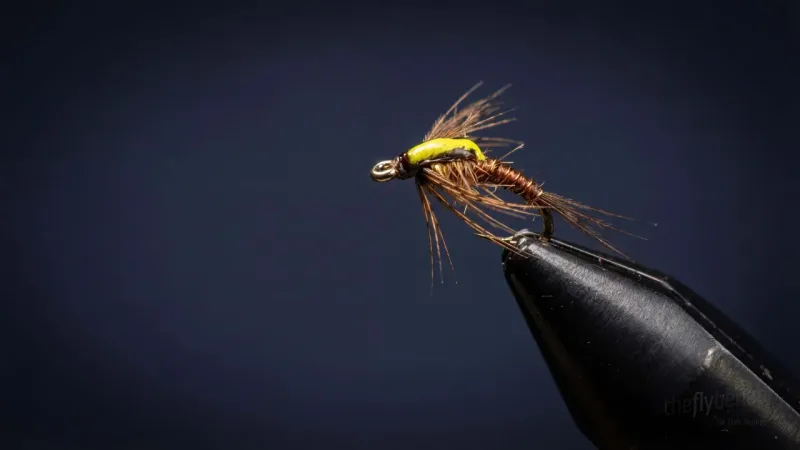
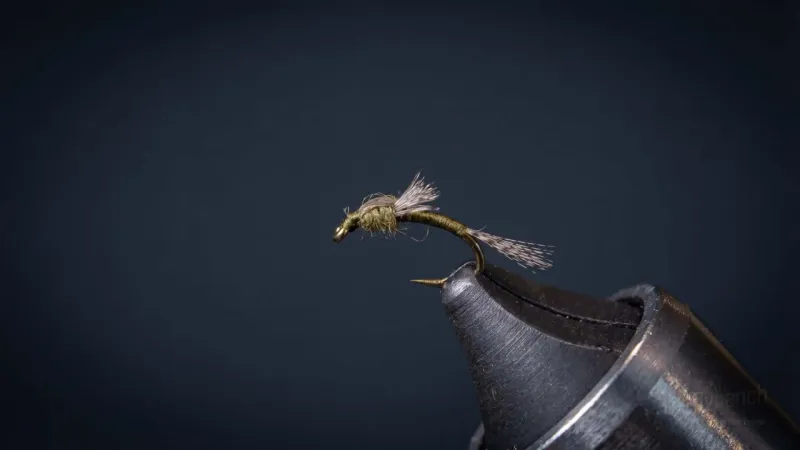
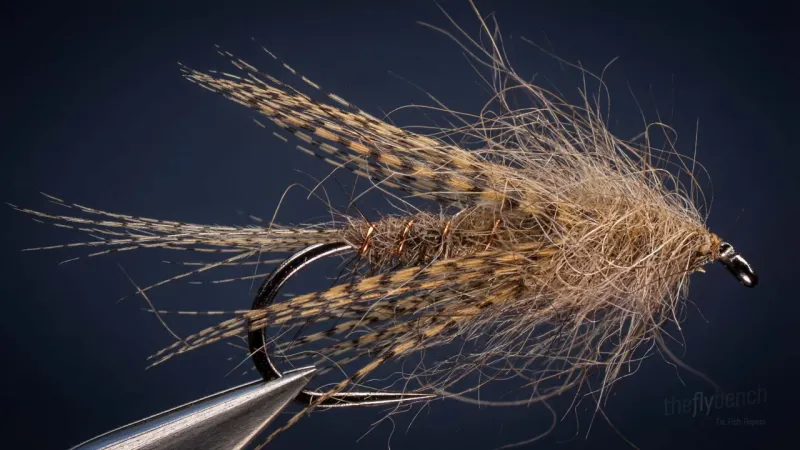
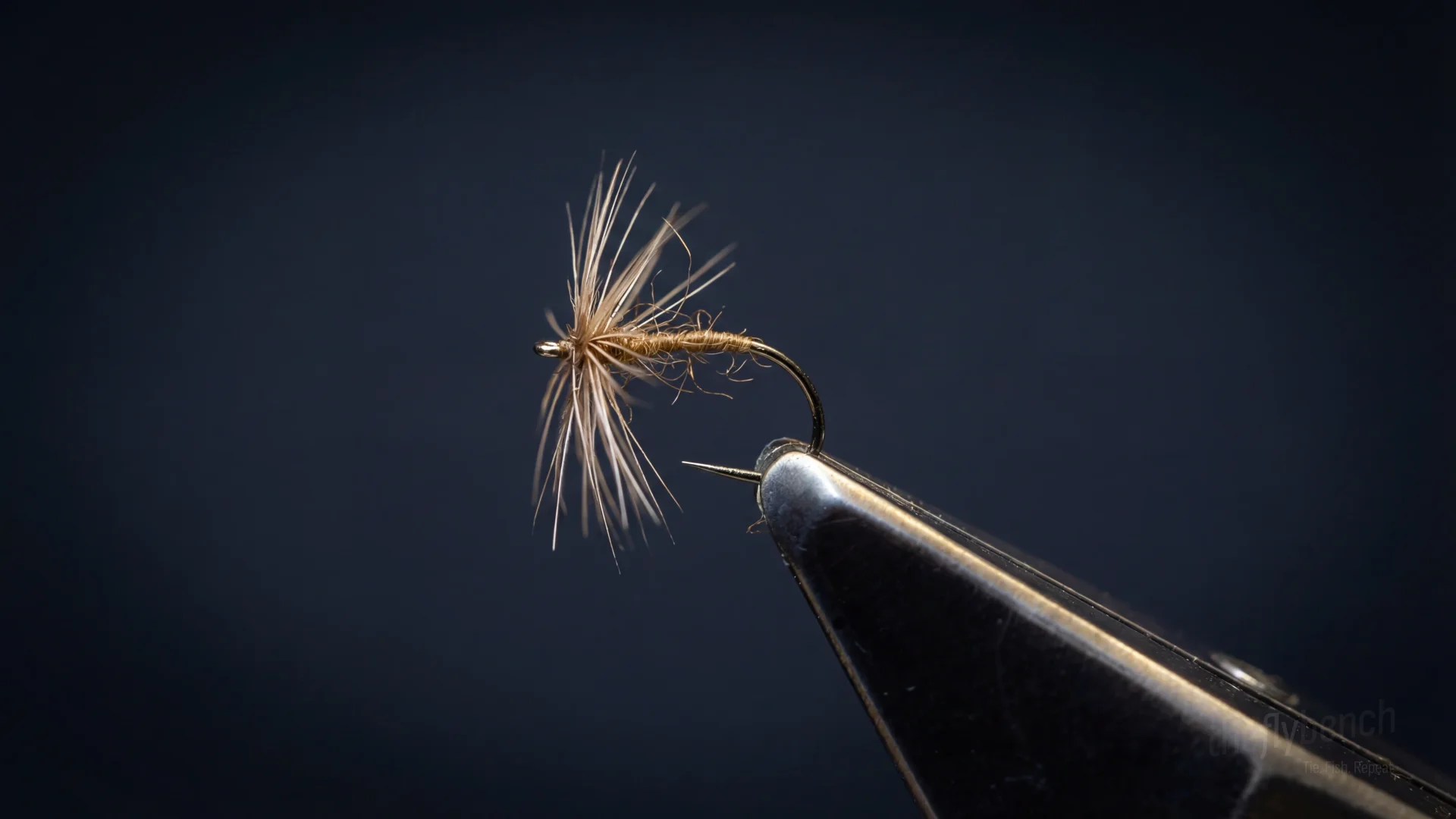
This split-thread soft-hackle spins dark brown beaver fur into a dubbing loop for both the rib and thorax, producing a fuzzy, segmented body over a bare-thread abdomen. A sparse Coq de Leon hen hackle suggests the legs of a mayfly nymph as trout intercept it during pre-emergence drift in moving water and stillwaters.
Spring, Summer, Fall
Intermediate
Trout
Feb 2026
Overview
Split-thread dubbing lets beaver fur guard hairs stand out from the body rather than compress flat, giving the fly more movement in current than a conventionally dubbed rib. Keeping the abdomen down to bare thread contrasts against the fuzzier thorax, mimicking the segmented look of a natural nymph. Fish it dead-drift through riffles in spring and summer when mayfly nymphs migrate toward faster water ahead of a hatch.
Where to Buy This Fly
We only link to fly shops we trust. Some links are referral links, which may earn us a commission at no extra cost to you.
Materials
- Materials used:
- Hook: Grip 14723BL #14; Thread: Benecchi 12/0, tan; Hackle: Whiting Coq de Leon hen; Abdomen: Tying thread; Rib: Beaver, dyed dark brown - in split thread; Thorax: Beaver, dyed dark brown - in split thread
Behavior & Presentation
Natural Behavior: Fish gorge when nymphs mass in predictable zones before hatching begins. Anglers target these pre-hatch concentrations with nymph patterns because the feeding activity reaches peak intensity.
Where Trout Eat It: Fish intercept migrating nymphs at mid-column in runs, riffles, seams, pool tail-outs, rocky shoals, and near weed beds.
How to Fish It: Dead drift at depth using high-stick or euro techniques, or traditional wet fly swing. The soft hackle pulses while split thread mimics natural segmentation.
Best Water: Target riffles, runs, pool tail-outs, current seams, rocky shoals, and weed bed edges where nymphs stage before ascending to emerge.
Strike Type: Watch for indicator dips or subtle tightening. Strikes feel like hesitation in drift or slight resistance during swing.
Fishing Strategy
Rigging Suggestions: 9-12ft 4X-5X leader. Add split shot 12-18 inches above for depth or fish unweighted for wet fly swing. Solo or traditional team of 2-3 wet flies.
Seasonal Timing: Peak during spring mayfly emergences (April-June) when water hits 50-60°F and fall (September-October). Year-round in tailwaters because stable flows maintain insect activity.
Pro Tips: Split thread creates segmentation matching natural cuticles. Thorax adds bulk where insects have more mass. Sizes 12-16 most versatile. Bridges traditional wet flies and modern nymphing.
Entomology
During peak activity periods, mayfly nymphs migrate toward shallower water and faster current seams in preparation for emergence. Trout recognize this pre-emergent behavior and gorge on the concentrated nymphs as they move into predictable migration routes.
- Order
- Ephemeroptera
- Common Name
- Mayfly
- Organism Type
- insect
- Life Stage
- nymph