Midge / EmergersSimple Midge Larva
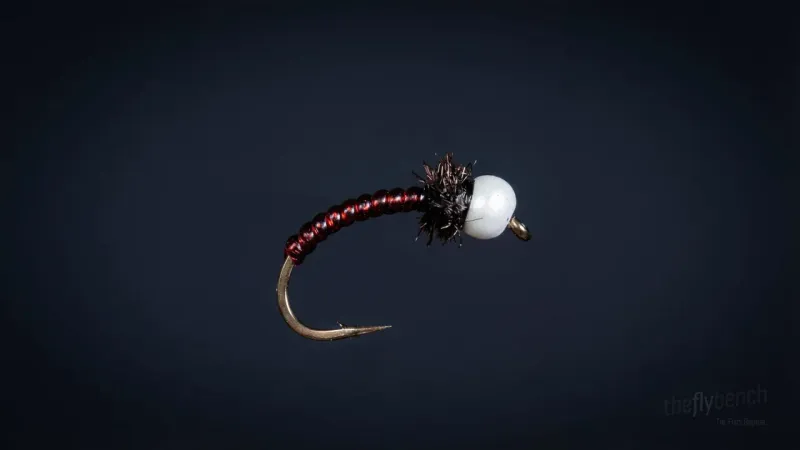
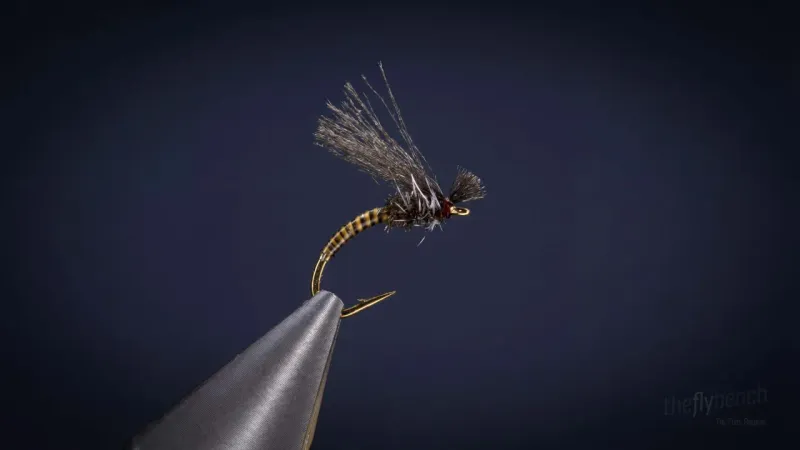
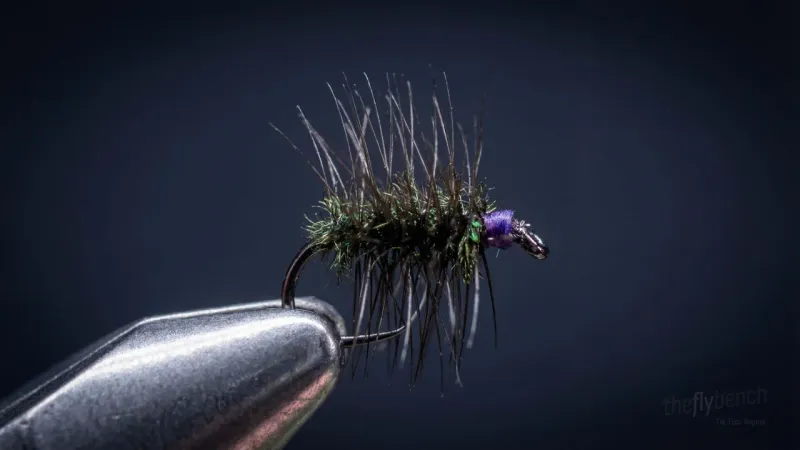
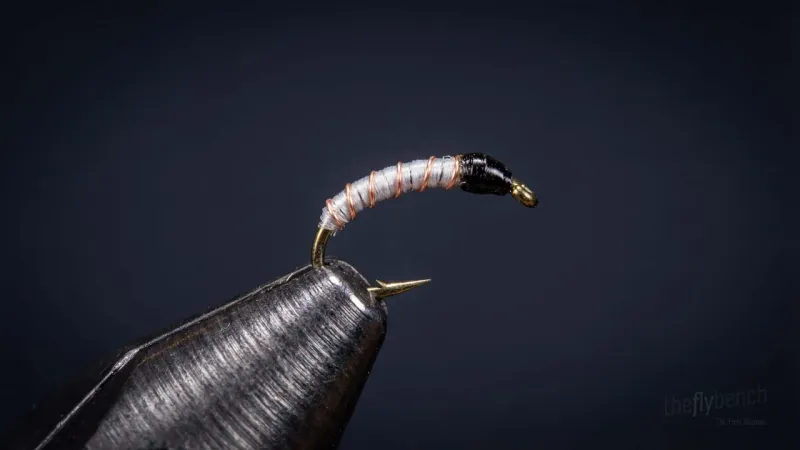
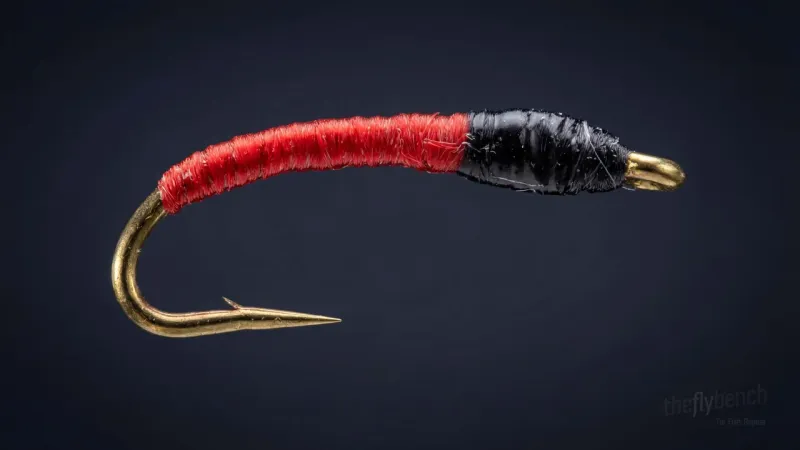
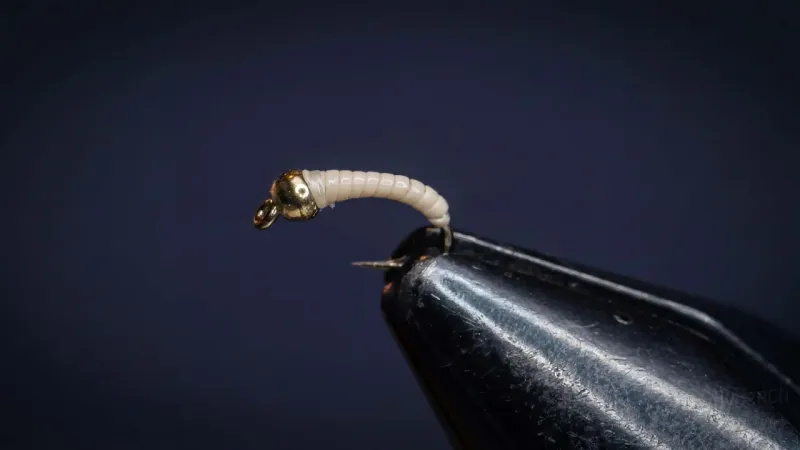
The Simple Midge Larva is a minimalist, yet effective pattern that closely imitates the natural midge larva found in many bodies of water. Its slender profile and subtle colors make it a great choice for clear water and picky fish.
Year Round
Beginner
Trout, Grayling
Apr 2025
Overview
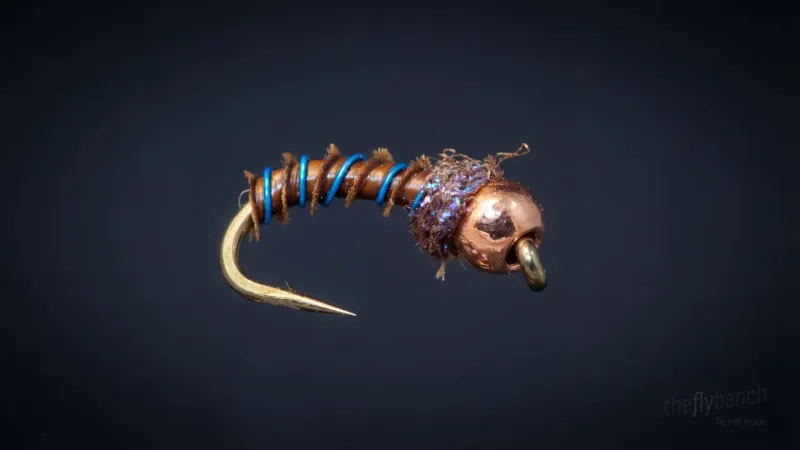
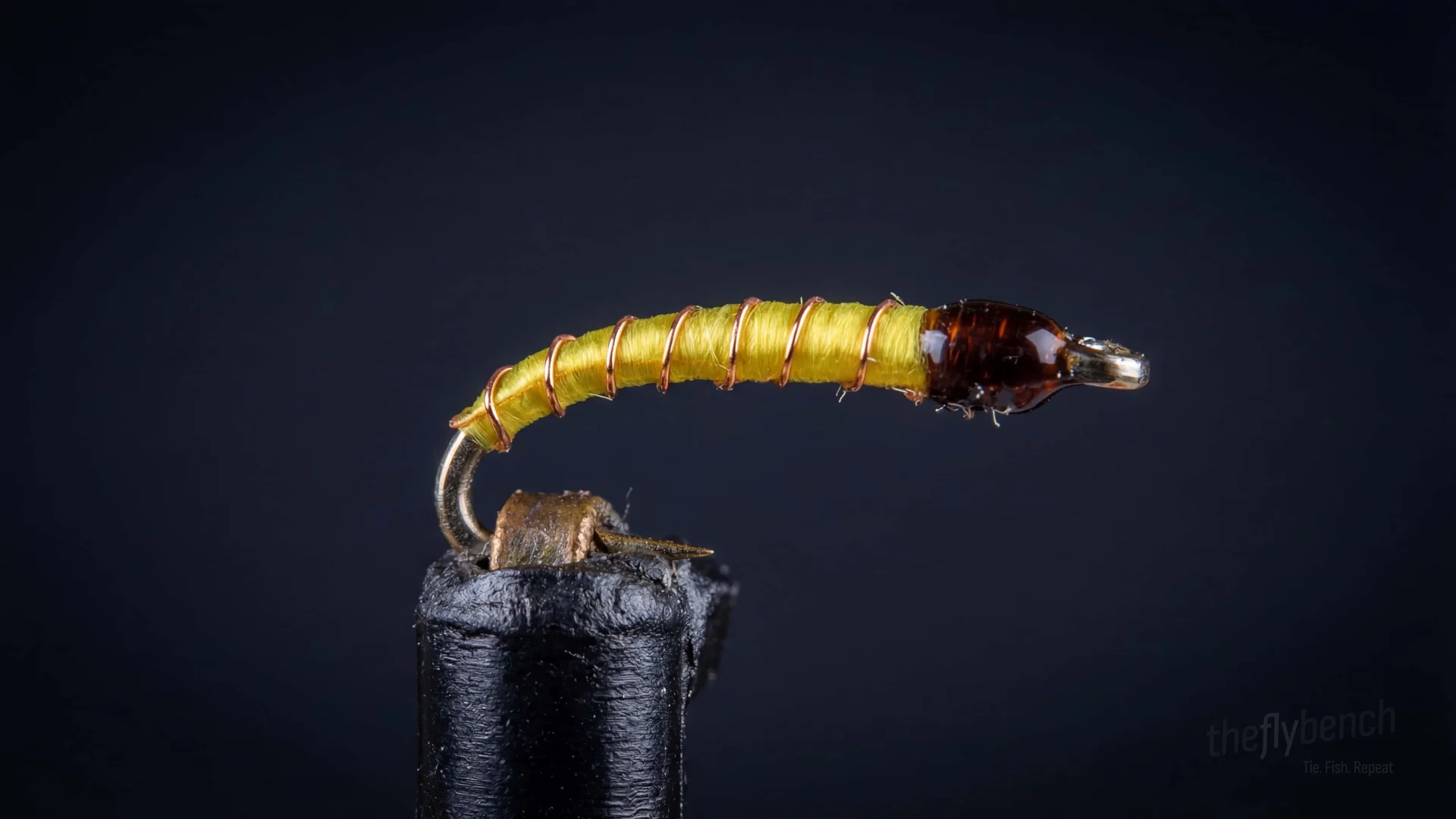
A thread-based midge larva with a slender profile and wire ribbing for segmentation. Often finished with a small tungsten bead or resin coat. Tied in red, black, or olive — it's easy to tie in bulk and effective year-round in tailwaters.
Where to Buy This Fly
We only link to fly shops we trust. Some links are referral links, which may earn us a commission at no extra cost to you.
Materials
- Hook:
- 3X-long natural-bend hook (here a Dai-Riki 270), size 24
- Thread/Body:
- 8/0 or UTC 70 Denier, yellow
- Rib:
- Ultra wire, extra-small, copper
- Head:
- Tying thread, colored with a dark brown permanent marker
Behavior & Presentation
Natural Behavior: Midge larvae exhibit a distinctive undulating swimming motion through the water column, their slender segmented bodies creating an irresistible wiggle as they drift or actively swim between substrate and surface.
Where Trout Eat It: Trout feed on drifting larvae in slow tailwater runs 2-10 feet deep, spring creek pools with gravel substrate, and lake shoals with silt bottom.
How to Fish It: Dead drift near bottom with split shot 8 inches above fly. Lift rod tip slowly at drift's end to imitate rising pupae.
Best Water: Smooth tailwater pools with consistent depth, spring creek slicks over gravel, and slack water in back eddies where larvae concentrate.
Strike Type: Indicator movement is minimal—watch for tiny hesitations, sideways drifts, or slight depth changes signaling a take.
Fishing Strategy
Rigging Suggestions: Use 9-12 foot leaders with 6X or 7X tippet. Micro strike indicators or dry-dropper rigs help detect subtle takes. Additional split shot may be needed to reach bottom in deeper or faster water.
Seasonal Timing: Year-round effectiveness with peak productivity during months (December-February) and early (March-April) when midges dominate aquatic insect populations.
Pro Tips: The subtle coloration blends naturally with most midge larvae, making it effective when fish are highly selective. Fish multiple patterns at varied depths using tandem rigs to locate feeding zone quickly.
Entomology
Midge larvae exhibit a distinctive undulating swimming motion through the water column, their slender segmented bodies creating an irresistible wiggle as they drift or actively swim between substrate and surface. Fish consume them year-round as a reliable protein source, particularly in stillwaters and tailwaters where midges dominate the biomass.
- Order
- Diptera
- Family
- Chironomidae
- Common Name
- Midge
- Organism Type
- insect
- Life Stage
- general