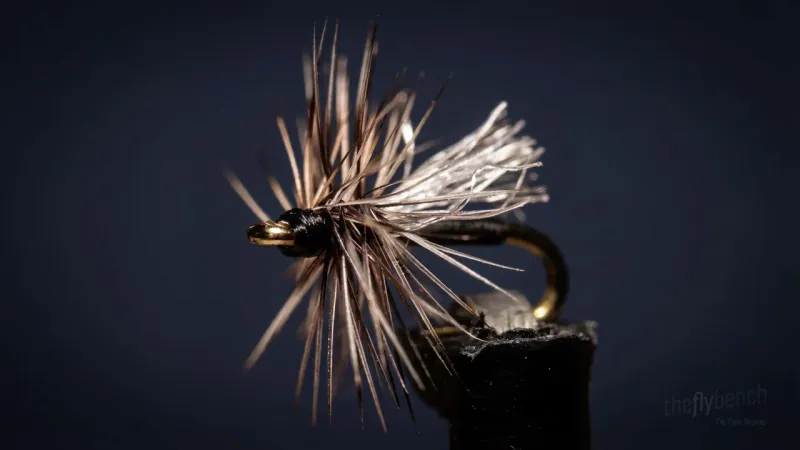
Dry FliesGnatty Ice
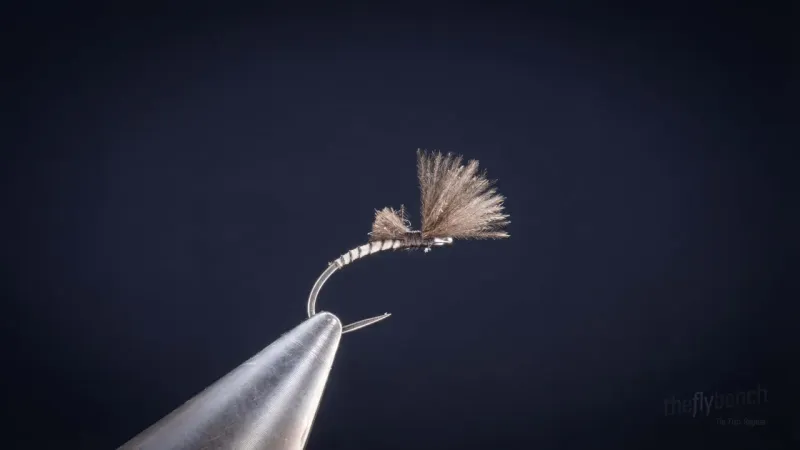
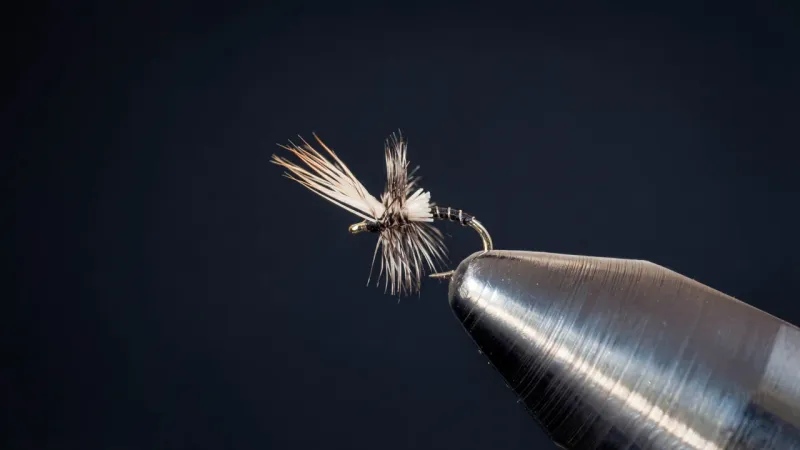
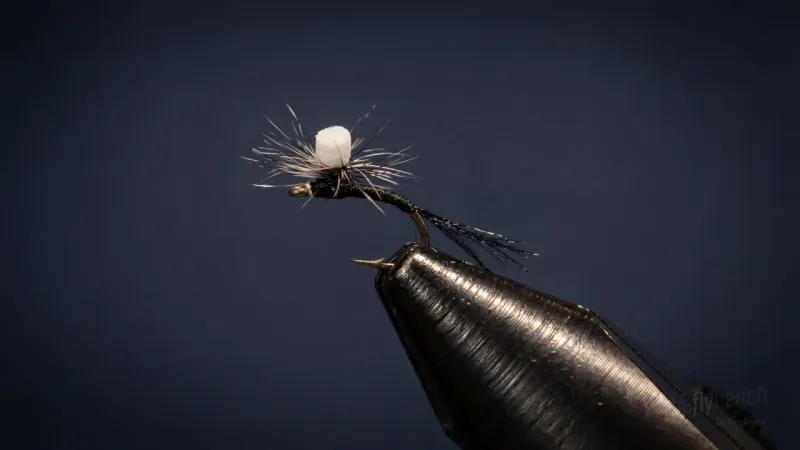
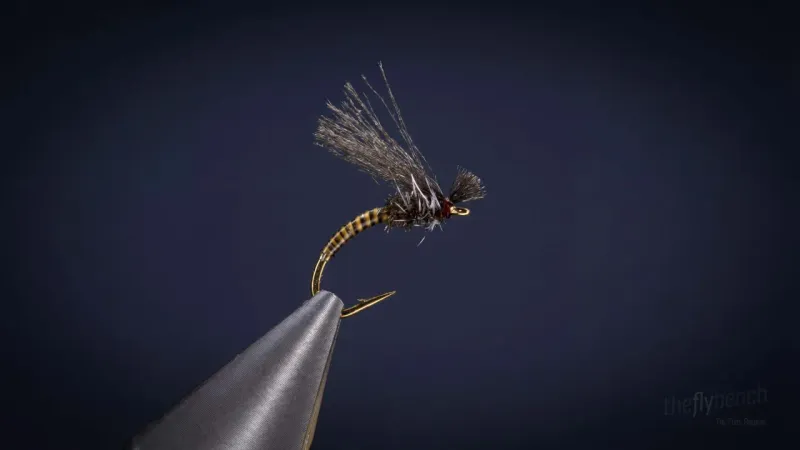
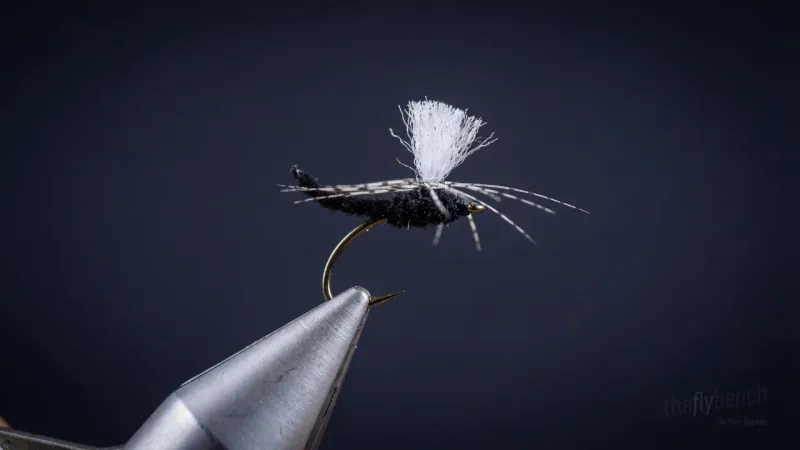
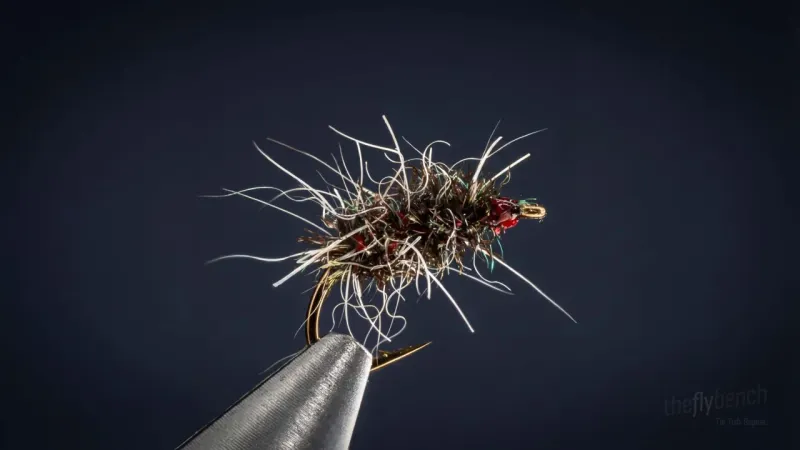
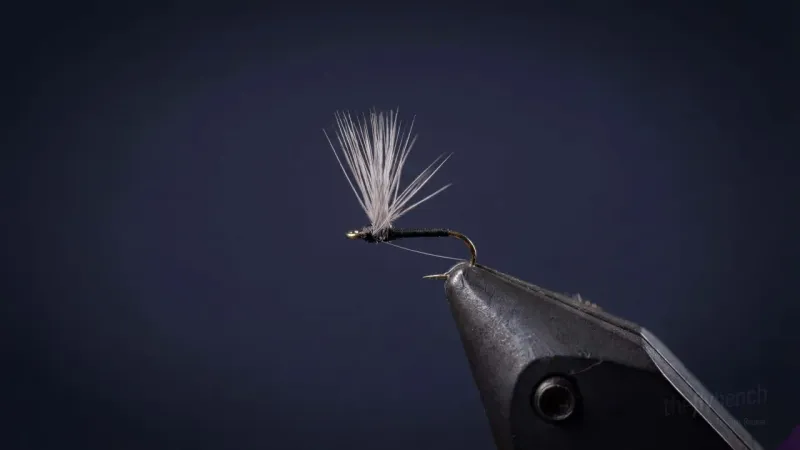
The Gnatty Ice is a small midge cluster imitation that excels during winter and early spring midge activity. Its peacock ice dub body creates a subtle sparkle that attracts fish in flat water conditions. The white EP fiber wings provide excellent visibility for the angler while maintaining a realistic profile.
Year Round
Beginner
Trout
Dec 2025
Overview
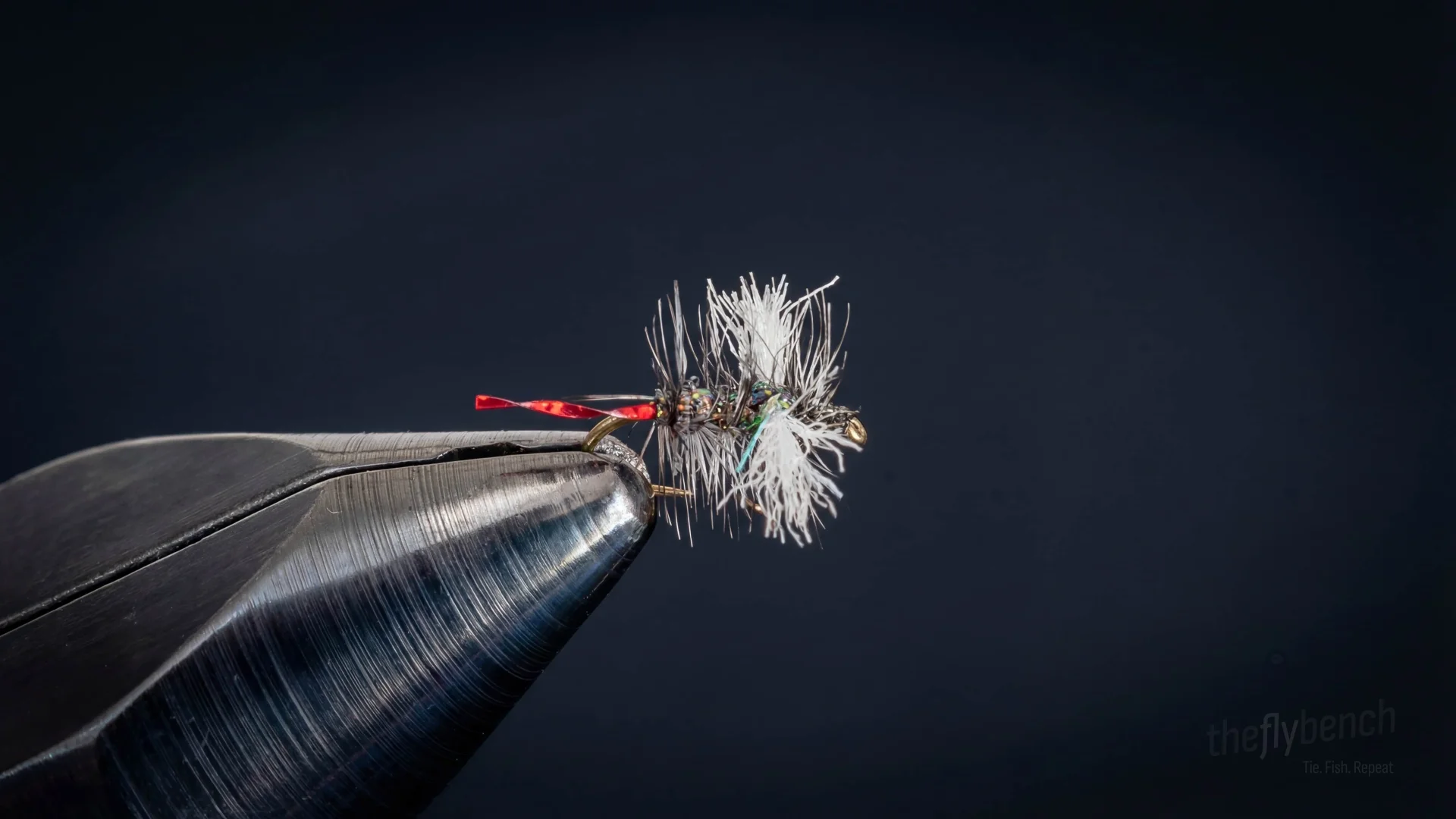
The Gnatty Ice was developed at Blue Ribbon Flies as a reliable midge cluster pattern for technical spring creek fishing. The red Krystal Flash tail adds a subtle trigger point that can make the difference when fish are being selective. This pattern works particularly well on tailwaters where midge activity occurs year-round.
Materials
Hook: Tiemco 100, #20
Thread: Semperfli Classic Waxed Thread, 12/0, black
Tail: Krystal Flash, red
Body: Peacock Ice Dub
Wing: EP Sculpt-A-Fly Fibers, white
Hackle: Grizzly dry fly hackle
Behavior & Presentation
Natural Behavior: Midges emerge in subfreezing conditions and remain motionless for extended periods while wings dry in cold air. Adults cluster densely along current edges where warmer water facilitates emergence, creating concentrated aggregations that appear as dark scum in the surface film where individual insects hang vertically or drift with minimal movement.
Where Trout Eat It: Fish feed selectively on midges in Henry's Fork and Madison River slow-moving tail-outs and slicks where surface film concentrations form. Target fish sipping in foam lines and eddy margins where midge clusters accumulate.
How to Fish It: Dead drift in feeding lanes with precise depth control. Because midges are so small and plentiful, fish won't move far—place the fly directly in the feeding lane. Use slow drifts matching natural midge cluster movement.
Best Water: Spring creek flats with complex microcurrents, tailwater slicks below riffles, and slow eddies where midges cluster in smooth water adjacent to faster currents.
Strike Type: Watch for deliberate sipping rises—fish intercept clustered midges with rhythmic takes in tight feeding lanes, requiring visual tracking since the tiny #20 pattern disappears easily in complex microcurrents.
Fishing Strategy
Rigging Suggestions: Fish on 12-15 foot leader with 6X-7X tippet. Can be fished alone or as part of a multi-fly rig with a larger dry fly as an indicator.
Seasonal Timing: with peak performance during winter and early spring when midges are the primary food source. Particularly productive on cold, overcast days when fish focus on small insects.
Pro Tips: Rides high in the surface film thanks to the sparse grizzly hackle.
Entomology
Adult midges emerge through the surface film in cold-weather conditions, often remaining motionless for extended periods as their wings dry in subfreezing air. These tiny dipterans cluster in dense congregations along current edges where warmer water facilitates emergence, creating concentrated feeding opportunities. Despite their minute size, winter midges provide critical sustenance during periods of low insect activity, and fish develop specialized feeding patterns to harvest them efficiently.
- Order
- Diptera
- Family
- Chironomidae
- Common Name
- Midge
- Organism Type
- insect
- Life Stage
- adult