Midge / EmergersGinny Midge
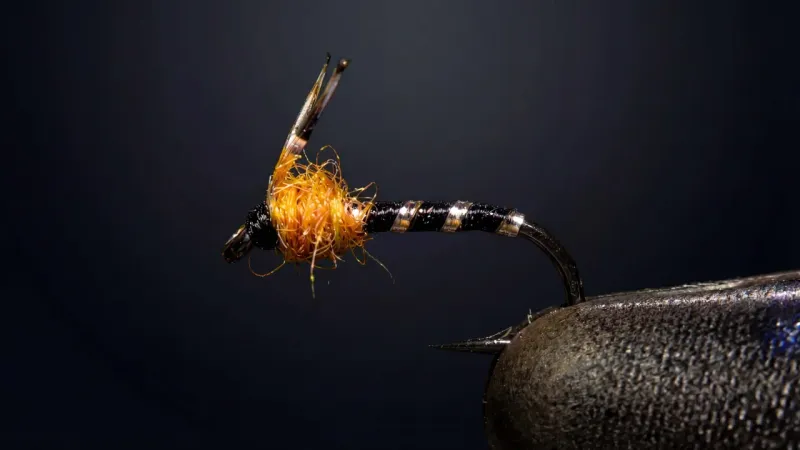
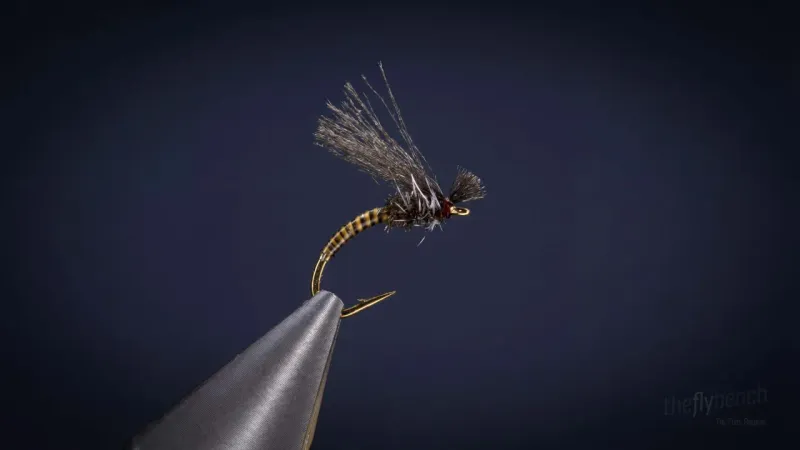
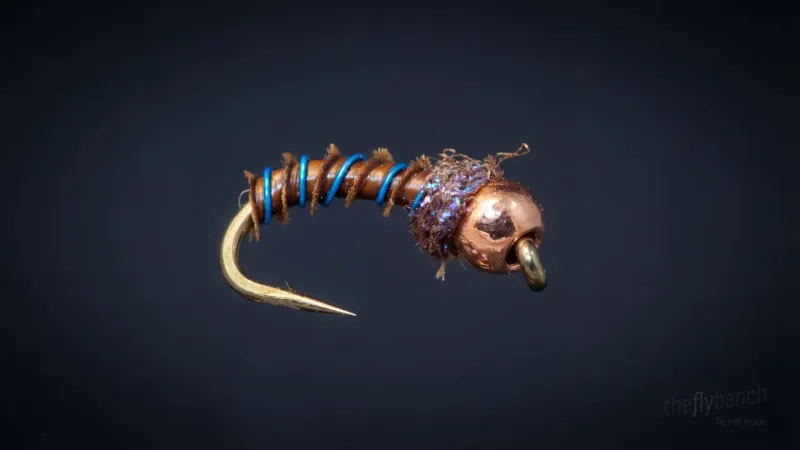
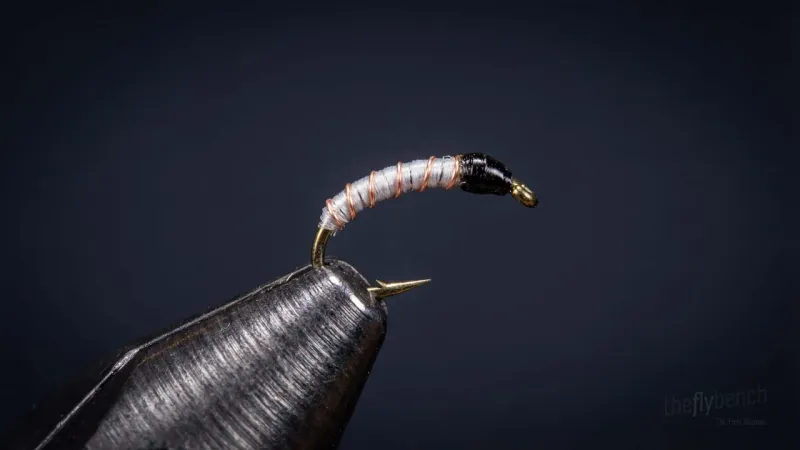
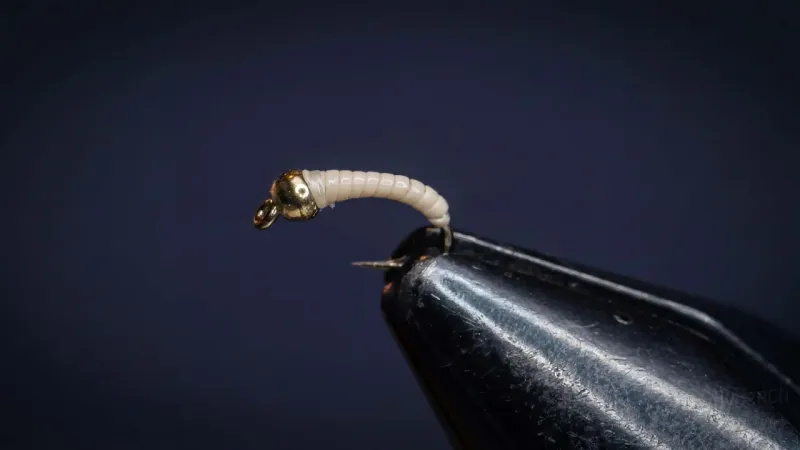
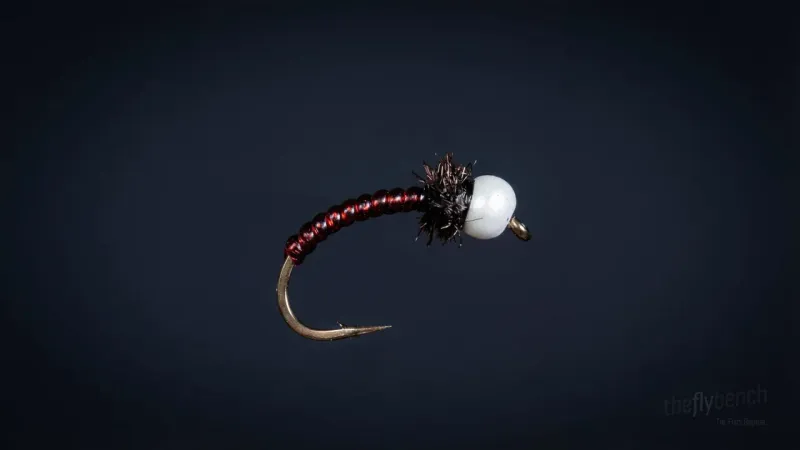
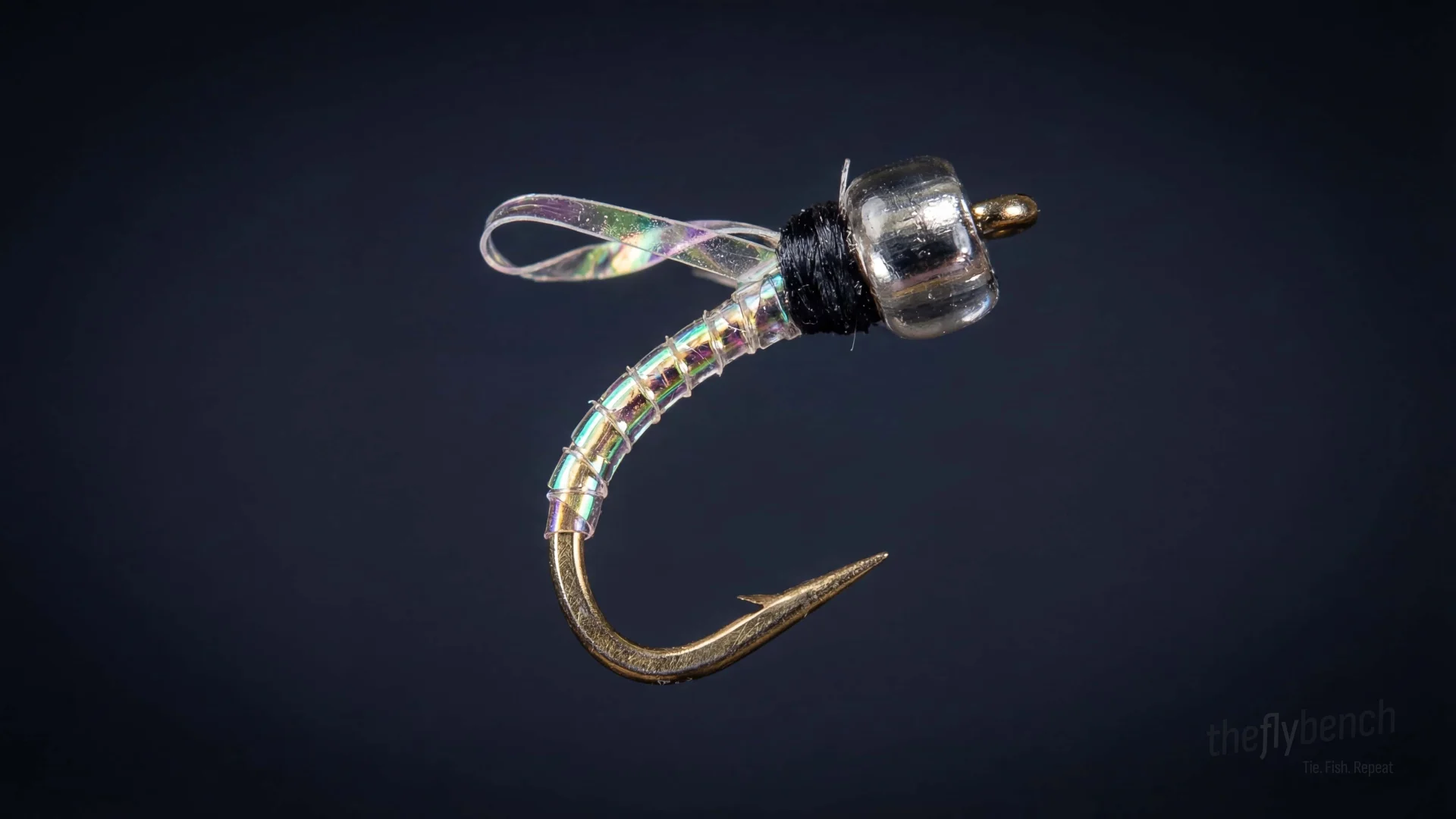
The Ginny Midge is a simple yet effective pattern that imitates a small midge, making it irresistible to trout. Its slender body and shiny ribbing simulate the segmented bodies of natural midges, while the visible thread body beneath the resin shell provides a realistic translucency.
Spring, Summer, Fall
Intermediate
Trout
Apr 2025
Overview
A simple thread midge pattern featuring a thin profile, fine wire ribbing, and a sparse dubbed thorax or bead head. Great for tiny sizes (#20–#26), it's tied in black, red, or olive and works well during winter midge hatches.
Where to Buy This Fly
We only link to fly shops we trust. Some links are referral links, which may earn us a commission at no extra cost to you.
Materials
- Hook:
- Emerger hook (here, a Dai-Riki 125), size 20.
- Bead:
- Glass bead, small, silver-gray.
- Thread:
- Black, 6/0 Danville, black.
- Body/Wing:
- Flashabou, small, pearl.
Behavior & Presentation
Natural Behavior: Midge larvae tumble through slow currents with jerky movements, their segmented bodies catching light as they pulse mid-column.
Where Trout Eat It: Fish cruise slow pools, back eddies, and tailwater flats where drifting larvae concentrate in feeding zones.
How to Fish It: Dead drift with micro-adjustments in rivers, or static presentation with inch-long strips in lakes to imitate suspended larvae.
Best Water: Target back eddies, slicks, and foam lines in tailwaters. In lakes, fish shallow edges where trout cruise for larvae.
Strike Type: Detect subtle sips, indicator hesitations, or barely perceptible film movements as fish take gently.
Fishing Strategy
Rigging Suggestions: Use 12-15 foot leaders tapered to 6X-7X tippet for delicate presentations. Excellent as a dropper off a dry fly or fished tandem with another midge pattern to cover multiple depths.
Seasonal Timing: Fish from March through November, with fishing viable during mild spells. Most productive during early (March-April) and late (October-November) when midges dominate the insect activity and water temperatures range from 35-55°F.
Pro Tips: The glossy shellback catches light underwater, triggering strikes from fish that key on the gas bubble trapped in natural midge pupae. Adjust depth by adding micro-split shot 12-18 inches above the fly rather than using a heavier pattern.
Entomology
Midge larvae inhabit silted areas and vegetation in stillwaters, occasionally releasing into open water where they drift helplessly with minimal swimming ability. Their slender segmented bodies and limited mobility make them easy pickings during population booms. Trout in lakes and slow-moving rivers feed on these drifting larvae with casual efficiency, particularly during low-light periods.
- Order
- Diptera
- Family
- Chironomidae
- Common Name
- Midge
- Organism Type
- insect
- Life Stage
- general