

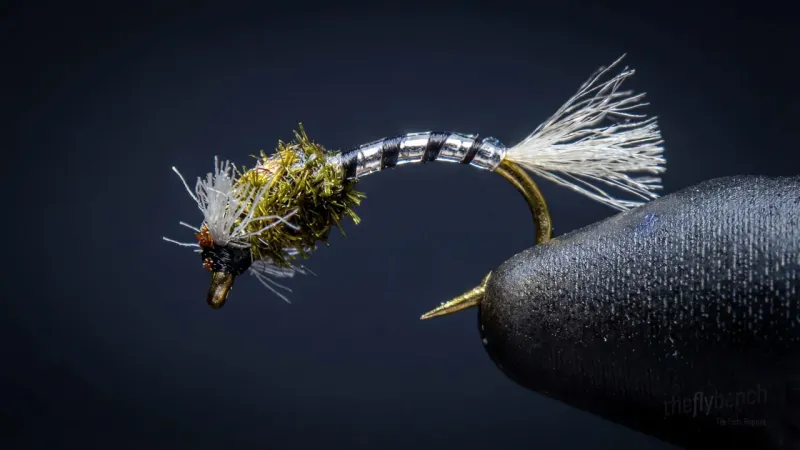
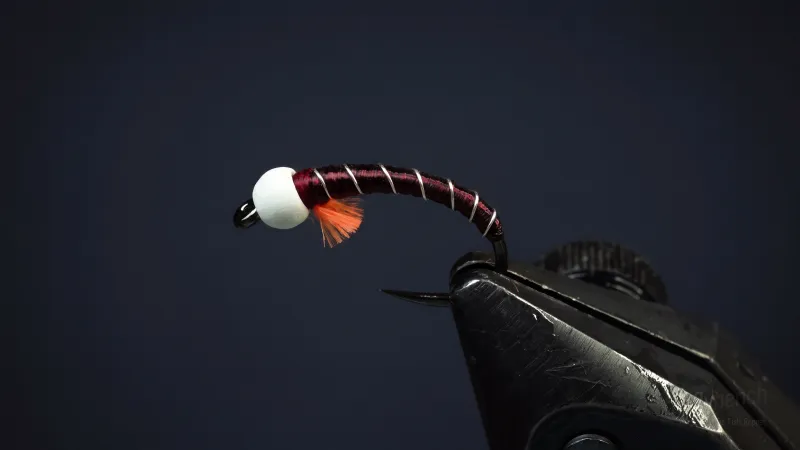
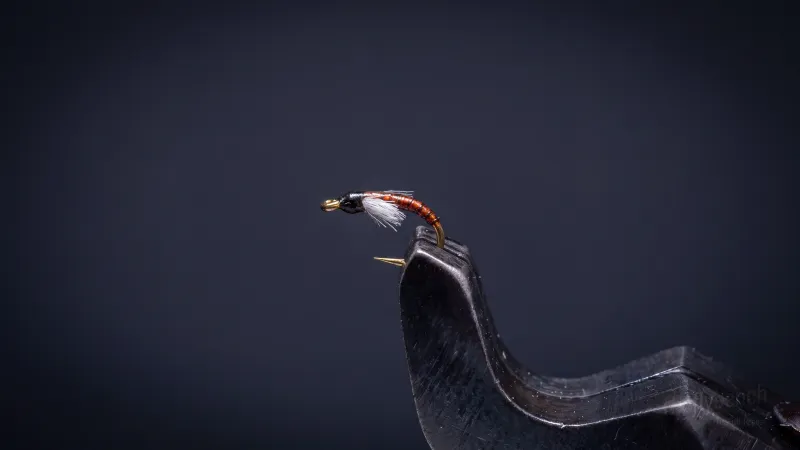
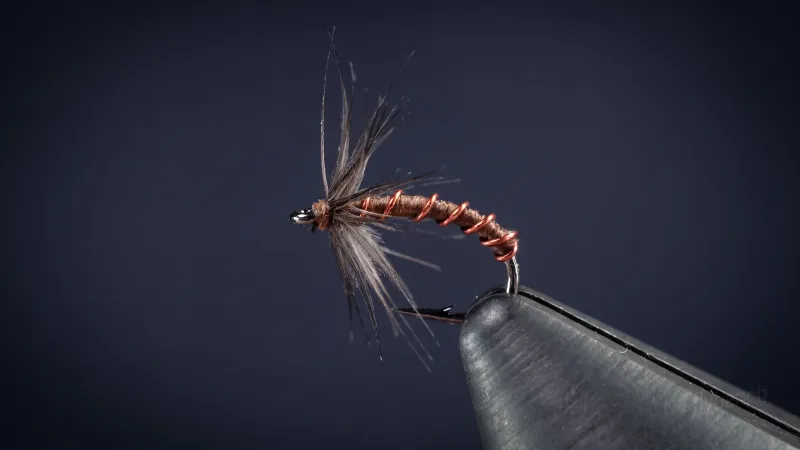
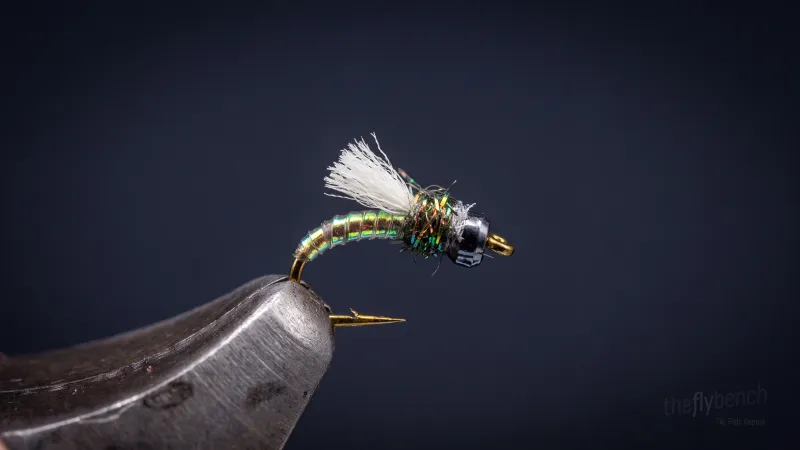
Overview
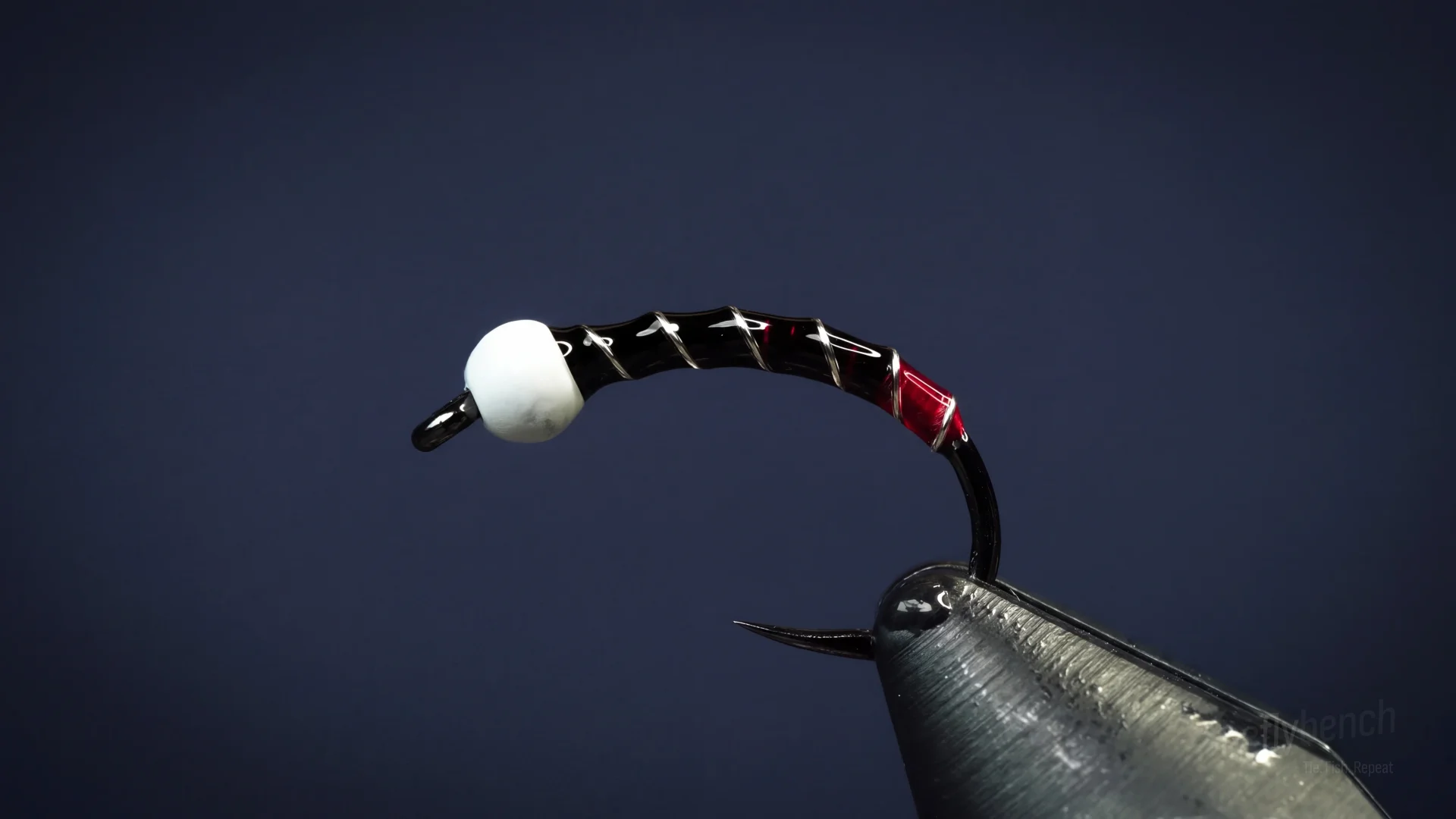
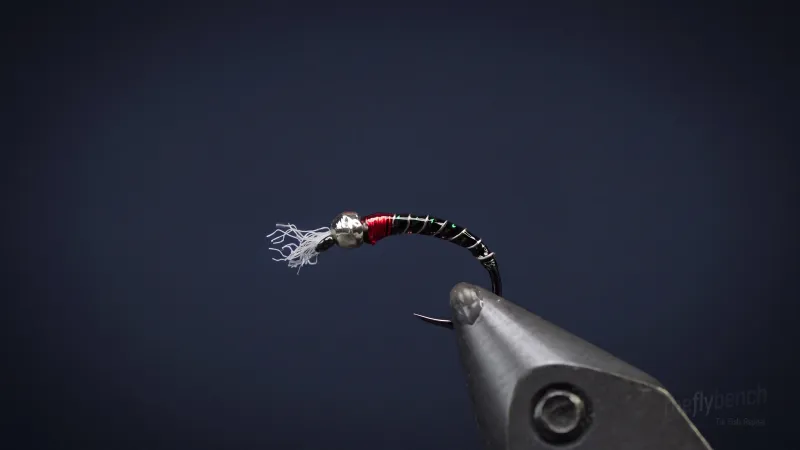
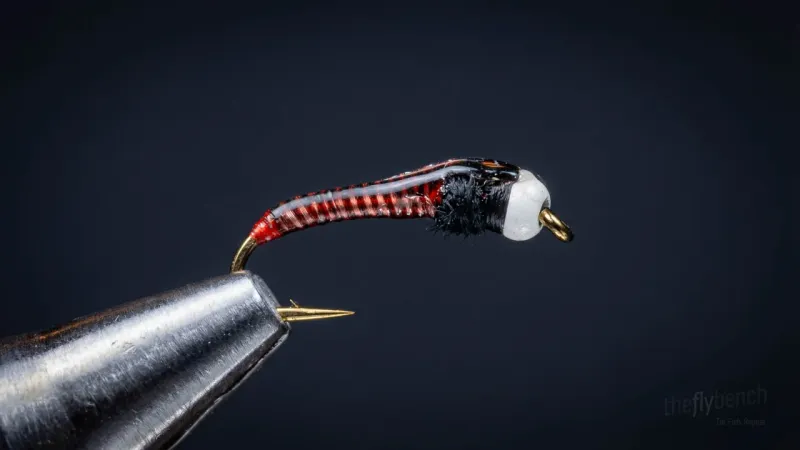
Cade Moore of Fly Fish Food shared this one in 2024 as a confidence pattern he always carries in his chironomid box. The body is built by laying down red thread and then overwrapping it with black so the color fades from one to the other, all on a heavy Czech nymph hook. A coat of Bone Dry resin makes it tough and quick to tie. The fade works in many color pairs, and it fishes all year but shines from ice-off through spring.
Related patterns
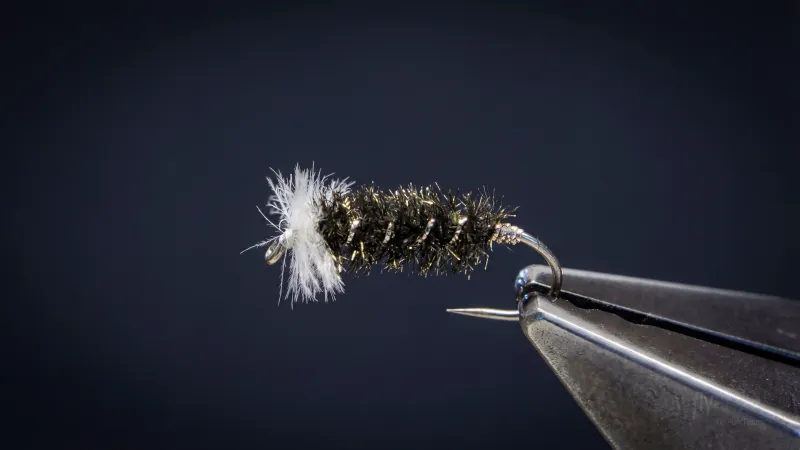
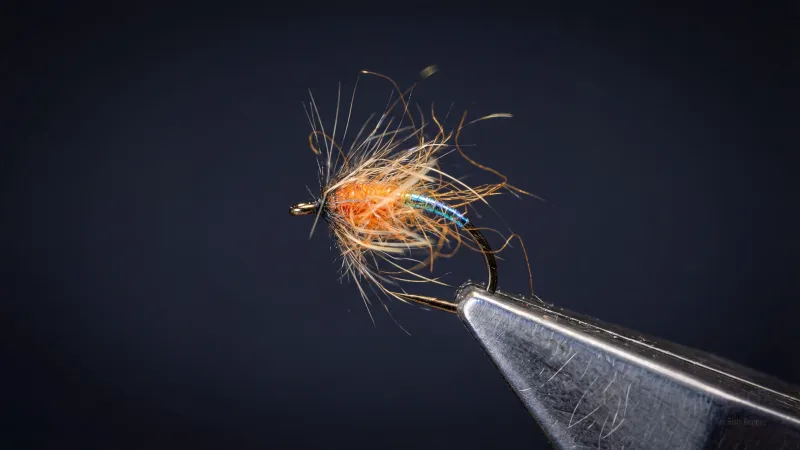
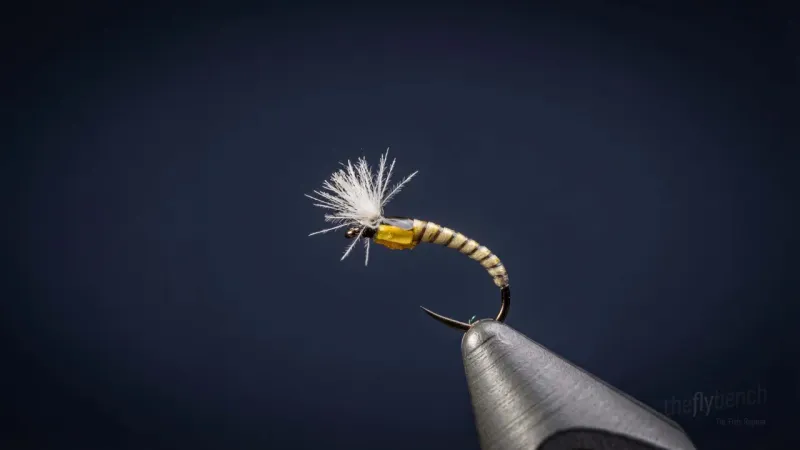
Behavior & presentation
- Natural Behavior
- Dark pupae with reddish tones wriggle free of mud tubes on the lake bottom and drift slowly upward, often stalling for long stretches a foot or two off the bottom before rising on to the film.
- Where Trout Eat It
- Trout cruise over soft-bottomed flats and shoals, picking off pupae close to the bottom early in a hatch and higher in the water column as the emergence builds.
- How to Fish It
- Hang it under an indicator so it rides just off the bottom, then let wind chop give it gentle lift and drop. A very slow hand-twist retrieve on a clear intermediate line also works.
- Best Water
- Shoal edges, drop-offs into deeper basins, and muddy bays near weed beds where chironomids hatch in numbers right after ice-off.
- Strike Type
- The indicator usually just sinks slowly or tips sideways; on a hand-twist the take shows up as a soft weight or a short tightening of the line.
Fishing strategy
- Rigging Suggestions
- Floating line with a leader of 12 feet or more, a fluorocarbon 4X–5X tippet, and an adjustable indicator set so the fly sits about a foot above the bottom. Hang it as the point fly below a larger pupa or a small leech to work two depths at once.
- Seasonal Timing
- Best from ice-off through late spring when the first big chironomid emergences hit, and still productive through summer and fall wherever pupae are hatching.
- Pro Tips
- Tie a few with other color fades, such as olive into black or red into brown, to match whatever is coming off. If the indicator sits still for too long, move it up or down a foot before changing flies.
Entomology
Chironomid pupae leave their larval tubes in lake-bottom mud and slowly rise toward the surface, held up partly by gas trapped beneath the pupal skin. They often pause and hang at one level during the ascent, which concentrates them in narrow depth bands where cruising trout feed on them steadily.
- Order
- Diptera
- Family
- Chironomidae
- Common name
- Chironomid
- Organism
- insect
- Life stage
- pupa
Pattern details
- Stillwater
- Rocky Mountain
- indicator-nymph
- midge-hatch
- modern
- beginner-friendly
- cold-water