

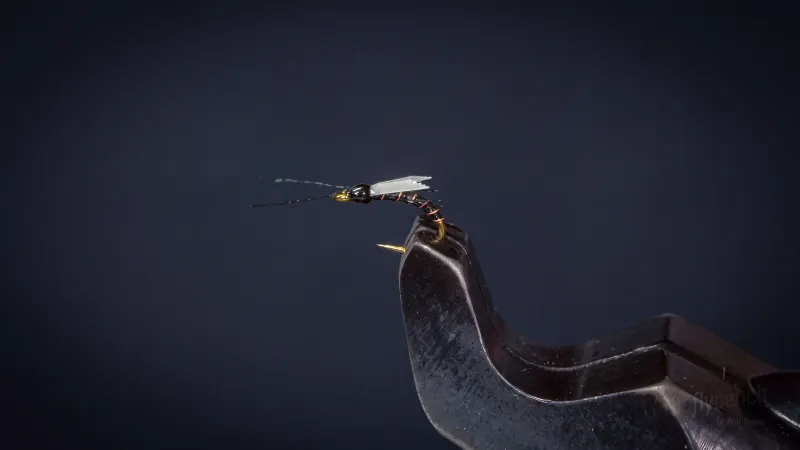
Overview
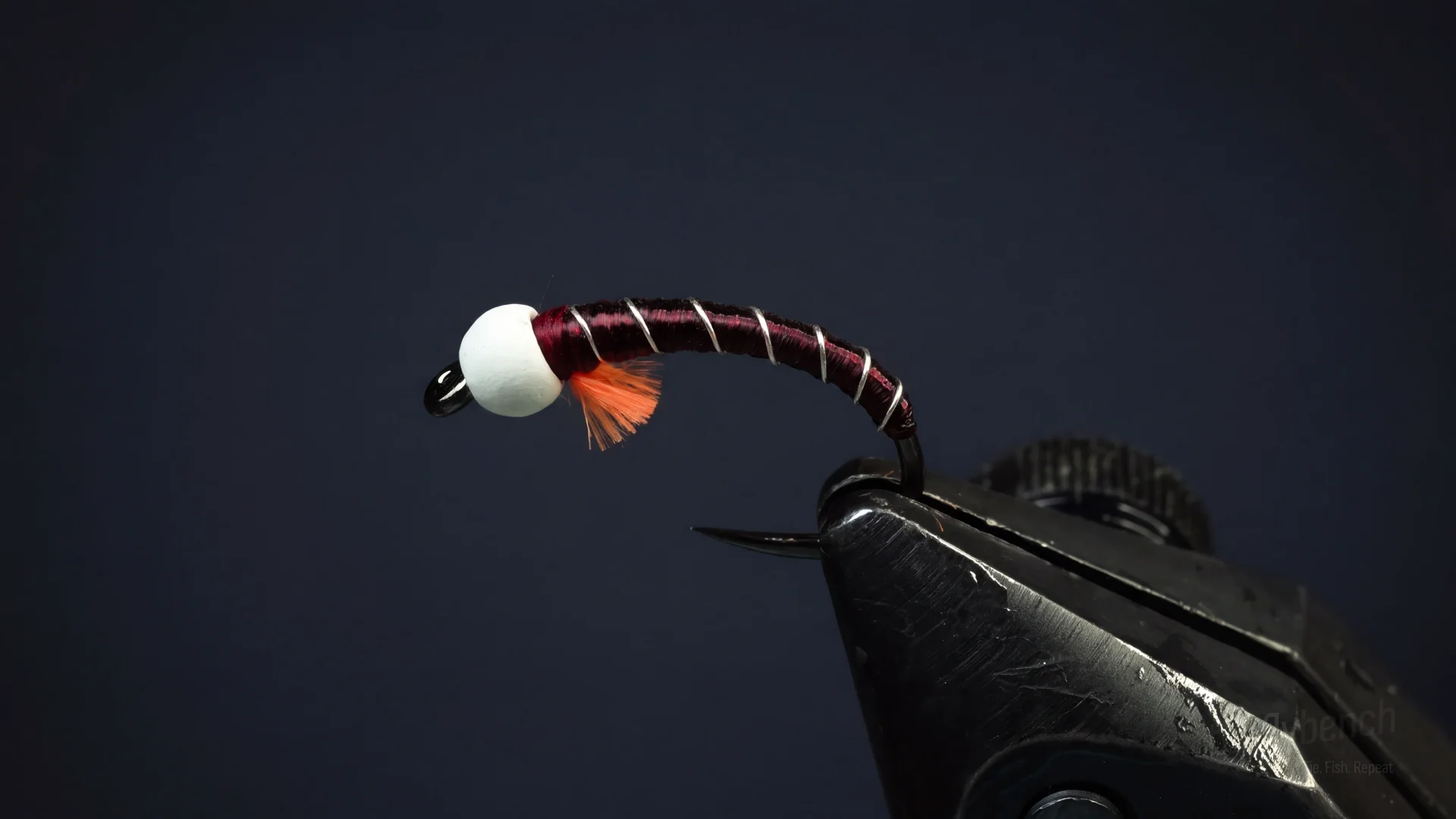
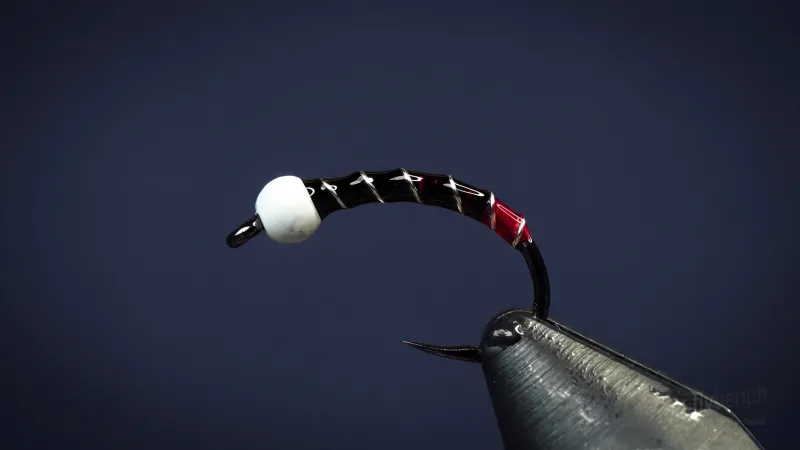
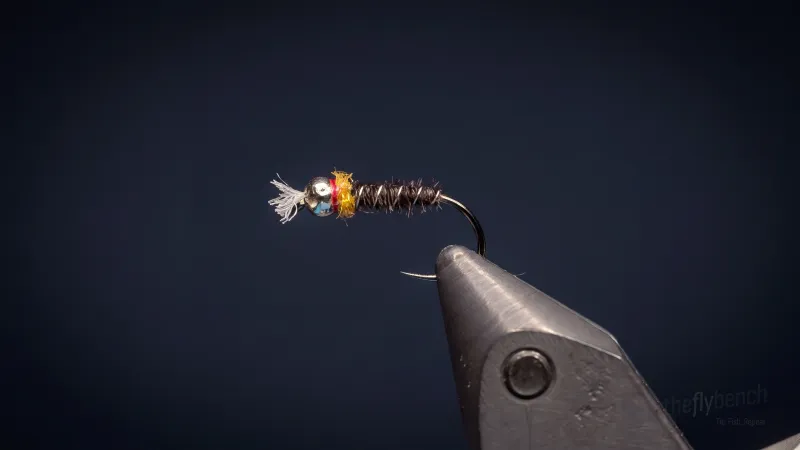
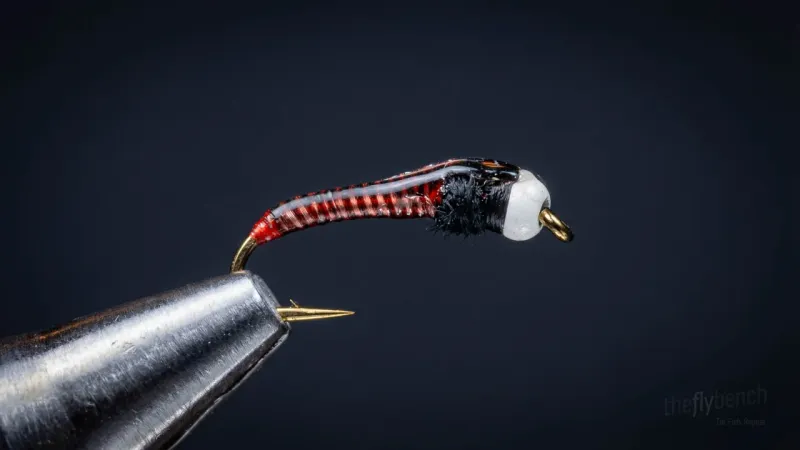
Cheech of Fly Fish Food tied the Ween Dawg in April 2024 and describes it as only a step past a zebra midge. Stretchy claret floss over a heavy grub hook gives a slim, segmented body, the silver wire adds flash, and a few turns of orange Power Thread form the hot spot behind the bead. Swap colors and sizes to match the naturals.
Related patterns
Behavior & presentation
- Natural Behavior
- Chironomid pupae leave the mud and drift upward in a slow, wriggling climb, often stalling for long spells a few feet off the bottom before they reach the surface and split their shucks.
- Where Trout Eat It
- Lake trout hold at the depth where pupae are staging and pick them off one after another, often within a foot or two of the bottom early in a hatch.
- How to Fish It
- Hang it under an indicator with the bead set just above the bottom, or fish it on a long leader with a full-sink line and a very slow hand-twist retrieve.
- Best Water
- Shoals, mud-bottomed bays, and the edges of drop-offs in 6 to 20 feet of water, especially where weed beds meet open water.
- Strike Type
- The indicator usually just sinks slowly or slides sideways; on a sinking line, takes come as a soft weight or a gentle tightening rather than a hard pull.
Fishing strategy
- Rigging Suggestions
- Use a floating line and a fluorocarbon leader long enough to put the fly just off the bottom, tapered to 4X or 5X. A quick-release indicator makes depth changes easy. The tungsten bead gets the fly down without split shot.
- Seasonal Timing
- Best from ice-off through early summer, when the heaviest chironomid hatches come off, and again in fall as lakes cool.
- Pro Tips
- Measure the depth first and set the fly about a foot above the bottom. Carry a few colors, since claret is only one of many shades naturals come in, and swap through them until fish respond.
Entomology
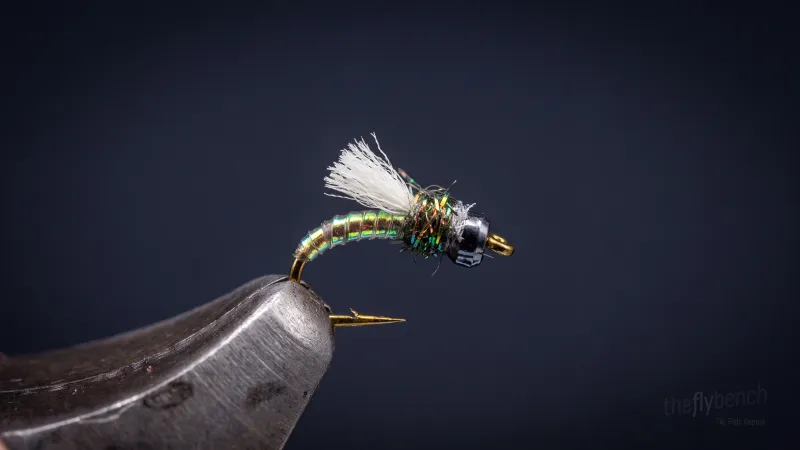
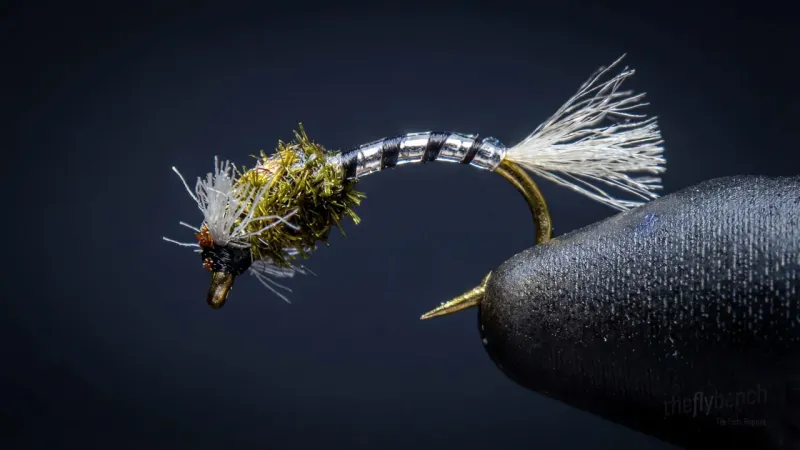
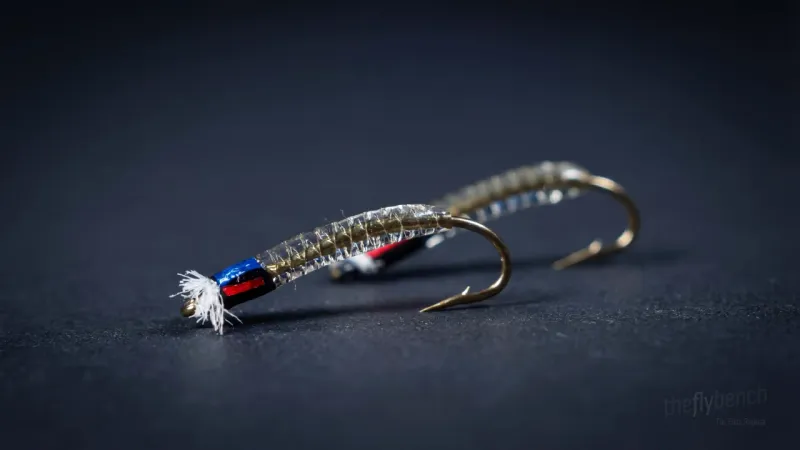
Chironomid larvae live in the soft bottom of lakes and turn into pupae before they hatch. The pupae rise slowly toward the surface, trapping gas under the skin that gives them a silvery look, and the white gill tufts at the head stand out. Because they climb so slowly and can't escape, trout feed on them heavily at whatever depth they gather.
- Order
- Diptera
- Family
- Chironomidae
- Common name
- Chironomid
- Organism
- insect
- Life stage
- pupa
Pattern details
- Stillwater
- Rocky Mountain
- Pacific Northwest
- British Columbia
- indicator-nymph
- midge-hatch
- beginner-friendly
- modern
- dead-drift