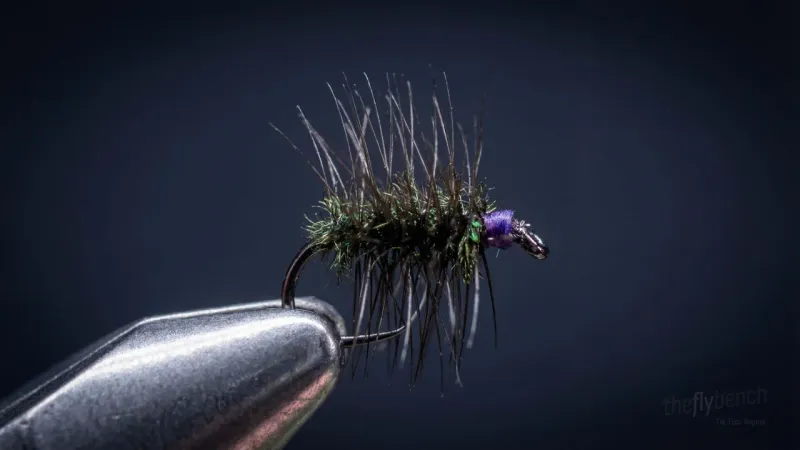
Midge / EmergersDriskill's Midge
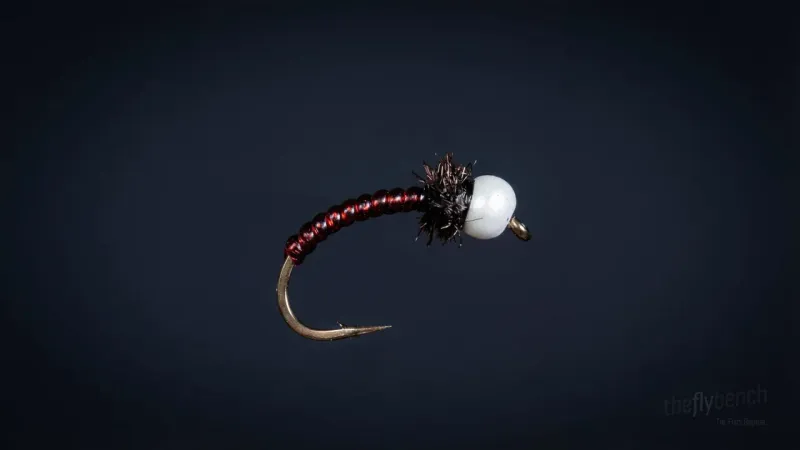
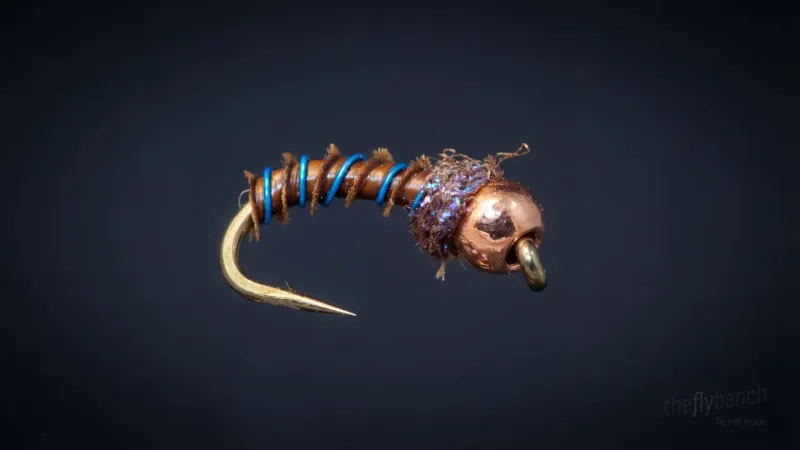
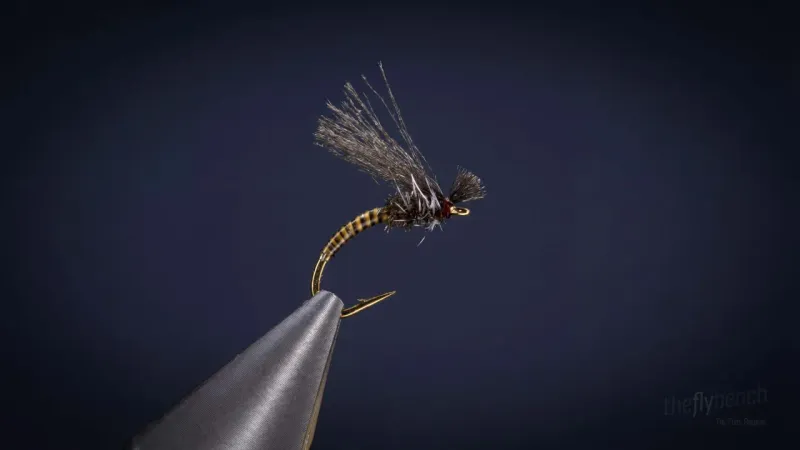
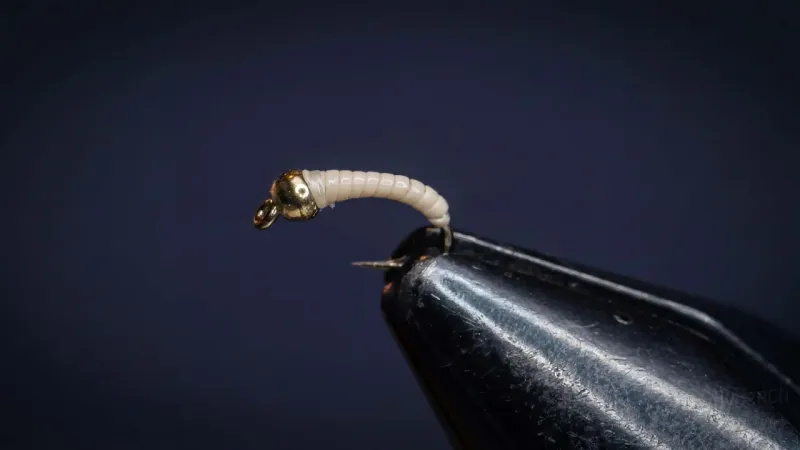
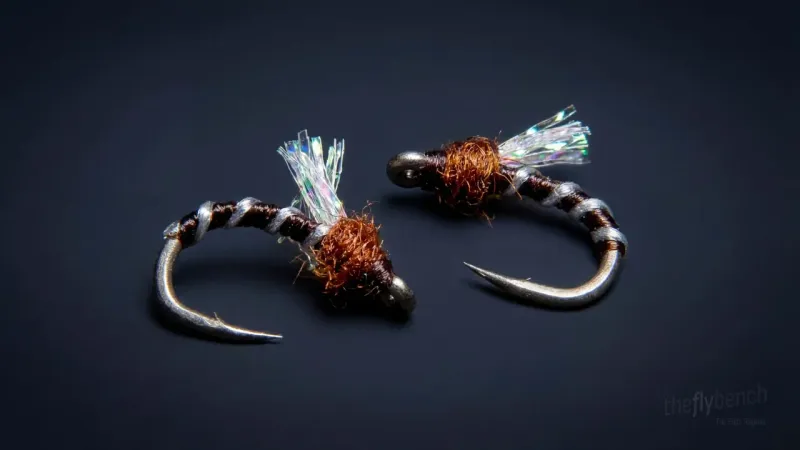
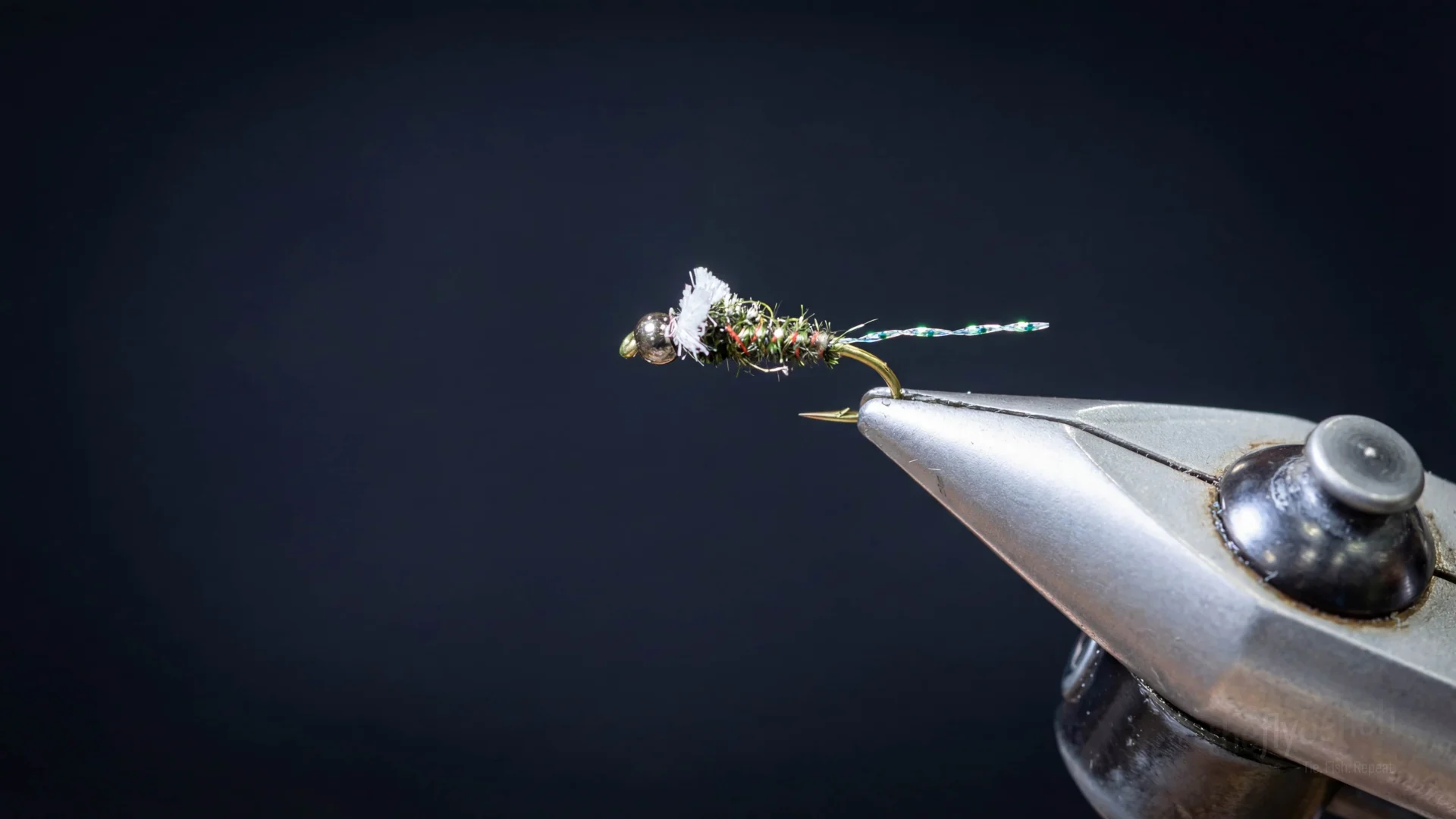
Driskill's Midge is a substantial midge pattern tied on a size 12 hook, designed for situations where fish are keying on larger chironomid species. The peacock herl body with dual ribbing (Krystal Flash and red wire) creates flash and segmentation, while the white EP fiber gills add a realistic emergent profile. The black nickel bead provides weight and a clean look.
Year Round
Intermediate
Trout
Dec 2025
Overview
Driskill's Midge takes the classic peacock and pheasant tail combination and adds modern touches for improved effectiveness. The dual ribbing of pearl Krystal Flash and red wire creates a pattern that catches light from multiple angles. The white EP fiber gills mimic the respiratory filaments visible on emerging midges, adding realism to the pattern.
Materials
Hook: Tiemco 3761, #12
Thread: Ultra Thread, 70 denier (8/0), black
Bead: Brite Bead, 7/64", black nickel
Tail: Krystal Flash, pearl
Rib: Krystal Flash, pearl and Ultra Wire, small, red
Body: Peacock Herl, natural
Wingcase: Pheasant Tail, natural
Gills: EP Fibers, white
Behavior & Presentation
Natural Behavior: Larger chironomid pupae ascend slowly using rhythmic body flexions, hovering in mid-column before reaching the film. During emergence windows, they suspend at various depths while gases accumulate for final ascent. Their extended vulnerability makes them priority targets.
Where Trout Eat It: Fish sip emergers suspended in the surface film or intercept ascending pupae at mid-column depths. Target foam lines, eddies, and seams where pupae concentrate.
How to Fish It: Dead drift near bottom or at mid-depths where fish are actively feeding. The heavy bead reaches target zones quickly.
Best Water: Focus on seams, eddies, foam lines, and slicks where midge pupae accumulate during emergence.
Strike Type: Subtle film sips or indicator hesitations signal gentle takes.
Fishing Strategy
Rigging Suggestions: Fish below an indicator or as part of a midge tandem rig. Can anchor a multi-fly setup with its substantial weight.
Seasonal Timing: during midge activity. Particularly productive in winter and early spring when larger midges are prevalent.
Pro Tips: Adjust presentation depth and speed based on fish activity level and current conditions for best results.
Entomology
Midge larvae colonize silty substrates in massive densities, constructing tubular retreats from which they filter-feed by extending their bodies in rhythmic undulations. During emergence windows, pupae ascend slowly using rhythmic body flexions, often hovering in the film for extended periods before adult eclosion. Their overwhelming abundance in stillwaters and tailwaters makes them foundational forage despite small individual size, with fish consuming hundreds during sustained emergence periods.
- Order
- Diptera
- Family
- Chironomidae
- Common Name
- Midge
- Organism Type
- insect
- Life Stage
- general