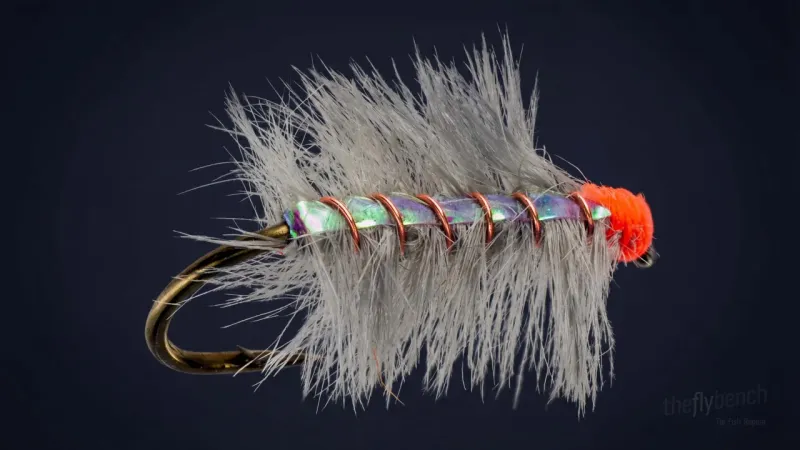
Scud / ShrimpCarpet Bug
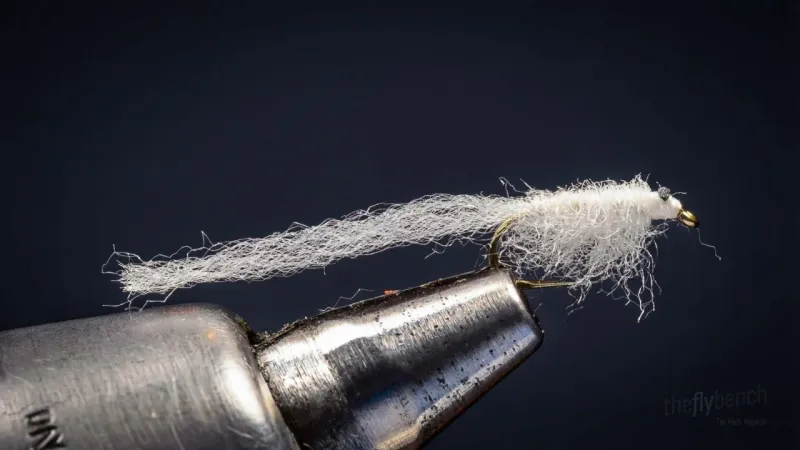
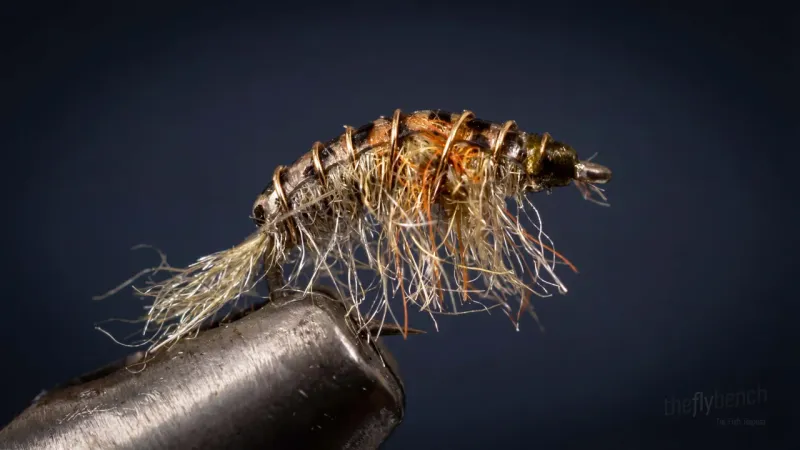
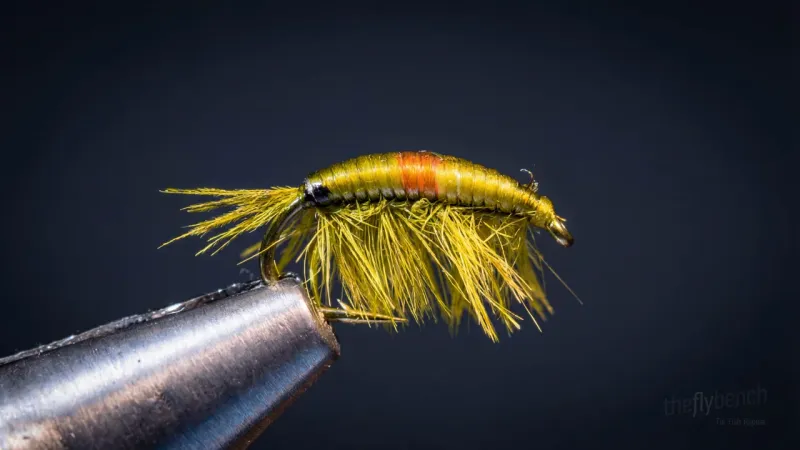
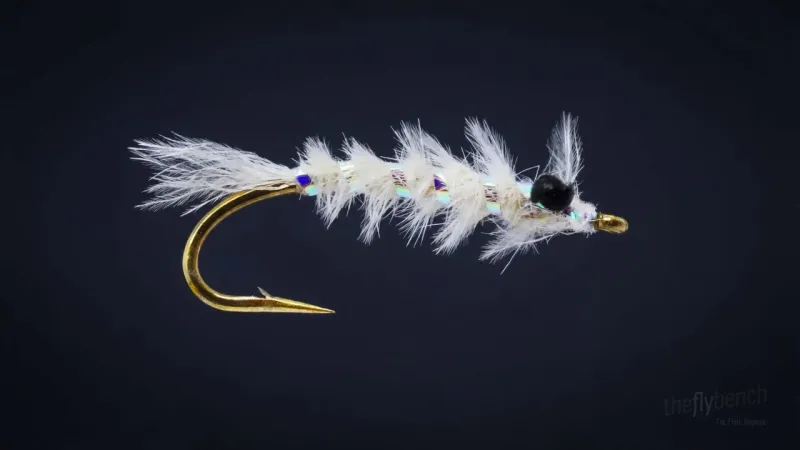
The Carpet Bug is a versatile crustacean imitation that effectively mimics both scuds and sowbugs. Taking inspiration from the Ray Charles pattern, this fly features rainbow scud dubbing with a holographic back that creates subtle flash without spooking wary fish. An excellent choice for limestone streams and tailwaters where freshwater crustaceans are a primary food source.
Year Round
Beginner
Trout
Dec 2025
Overview
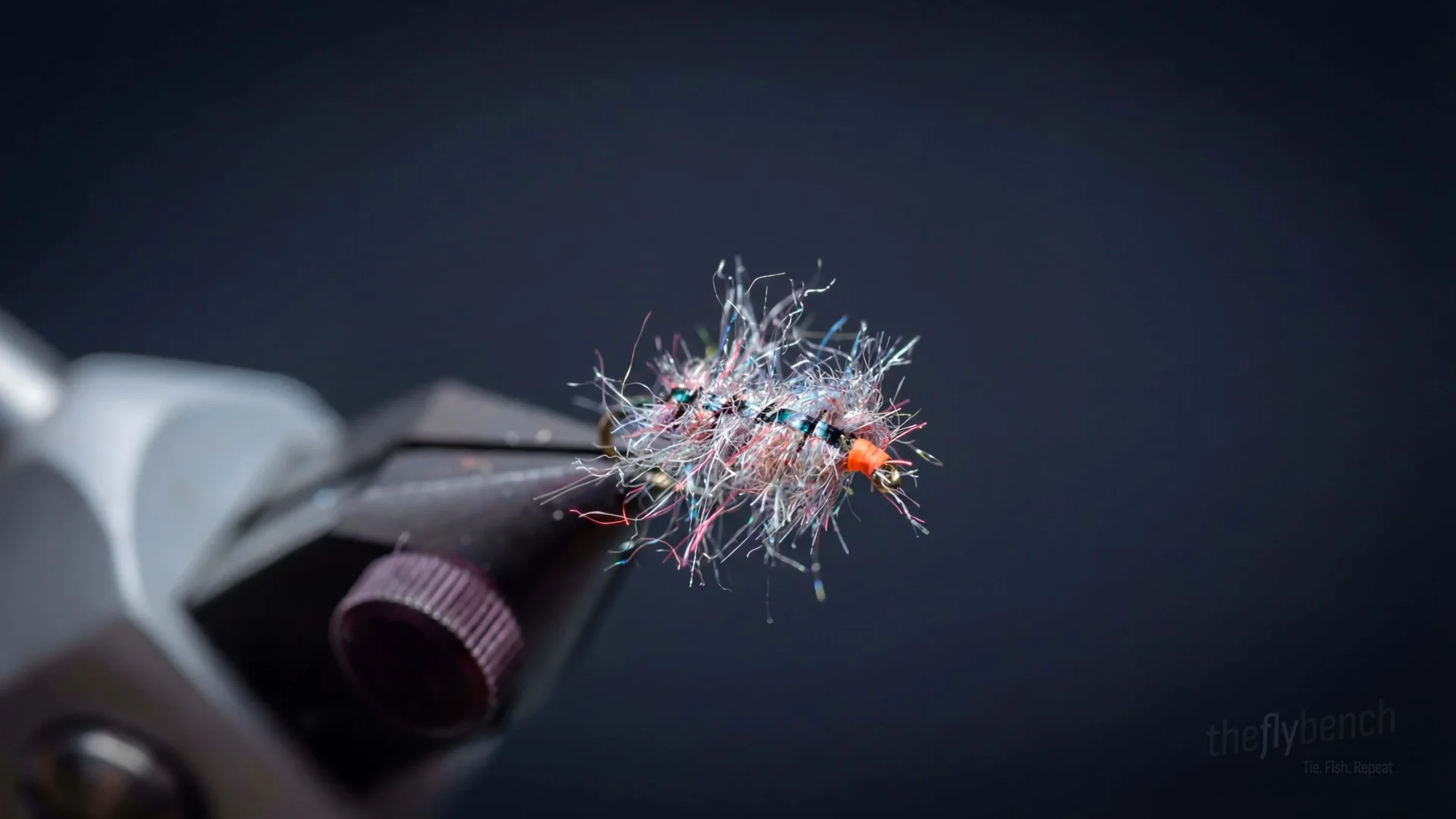
The Carpet Bug draws inspiration from the popular Ray Charles Sow Bug but adds holographic flash via the tinsel back. The fluorescent orange thread creates a subtle hot spot at the head that can trigger strikes. This pattern can be tied in various colors to match local naturals—gray, tan, olive, and pink are all effective options depending on your waters.
Materials
Hook: Tiemco TMC 3761, #10–#22
Thread: UTC Ultra Thread 70 denier, fluorescent orange
Body: Hareline Rainbow Scud Dubbing, light shade
Ribbing: UTC Ultra Wire, small, black
Back: Veevus Holographic Tinsel, medium, black
Behavior & Presentation
Natural Behavior: Scuds and sowbugs crawl along vegetation and rocky substrate, occasionally dislodging into drift where currents carry them downstream while they kick frantically. Their tumbling motion through feeding lanes makes them easy targets.
Where Trout Eat It: Fish cruise weed edges and drop-offs from mid-depths to bottom where crustaceans concentrate. Vegetation transitions hold feeding fish.
How to Fish It: Dead drift along bottom using tight-line or indicator setups, allowing natural tumbling. In lakes, use slow hand-twist retrieves near weed beds.
Best Water: Work weed edges, drop-offs, and shoals where forage concentrates. Rocky substrate and aquatic vegetation produce steady action.
Strike Type: Soft takes appear as slight line draws or indicator pauses. Set on any hesitation.
Fishing Strategy
Rigging Suggestions: Fish on 9–12 foot leader with 5X–6X tippet. Works well as a dropper below a heavier nymph or as the point fly in a two-nymph rig. Add split shot 12–18 inches above the fly in deeper water.
Seasonal Timing: effectiveness, particularly productive during colder months when trout focus on subsurface food. Scuds and sowbugs remain active even in , making this a reliable cold-weather pattern.
Pro Tips: Sinks readily due to the wire ribbing. The holographic back provides subtle flash that attracts attention without appearing unnatural.
Entomology
Scuds and sowbugs crawl along aquatic vegetation and rocky substrates, occasionally dislodging into the drift where currents carry them helplessly downstream while they frantically kick their legs. Fish position themselves to intercept these drifting crustaceans because they represent easy, nutritious meals that require no active hunting.
- Organism Type
- crustacean
- Life Stage
- general