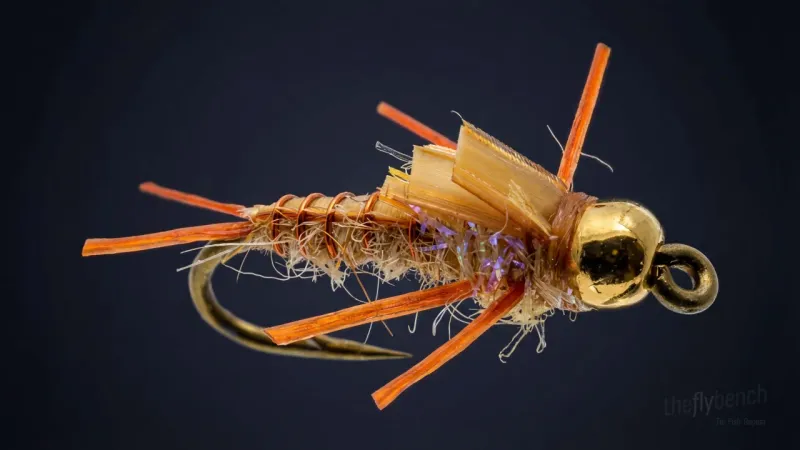
NymphBead Head "D" Rib Golden Stone
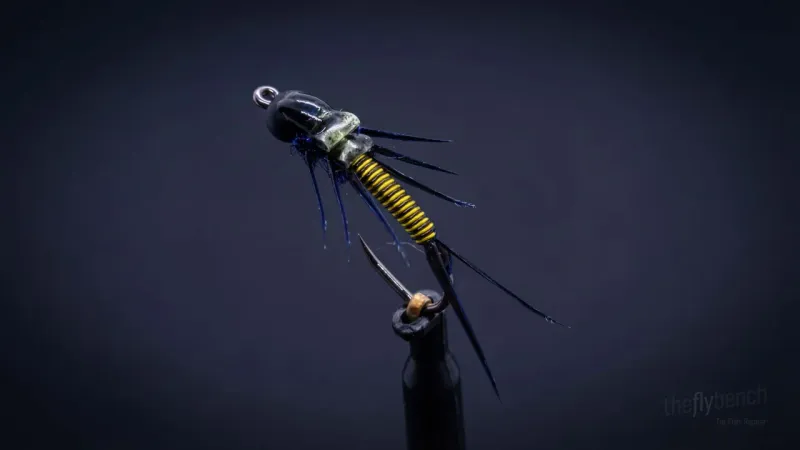
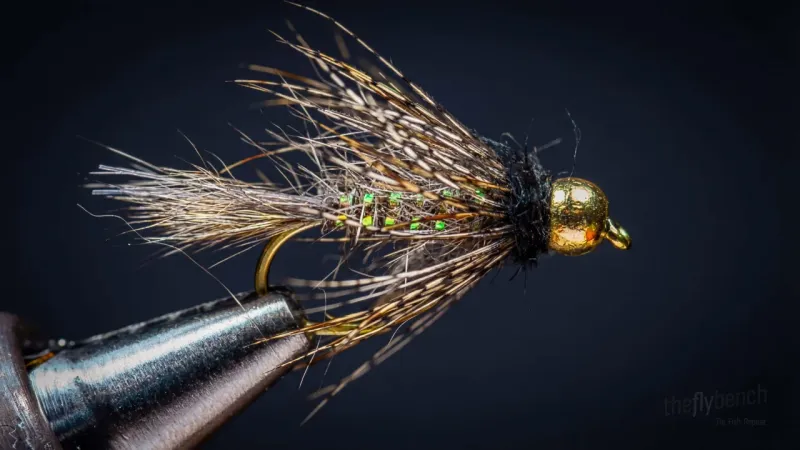
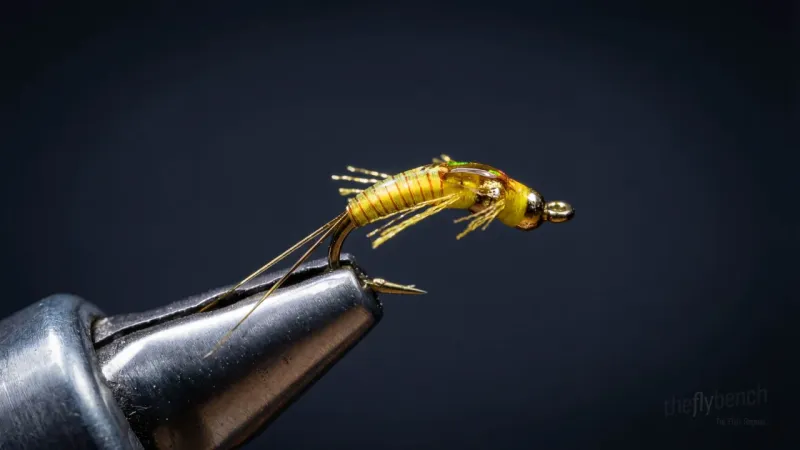
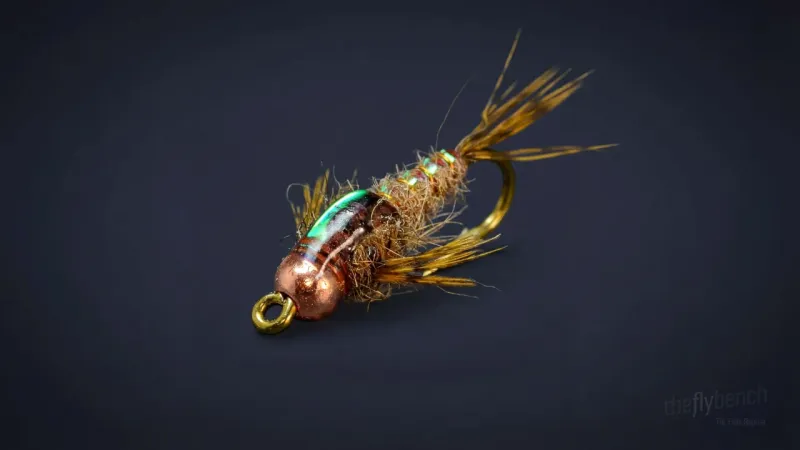
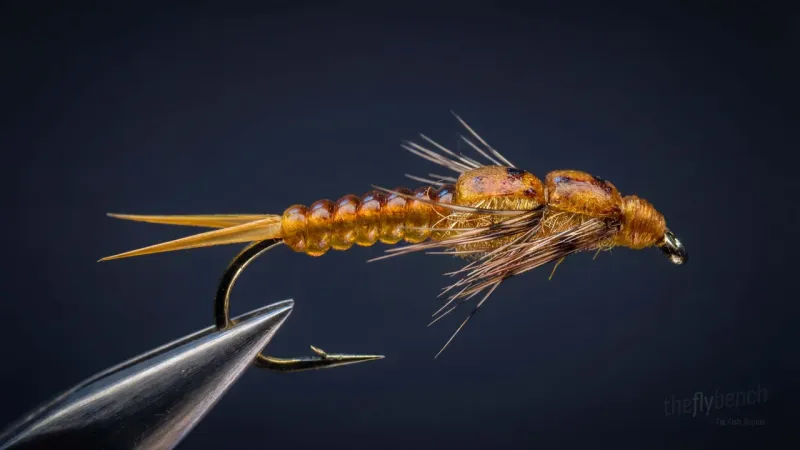
A heavy, durable nymph pattern that imitates golden stonefly nymphs with a realistic segmented body. The D-rib material adds translucency and segmentation, while the bead helps it dive quickly into the strike zone.
Spring, Summer
Intermediate
Trout
Apr 2025
Overview
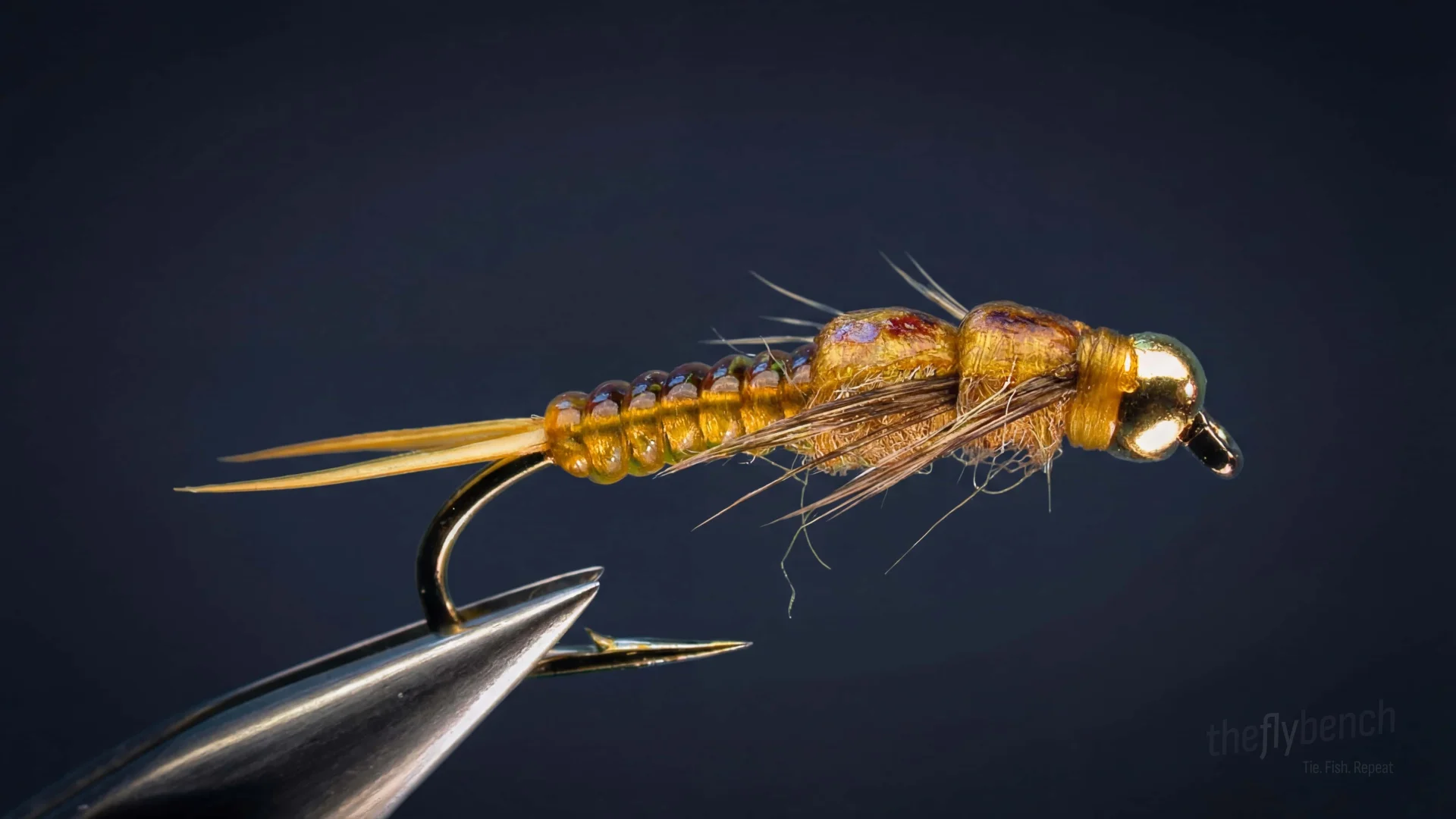
This heavy stonefly nymph uses a tungsten bead and lead wire underbody for quick sink. The segmented body is formed by wrapping translucent D-Rib over golden dubbing, while rubber legs and a peacock thorax add movement and natural contrast. A reliable anchor fly for fast water.
Where to Buy This Fly
We only link to fly shops we trust. Some links are referral links, which may earn us a commission at no extra cost to you.
Materials
- Hook:
- Dai-Riki #280 Size 12
- Thread:
- Brass - under size bead 1 size
- Thread:
- 8/0 yellow
- Tail:
- Amber Goose Biots
- Underbody:
- 8/0 Yellow Thread
- Abdomen:
- Med. "D" Rib Light Golden Stone
- Wing:
- Golden Stone Scud Back
- Wingcase:
- Golden Stone Scud Back
- Thorax:
- Tannish Yellow Dubbing
- Legs:
- Partridge
Behavior & Presentation
Natural Behavior: Large golden stone nymphs crawl actively across rocky substrate while foraging, but frequently dislodge during high water or pre-emergence migrations. Their substantial size and meaty profile make them trophy meals that trigger aggressive takes.
Where Trout Eat It: Fast freestone runs, riffles, and pocket water 2-6 feet deep with rocky substrates.
How to Fish It: Dead drift along bottom with occasional high-stick lifts to mimic natural crawling movement.
Best Water: Focus on pockets, runs, and riffle edges near banks where mature nymphs migrate toward shore.
Strike Type: Expect a sharp stop or sudden rod-tip bend as trout intercept this heavy pattern tumbling near bottom, often feeling like a snag before the fish begins to thrash.
Fishing Strategy
Rigging Suggestions: Use 4X-5X tippet. Excellent as a point fly in Euro-nymphing rigs or 18-24 inches below an indicator. The tungsten bead provides weight, reducing need for additional split shot.
Seasonal Timing: Most productive from May through August during golden stonefly nymph migrations and emergences. Peak activity occurs in June and early July when mature nymphs crawl to shore before hatching.
Pro Tips: The translucent body and resin wingcase create lifelike segmentation. Fish near banks and boulders during nymph migrations, as mature nymphs leave mid-river habitats to emerge on shore.
Entomology
Golden stonefly nymphs are large, aggressive predators that crawl actively along rocky substrate in fast-moving water, feeding on other aquatic insects and detritus. These robust insects cling to the underside of large cobbles and boulders but frequently dislodge during high water or when migrating toward shore prior to emergence. Their substantial size (1-2 inches) and high protein content make them a trophy meal for trout, triggering aggressive takes even in cold water when other food sources are scarce.
- Order
- Plecoptera
- Family
- Perlidae
- Common Name
- Golden Stonefly
- Organism Type
- insect
- Life Stage
- general