


Overview
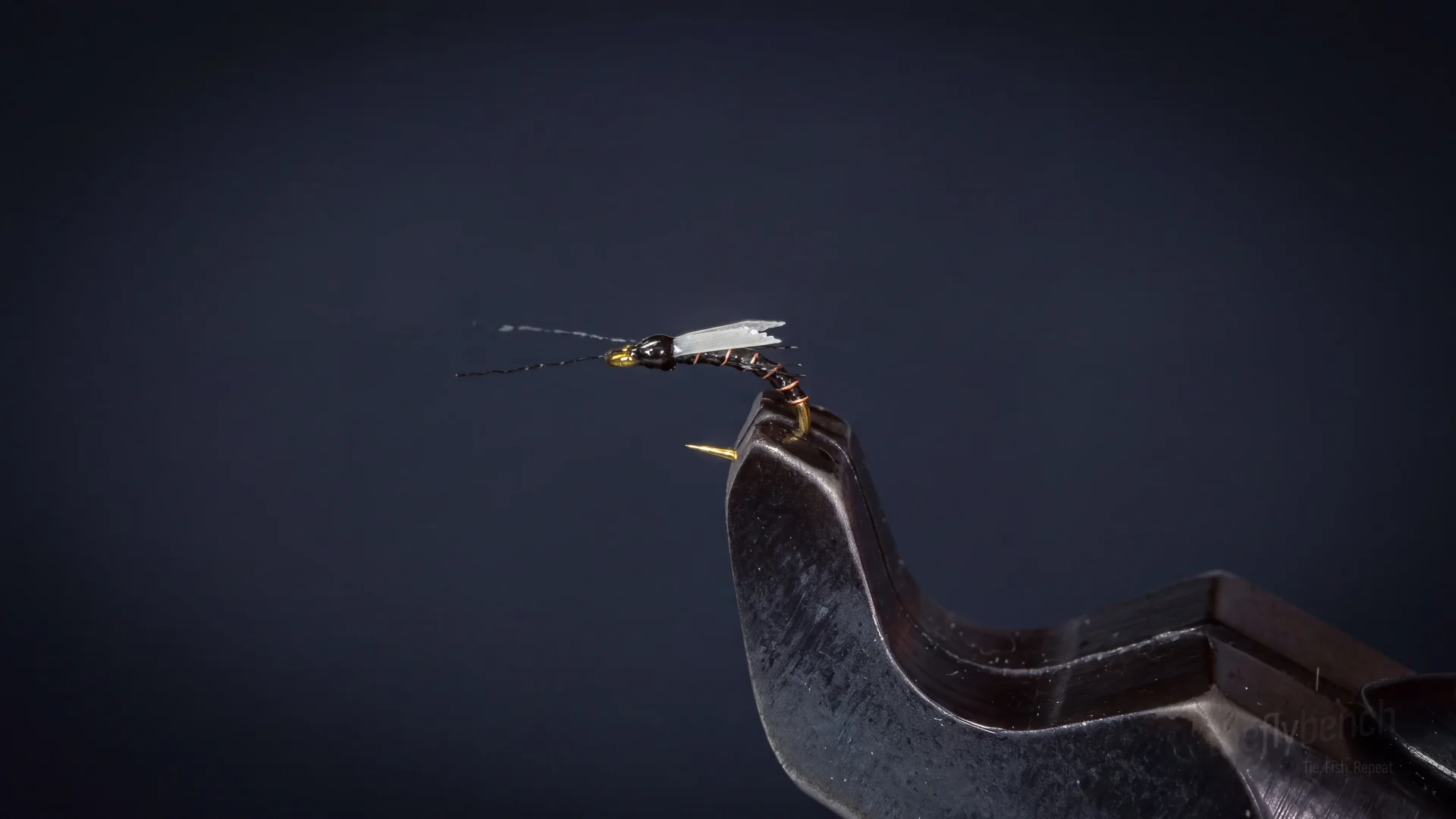
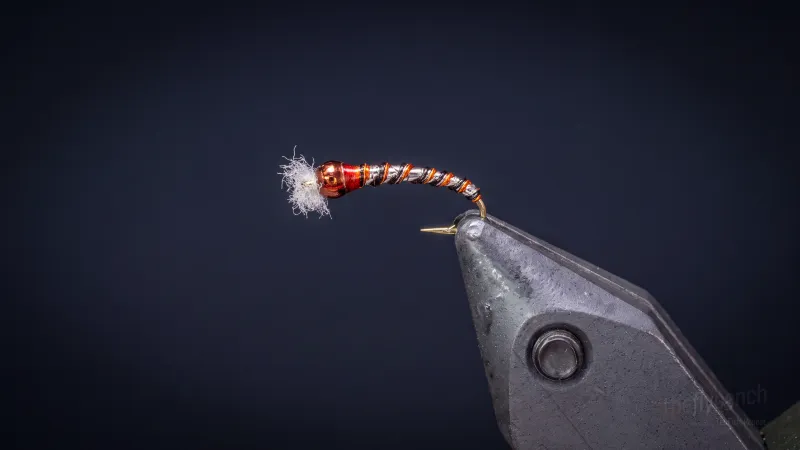
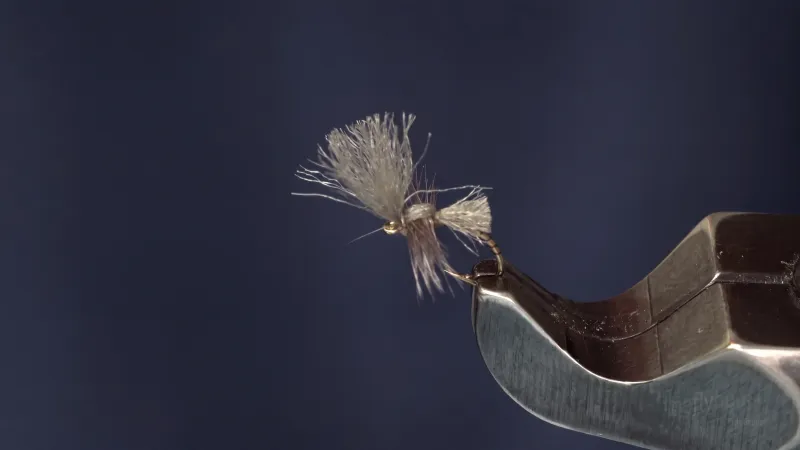
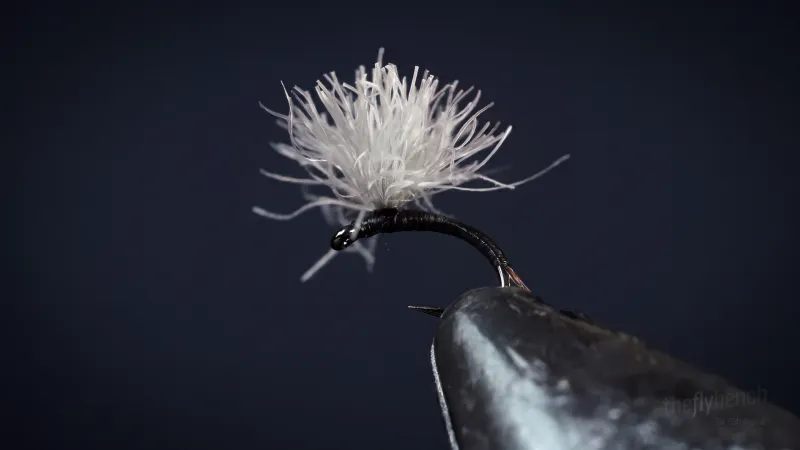
Dylan Gonzales built the 1 O'Clock Midge after a day on the San Juan with his dad, when the water was covered in bugs and they started trying different materials and styles. It gets its name from when it started catching fish: around one o'clock, as the midges began drifting down. The body is just black thread and fine copper wire. White UV tinsel cheeks are locked in with UV resin and topped with a short black wing. Tie it in sizes 18 to 24.
Related patterns
Behavior & presentation
- Natural Behavior
- Adult midges that fail to get airborne, or get pulled under by current and rain, drift a few inches beneath the film with wings folded flat. These waterlogged adults pile up in the drift during midday hatches and are easy food for trout that are already keyed on midges.
- Where Trout Eat It
- The top two or three feet of slow tailwater flats, and the band just off the bottom in lakes, where drowned adults hang in the drift.
- How to Fish It
- Dead drift it high in the column below a small dry or behind a Zebra Midge, or fish it alone on long fine tippet to fish you can see.
- Best Water
- Slow glides, soft seams beside weed beds, tail-outs, and back eddies where spent midges collect, plus wind lanes over lake drop-offs.
- Strike Type
- The dry ticks under or the indicator slides a few inches; when sight fishing, look for the white flash of a mouth opening rather than any tug.
Fishing strategy
- Rigging Suggestions
- Hang it 18-30 inches under a Griffith's Gnat or another small dry, or trail it behind a Zebra Midge under an indicator. For clear, slow water, fish it alone on a long 6X-7X fluorocarbon leader. In lakes, set the depth so it hangs just off the bottom and let the wind drift it.
- Seasonal Timing
- Midges hatch all year on tailwaters, so carry it year-round. It works best from late morning into early afternoon, when midges are coming down the river, and on calm winter days.
- Pro Tips
- Keep the body thin and the wing short. A bulky tie loses the drowned-adult look. Use the white cheeks to track the fly as it drifts toward a fish you can see.
Entomology
Adult midges emerge in large numbers on tailwaters and lakes, and many never make it off the water, getting trapped or sunk by current, wind and rain. These drowned adults drift just below the surface in steady numbers, giving trout an easy, predictable meal through the middle of the day. On pressured water, fish often take them more readily than midges riding on top of the film.
- Order
- Diptera
- Family
- Chironomidae
- Common name
- Midge
- Organism
- insect
- Life stage
- adult
Pattern details
- Moving Water
- Stillwater
- Southwest
- dead-drift
- midge-hatch
- tailwater
- low-clear-water
- dry-dropper
- sight-fishing
- modern