

Overview
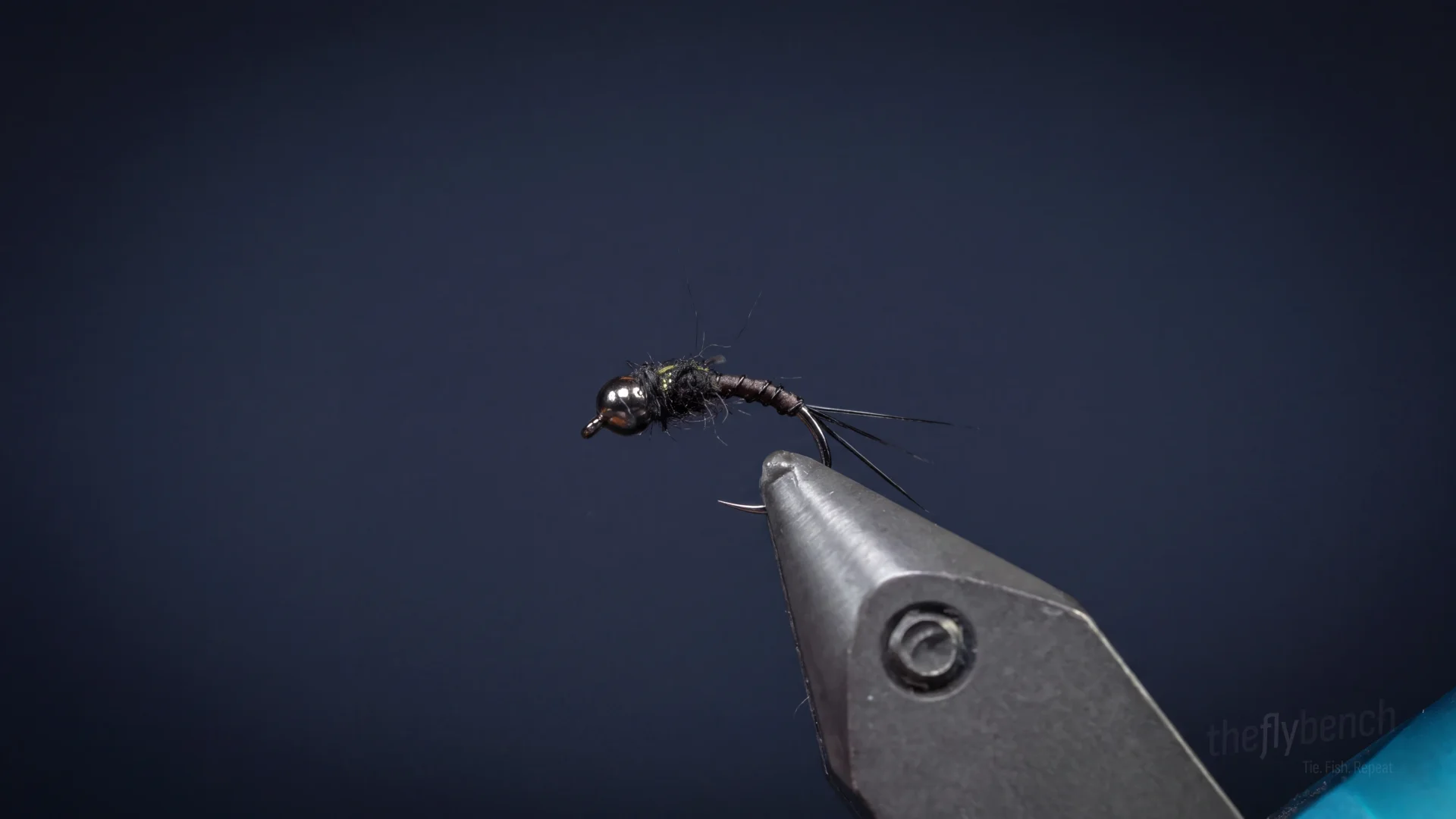
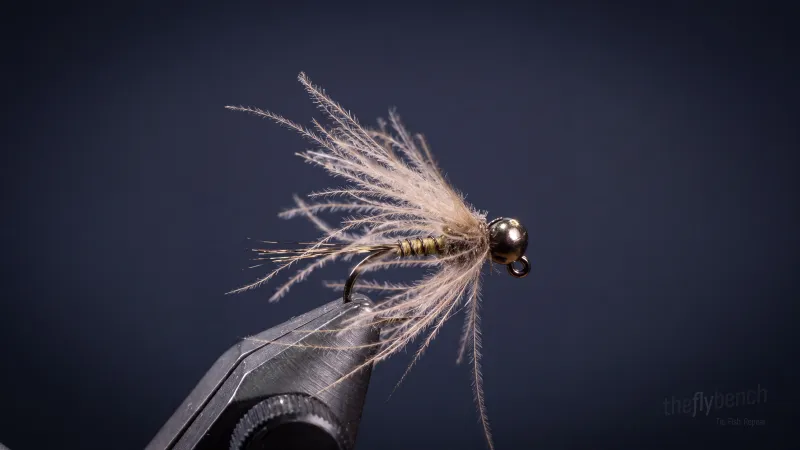
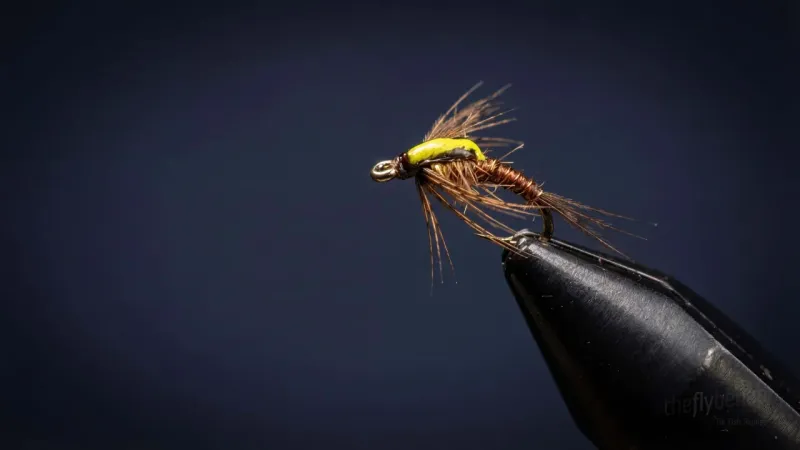
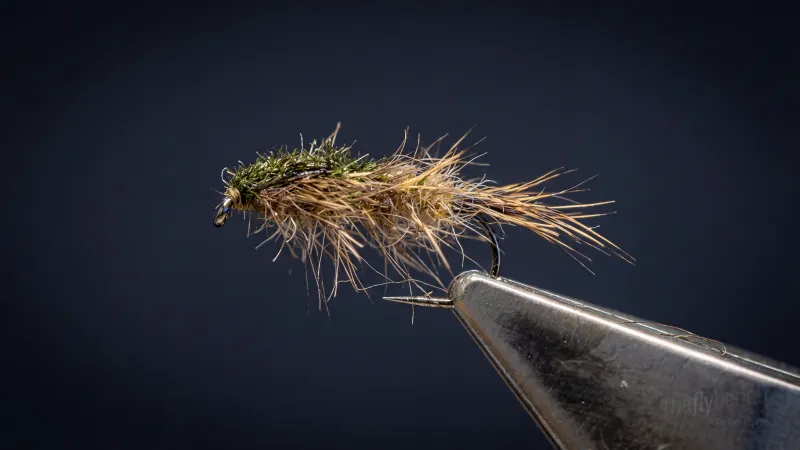
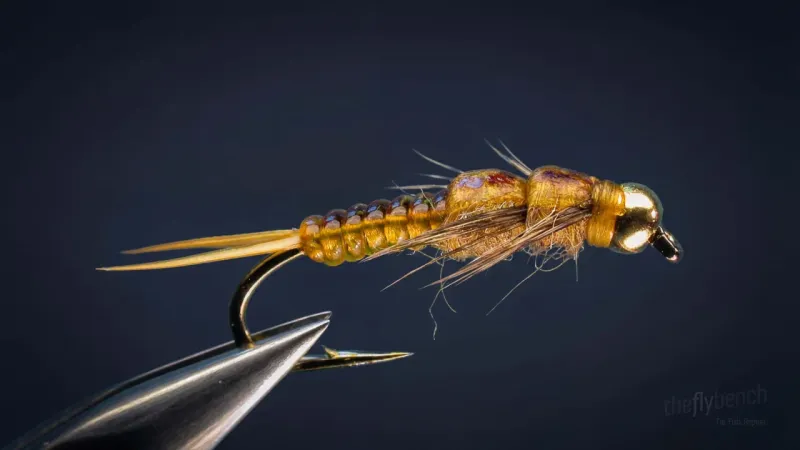
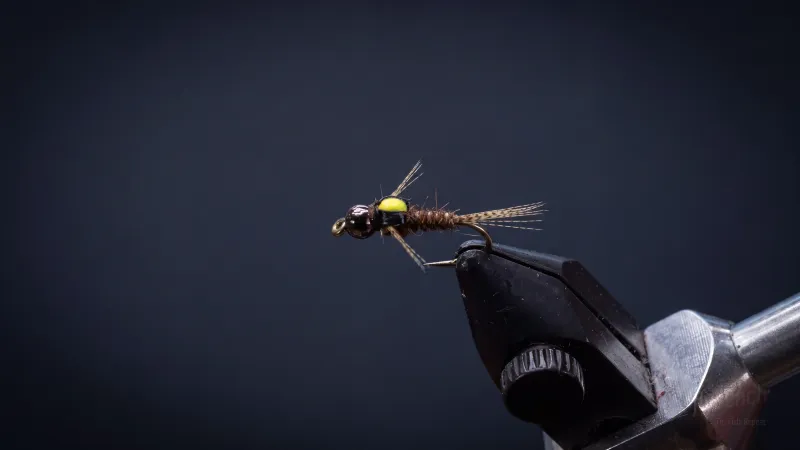
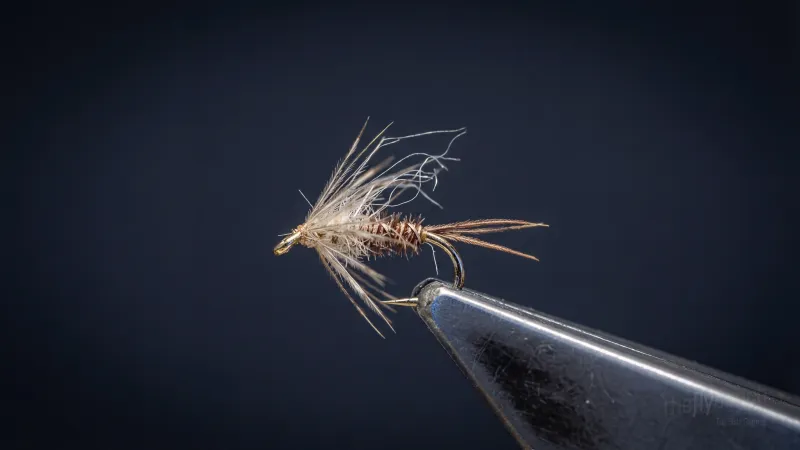
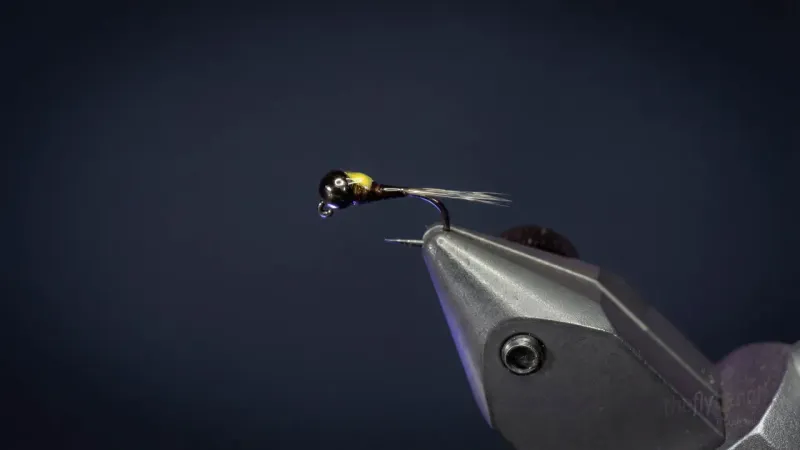
Utah guide Spencer Higa originally tied the SOS to imitate Baetis. This hatch-specific version, shown by Higa for Fly Fish Food in 2026, swaps the original's silver bead, black body and red wingcase for a black 2.4mm tungsten bead, a brown flat-thread body ribbed with black wire, and a yellow rayon floss wingcase that suggests the pale color of a PMD nymph close to hatching. It is tied on a Fulling Mill Czech nymph hook in sizes 16-20, with a black dubbed thorax and black Krystal Flash legs. Peacock flash or dark brown thread are listed as alternates.
Related patterns
Behavior & presentation
- Natural Behavior
- Pale Morning Dun nymphs crawl among cobble and weed beds for most of the year, then turn restless in the days before emergence and let go of the bottom in late morning, wriggling up through the water column to hatch.
- Where Trout Eat It
- Shallow riffles and the soft water just below them, where trout move up and hold in a foot or two of water to pick off rising PMD nymphs before the duns show.
- How to Fish It
- Hang it 18-30 inches under a buoyant dry and dead drift it through shallow feeding lanes, or fish it as the lower fly under an indicator on deeper tailwater runs.
- Best Water
- Riffle tail-outs, weedy flats on tailwaters, inside seams along gravel bars, and shallow slicks where trout fin just under the surface in late morning.
- Strike Type
- The dry fly stalls or dips under as a trout eats the nymph on its way up; quick, light sets keep 6X tippet intact.
Fishing strategy
- Rigging Suggestions
- Fish it as the dropper in a dry-dropper rig on 5X-6X fluorocarbon, tied off the hook bend of a parachute or foam dry. On deeper runs, run it as the bottom fly of a two-nymph indicator rig.
- Seasonal Timing
- Best from late June through August on western tailwaters and freestones, starting an hour or two before the late-morning PMD hatch and through the emergence.
- Pro Tips
- Carry it in 16, 18 and 20 and match the nymphs you turn over on the riffles. The yellow wingcase stands out as a trigger without adding bulk, and the 2.4mm bead sinks a size 18 fast enough for shallow water without snagging.
Entomology
Pale Morning Dun nymphs live among rocks and aquatic weeds in riffles and moderate runs. In the hours before a summer hatch they leave the bottom and drift or swim toward the surface, and trout feed on them heavily in shallow water.
- Order
- Ephemeroptera
- Family
- Ephemerellidae
- Common name
- Pale Morning Dun
- Organism
- insect
- Life stage
- nymph
Pattern details
- Moving Water
- Rocky Mountain
- dead-drift
- dry-dropper
- indicator-nymph
- modern
- tailwater
- low-clear-water