


Overview
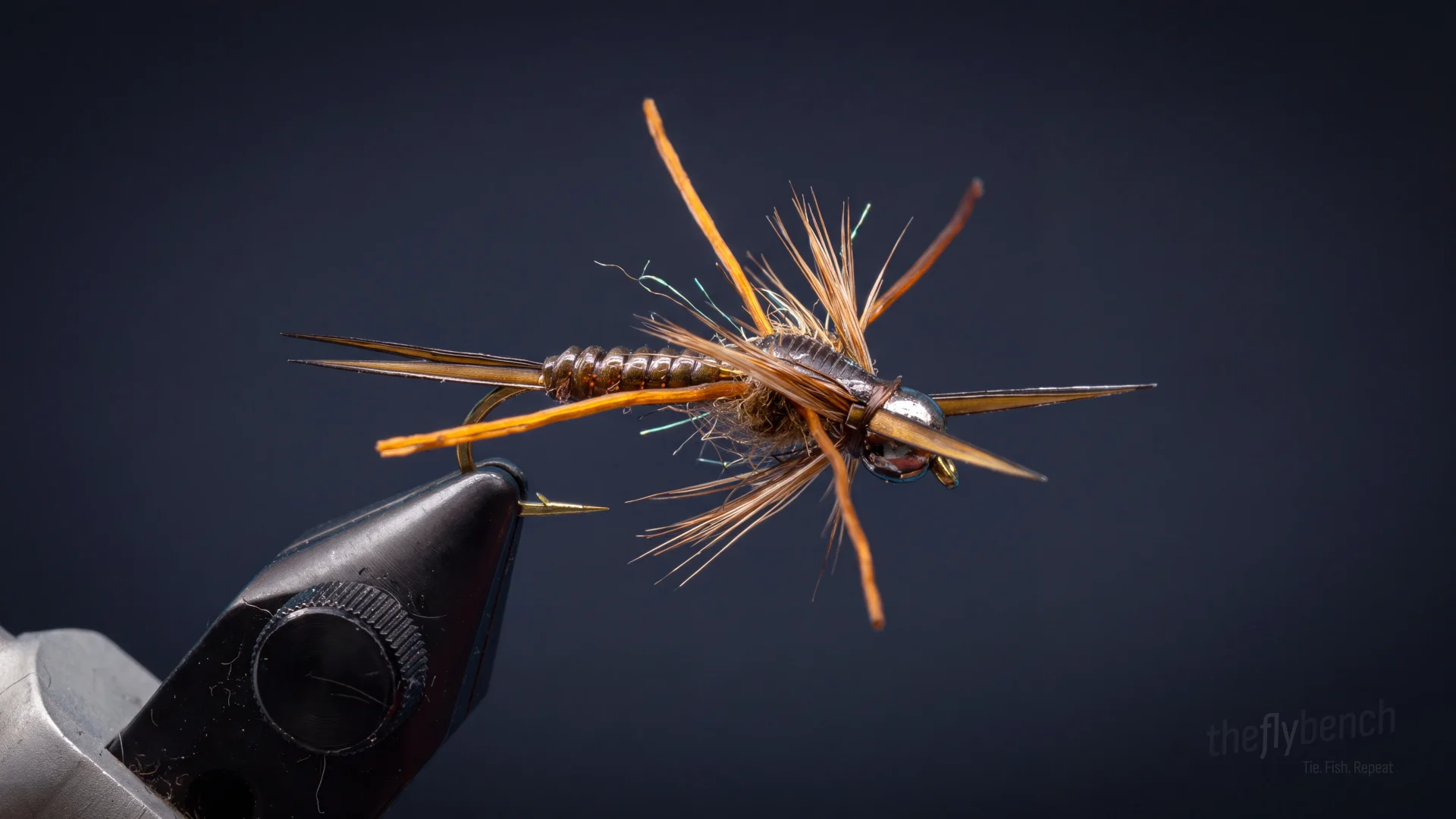
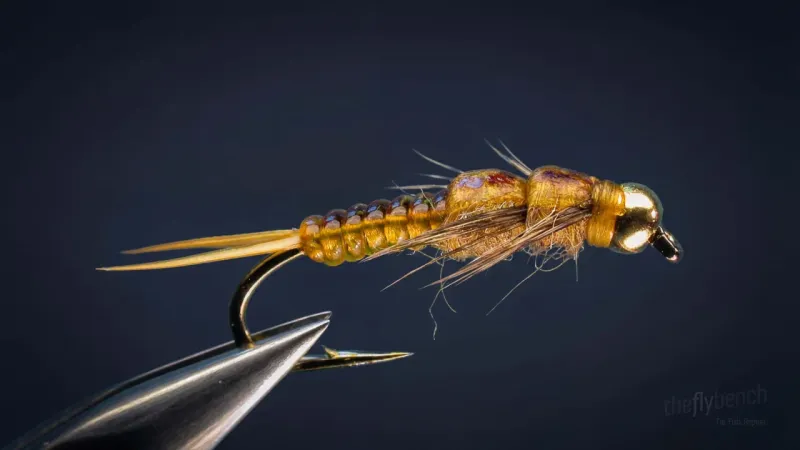
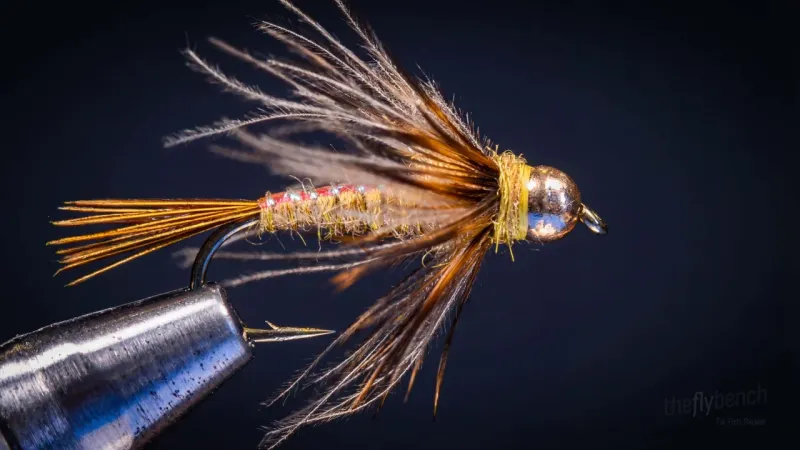
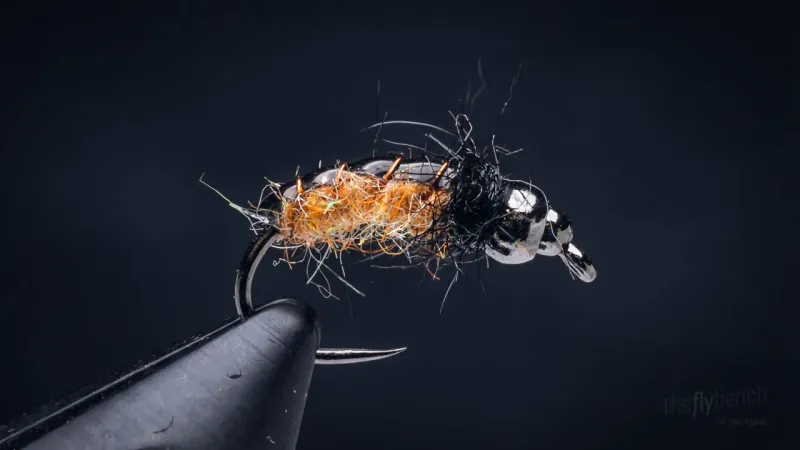
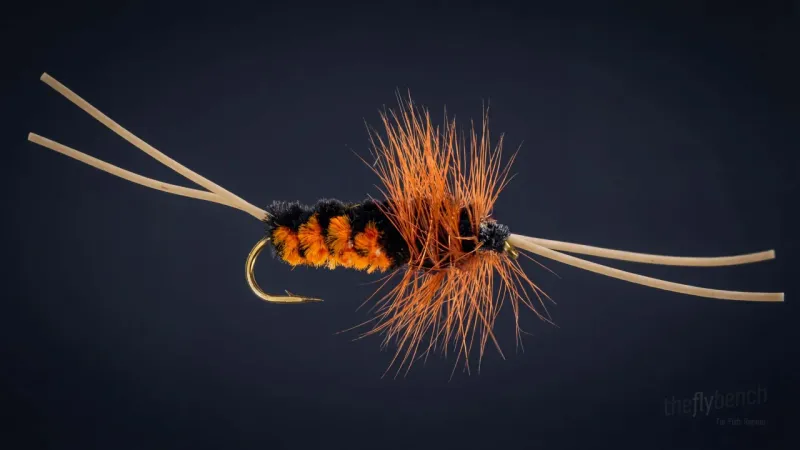
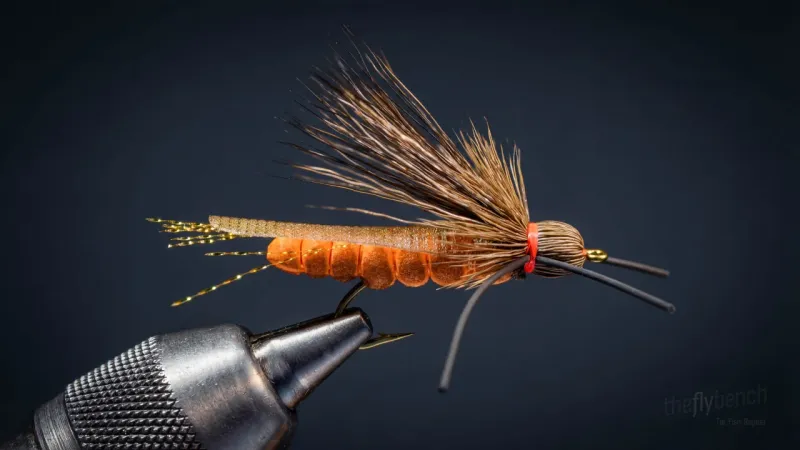
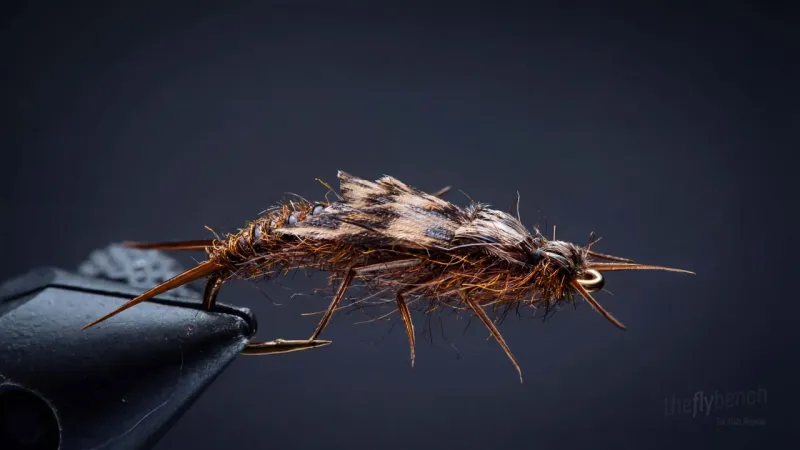
Smitty's Monthly Fly Box tied this brown version of the Jellystone on a size 8 Daiichi 1730 and recommends it for the weeks just before salmonflies take flight. Brown D-Rib wrapped over Diamond Dubbing lets some sparkle show through the segments, and a blue-and-brown Diamond Dubbing thorax adds flash under the Thin Skin wingcase. Flex Floss legs and goose biot tails and antennae keep the fly moving in the drift.
Related patterns
Behavior & presentation
- Natural Behavior
- Mature salmonfly nymphs, close to two inches long, leave the boulders where they have fed for years and crawl toward the banks to hatch, and many lose their footing and roll downstream along the bottom.
- Where Trout Eat It
- Trout stack up along the edges of fast freestone runs and in the soft water near shore, where migrating nymphs pile up before they climb out on rocks and willows.
- How to Fish It
- Drift it deep under an indicator or on a tight line with enough weight to touch the rocks, and work the last few feet of each drift along the bank, where nymphs are crawling out.
- Best Water
- Boulder pockets, bank-side seams, the soft inside edge of heavy runs and the drop-off where a riffle spills into deeper water.
- Strike Type
- A heavy, stubborn stop as a big fish clamps down on a mouthful of bug, often easy to mistake for a snag on the bottom.
Fishing strategy
- Rigging Suggestions
- Use a 9-foot 3X leader and fish it as the heavy point fly, with a smaller mayfly or caddis nymph trailed 18 inches behind on 4X or 5X. Add split shot in high spring flows to keep it near the bottom.
- Seasonal Timing
- Best from late April through June in the weeks before and early in the salmonfly hatch, when nymphs migrate to the banks. It still works through summer and fall, since salmonfly nymphs live in the river for several years.
- Pro Tips
- Fish it tight to the banks in the days before adults show up on the willows. In off-color runoff, the dark brown body and flashy thorax hold up well where slimmer nymphs disappear.
Entomology
- Order
- Plecoptera
- Family
- Pteronarcyidae
- Common name
- Salmonfly
- Organism
- insect
- Life stage
- nymph
Pattern details
- Moving Water
- Rocky Mountain
- Pacific Northwest
- dead-drift
- indicator-nymph
- stonefly-hatch
- high-water
- freestone
- modern