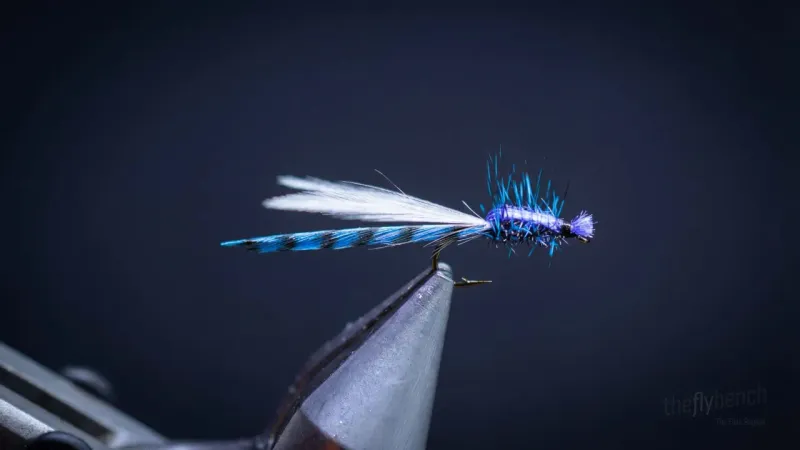
NymphSmitherman's Draggin' Nymph
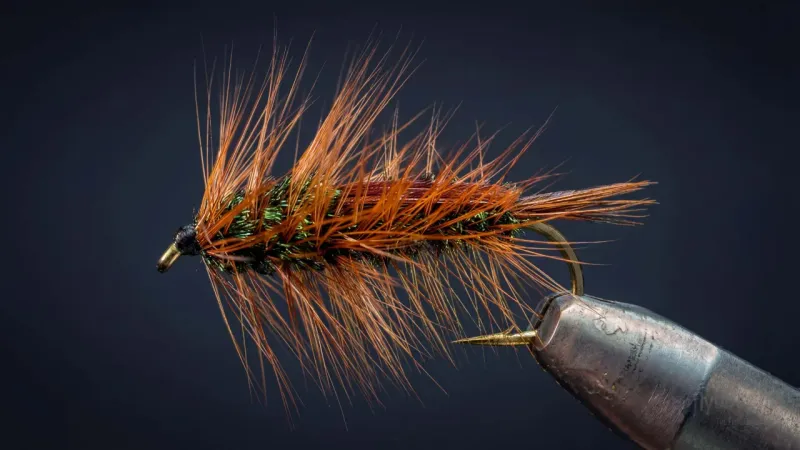
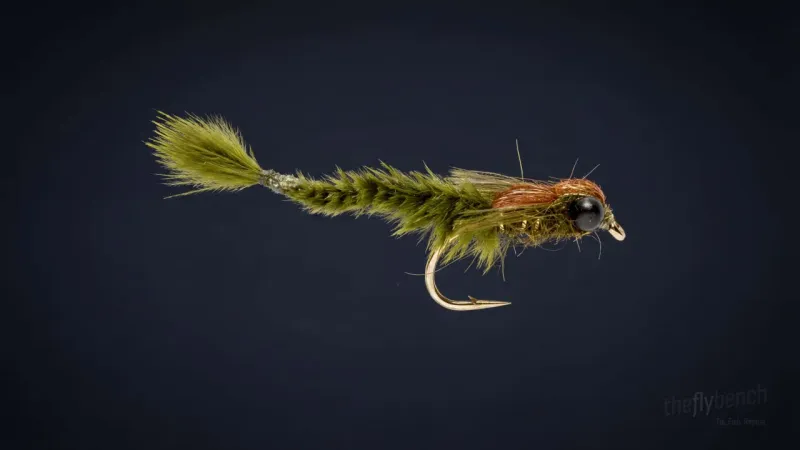
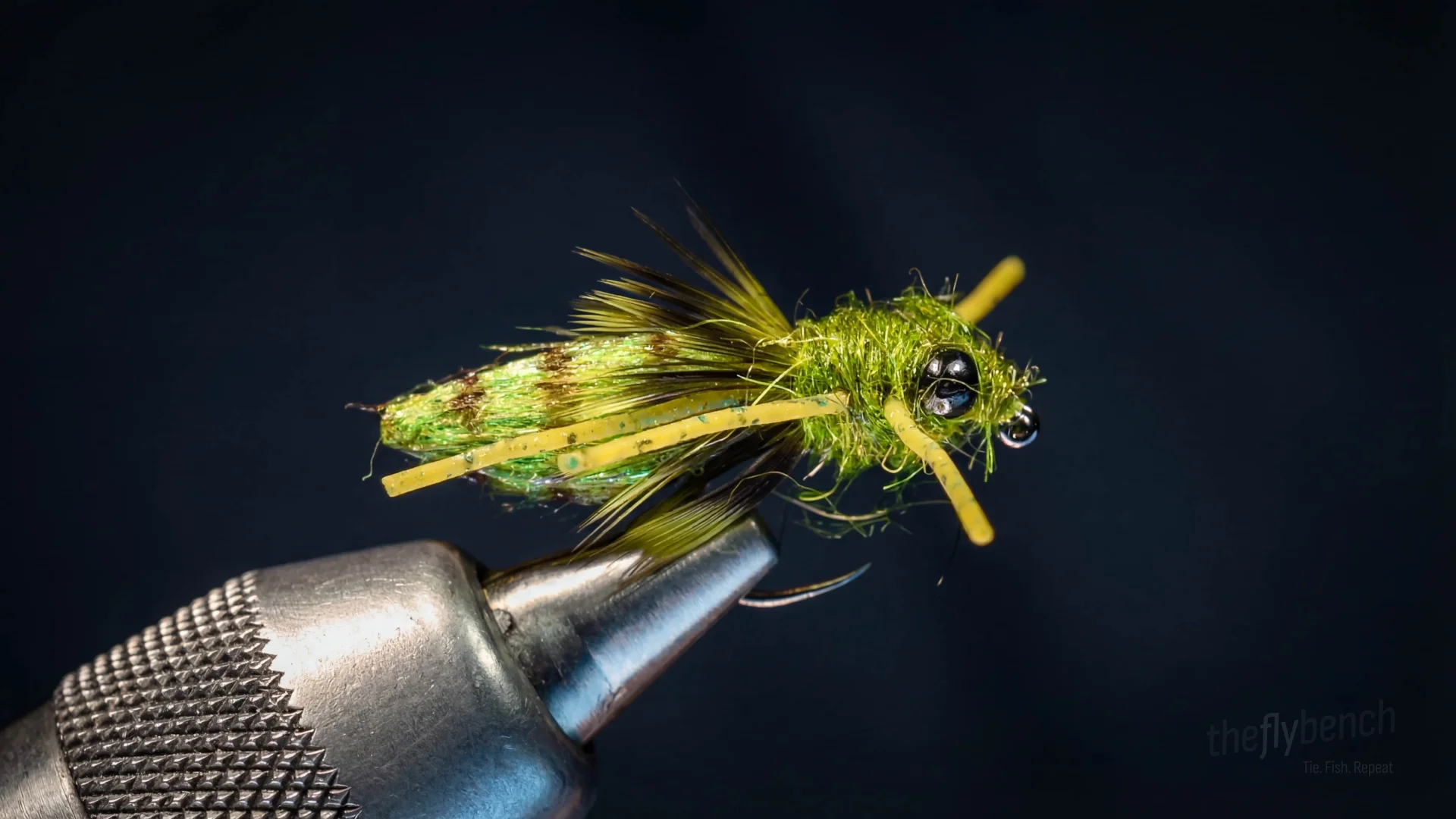
Smitherman's Draggin' Nymph is a realistic dragonfly nymph imitation designed to trigger aggressive strikes from trout and bass. This pattern features bead chain eyes that give it a jigging action and help it ride hook-point-up, a body of Senyo's Laser Dub that creates translucent bulk, a thorax blend of SLF dubbing with peacock emergence dubbing for flash and texture, an olive grizzly hen collar that pulses with movement, and rubber legs that extend beyond the body to suggest the sprawling legs of natural dragonfly nymphs.
Spring, Summer, Fall
Intermediate
Trout, Bass
Dec 2025
Overview
This Charlie Craven pattern from Charlie's Fly Box represents a modern approach to dragonfly nymph imitation that emphasizes movement and lifelike action. The bead chain eyes serve dual purposes - they provide weight to get the fly down and cause it to ride inverted, reducing snags on weedy bottoms where dragonfly nymphs live. Senyo's Laser Dub creates a body with both translucency and subtle flash that mimics the semi-transparent abdomen of natural nymphs. The thorax blend incorporating peacock emergence dubbing adds the iridescent quality seen in many aquatic insects. The olive grizzly hen collar provides subtle barred motion while the motor oil rubber legs extend outward to suggest the distinctive splayed legs of dragonfly nymphs. The hook choice (Hanak 450BL) features a jig-style bend that works with the bead chain eyes to ensure proper orientation.
Materials
Hook: Hanak 450BL, #10-14
Thread: Veevus 8/0, light olive
Eyes: Bead Chain Eyes (medium), black
Body: Senyo's Laser Dub, light olive
Thorax: SLF Dubbing (Whitlock's) or Caddis Green Hareline Dubbing, peacock emergence dubbing blend
Collar: Hen Saddle, olive grizzly
Legs: Perfect Rubber Legs, motor oil
Behavior & Presentation
Natural Behavior: Dragonfly nymphs jet-propel through weed beds using rectal respiration, pausing to ambush prey before lunging forward again. Their sprawling legs and bulky bodies make them unmistakable.
Where Trout Eat It: Trout hunt these nymphs near weed edges in lakes, along drop-offs where vegetation meets depth, and in slow river sections with aquatic plants.
How to Fish It: Use erratic strip-pause retrieves to mimic jet propulsion. Let the fly sink during pauses while materials pulse, then strip sharply to imitate forward lunges.
Best Water: Target weed edges in lakes, drop-offs at shelf breaks, grass edges along calm banks, and slow channel swings with vegetation.
Strike Type: Strikes feel aggressive and solid as fish attack the large profile with commitment.
Fishing Strategy
Rigging Suggestions: Fish on a 9-12 foot leader tapering to 3X-4X fluorocarbon tippet. Use a floating line with long leader for shallow water, or intermediate/sinking line for deeper presentations. Count down to reach different depths.
Seasonal Timing: Most effective from when dragonfly and damselfly nymphs are active. Peak productivity occurs in warmer months when these large predatory nymphs are most abundant.
Pro Tips: This is a sinking pattern designed to probe weedy structure near the bottom. The light olive coloration matches most dragonfly nymph populations while providing visibility in various water conditions.
Entomology
Damselfly nymphs swim through weed beds with sinuous, undulating movements before climbing vegetation to emerge, occasionally dislodged into open water. Fish pursue these active nymphs because their elongated bodies and swimming motion make them highly visible prey items, especially in stillwater environments.
- Order
- Odonata
- Family
- Coenagrionidae
- Common Name
- Damselfly
- Organism Type
- insect
- Life Stage
- nymph