Midge / EmergersScotty's Midge
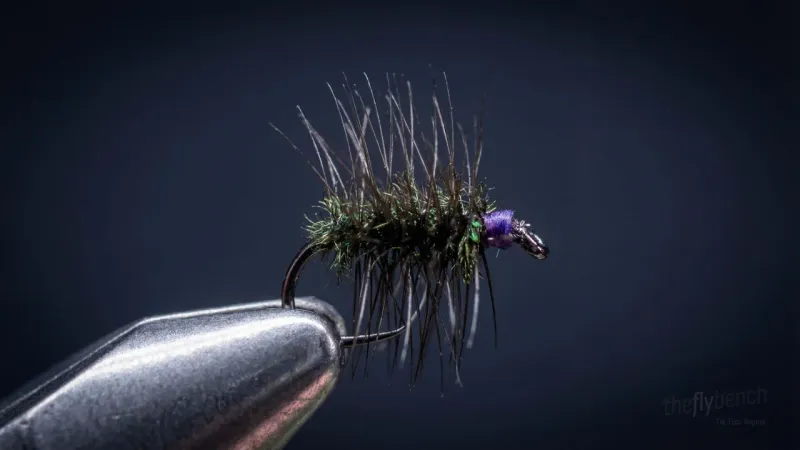
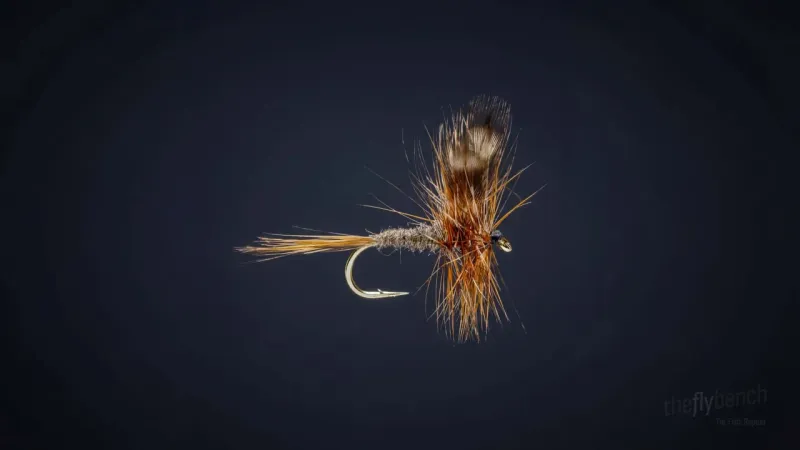
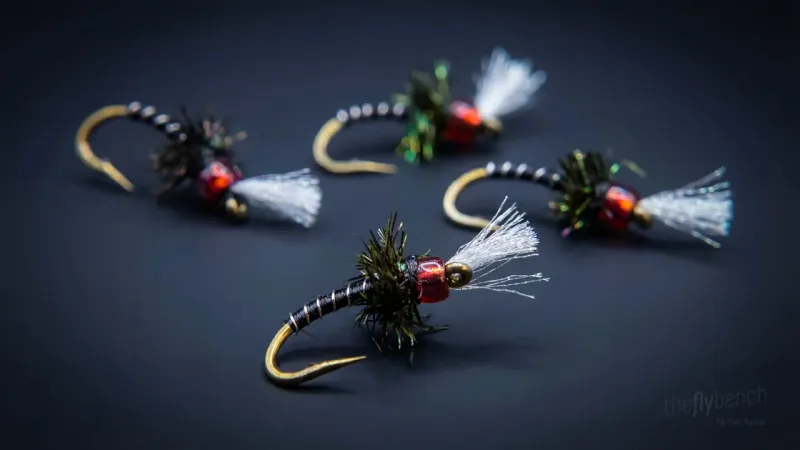
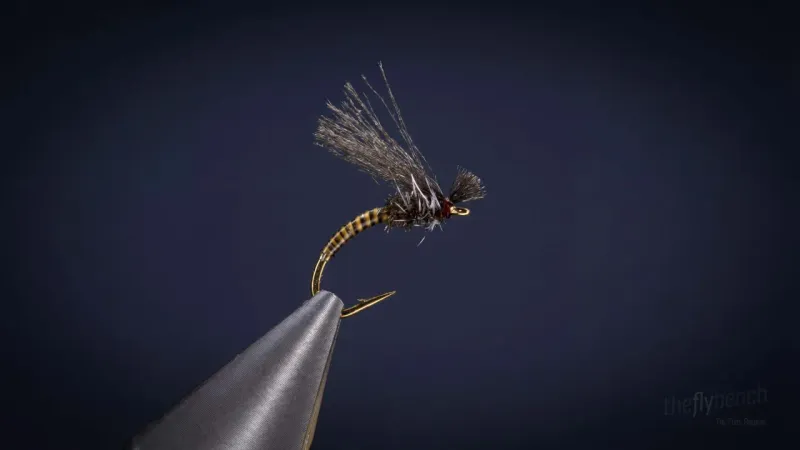
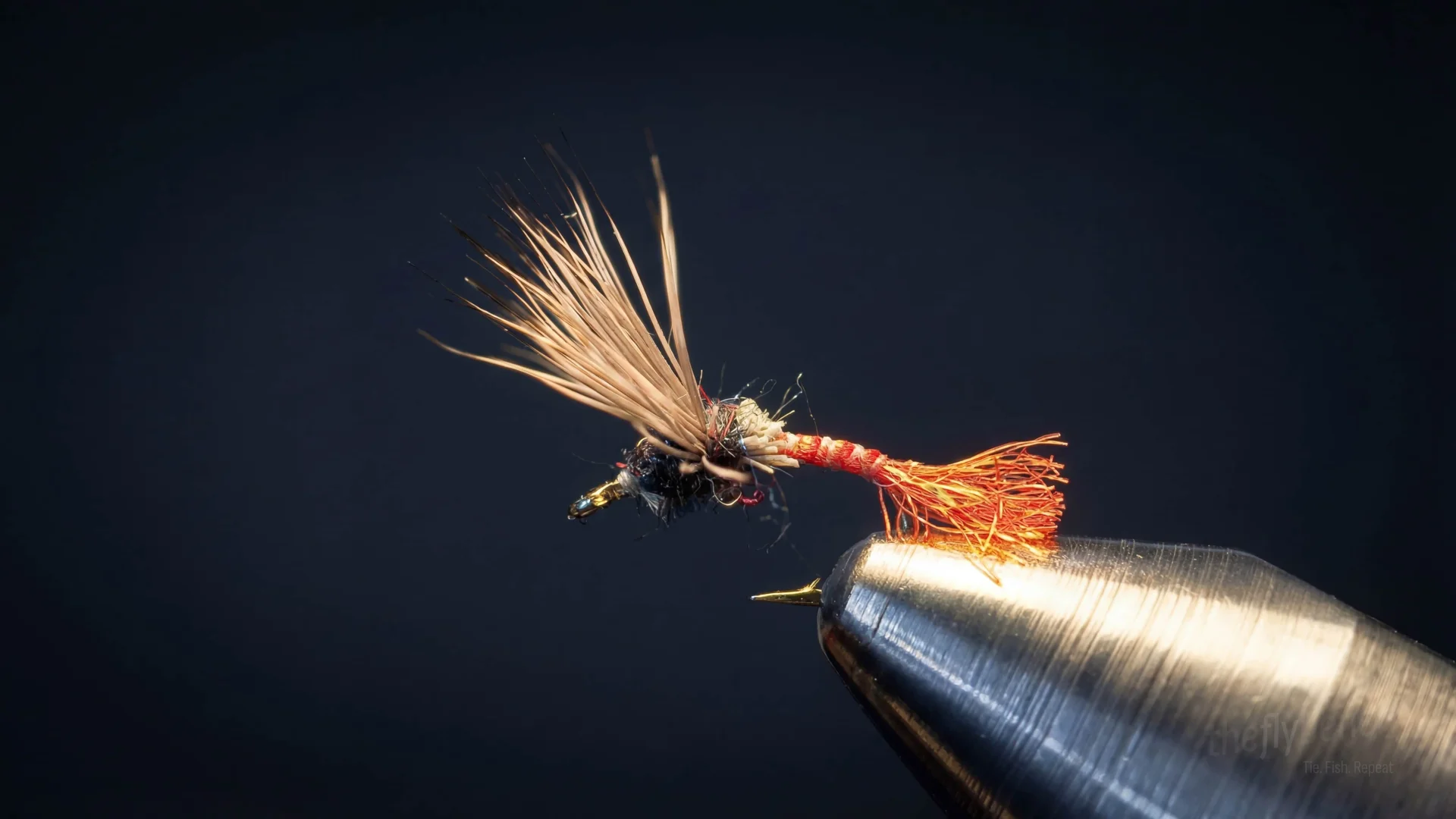
Scotty's Midge is a high-visibility midge emerger pattern featuring a distinctive red Zelon shuck and sparkle dun deer hair wing. The contrasting colors create an attractive pattern that fish find irresistible while allowing the angler to track the fly in challenging conditions. The black Zelon dubbing thorax completes the midge profile.
Year Round
Intermediate
Trout
Dec 2025
Overview
Scotty's Midge was developed at Blue Ribbon Flies as a visible alternative to standard midge patterns. The coachman red shuck creates a subtle hot spot that can trigger strikes from hesitant fish while helping the angler locate the fly. The sparkle dun deer hair wing provides both floatation and visibility for the angler.
Materials
Hook: Tiemco 2488 or Umpqua U201, #18-22
Thread: Uni-Thread, 8/0, rusty dun
Shuck: Crinkled Zelon, coachman red
Thorax: Zelon Dubbing, midge black
Wing: Sparkle Dun Deer Hair, natural
Behavior & Presentation
Natural Behavior: Midge pupae ascend slowly through the water column toward the surface, their trapped gases causing them to rise in gentle, predictable patterns. Fish sip these emerging midges methodically because winter and early season hatches provide crucial nutrition when water temperatures suppress other insect activity.
Where Trout Eat It: Ideal for tailwaters, spring creeks, and slow-moving freestone sections. Also effective on lake during calm conditions when fish are sipping midges.
How to Fish It: Dead drift in the surface film. The red shuck adds attraction without alarming fish. Drag-free drift matches natural nymph movement in the current.
Best Water: Focus on seams where trout hold and actively feed.
Strike Type: Look for subtle dimples or quiet sips in the surface film. The deer hair wing may disappear in a gentle swirl as fish confidently take the floating emerger.
Fishing Strategy
Rigging Suggestions: Fish on 12-15 foot leader with 6X-7X tippet. Can be fished alone or as an indicator fly for smaller midge droppers. The deer hair wing provides good floatation.
Seasonal Timing: Effective year-round during midge activity. Particularly productive during when midges dominate and fish become selective to size and profile.
Pro Tips: Excellent visibility from the sparkle dun deer hair wing. Better tracking than standard midge patterns while maintaining effectiveness.
Entomology
Midge pupae ascend slowly through the water column toward the surface, their trapped gases causing them to rise in gentle, predictable patterns. Fish sip these emerging midges methodically because winter and early season hatches provide crucial nutrition when water temperatures suppress other insect activity.
- Order
- Diptera
- Family
- Chironomidae
- Common Name
- Midge
- Organism Type
- insect
- Life Stage
- general