NymphProblem Child
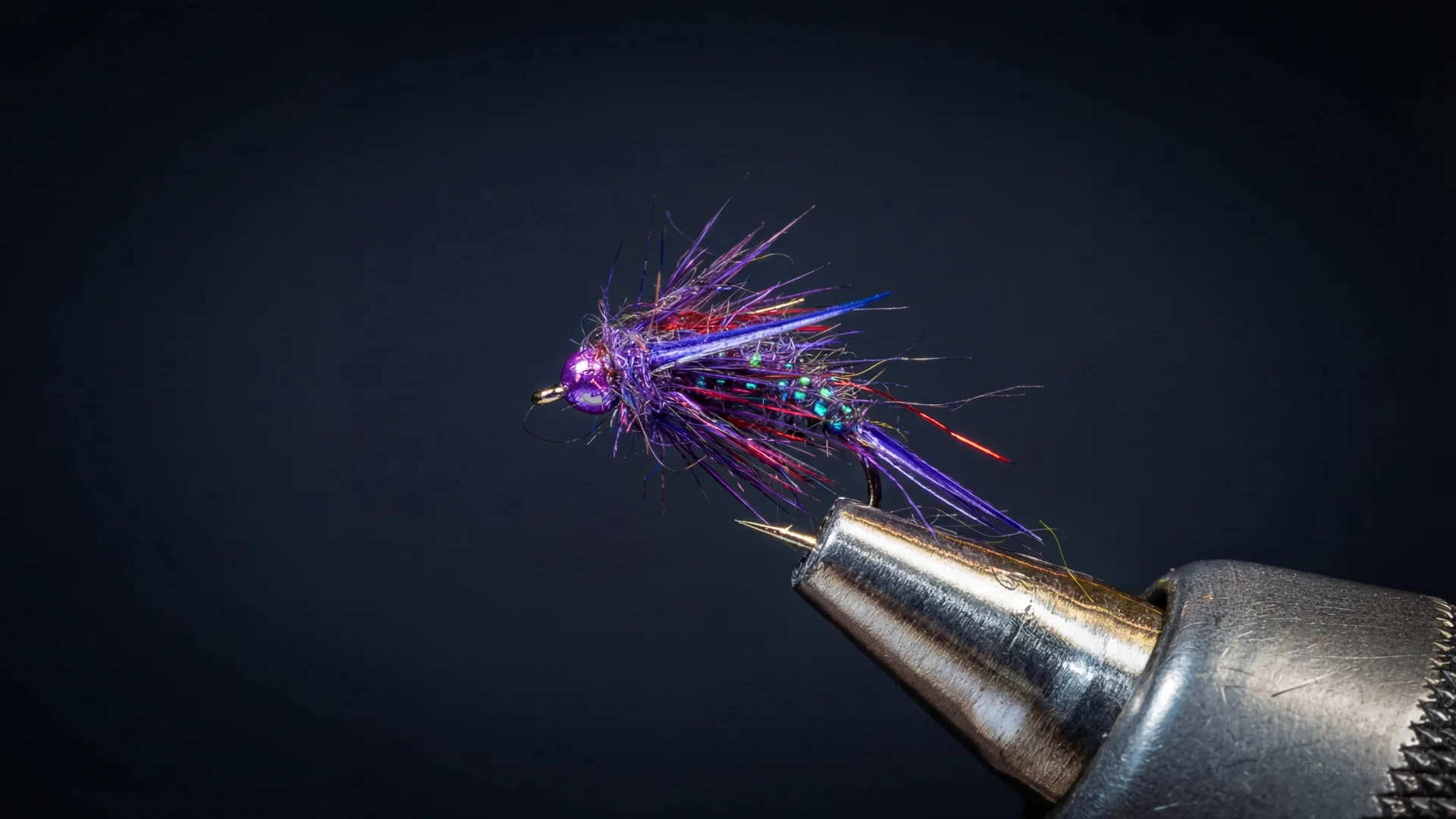
The Problem Child is an innovative attractor nymph that showcases a unique dubbing loop technique for creating soft-hackle collars with coq de Leon hen saddle fibers. This pattern features dual purple and red tungsten beads, a purple turkey biot tail, an emergence dubbing abdomen with lateral scale ribbing, and a compound dubbing loop collar that combines cut-to-length hen saddle fibers with dubbing. Purple turkey biot horns complete the flashy, eye-catching design that attracts attention in any water condition.
Spring, Summer, Fall
Advanced
Trout
Dec 2025
Overview
This Charlie Craven pattern from Charlie's Fly Box represents an innovative approach to soft-hackle collar construction. The pattern was born from Craven's desire to use the outstanding mottling, perfect shape, and extreme webbiness of Whiting Farms coq de Leon hen saddles on smaller patterns. These hen feathers differ dramatically from the long, stiff fibers of coq de Leon roosters - they're about three to four times the size of Indian hen saddles with much longer fibers. While the long fibers made them difficult for conventionally wrapped soft-hackle collars on small flies, Craven adapted a steelhead technique of using dubbing loops loaded with fibers. By cutting the hen fibers to the proper length and combining them with a trace of dubbing in the loop, the dubbing acts as a vehicle to transfer the fibers without separation. This compound loop technique allows for mixed colors, varied fiber lengths, and carefully selected dubbing to enhance the collar.
Materials
Hook: Daiichi 1160, #14
Bead: Tungsten Bead (Umpqua Radiant), purple and red (7/64")
Thread: Veevus 14/0, red
Tag: Thread coated with UV Resin
Tail: Turkey Biot, purple
Rib: Lateral Scale (Opal Mirage), 1/100"
Abdomen: Emergence Dubbing (Nature's Spirit), purple
Collar: Coq de Leon Hen Saddle, purple (spun in dubbing loop)
Horns: Turkey Biot, purple
Glue: Solarez UV Resin, bone dry
Behavior & Presentation
Natural Behavior: Mayfly nymphs crawl and swim along substrate, occasionally releasing into the drift where they tumble and flex their bodies attempting to regain purchase. The compound dubbing loop collar with long coq de Leon hen fibers creates undulating movement mimicking legs and gills of drifting nymphs.
Where Trout Eat It: Trout attack this weighted nymph in the mid to lower water column as it tumbles along the bottom in freestone riffles and tailwater runs. The purple coloration and lateral scale ribbing create visibility in off-color high water where the pattern excels as an attractor for fish holding behind structure.
How to Fish It: Dead drift on tight-line euro rig or under indicator as point fly with 5X-6X fluorocarbon. The dual purple and red tungsten beads provide exceptional weight for fast descents into deep pockets. Lead the fly slightly in faster currents and maintain contact for immediate hook sets.
Best Water: Focus on deep pockets behind boulders and freestone riffles when South Platte flows increase. The aggressive dual-bead weight excels in heavy current breaks and pocket water where the attractor colors work when visibility decreases and flow accelerates.
Strike Type: Euro or indicator takes register as ticks, stops, or indicator dips; respond immediately with a firm upstream set to connect before fish eject the fly.
Fishing Strategy
Rigging Suggestions: Fish on a tight-line euro rig or under an indicator. The dual beads provide excellent weight, making it suitable as a point fly in a two-nymph setup. Use 5X-6X fluorocarbon tippet for best results.
Seasonal Timing: Most effective during, and when mayfly nymphs are active. The attractor colors work well in both clear and off-color water conditions.
Pro Tips: This is a subsurface pattern designed to sink quickly. The purple coloration and lateral scale ribbing provide visibility while the soft-hackle collar creates lifelike movement that triggers strikes from curious trout.
Entomology
Mayfly nymphs exhibit varied swimming patterns including crawling, clinging to substrate, and occasional drifting when disturbed during feeding activities. Fish target these abundant aquatic insects because they're available year-round in diverse habitats and represent consistent, nutritious forage regardless of specific species.
- Order
- Ephemeroptera
- Common Name
- Mayfly
- Organism Type
- insect
- Life Stage
- general