NymphNet Builder Caddis
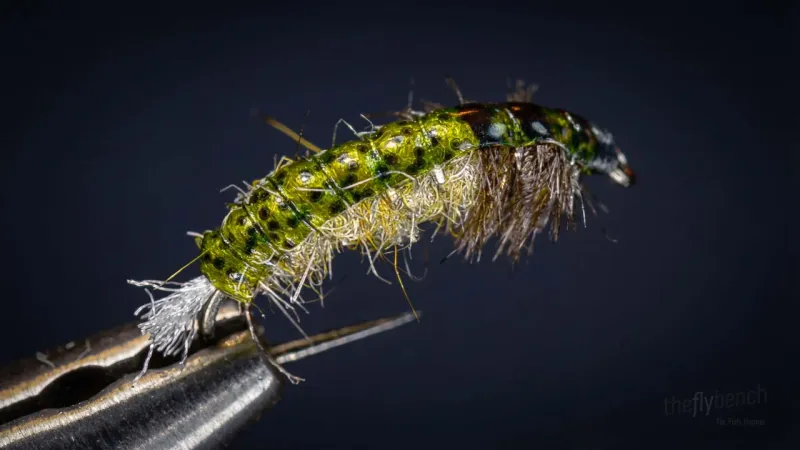
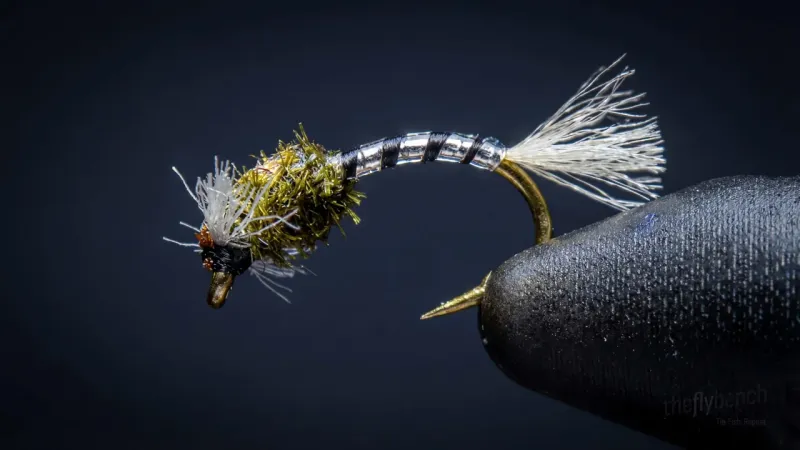
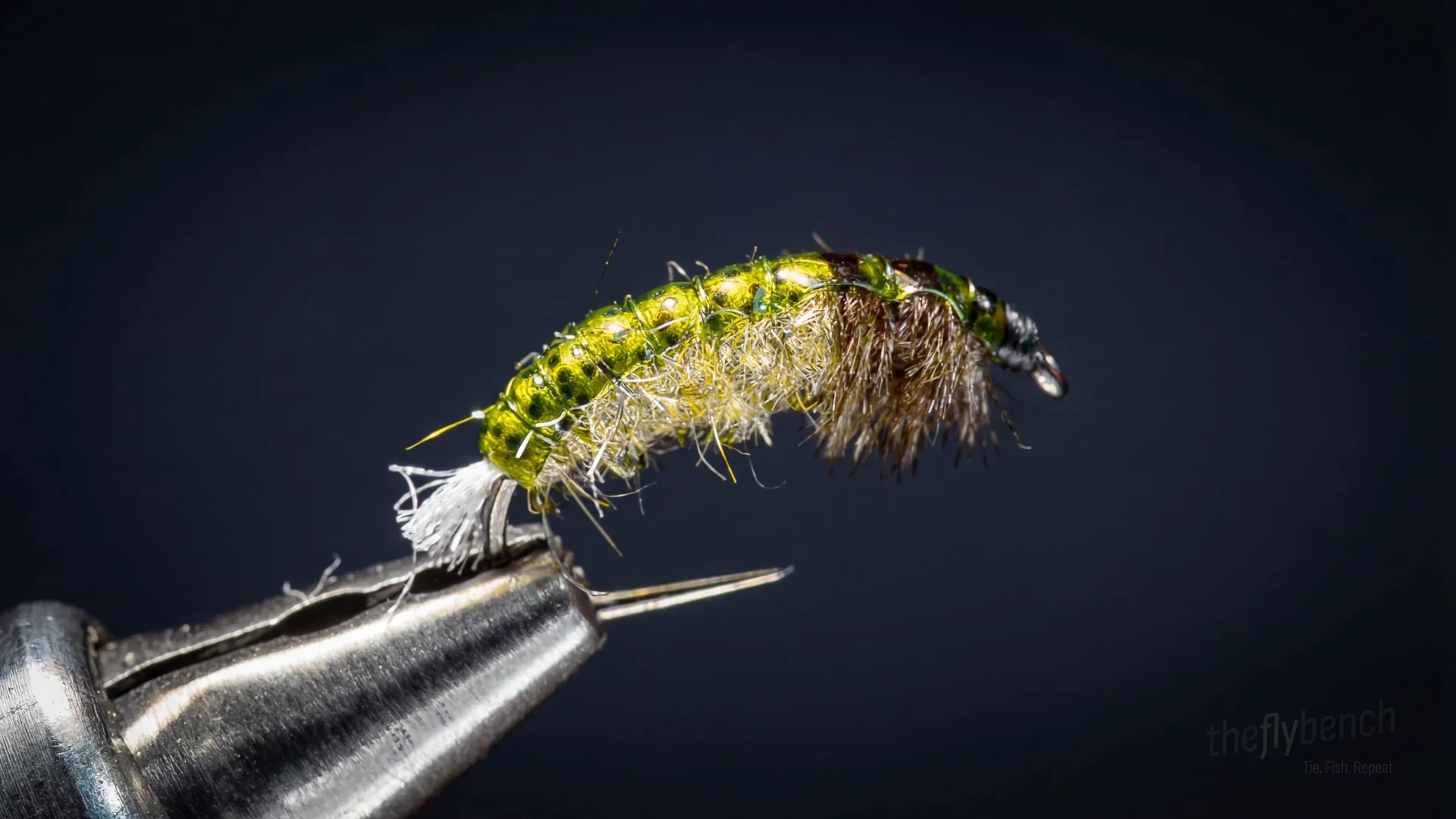
The Net Builder Caddis is a realistic caddis larva imitation that replicates the free-living, net-spinning caddis species that build silken nets to filter food from the current. This weighted pattern features a Thinskin casing over Sow Scud Dubbing for a translucent, segmented body, a white Z-Lon tail suggesting the anal gills of natural larvae, and ostrich herl legs that create movement and suggest the thoracic legs of natural caddis larvae.
Spring, Summer, Fall
Intermediate
Trout
Dec 2025
Overview
This Charlie Craven pattern from Charlie's Fly Box represents the often-overlooked net-building caddis larvae that are incredibly abundant in freestone streams. Unlike case-building caddis, net-spinners live in silken retreats attached to rocks where they filter organic matter from the current. The pattern's construction creates a realistic larval profile with the Thinskin casing providing the characteristic translucent appearance of natural caddis larvae. The white Z-Lon tail imitates the distinctive anal gills, while the tippet ribbing creates segmentation and adds durability to the pattern. The lead wire underbody ensures the fly reaches the bottom quickly where natural net-building caddis live.
Materials
Hook: Hanak 300, #10-16
Thread: UNI 8/0, black
Weight: Lead Wire, .020
Tail: Z-Lon, white
Rib: Tippet Material, 3X
Casing: Thinskin (Fly Specks), olive
Body: Sow Scud Dubbing, olive
Legs: Ostrich Herl, gray or black
Behavior & Presentation
Natural Behavior: Hydropsychidae larvae abandon their fixed silken nets during high water or when searching for better feeding sites, tumbling along the bottom with their distinctive white anal gills visible. The translucent Thinskin casing over dubbing perfectly captures the see-through quality of these soft-bodied filter feeders.
Where Trout Eat It: Trout intercept net-building caddis larvae in fast riffles and pocket water where the naturals build their silk hunting nets on slick rocks. Fish position in feeding lanes just downstream of rocky riffle edges where dislodged larvae tumble.
How to Fish It: Dead drift near bottom using weighted rigs or euro setup. Cast up and across into rough pocket water, maintaining tight line contact. Let fly swing downstream at drift end, as larvae naturally tumble and swing in current.
Best Water: Focus on fast riffles with slick, algae-covered rocks and pocket water where net-spinners construct silk retreats. Target transition zones where riffles spill into runs, and seams along boulder edges.
Strike Type: Weighted nymph takes feel like hesitations or taps transmitted through the tight line; set with a swift lift while maintaining tension throughout the drift.
Fishing Strategy
Rigging Suggestions: Fish on a standard nymphing rig or euro nymphing setup with a tight line. Works well as a point fly in a two-nymph rig or as a dropper behind a larger attractor pattern. Use 5X-6X fluorocarbon tippet.
Seasonal Timing: Most effective from when caddis larvae are actively feeding and growing. Particularly productive during periods of high water when dislodged larvae are available to trout.
Pro Tips: This is a subsurface pattern designed to sink quickly and drift near the bottom. The olive coloration blends with natural stream substrates while the ostrich herl legs provide subtle movement that attracts attention.
Entomology
Caddis larvae construct fixed net structures on rocks to filter food particles from the current, but they occasionally abandon these retreats and drift downstream seeking new territory. Fish capitalize on these displaced larvae because they're soft-bodied and unable to escape once swept into the current.
- Order
- Trichoptera
- Common Name
- Caddisfly
- Organism Type
- insect
- Life Stage
- larva