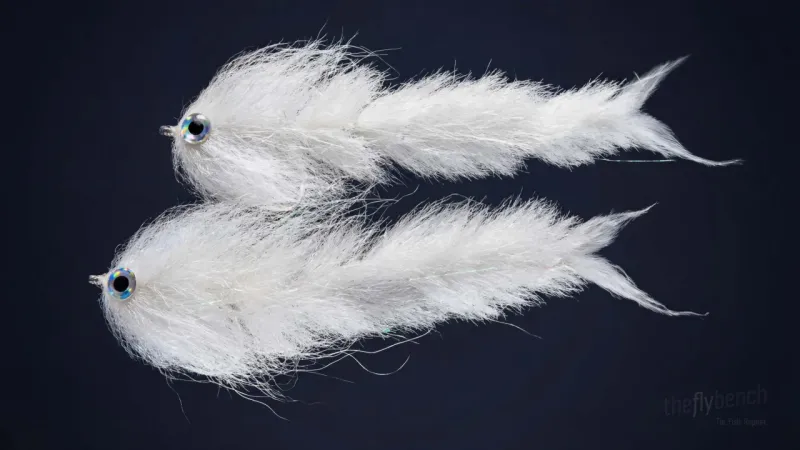
StreamersLlama Fry
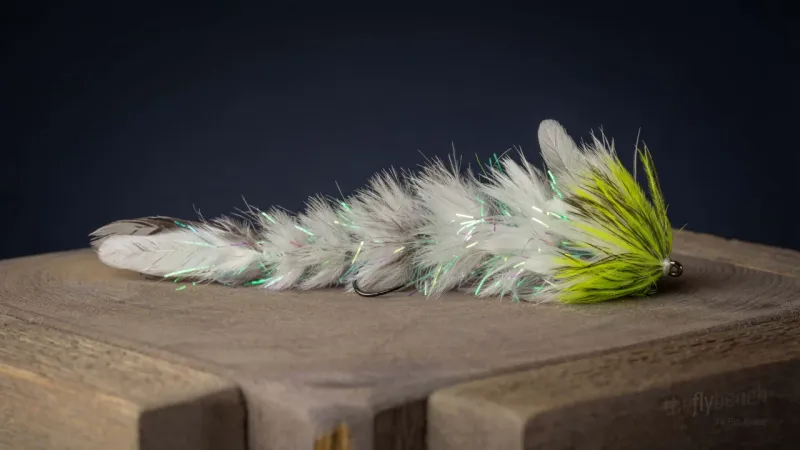
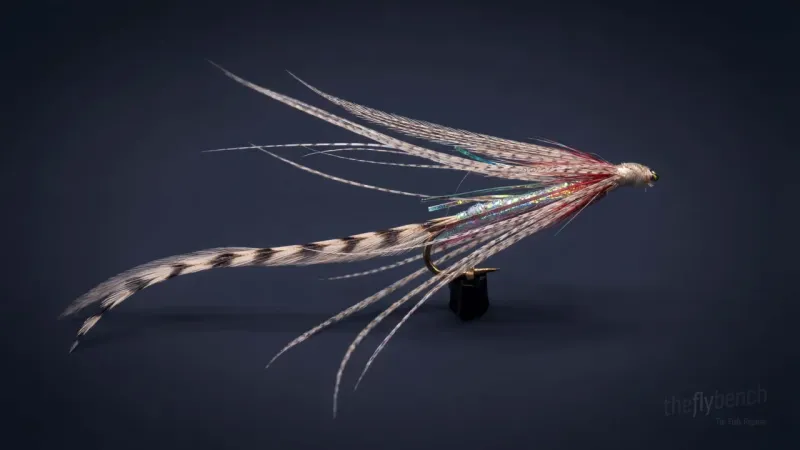
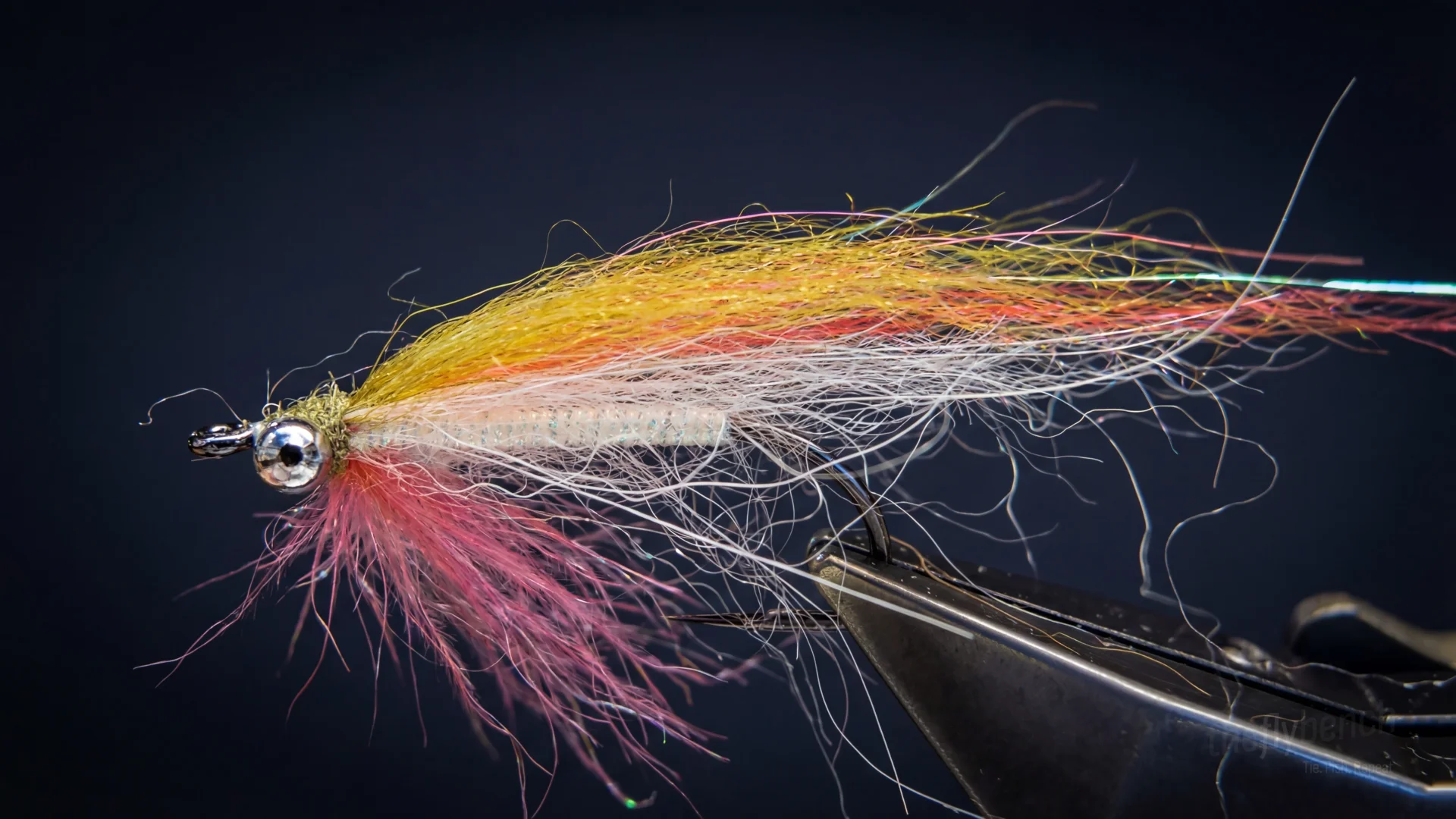
Hans Weilenmann's Llama Fry imitates struggling baitfish with a pearl Hi-Luster braid body, a pink Llama-mix throat, and a white-pink-olive Llama-mix wing capped by an olive rabbit-and-synthetic head. Silver bead-chain eyes add weight and flash for stripping through the edgewaters where predators key on exposed fry.
Spring, Summer, Fall
Advanced
Trout
Feb 2026
Overview
Llama fur mixed with a touch of fine flash gives the wing translucency and movement that plain bucktail or synthetic fibers alone don't produce, letting the fly pulse on the pause between strips. The braided pearl body throws flash along the flanks the way a fry's scales catch light, and the rabbit-and-synthetic head adds a soft, breathing profile without bulking up the silhouette. It's built for an active strip retrieve through spring and summer, when juvenile baitfish get pushed into open water and predators feed on them in numbers.
Where to Buy This Fly
We only link to fly shops we trust. Some links are referral links, which may earn us a commission at no extra cost to you.
Materials
- Hook:
- Tiemco 777SP #4
- Thread:
- Sparton 6/0, white
- Eyes:
- Bead chain, silver
- Body:
- Kreinek Hi Luster Braid, pearl #32
- Throat:
- Llama Mix, pink
- Wing:
- Llama Mix - white, pink, olive
- Head:
- Rabbit and synthetic mix, olive
Behavior & Presentation
Natural Behavior: Newly emerged fry struggle to maintain depth, their weak swimming muscles forcing them to drift into exposed positions. They flutter and tumble erratically when swept from protective edgewaters into faster flows.
Where Trout Eat It: Mid-column and near banks where fry lose position, particularly in current seams where they're pushed from refuge.
How to Fish It: Short strips with pauses to imitate struggling swimmers, or swing presentations that mimic fry being swept downstream.
Best Water: Target banks and undercuts where fry hold, current breaks where they lose position and drift helplessly, and seams between fast and slow water.
Strike Type: Violent strikes as predators capitalize on easy meals, often hitting during pauses when the fry appears most vulnerable.
Fishing Strategy
Rigging Suggestions: Use a 7-9 foot leader with 2X or 3X tippet for aggressive takes. Add weight 12-18 inches above the fly to get deep. Use a sinking tip or full sinking line in lake.
Seasonal Timing: Most productive from late April through October, with exceptional results during May and June when baitfish fry are abundant. fishing from September through October can be outstanding as trout feed aggressively before .
Pro Tips: Match your retrieve speed to water temperature. Cold water requires slow, methodical strips while warmer water allows for aggressive, fast retrieves that trigger reaction strikes.
Entomology
Newly emerged fry struggle to maintain depth in current, their underdeveloped swimming muscles forcing them to drift frequently into exposed positions within the water column. These vulnerable juveniles flutter and tumble erratically when swept from protective edgewaters into faster flows. Adult fish prey on fry because they represent zero-risk meals that can be consumed in massive numbers during spawning seasons, allowing predators to rapidly accumulate energy reserves with minimal effort.
- Organism Type
- baitfish
- Life Stage
- general