


Overview
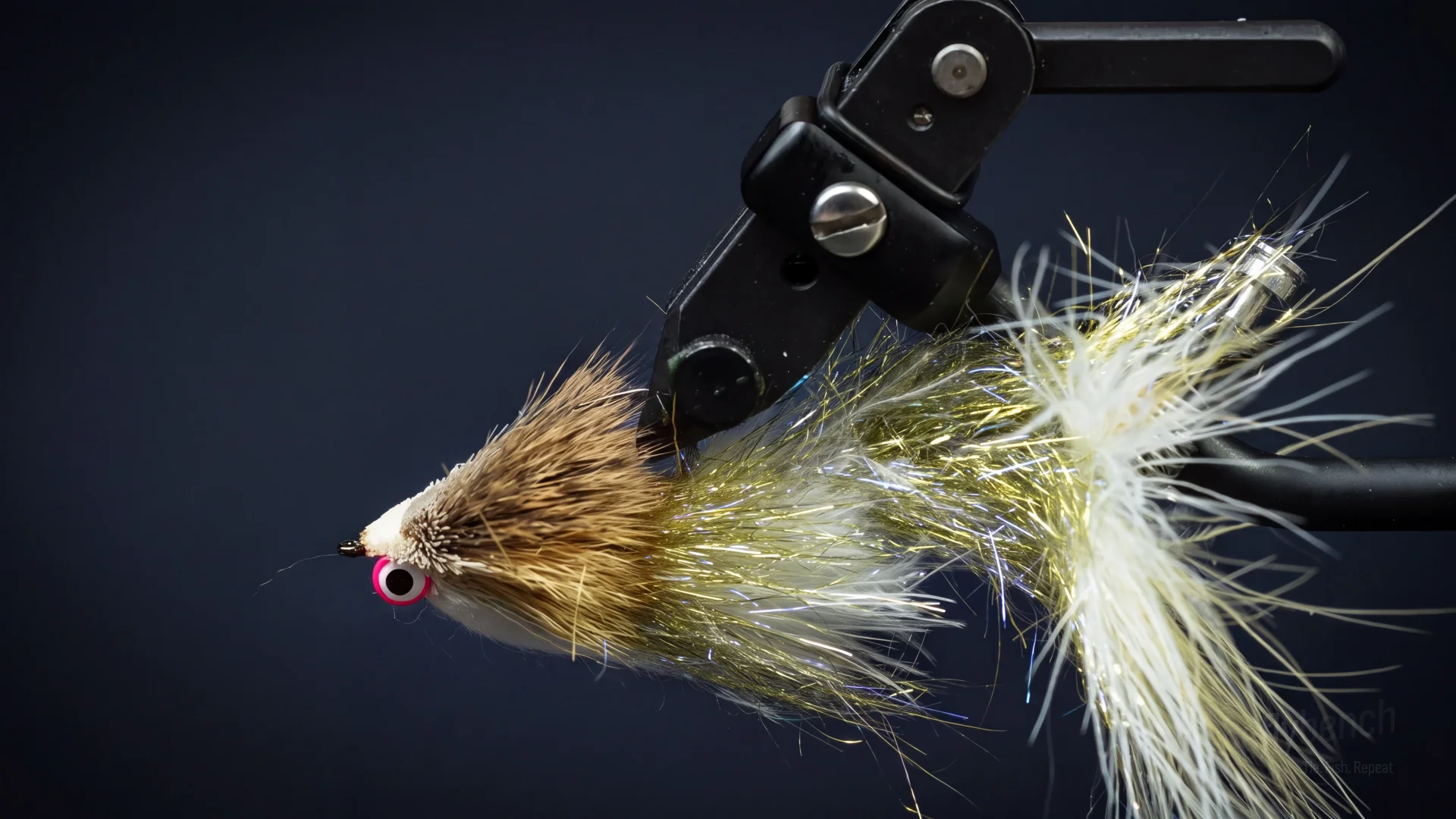
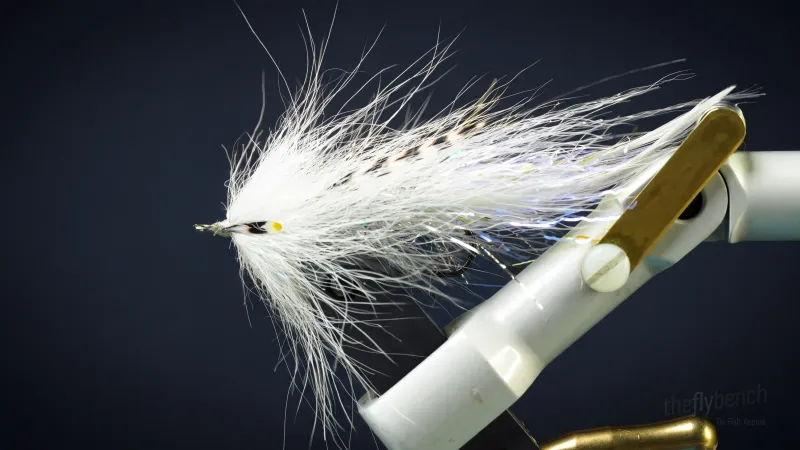
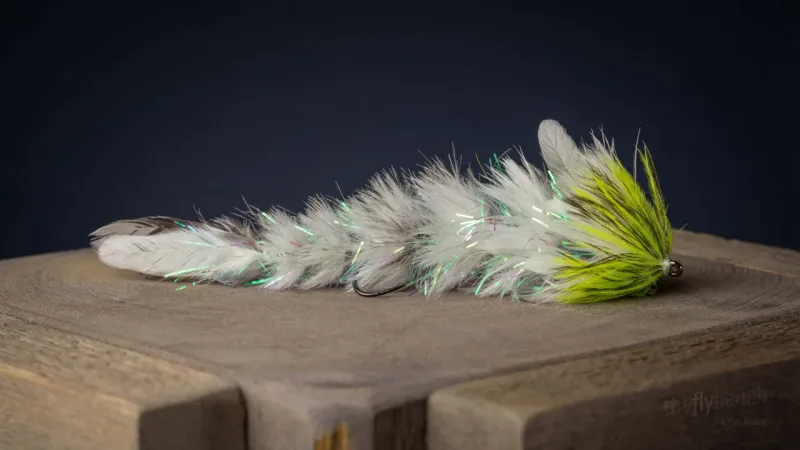
Cheech of Fly Fish Food designed the original Articulated Trout Slider in 2016 as a cross between Galloup's Sex Dungeon and Coffey's Sparkle Minnow. This update keeps the two-hook frame joined with Intruder wire but trims the Big Bug Hair head into a wedge, which makes the fly dart and hunt. Pack the hair tightly so the wedge holds its shape once cut.
Related patterns


Behavior & presentation
- Natural Behavior
- Small forage fish cruise in loose bursts, slide sideways when spooked, then hang near cover while they recover. A minnow that flashes its flank and wobbles off line looks hurt, and big trout key on that hesitation.
- Where Trout Eat It
- Large trout hold under banks and beside wood, then chase down a fish that glides past their lie. Many takes come in the middle third of the water column, just after the fly stalls.
- How to Fish It
- Cast tight to the bank, let the lead eyes pull it down a few feet, then strip in short jerks with pauses. The wedge head kicks the fly sideways on each pull, and it glides near level on the pause. It can also be twitched or dead-drifted through slots.
- Best Water
- Undercut banks, log jams, deep outside bends, the soft edge of a seam below a riffle, and drop-offs along lake shorelines.
- Strike Type
- Expect a heavy grab or a sudden stop on the pause, sometimes after a fish follows for several strips. Answer with a firm strip-set, not a rod lift, to drive the size 4 trailer home.
Fishing strategy
- Rigging Suggestions
- Fish a 6- or 7-weight rod with a sink-tip or intermediate line and a short 3-4 foot leader of 0X-1X fluorocarbon. A loop knot lets the articulated body swing freely.
- Seasonal Timing
- Best from spring runoff edges through fall, especially on cloudy days, at dawn and dusk, and in October when large brown trout turn aggressive before spawning.
- Pro Tips
- Vary the cadence until fish respond; a long pause after two quick strips often draws the follow into a take. Swap the gold body and tan head for white or olive to match local forage.
Entomology
Minnows, dace, and young trout feed along current edges and shorelines, moving in short bursts between pockets of cover. A forage fish that loses its balance or stalls in open water becomes an easy target, so large trout watch for any minnow that swims off rhythm.
- Common name
- Baitfish
- Organism
- baitfish
- Life stage
- general
Pattern details
- Moving Water
- Stillwater
- Rocky Mountain
- active-retrieve
- strip-retrieve
- modern
- searching-pattern