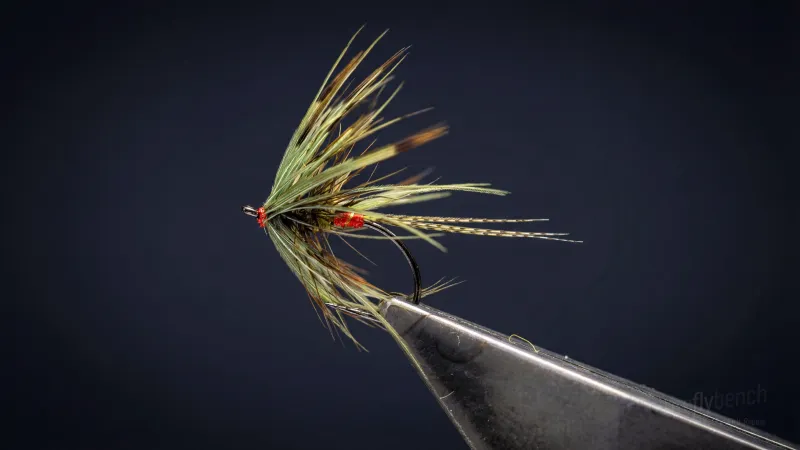
Dry FliesSquonker
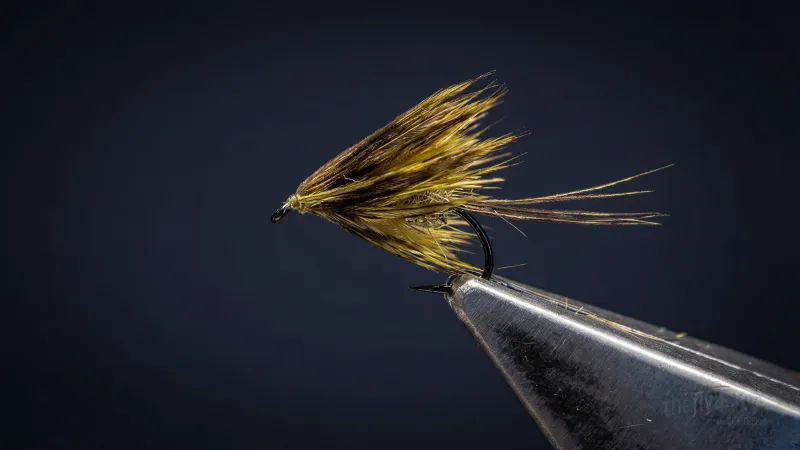
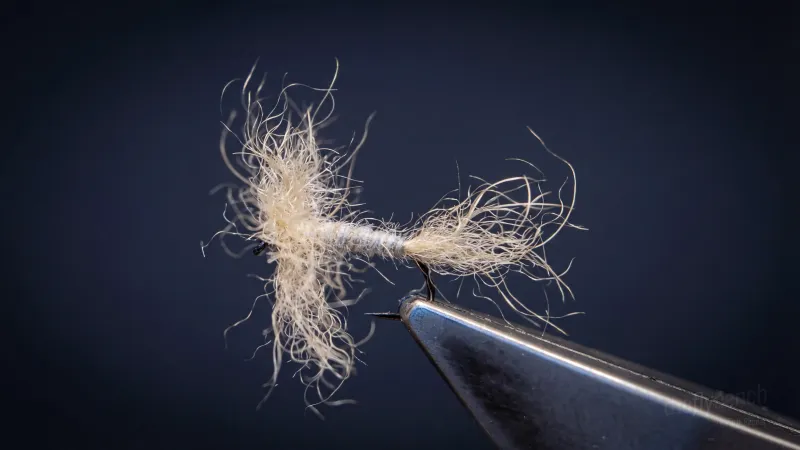
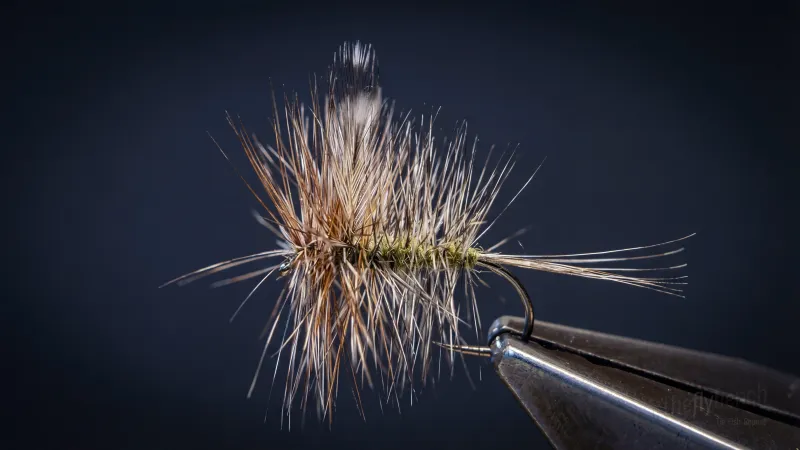
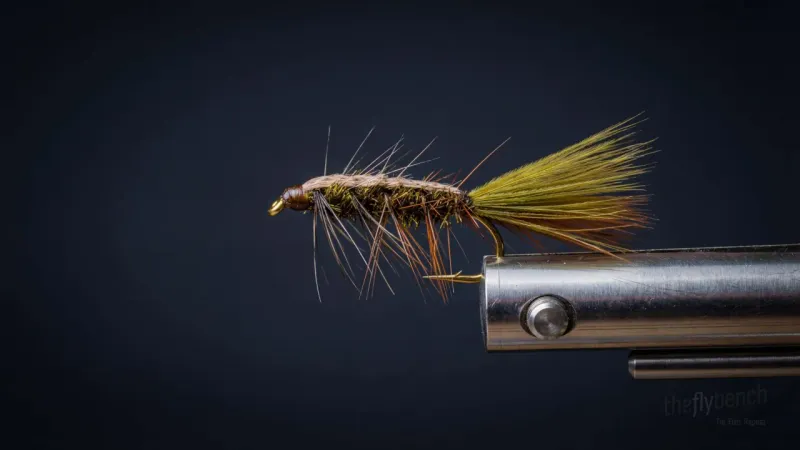
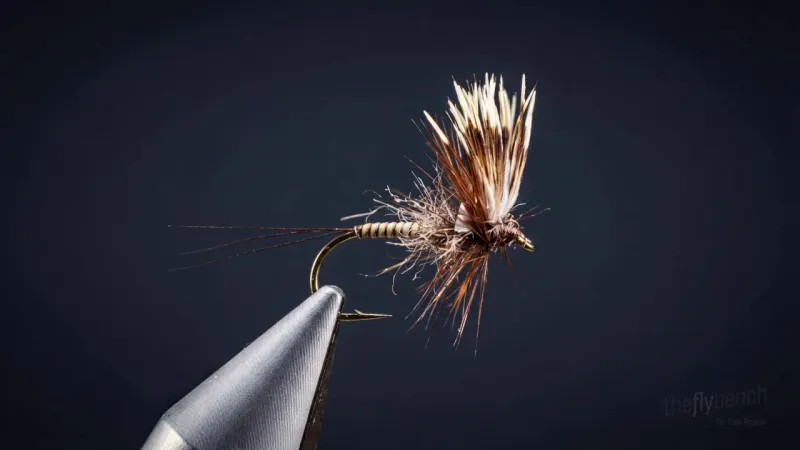
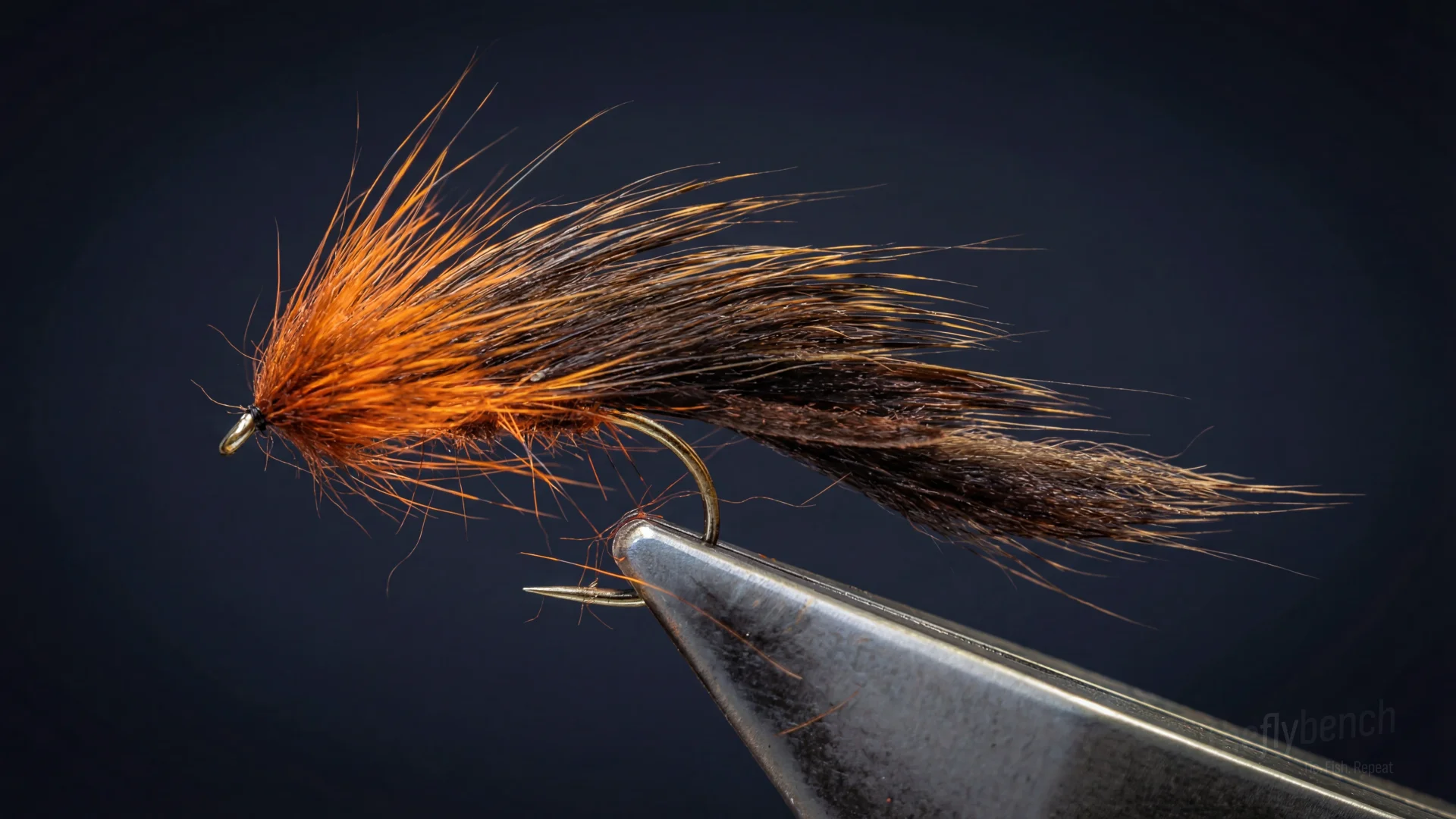
Hans Weilenmann's squonker builds entirely from dyed pine squirrel: chestnut underfur for the body, an olive-brown zonker strip for the wing, and chestnut guard hairs spun in a split thread for the collar, ribbed with copper wire. The soft, mobile silhouette suits searching water for mayflies and caddis in moving water and stillwaters.
Spring, Summer, Fall
Intermediate
Trout
Feb 2026
Overview
Using one material family for body, wing, and collar keeps the squonker's color palette cohesive while the split-thread collar adds the buggy movement pine squirrel guard hairs are known for. The copper wire rib adds durability and a hint of segmentation against the chestnut underfur. It's a solid searching fly for spring through fall when trout aren't locked onto a single insect.
Where to Buy This Fly
We only link to fly shops we trust. Some links are referral links, which may earn us a commission at no extra cost to you.
Materials
- Hook:
- Partridge Barbless Ideal Nymph #8
- Thread:
- Benecchi 12/0, black
- Rib:
- Copper wire
- Body:
- Pine squirrel underfur, dyed chestnut
- Wing:
- Pine squirrel 'zonker' strip, dyed olive-brown
- Collar:
- Pine squirrel guard hairs, dyed chestnut - in split thread
Behavior & Presentation
Natural Behavior: Evening hatches produce clumsy landings that create audible splashes attracting fish to the surface. Anglers fish low-riding patterns during dusk because the sound and struggle draw confident takes.
Where Trout Eat It: Fish intercept crash-landed caddis from the surface film in smooth runs, pool tail-outs, slicks, and slower riffles.
How to Fish It: Use upstream cast with drag-free drift. The low-riding profile imitates spent adults flush in the film without twitching during selective feeding.
Best Water: Focus on smooth runs, pool tail-outs, slicks, slower riffle edges, and calm flats where fish have time to inspect flush-floating offerings.
Strike Type: Watch for subtle sips and delicate takes as selective fish refuse higher-riding patterns but confidently take low-profile presentations.
Fishing Strategy
Rigging Suggestions: Employ a 10-12 foot leader with 5X or 6X tippet for delicate presentations. Light floatant application maintains the low profile that makes this pattern effective.
Seasonal Timing: Most effective May through October during caddis and mayfly activity, with peak performance during evening rises when multiple hatches overlap.
Pro Tips: The flush-floating design triggers takes from selective fish that refuse higher-riding patterns. Particularly effective during spinner falls.
Entomology
During evening flights, caddisflies crash-land on the water creating prominent surface disturbances that echo across quiet pools. Trout key into these auditory and visual cues, rising confidently to engulf the struggling insects before they can regain flight.
- Order
- Trichoptera
- Common Name
- Caddisfly
- Organism Type
- insect
- Life Stage
- adult