


Overview
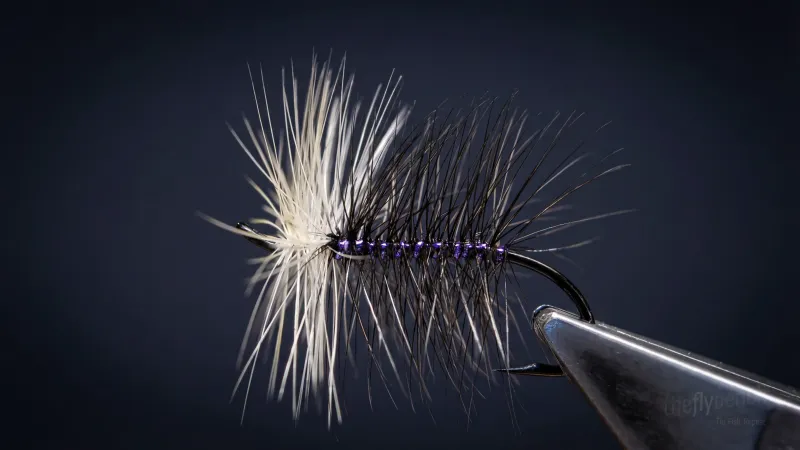
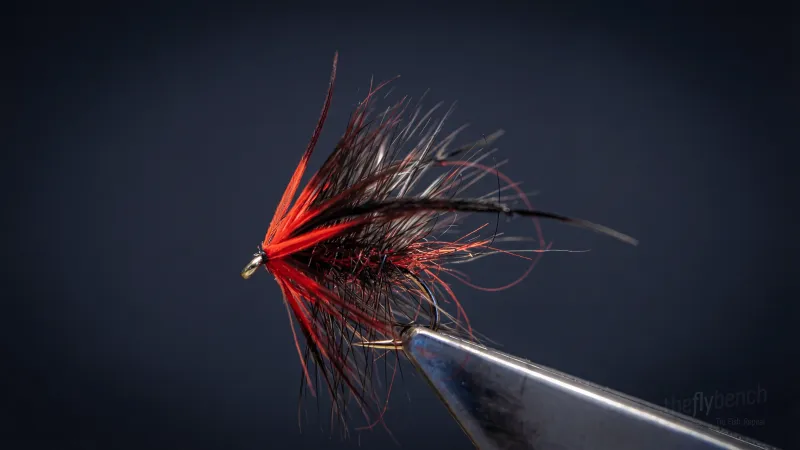
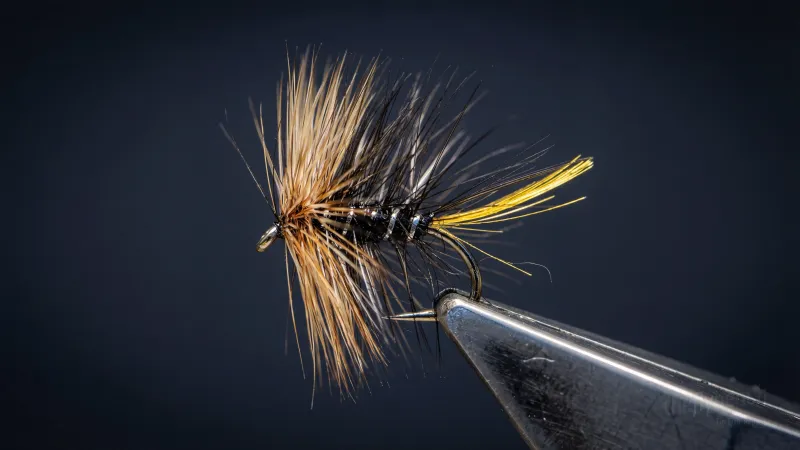
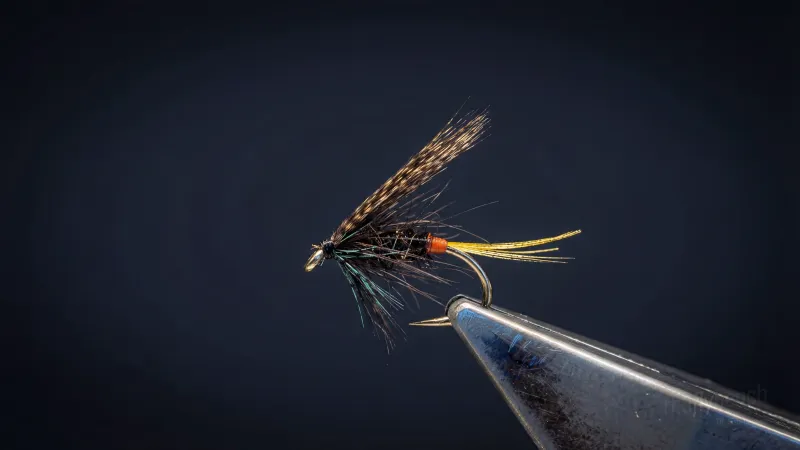
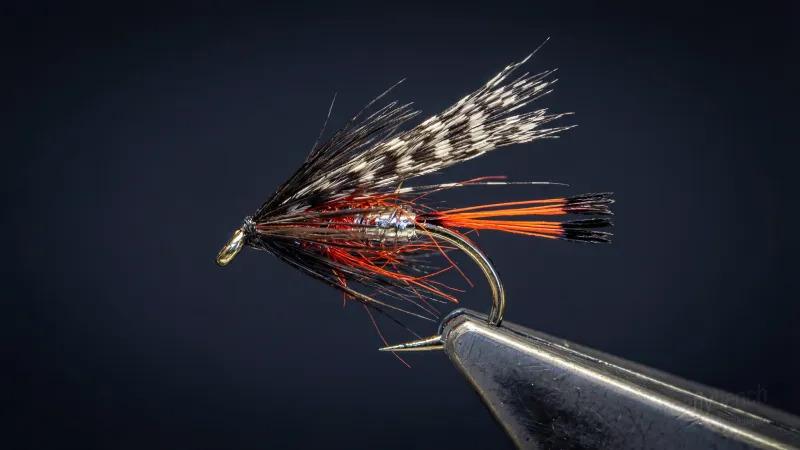
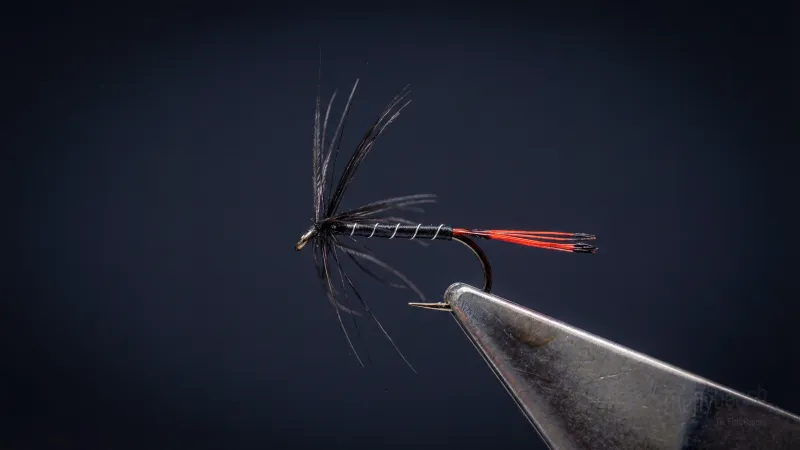
A flat silver tinsel abdomen and matching rib give the body reflective flash, while black seal's fur spun in a split thread builds a full, buggy thorax ahead of it. A black saddle hackle collar adds movement and bulk at the head, and the wing (black-dyed arctic fox or squirrel tail) sits under a peacock sword overwing for a dark, mottled topline. Optional jungle cock nail cheeks finish the fly in traditional style. Built and fished subsurface rather than as a floater, Hans Weilenmann's variant of Moc Morgan's original pairs silver flash with an all-black profile to draw trout in moving and still water alike.
Related patterns
Behavior & presentation
- Natural Behavior
- Moc's Cert Variant does not imitate a single natural; its flash and dark profile work as a general attractor rather than a copy of specific prey.
- Where Trout Eat It
- Fished subsurface, the fly's silver flash and dark silhouette draw trout in the water column where baitfish, leeches, or drowned insects would normally be intercepted, particularly in slightly stained or moving water where flash carries visibility.
- How to Fish It
- Cast across and swing the fly through runs and current seams, or retrieve it with slow strips in stillwater, letting the saddle hackle collar and seal's fur thorax pulse with each pause.
- Best Water
- Moving water with defined seams and current breaks, and stillwater margins with some depth, both suit this pattern.
- Strike Type
- Grabs typically come as a solid take on the swing or during a pause in the retrieve, since the fly is fished actively rather than dead-drifted.
Fishing strategy
- Rigging Suggestions
- Fish on a standard leader with a floating or midge-tip line for shallow swings, stepping down to a sink-tip when working deeper stillwater margins.
- Seasonal Timing
- Effective across spring through fall whenever trout are keying on flash and movement rather than a specific hatch.
- Pro Tips
- Let the fly hang and pulse at the end of the swing before recasting, since strikes often come as it sweeps past holding water. The optional jungle cock cheeks add a finishing touch but are not essential to the fly's action.
Pattern details
- Moving Water
- Stillwater
- United Kingdom
- dead-drift
- classic
- modern