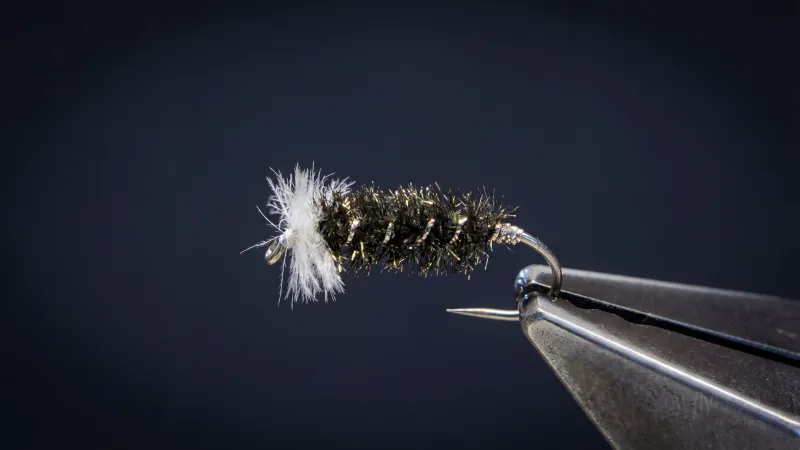
Dry FliesMuddled Spratley
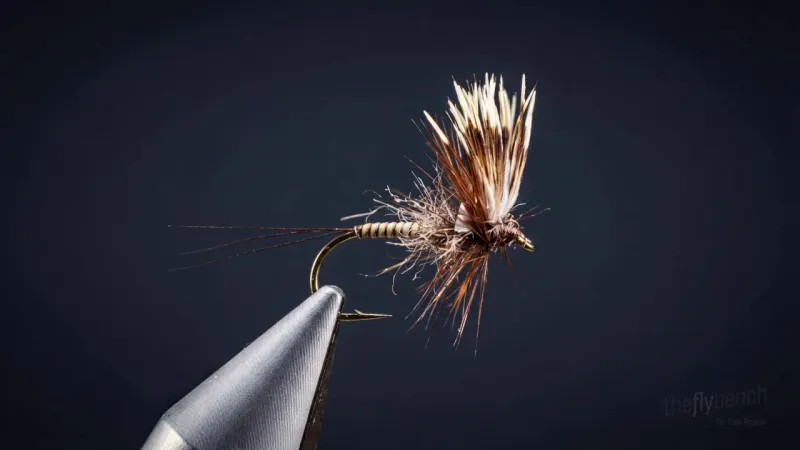
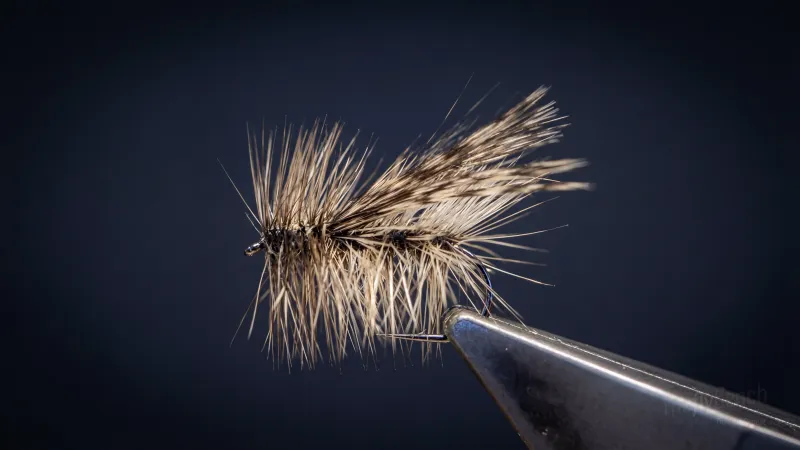
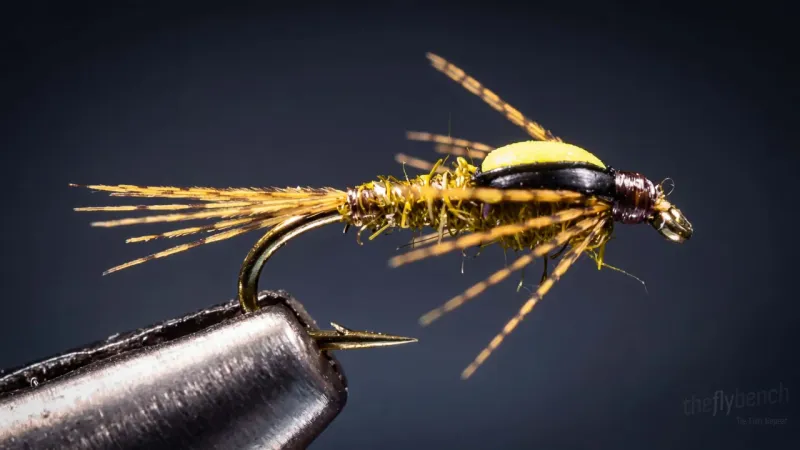
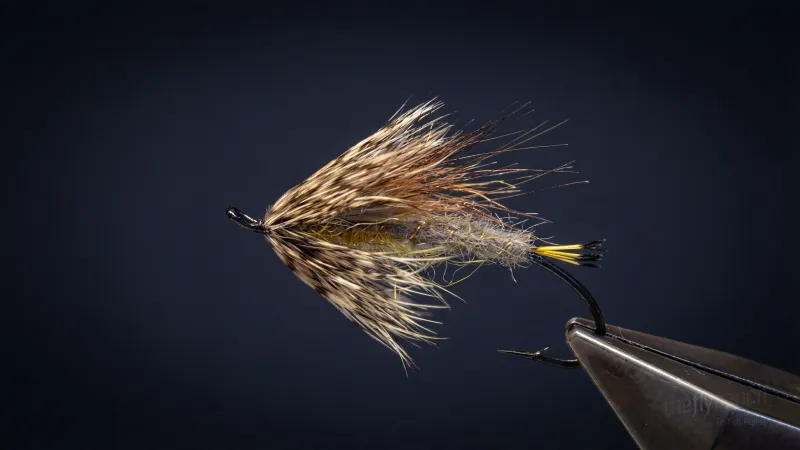
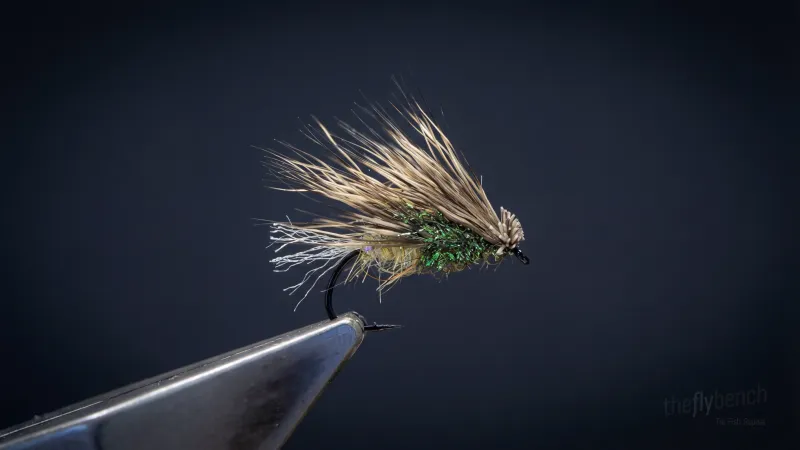
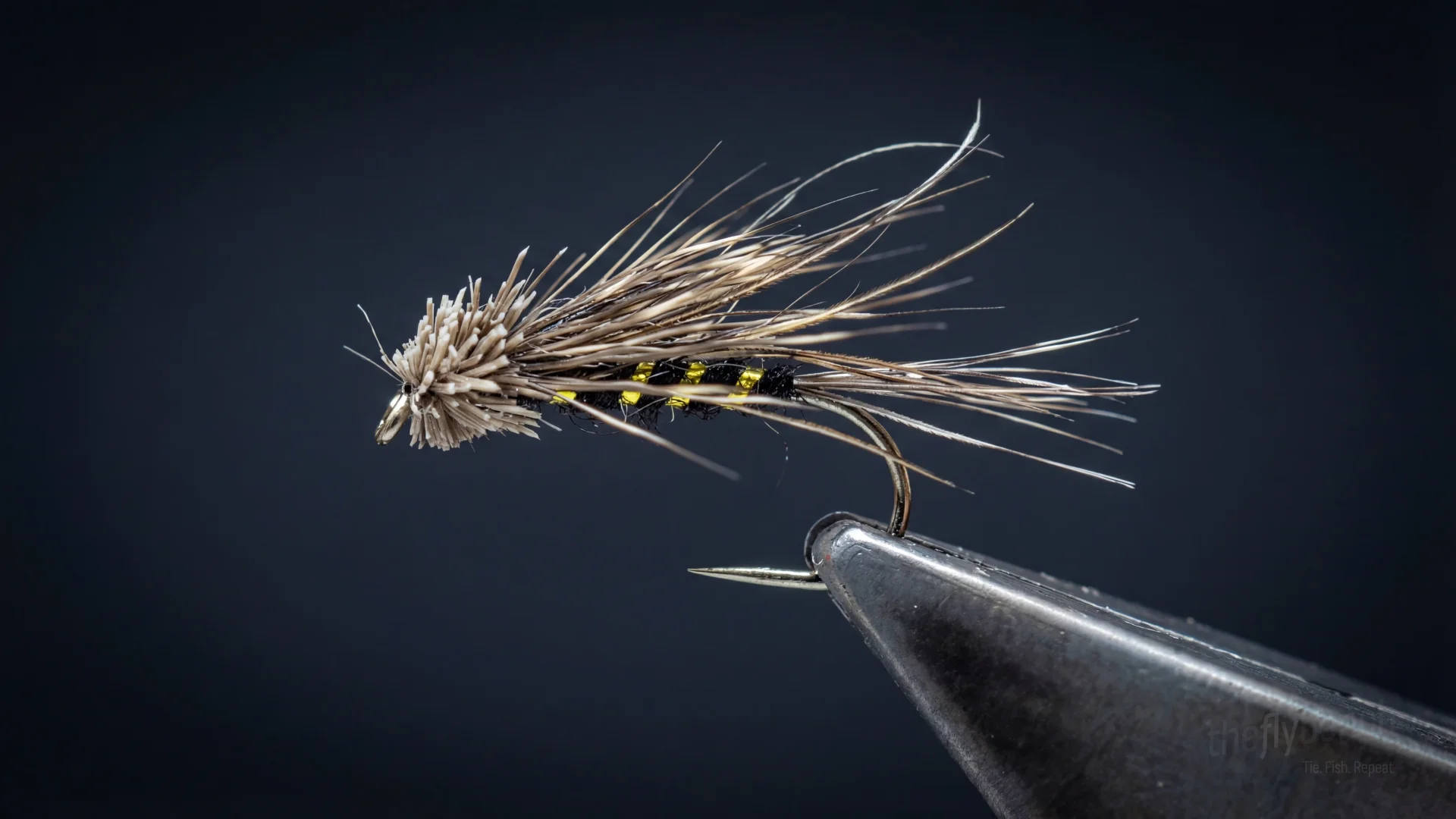
Hans Weilenmann ties this variant of the classic Spratley wet fly with a sparse muddler-style head of spun, clipped deer hair added to the original's black dubbed body and gold flash rib. A sparse deer hair wing and grizzly tail round out the profile, giving the fly enough buoyancy to fish in the film or be greased down just under it.
Spring, Summer, Fall
Advanced
Trout
Feb 2026
Overview
The body is Yorkshire flybody fur, or any semi-coarse black dubbing, ribbed with fine gold polar flash over a grizzly barb tail. A sparse underwing of cock pheasant center tail barbs sits beneath a very sparse touch of tan UV Ice Dub flash and a thin deer hair wing, and the head is deer hair spun in and clipped tight rather than wound as conventional hackle. That clipped head is what separates it from a standard Spratley, trapping enough air to hold in the surface film while the dark body and flash still read from below. It suits broken water and stillwater margins during general mayfly and caddis activity, fished dead drift or swung just under the surface.
Where to Buy This Fly
We only link to fly shops we trust. Some links are referral links, which may earn us a commission at no extra cost to you.
Materials
- Hook:
- Partridge BIN #10
- Thread:
- Uni-thread 8/0, black
- Rib:
- Polar flash, gold
- Tail:
- Grizzly barbs
- Body:
- Yorkshire flybody fur, black (or any semi-coarse black dubbing)
- Underwing:
- Cock pheasant center tail barbs - sparse
- Flash:
- UV Ice Dub, tan - very sparse
- Wing:
- Deer hair - sparse
- Head:
- Deer hair, spun and clipped - sparse
Behavior & Presentation
Natural Behavior: Caddis adults bob and struggle at the surface during mass emergence events, wings still damp and preventing proper flight. Fish feed selectively during these prolific hatches, preferring the crippled individuals that remain stuck rather than those that escape into the air.
Where Trout Eat It: Surface in riffles, pocket water, runs, current seams of freestone streams, tailwater runs, spring creek edges, and lake near structure and along drop-offs.
How to Fish It: Cast with a drag-free dead drift in slower water because crippled emergers drift helplessly with their wings stuck. In faster currents, add occasional twitches to create movement and attract attention because this mimics struggling insects. The muddler head creates disturbance that draws strikes. Allow the fly to swing at the end of drifts in current seams.
Best Water: Freestone streams in riffles, pocket water, current seams, tailwater runs, spring creek edges, and lake near structure and along drop-offs. Focus on water depths of 1-4 feet.
Strike Type: Visible eat or aggressive take as opportunistic feeders respond to the muddler head's surface disturbance. Watch for surface rings and splashes.
Fishing Strategy
Rigging Suggestions: Use a 9-11ft 4X or 5X tippet depending on fish selectivity. Apply floatant to the muddler head to maintain buoyancy. The pattern can support a small dropper nymph tied 18 inches below.
Seasonal Timing: Productive late April through October with peak effectiveness during May through July because this coincides with spring and early summer when insect activity is highest. Functions as both an attractor during hatches and a searching pattern between emergences. Fish throughout the day with best results during morning and evening. Most effective in water temperatures from 45-62°F when fish are feeding subsurface during hatches.
Pro Tips: The muddler-style head creates surface disturbance that triggers aggressive strikes from opportunistic feeders. Fish this pattern when standard dry flies are being ignored.
Entomology
Caddis adults bob and struggle at the surface during mass emergence events, wings still damp and preventing proper flight. Fish feed selectively during these prolific hatches, preferring the crippled individuals that remain stuck rather than those that escape into the air.
- Order
- Trichoptera
- Common Name
- Caddisfly
- Organism Type
- insect
- Life Stage
- adult