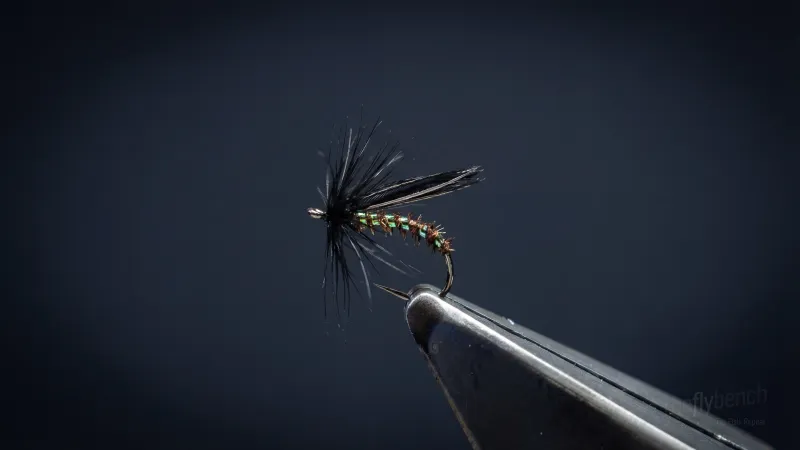
Dry FliesLaCroche
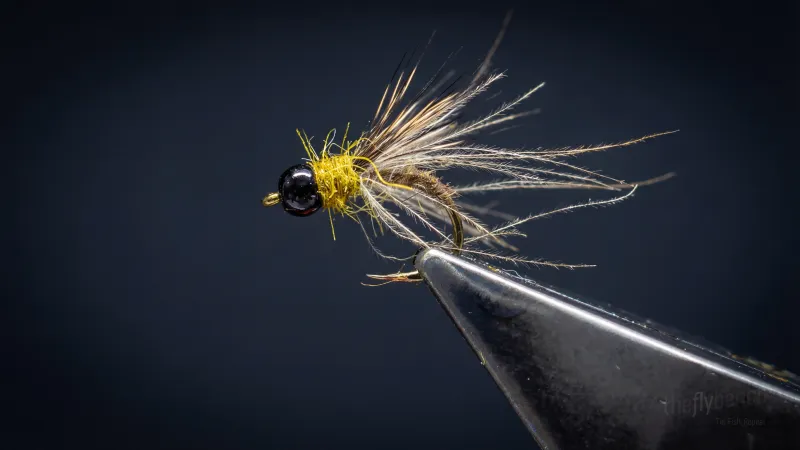
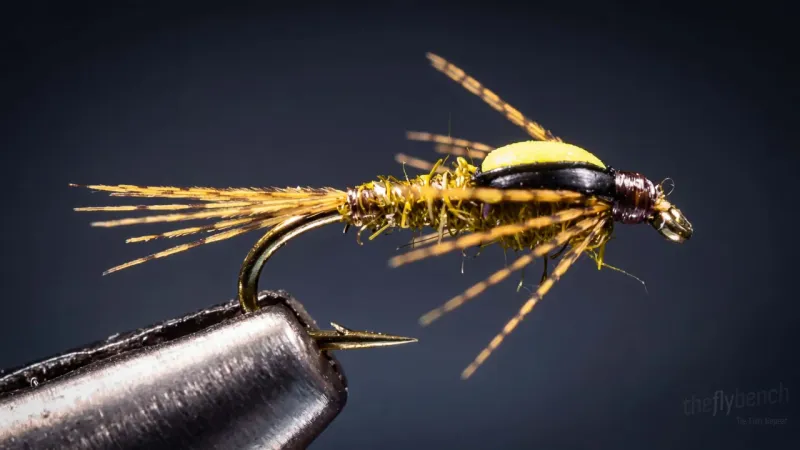
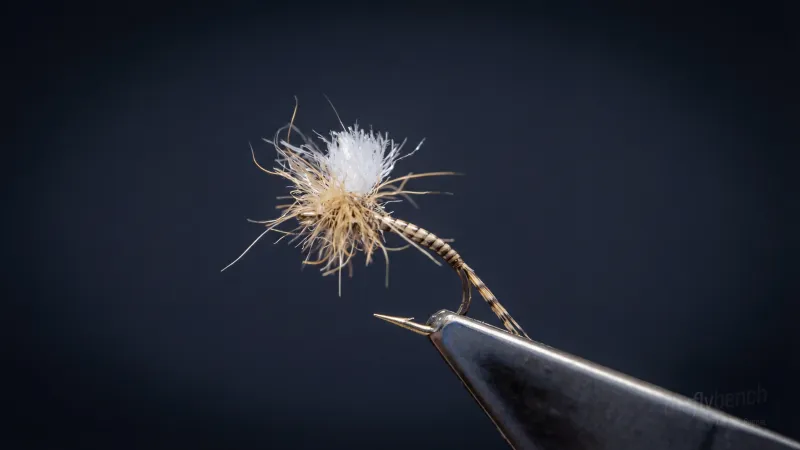
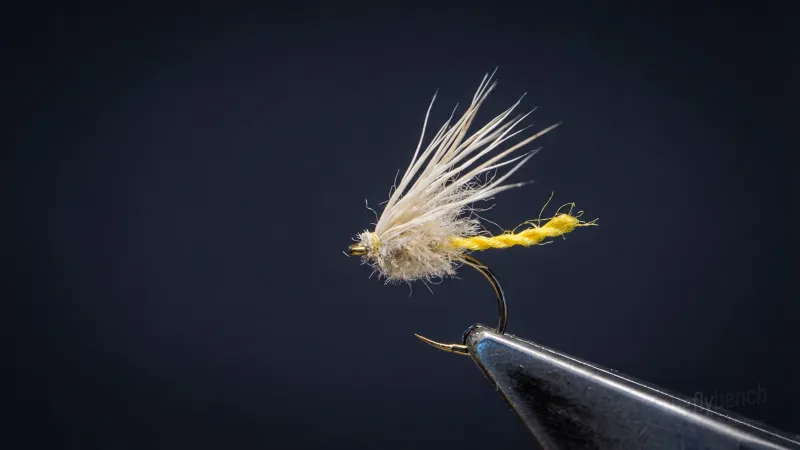
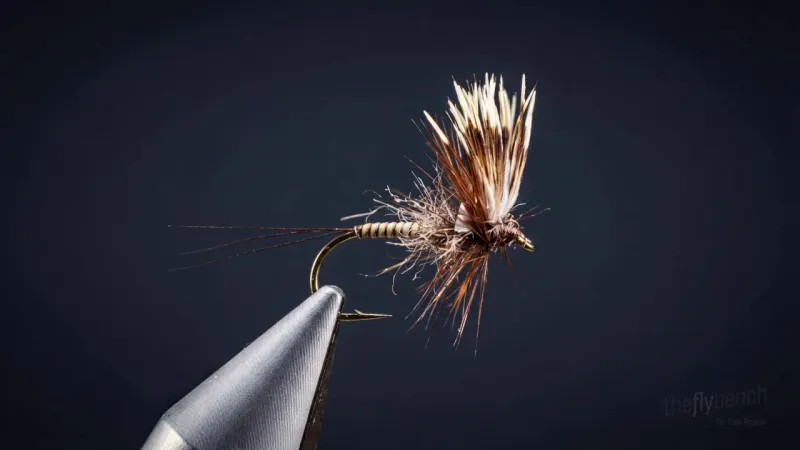
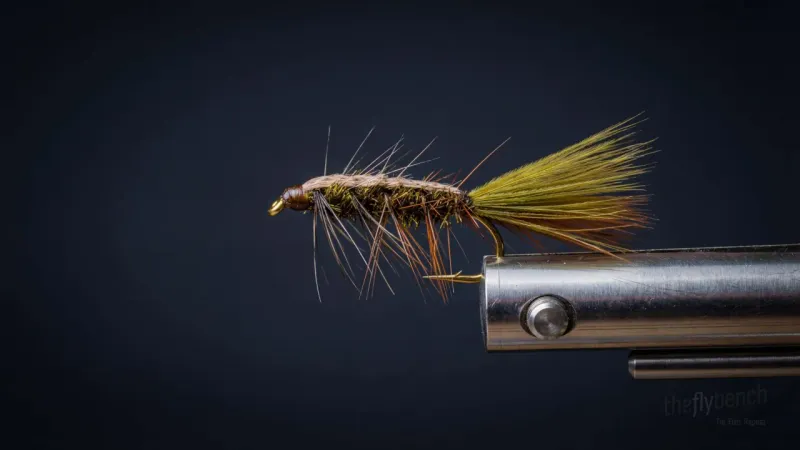
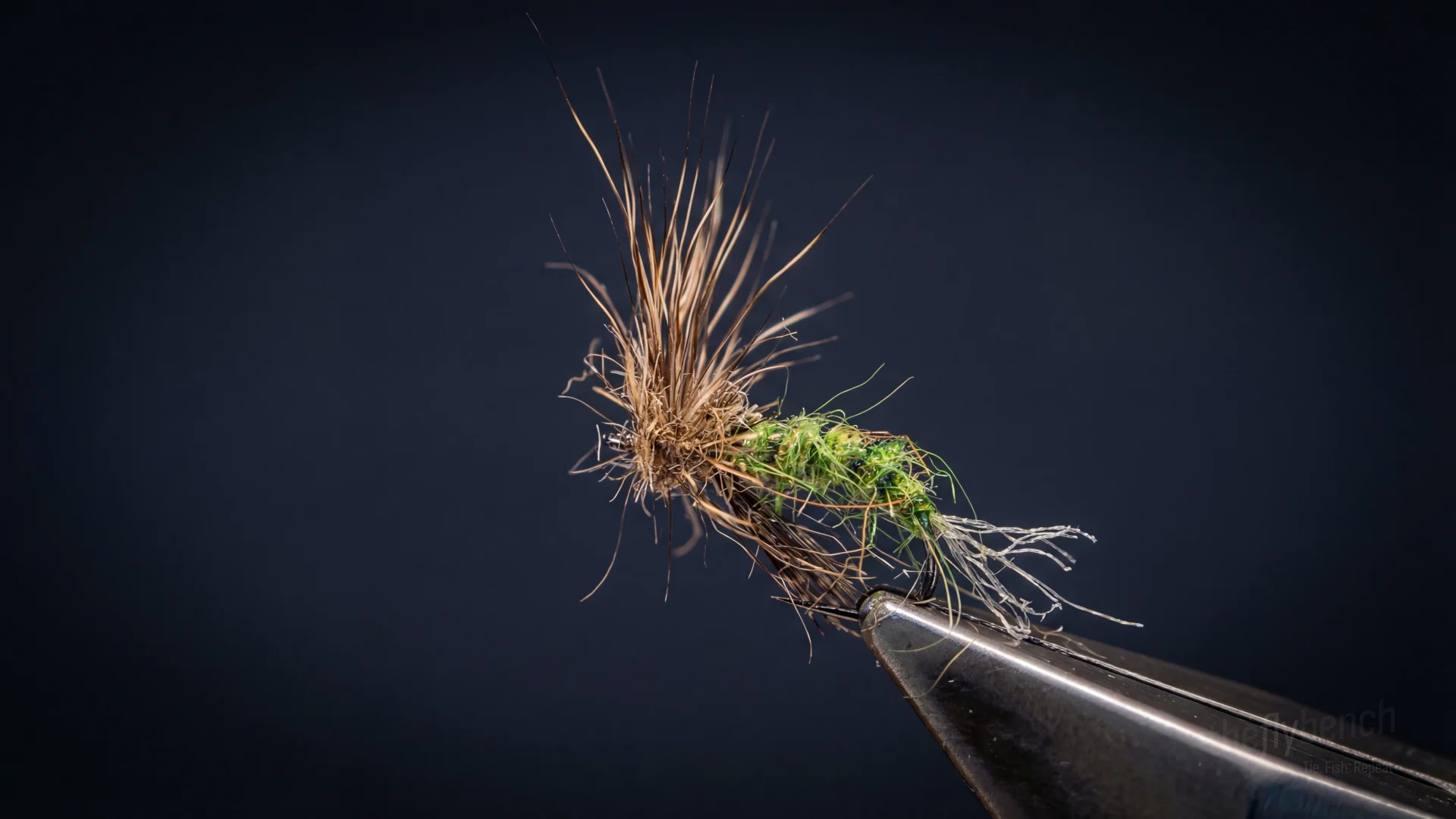
LaCroche imitates an emerging caddis with a silver Z-lon shuck trailing behind an olive-and-bright-green dubbed abdomen ribbed in fine olive D-rib. Mobile Coq de Leon (or brown partridge) hen legs and a deer hair wing and shoulder sit over a dark squirrel or hare's ear thorax and head. Fran Friesen's pattern is based on Brian Chan's B.C. Caddis Emerger, built to fish the film as caddis struggle free of their pupal shuck.
Spring, Summer, Fall
Intermediate
Trout
Feb 2026
Overview
A silver Z-lon shuck trails off the bend to suggest a caddis pupa still shedding its case, while fine olive D-rib segments a coarse olive-and-green dubbed abdomen. Coq de Leon (or brown partridge) hen saddle barbs splay outward as legs, giving the fly movement as it swings or hangs in the film. A deer hair wing and shoulder add buoyancy and a hint of an emerging wing, and a dark squirrel or hare's ear thorax and head finish a buggy, translucent profile. Fran Friesen's pattern follows Brian Chan's B.C. Caddis Emerger, tied to cover caddis emergence on both moving and still water.
Where to Buy This Fly
We only link to fly shops we trust. Some links are referral links, which may earn us a commission at no extra cost to you.
Materials
- Hook:
- Grip 14723BL #16-8
- Thread:
- Benecchi 12/0, black
- Rib:
- D-rib, small, olive
- Shuck:
- Z-lon, silver
- Abdomen:
- Coarse dubbing, olive and bright green mix
- Legs:
- Whiting Farms Coq de Leon hen saddle barbs (or brown partridge)
- Wing/shoulder:
- Deer hair
- Thorax/head:
- Squirrel (or hare's ear), dark
Behavior & Presentation
Natural Behavior: Adult caddis skitter across the water during late-evening ovipositing flights, creating continuous disturbance patterns as they repeatedly touch down and lift off across glides and pools. Trout position themselves in feeding lanes during these caddis dances because the insects' predictable flight corridors concentrate food sources in narrow zones, allowing efficient feeding without repositioning.
Where Trout Eat It: Trout rise to mayflies and caddis in varied current speeds from technical creeks to freestone rivers. The Catskill-style construction with modern materials creates a balanced profile for multiple insect types.
How to Fish It: Fish with 9-12 foot leaders to 5X tippet. The clean body taper allows natural drift in varied currents—use reach casts to extend drifts.
Best Water: Focus on seams with mixed current speeds (1-3 feet) and tail-outs below riffles.
Strike Type: The Catskill-style construction produces classic rise forms during drag-free drifts through seams. Watch for expanding rings and confident head-and-tail rises as fish intercept the balanced profile in varied current speeds.
Fishing Strategy
Rigging Suggestions: Use a 9-12 foot leader tapering to 5X tippet for delicate presentations. Apply floatant to the body and hackle.
Seasonal Timing: Most effective during peak feeding periods at dawn and dusk. Water temperatures between 45-65°F typically produce best results.
Pro Tips: Floats well with proper floatant application. The natural materials provide good visibility without spooking wary fish.
Entomology
Adult caddis skitter across the water during late-evening ovipositing flights, creating continuous disturbance patterns as they repeatedly touch down and lift off across glides and pools. Trout position themselves in feeding lanes during these caddis dances because the insects' predictable flight corridors concentrate food sources in narrow zones, allowing fish to feed efficiently without repositioning.
- Order
- Trichoptera
- Common Name
- Caddisfly
- Organism Type
- insect
- Life Stage
- adult