

Overview
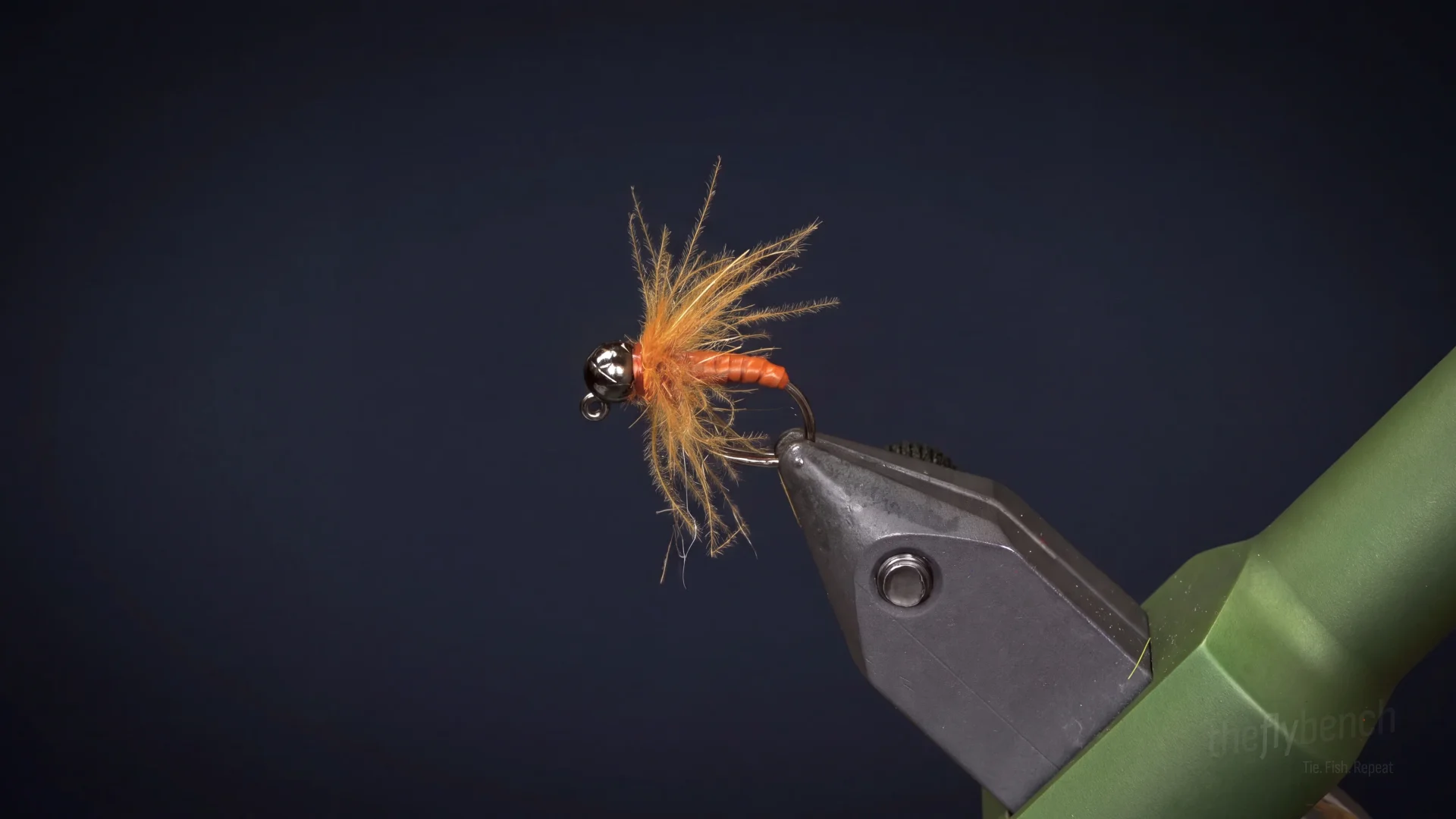
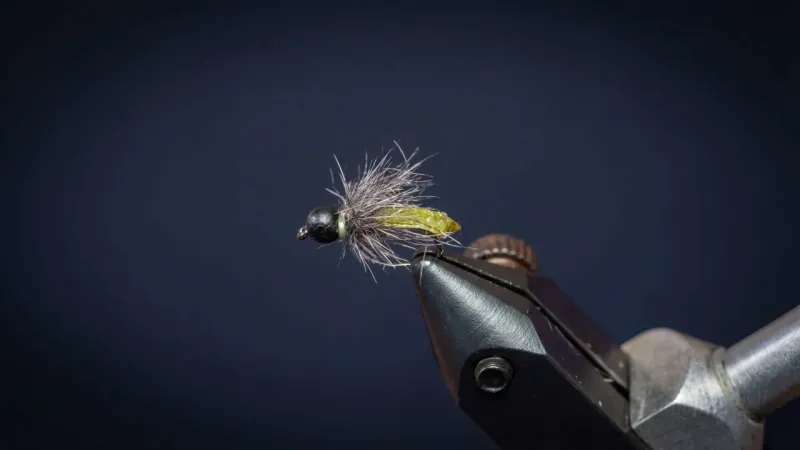
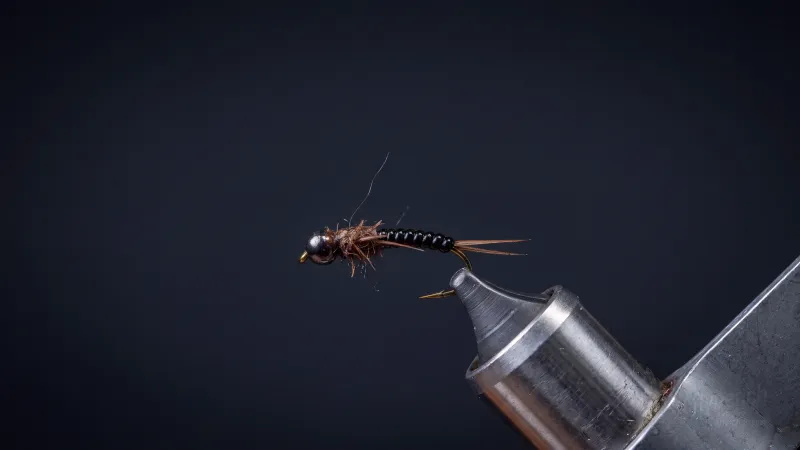
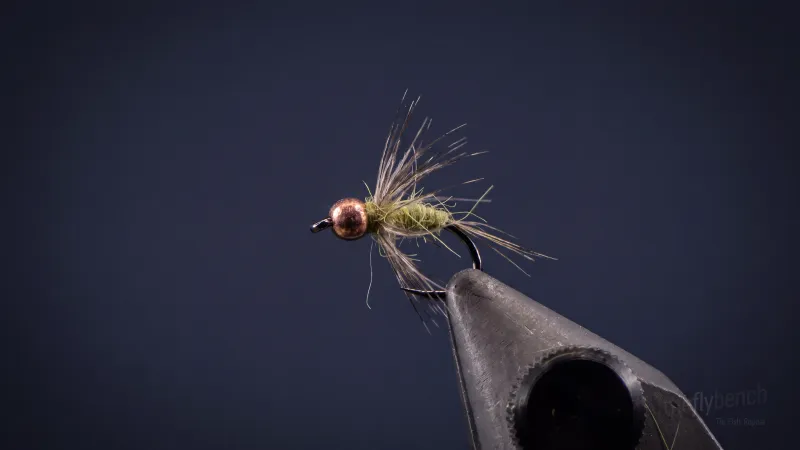
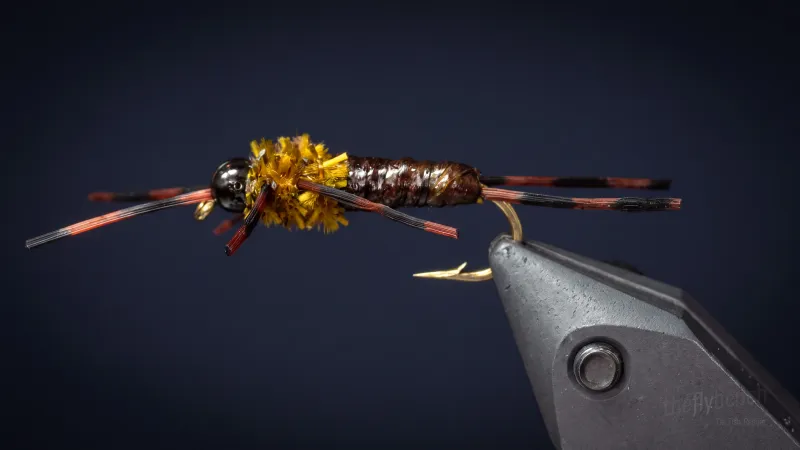
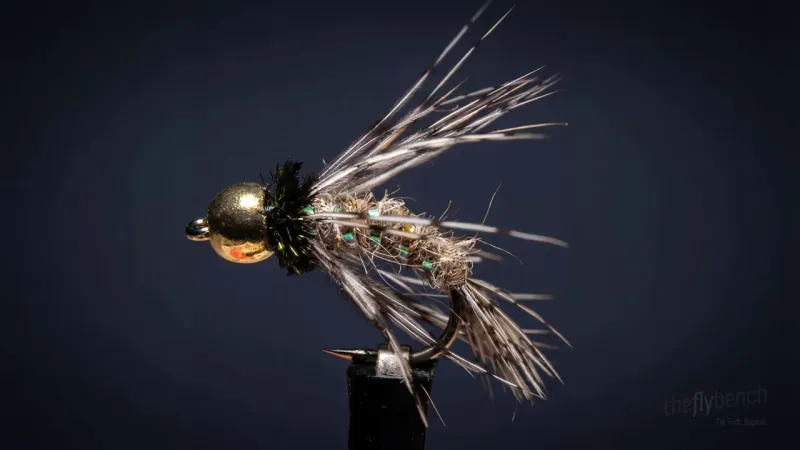
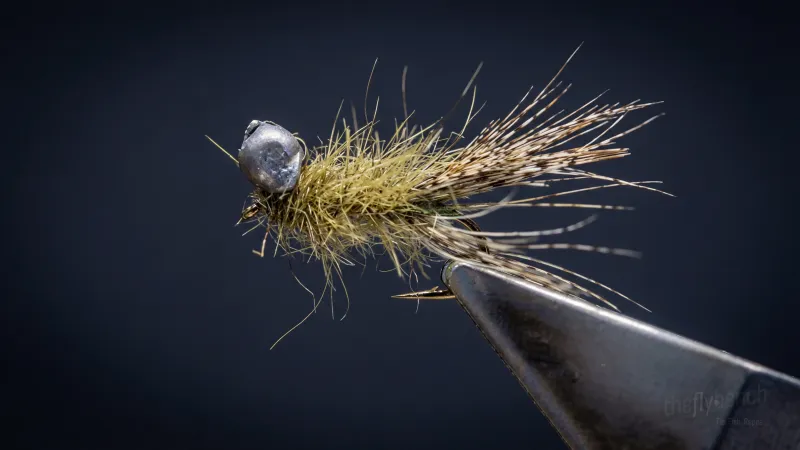
Kyle tied this for AvidMax's Tying Tuesday series in September 2026; no separate designer is credited. Wrapped Nymph Skins form the ribbed rust abdomen, and a few turns of ginger CDC add legs that move in the current. The barbless jig hook rides point-up, so the fly bounces through rocks with fewer snags. The video ties it on a size 12.
Related patterns
Behavior & presentation
- Natural Behavior
- October caddis larvae drag heavy stone-and-gravel cases over the bottom through summer, then seal up to pupate. In fall the orange pupae cut free and swim or crawl toward the banks to hatch, exposed and slow in the drift.
- Where Trout Eat It
- Along the bottom of rocky freestone runs where cased larvae graze, and in the soft edges near shore where pupae head before emerging in the afternoon and evening.
- How to Fish It
- Run it near the bottom on a tight-line rig or under an indicator, then let the line come tight at the end of the drift so the fly swings up like a pupa leaving the rocks.
- Best Water
- Boulder pockets, cobble riffles, inside seams and bank margins where fast water slows, and the head of a tail-out where pupae drift toward shore.
- Strike Type
- A sharp stop or tick in the sighter on the dead drift; on the lift at the end, takes come as a firm pull as trout chase the rising pupa.
Fishing strategy
- Rigging Suggestions
- Fish it on a euro leader with 4X–5X tippet as the point fly or a tag dropper, or hang it below an indicator with enough weight to keep it ticking bottom. It also makes a good dropper under an October Caddis dry.
- Seasonal Timing
- Late August through October on western freestone rivers, peaking in September and October when pupae migrate and adults start showing in the afternoon.
- Pro Tips
- The jig hook lets you drag through boulder water with fewer snags. Before the hatch starts, drift it deep and slow; once orange adults appear, focus on the swing-up near the banks.
Entomology
October caddis (Dicosmoecus in the West) spend their larval stage in heavy cases of small stones on rocky stream bottoms. In late summer the larvae seal their cases and pupate, and in fall the large orange pupae leave the case and move toward the shallows to emerge, which makes them a big, easy meal for trout near the bottom and along the banks.
- Order
- Trichoptera
- Family
- Limnephilidae
- Common name
- October Caddis
- Organism
- insect
- Life stage
- pupa
Pattern details
- Moving Water
- Pacific Northwest
- Rocky Mountain
- tight-line-nymph
- indicator-nymph
- dead-drift
- swing
- caddis-hatch
- freestone
- modern