Overview
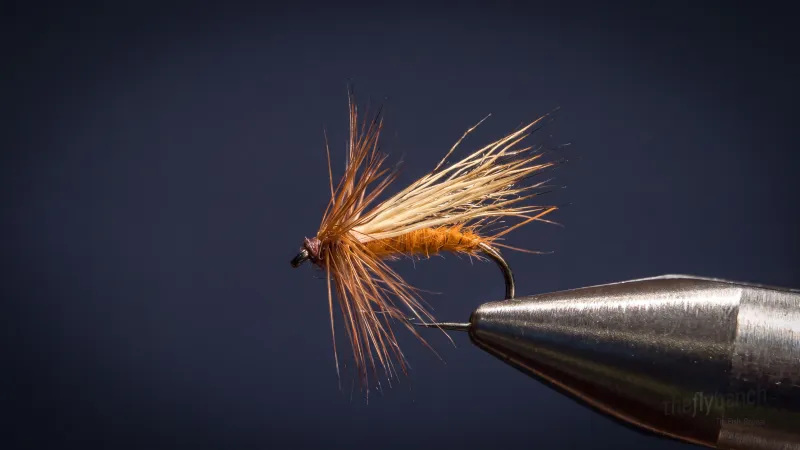
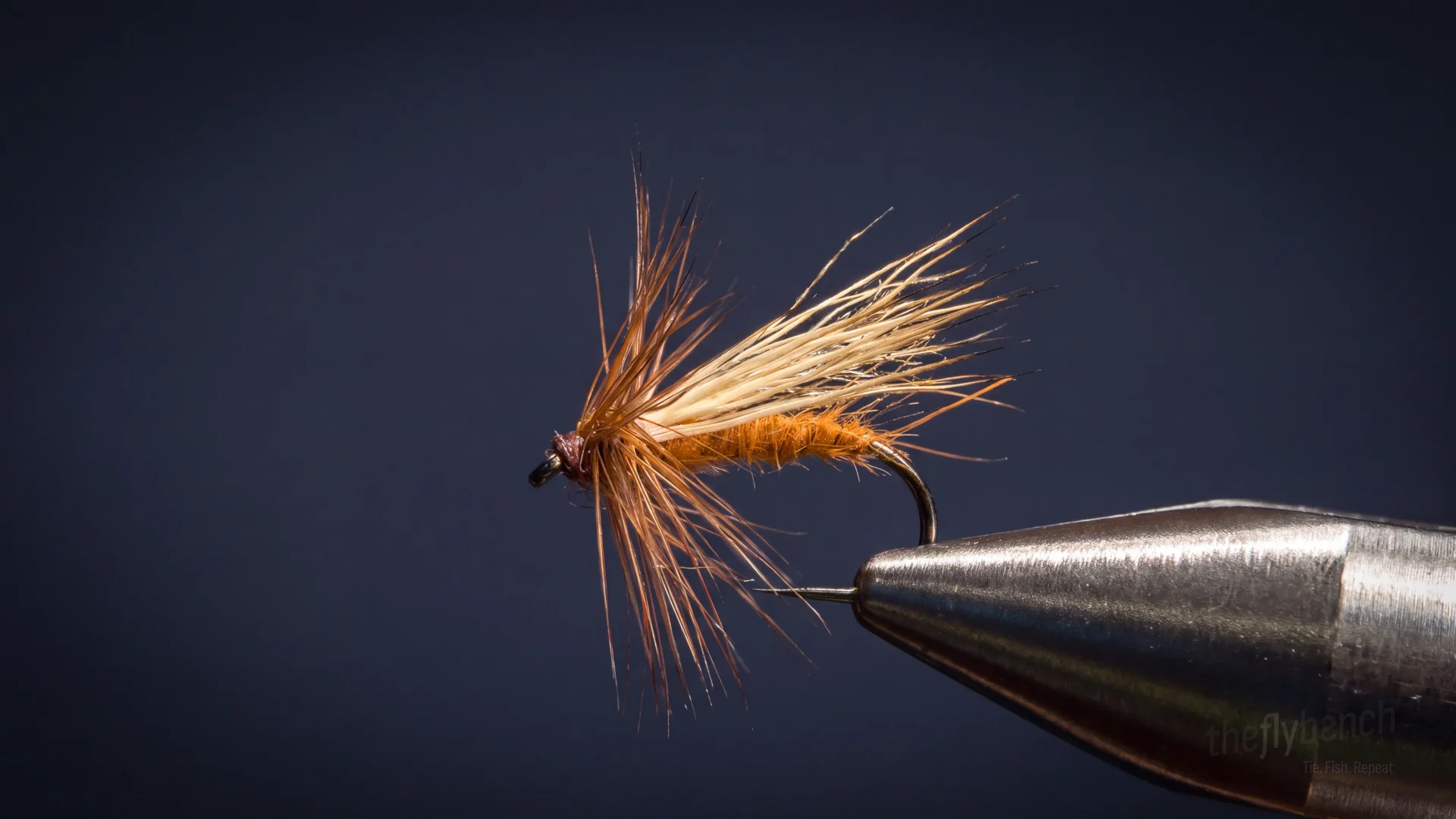
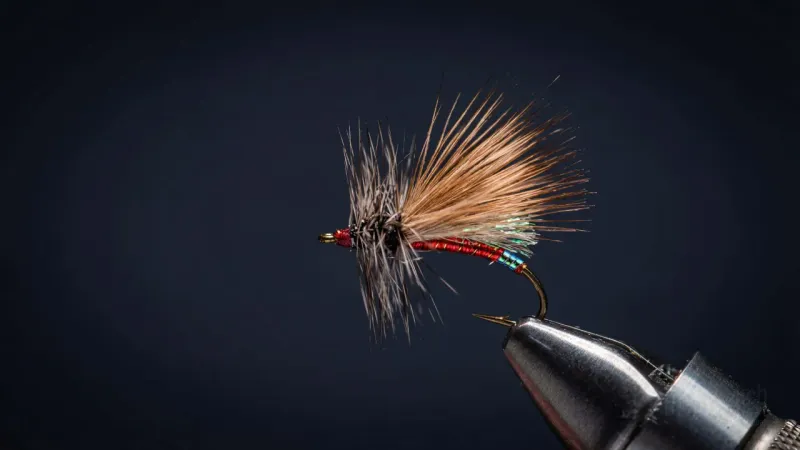
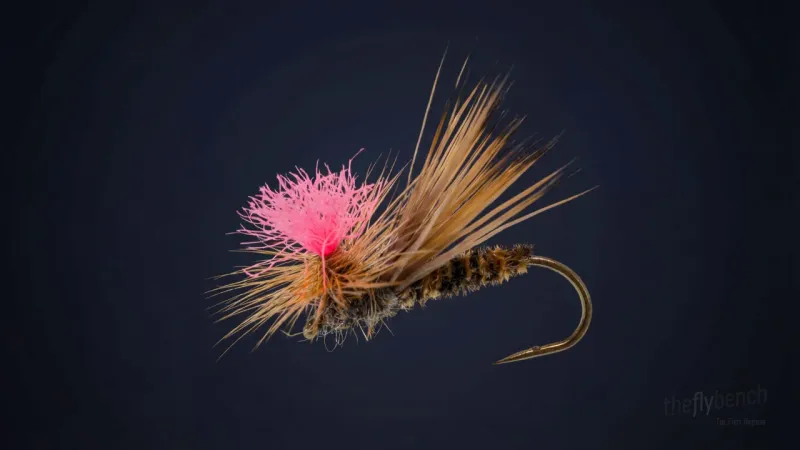
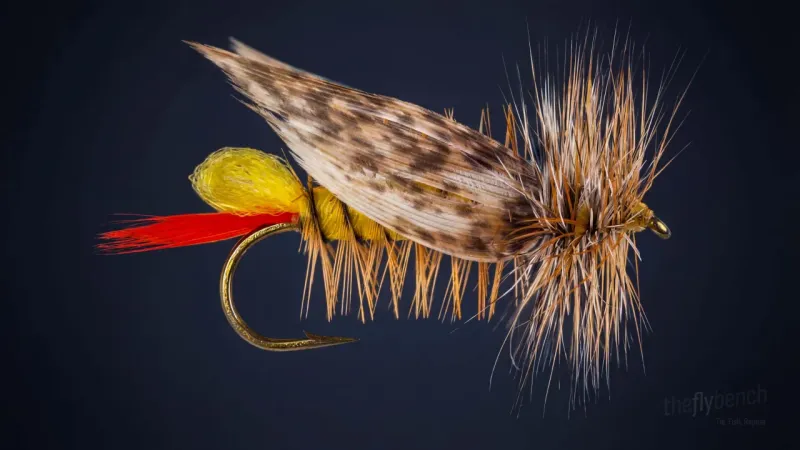
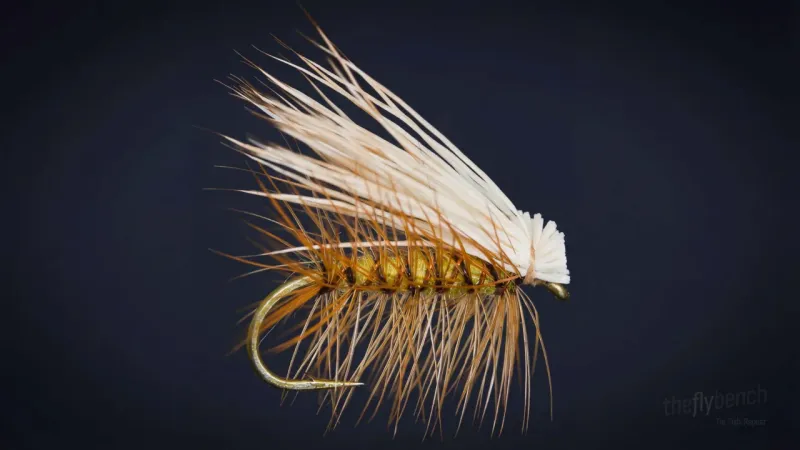
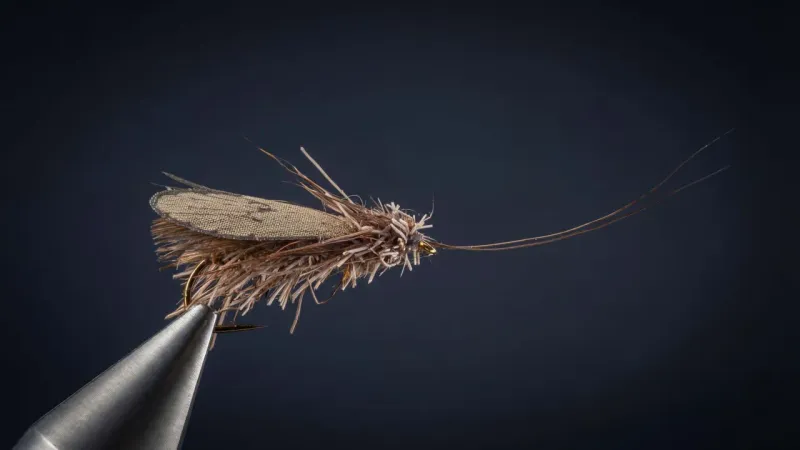
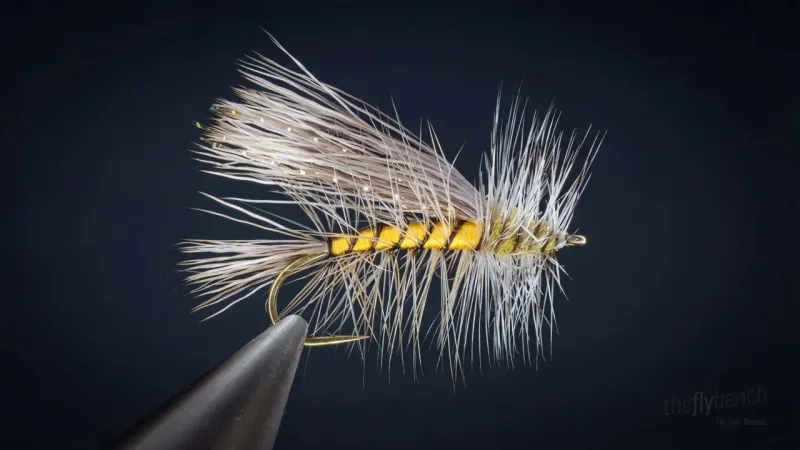
No single designer is credited; the name covers a family of fall caddis ties. Western tiers match Dicosmoecus on #6–#10 hooks, while eastern anglers size down to #10–#14 for Pycnopsyche, the Great Brown Autumn Sedge. The Z-lon underwing adds sparkle beneath the elk. Tie a few with darker wings for slow, clear water.
Related patterns
Behavior & presentation
- Natural Behavior
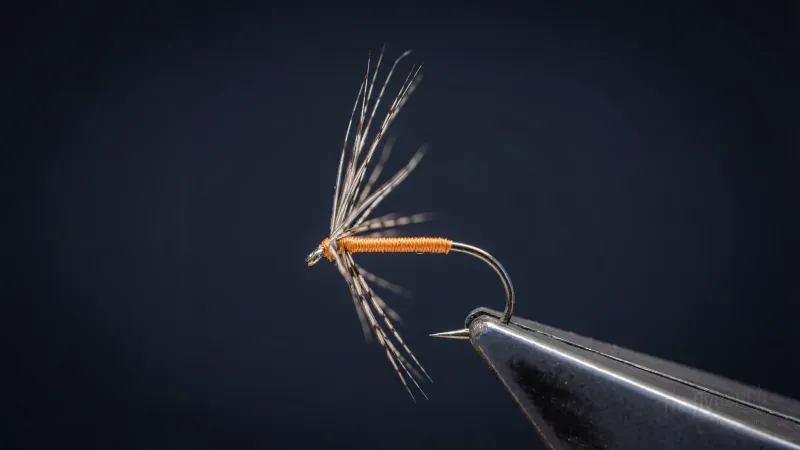
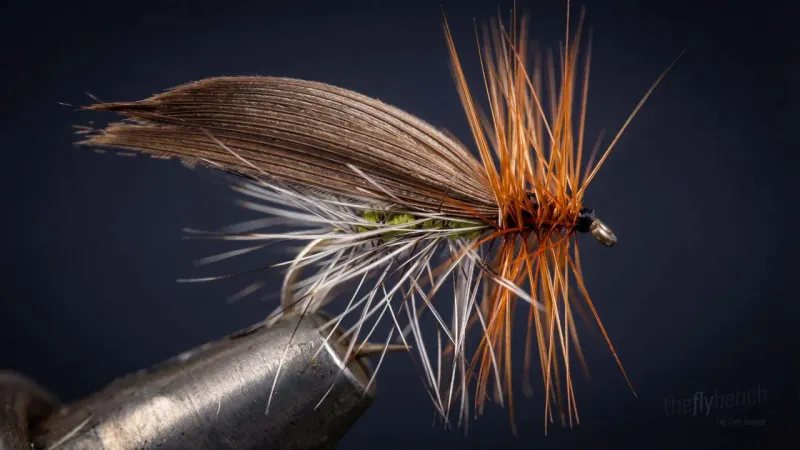
- Cased larvae turn into pupae that swim toward shore before hatching, and the large adults return near dusk to flutter and tap eggs onto the surface, often riding a few feet before lifting off.
- Where Trout Eat It
- The first few feet off the bank and the soft water beside boulders and logs, where emerging adults and returning egg-layers collect along the slower edges of freestone streams.
- How to Fish It
- Start with a dead drift tight to the bank. If fish ignore it, add a short twitch or hop, or skate it across the current to copy a fluttering adult.
- Best Water
- Bank margins, boulder pockets, seams where fast water meets slack edges, and the transition where a riffle flattens into a tail-out.
- Strike Type
- Heavy, splashy takes from trout chasing a large bug that might fly off; a skated fly draws a slash or swirl rather than a sip.
Fishing strategy
- Rigging Suggestions
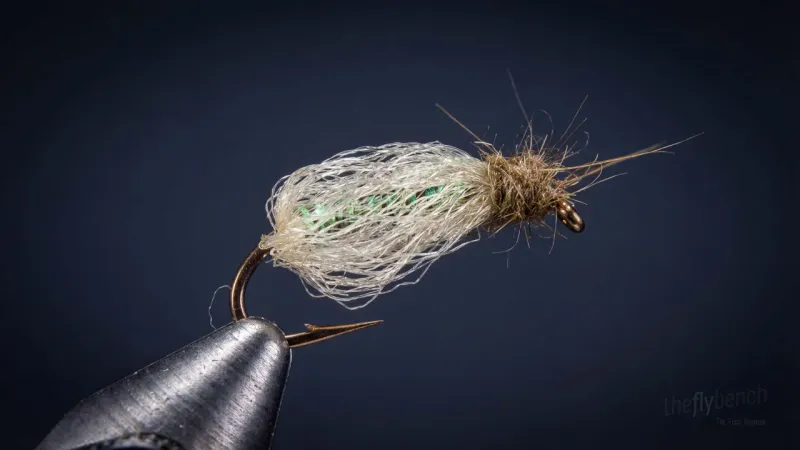
- A 9-foot leader tapered to 3X or 4X turns over this wind-resistant fly and handles hard takes. Hang a caddis pupa about 18 inches below to catch fish feeding on emergers; in Great Smoky Mountains National Park keep at least 12 inches between flies.
- Seasonal Timing
- September through early November, starting in early September up north and running into late October and November in the South. Low light fishes best: late afternoon to dark, with overcast or drizzly days stretching the window.
- Pro Tips
- Check bank rocks for empty pupal shucks in the morning to see where the previous evening's hatch came off. Lighter wings are easier to track at dusk; blind-cast along good banks even when nothing is rising.
Entomology
October caddis are large fall sedges, Dicosmoecus in the West and Pycnopsyche in the East and Midwest, whose cased larvae live on the stream bottom. Pupae migrate toward the banks to emerge, and adults return to the water in low light to lay eggs, giving trout one of the biggest surface meals of the year.
- Order
- Trichoptera
- Family
- Limnephilidae
- Common name
- October Caddis
- Organism
- insect
- Life stage
- adult
Pattern details
- Moving Water
- Pacific Northwest
- Rocky Mountain
- Northeast
- Southeast
- dead-drift
- caddis-hatch
- skate
- freestone
- searching-pattern
- dry-dropper