

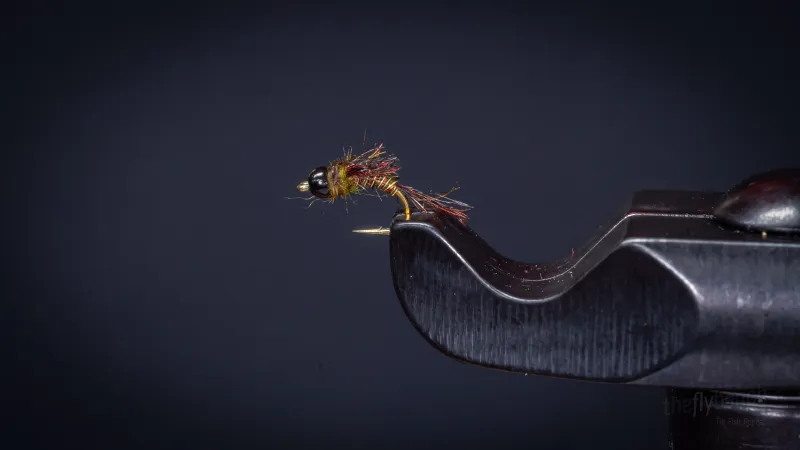
Overview
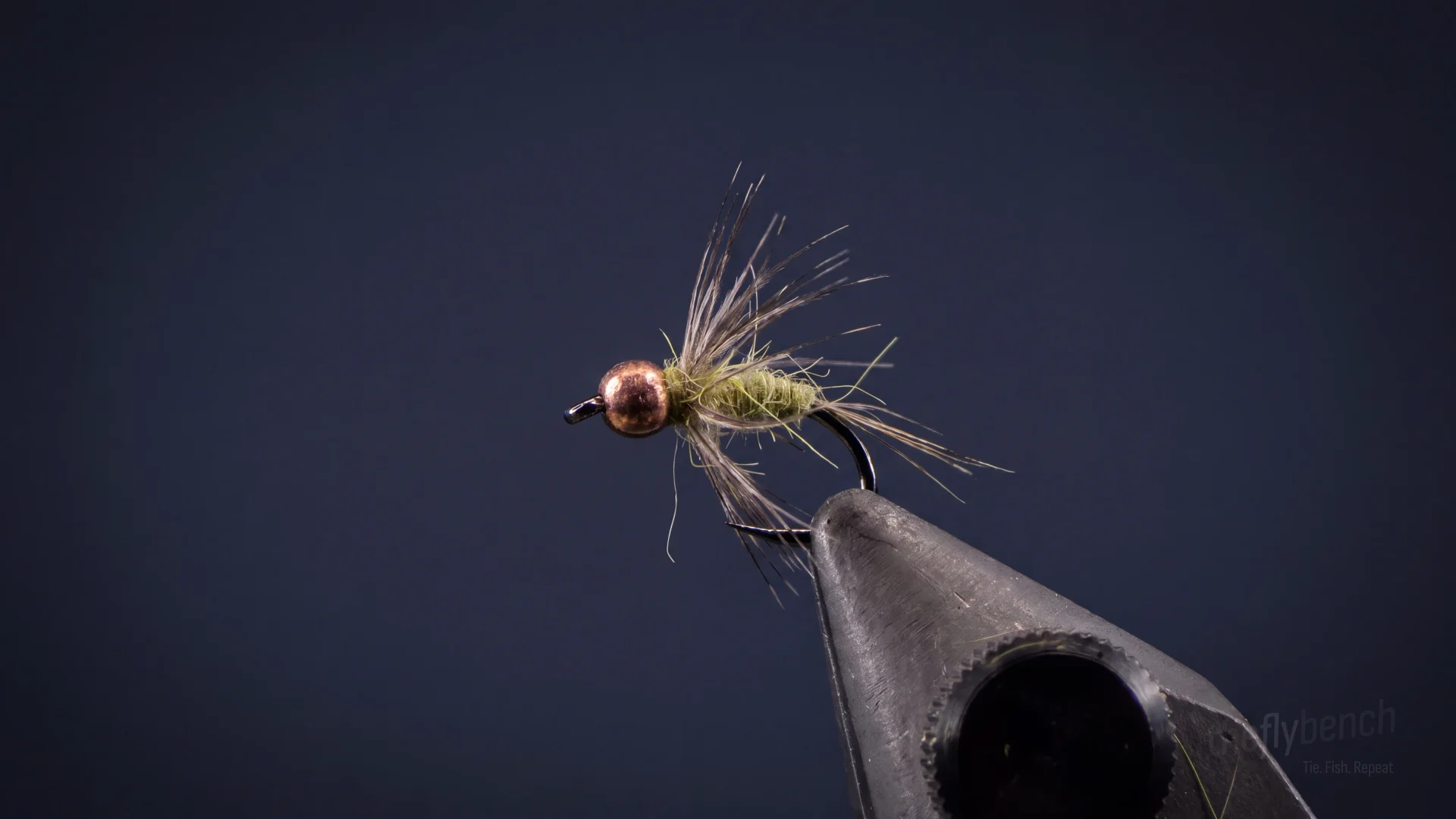
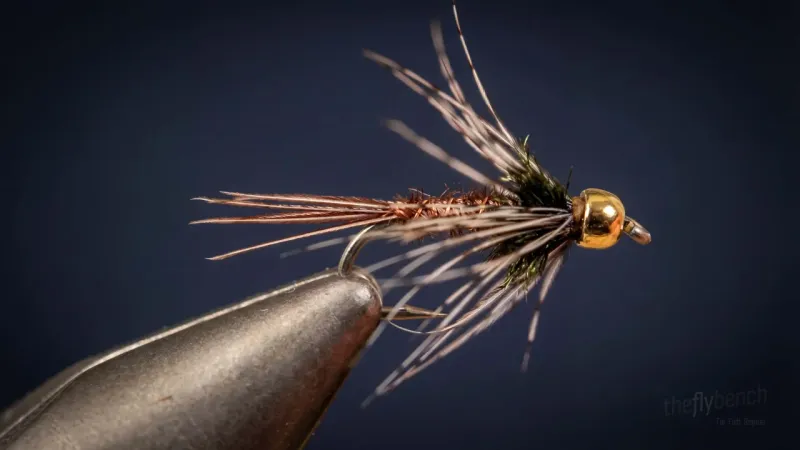
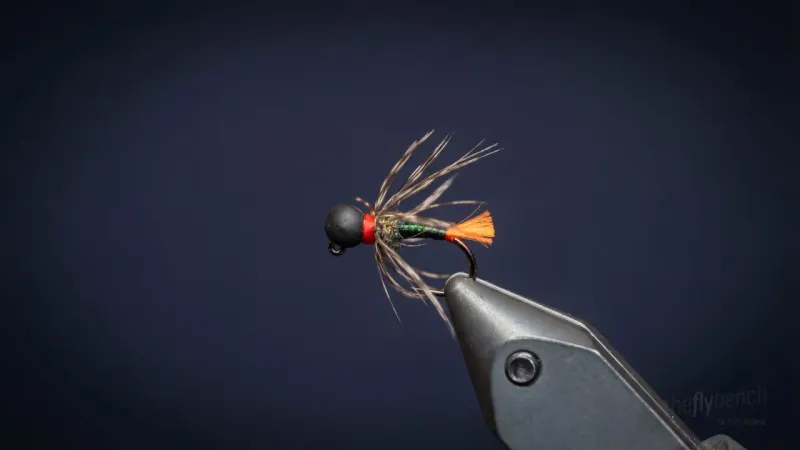
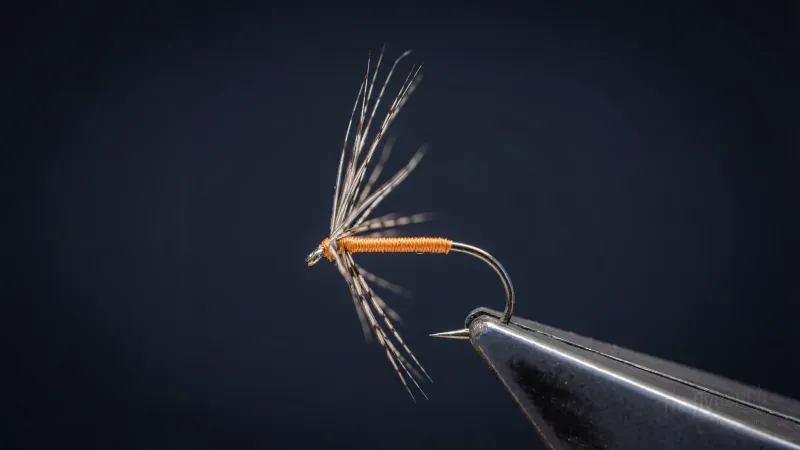
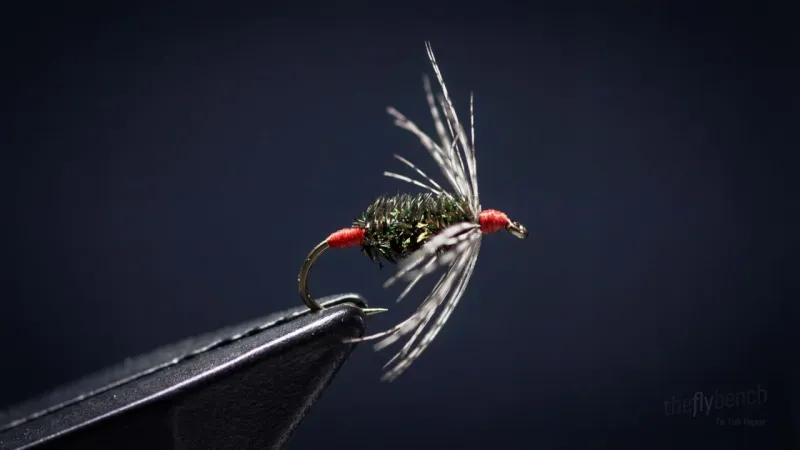
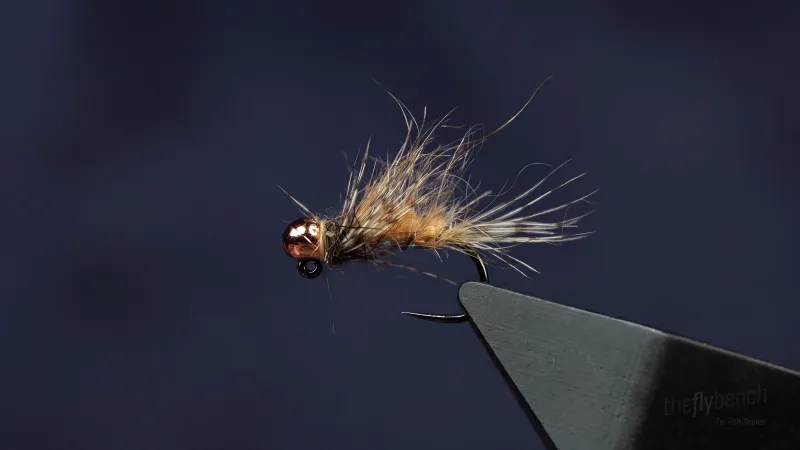
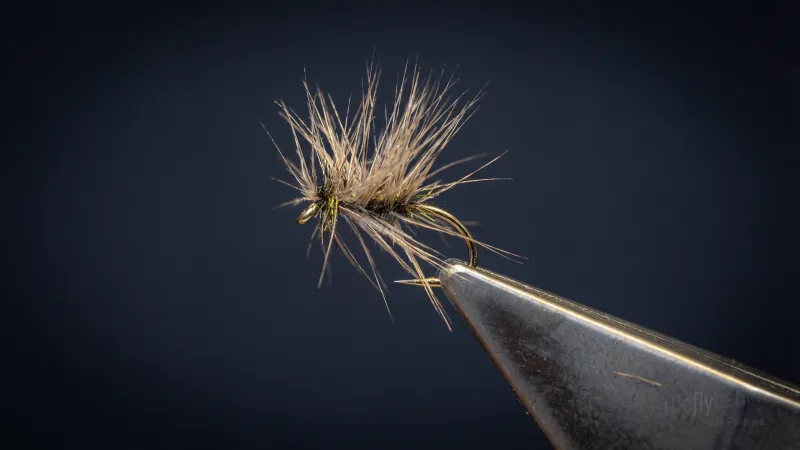
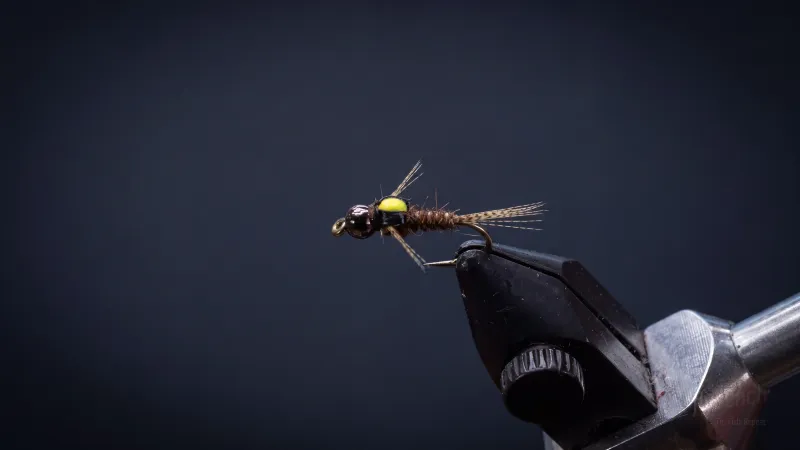
Howard Croston's pattern ran in the UK magazine Fly Fishing & Fly Tying with a brown dubbing mix, and Hans Stephenson ties it in both brown and olive. It is a fast tie: a few fibers of tail, a thin rabbit body with a slightly fuller thorax, and two turns of starling. Copper, nickel, or black nickel beads let you change the look, and any hackle fibers can stand in for the coq de leon.
Related patterns
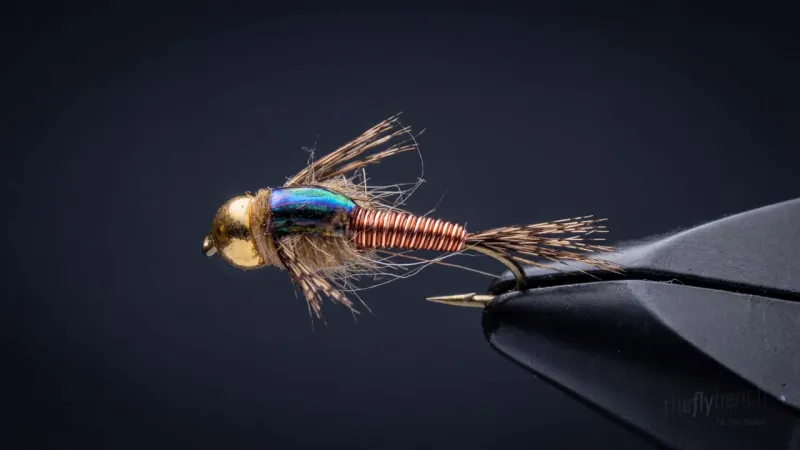
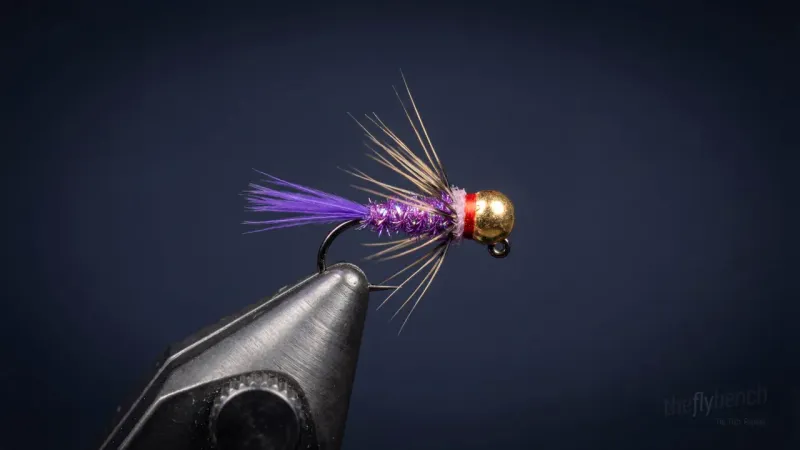
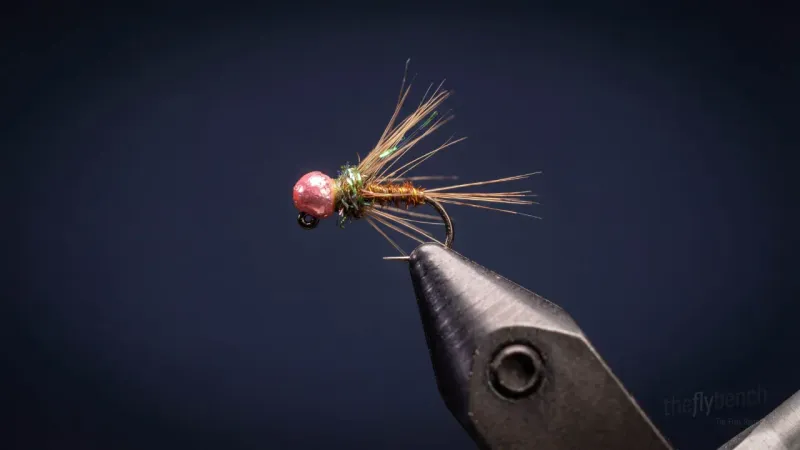
Behavior & presentation
- Natural Behavior
- Small mayfly nymphs that lose their grip or start rising to hatch tumble in the current with legs and gills splayed, and the starling fibers copy that loose, kicking outline.
- Where Trout Eat It
- Wary trout sit low in clear, slower lanes and pick off small nymphs that drift past at eye level rather than moving far for food.
- How to Fish It
- Hang it 18-30 inches under a buoyant dry as a dry-dropper, or fish it alone on a light tight line and let it dead drift, adding a slight lift at the end of the swing.
- Best Water
- Gravel tail-outs, soft seams beside faster water, the edges of shallow flats, and the slicks below riffles where pressured fish hold.
- Strike Type
- On a dry-dropper the dry fly ducks or stalls; fished alone, a take shows as a quiet tightening of the line or a small pull as the fly lifts.
Fishing strategy
- Rigging Suggestions
- Use a 9-foot leader with 5X-6X fluorocarbon to the dropper. Choose bead size and color by depth and light: copper or black nickel for clear water, a larger nickel bead when fish sit deeper.
- Seasonal Timing
- Best from April through October when mayfly nymphs are active and fish are watching for small food near the surface and bottom. Brown versions match early season naturals; olive fits summer and fall Baetis water.
- Pro Tips
- Keep the dubbing thin and the hackle to one or two turns so the fly stays sparse. Drop to sizes 18-20 for pressured fish in low, clear flows.
Entomology
Mayfly nymphs live among stones and weed on the bottom and drift when they lose their footing or begin to rise toward the surface to hatch. Trout feed on them through most of the season, often holding near the bottom and taking the drifting nymphs as they pass.
- Order
- Ephemeroptera
- Common name
- Mayfly
- Organism
- insect
- Life stage
- nymph
Pattern details
- Moving Water
- United Kingdom
- dead-drift
- dry-dropper
- soft-hackle-family
- searching-pattern
- low-clear-water
- beginner-friendly