

Overview
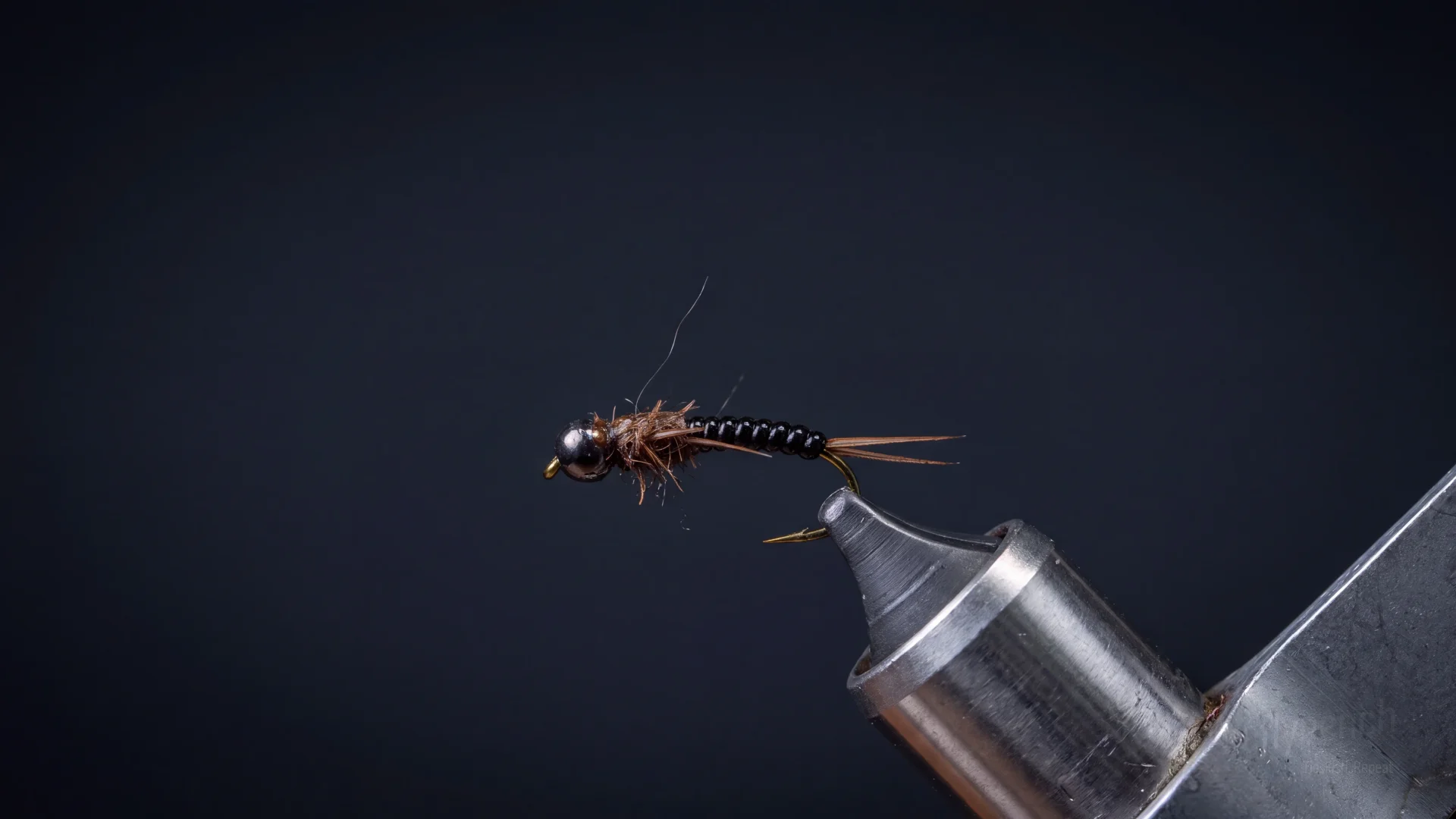
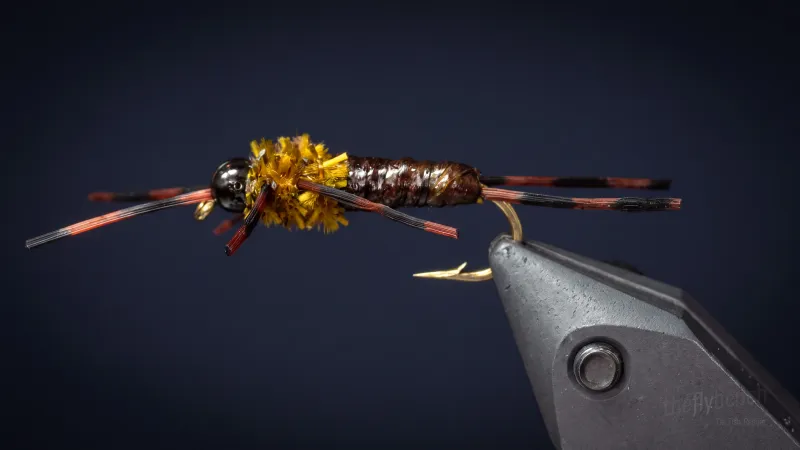
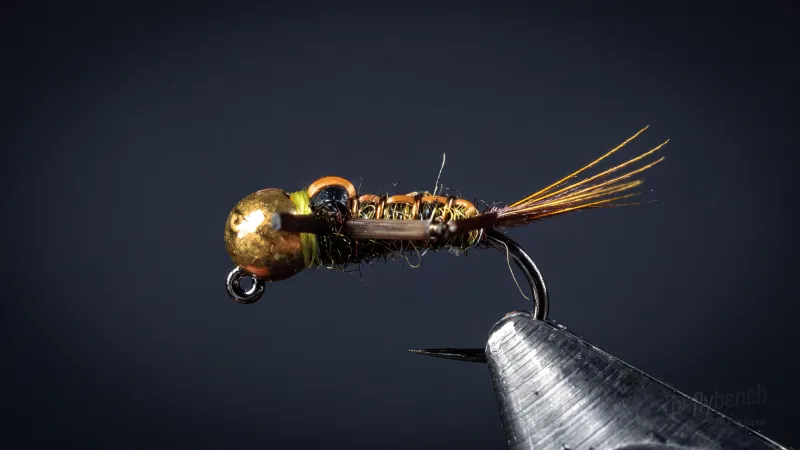
Tyler ties this stonefly for AvidMax's Tying Tuesday series on a curved TMC 2302, weighted with lead wire under the body and a black nickel tungsten bead. Brown olive goose biots form the split tail and antennae, while the black D-Rib abdomen gives crisp segments. The SLF thorax is picked out for legs under a brown Medallion Sheeting wingcase. Swap D-Rib colors to match golden stones.
Related patterns


Behavior & presentation
- Natural Behavior
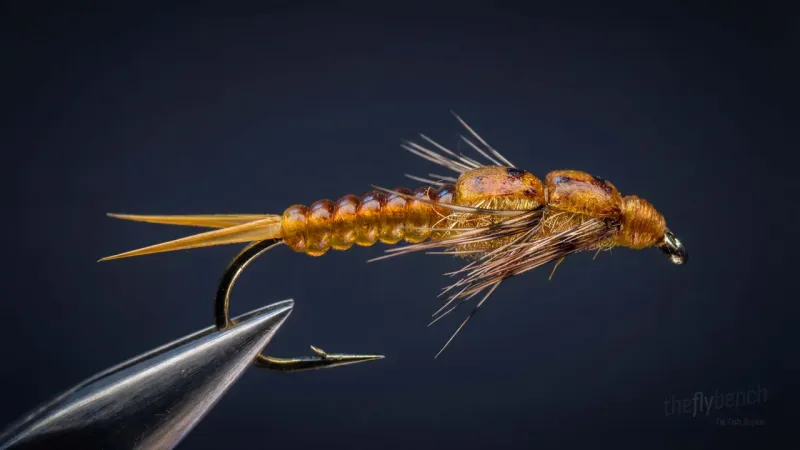
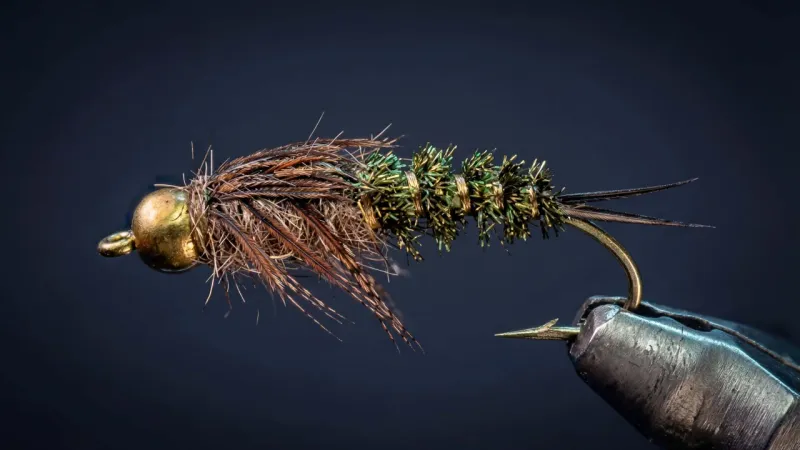
- Dark stonefly nymphs cling flat to the undersides of cobble in fast current and lose their footing when flows rise, rolling along the streambed with legs splayed until they find another rock to grab.
- Where Trout Eat It
- Trout hold tight to the bottom in heavy riffles and boulder-strewn runs, picking off nymphs that tumble loose before they can reattach.
- How to Fish It
- Fish it as the heavy anchor of a two-nymph rig, dead-drifting it right on the rocks under an indicator or on a tight line, with a smaller mayfly or caddis nymph trailing behind.
- Best Water
- Pocket water behind boulders, the soft seam at the edge of a fast run, and the head of a riffle where it drops into deeper water.
- Strike Type
- Because the fly rides on the bottom, takes often feel like a snag: a dead stop of the indicator or line, then head shakes once you set.
Fishing strategy
- Rigging Suggestions
- Tie it on 3X or 4X fluorocarbon as the upper, heavier fly, with 14 to 18 inches of 5X to a smaller dropper nymph. The lead wire and tungsten bead usually mean no split shot in moderate runs; add shot only in deep, fast water.
- Seasonal Timing
- Stonefly nymphs live in the river for one to three years, so it fishes year-round. It is strongest in late winter and spring before the stonefly hatches, and after high water has stirred up the streambed.
- Pro Tips
- Set your indicator depth so the fly ticks bottom every few feet; if it never snags, go deeper. Carry a few with golden or brown D-Rib to cover lighter-colored stones.
Entomology
Stonefly nymphs live among the rocks of cold, well-oxygenated riffles and pocket water for one to three years before hatching. They crawl rather than swim, so when high flows knock them loose they tumble helplessly along the bottom. Before emerging, mature nymphs crawl toward shore to hatch on rocks and streamside plants.
- Order
- Plecoptera
- Common name
- Stonefly
- Organism
- insect
- Life stage
- nymph
Pattern details
- Moving Water
- Rocky Mountain
- Pacific Northwest
- dead-drift
- indicator-nymph
- stonefly-hatch
- high-water
- freestone
- modern