


Overview
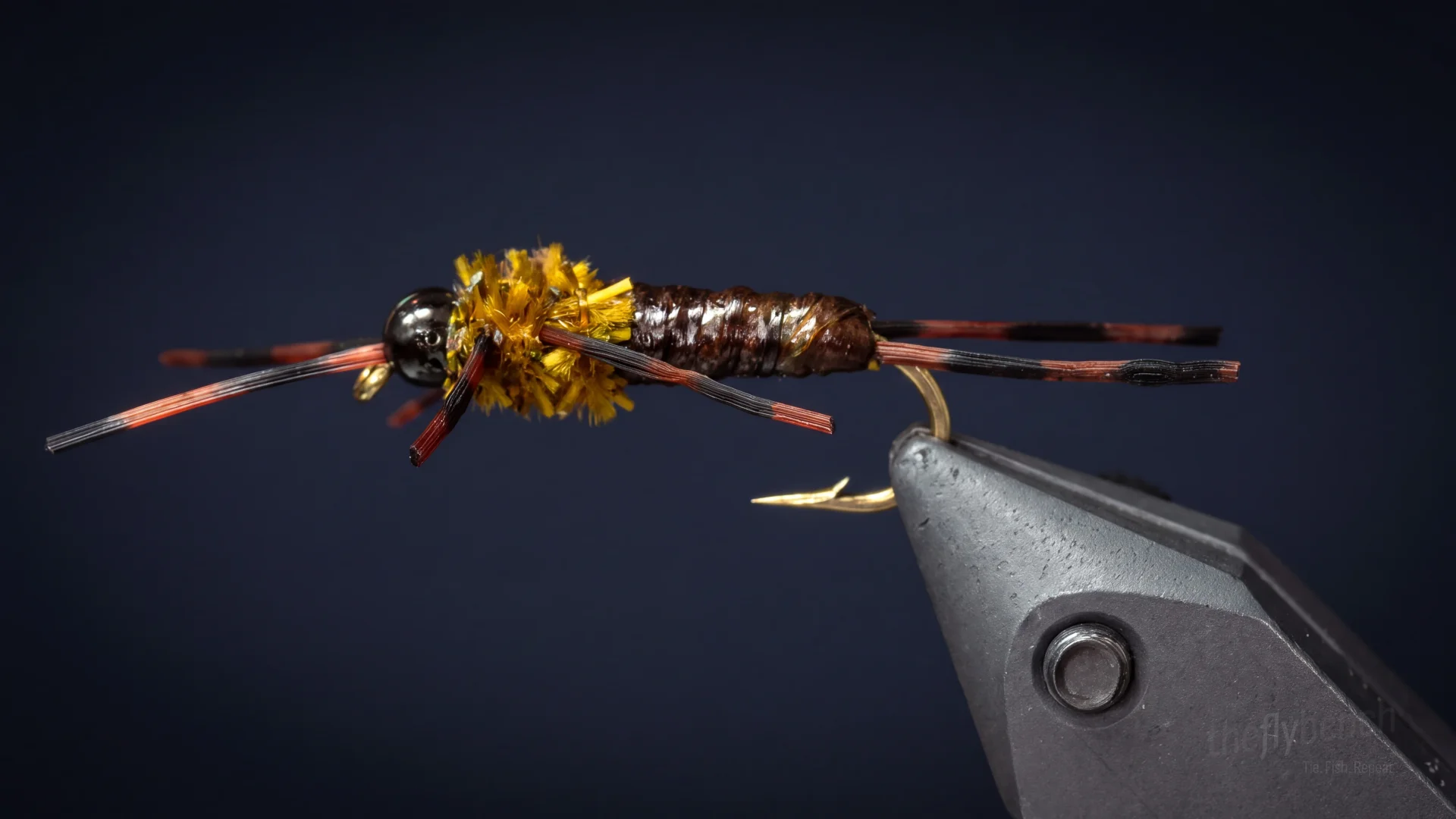
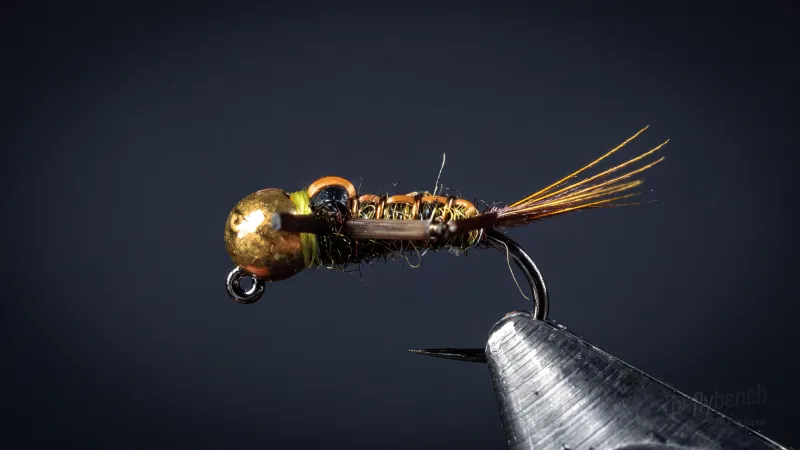
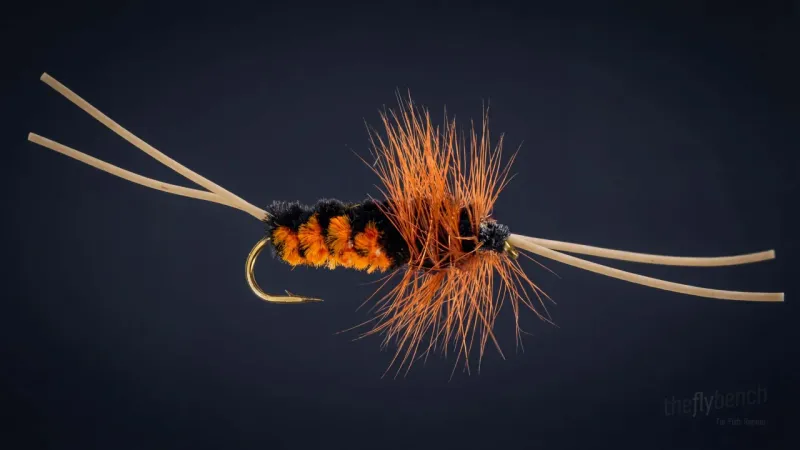
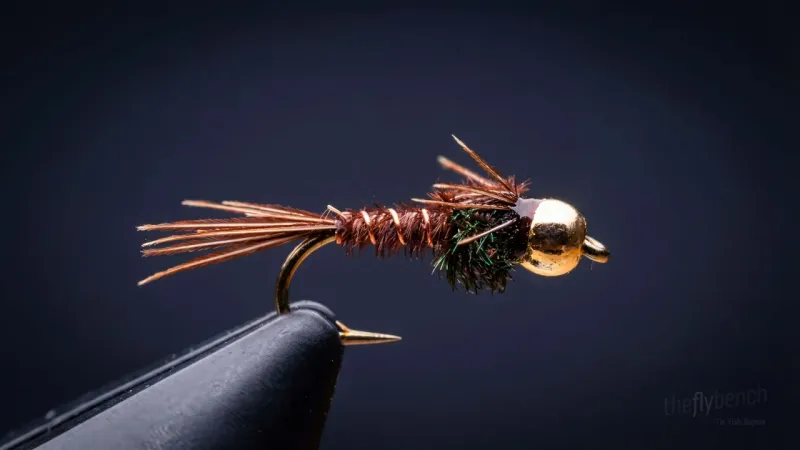
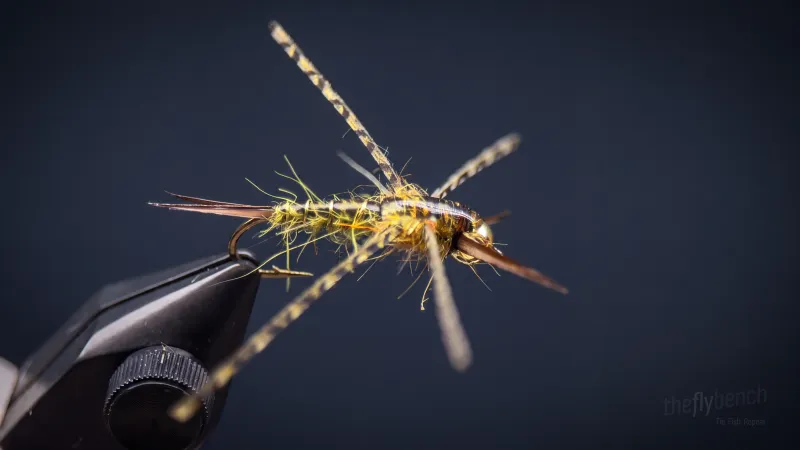
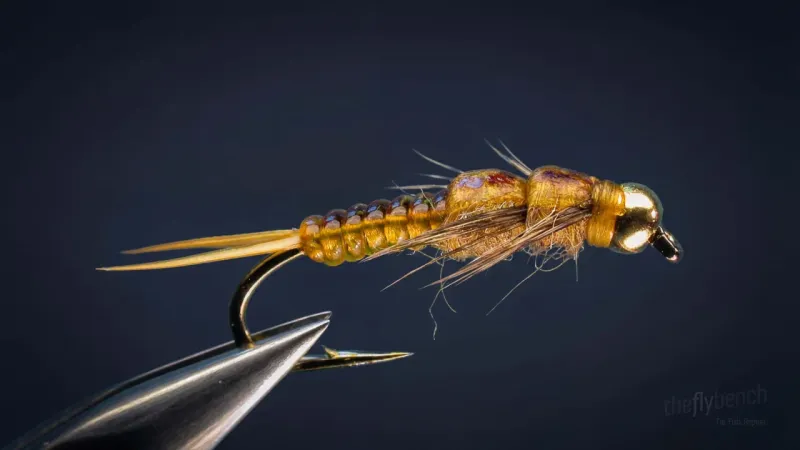
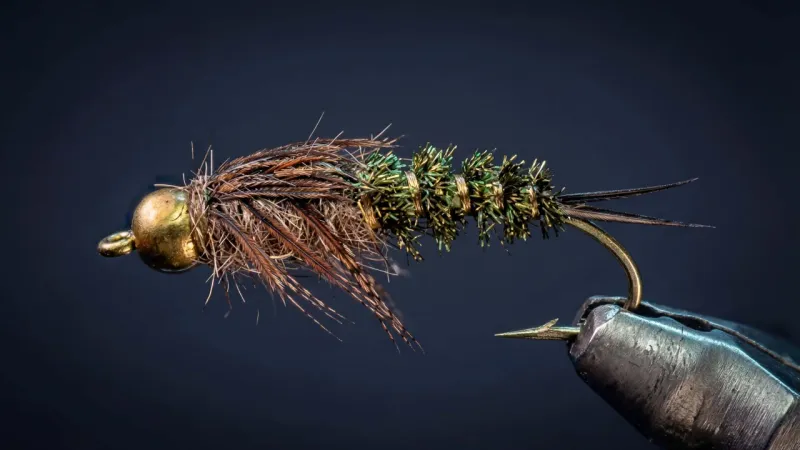
Kyle at AvidMax tied this stonefly for a 2026 Tying Tuesday and credits the pattern to a tyer from Fly Fish Food. A 3.8mm tungsten bead and .02 lead-free wire on a size 8 Daiichi 1710 make it sink fast, while a Scud Skin shellback over Chewy Worm chenille gives clear segmentation. Barred Sexi-Floss forms the legs. A black marker darkens the thorax, and a drop of super glue adds durability.
Related patterns
Behavior & presentation
- Natural Behavior
- Large stonefly nymphs spend one to three years clinging under rocks in fast current, crawling slowly between stones to feed. High flows and the shoreward crawl before emergence knock many loose, and they tumble along the bottom with legs splayed.
- Where Trout Eat It
- Trout hold low in the current and pick off dislodged nymphs in the bottom few inches of boulder-strewn riffles and fast runs.
- How to Fish It
- Dead drift it tight to the rocks so it ticks bottom, letting the weight carry a smaller nymph down behind it.
- Best Water
- Pockets behind boulders, the soft seam beside a fast chute, riffle drop-offs and cobble banks where mature nymphs gather before crawling out.
- Strike Type
- The drift simply stops, much like a snag on a rock, then the line comes alive with a heavy head shake as the fish turns.
Fishing strategy
- Rigging Suggestions
- Fish it as the anchor fly on 3X-4X under an indicator or on a tight-line rig, with a smaller mayfly or caddis nymph trailed 14-20 inches behind on 5X. The built-in weight usually removes the need for split shot.
- Seasonal Timing
- Stonefly nymphs are in the river all year, but this fly is at its best from March through July, peaking in spring runoff and the weeks before the big stoneflies hatch.
- Pro Tips
- Adjust depth until the fly touches bottom every few feet; if it never snags, it is riding too high. Coat the thread wraps with super glue before adding the chenille so the body survives rocks and teeth.
Entomology
Large stonefly nymphs live for several years among cobble and boulders in cold, well-oxygenated rivers, gripping the rock with strong legs as they crawl and forage. Because several year classes are present at once, trout see them in every month of the season. Heavy current and the migration to shore before emergence put many into the drift, where their size makes them a substantial meal.
- Order
- Plecoptera
- Common name
- Stonefly
- Organism
- insect
- Life stage
- nymph
Pattern details
- Moving Water
- Rocky Mountain
- dead-drift
- indicator-nymph
- tight-line-nymph
- stonefly-hatch
- freestone
- high-water
- modern