Dry FliesIwan-E-Dun
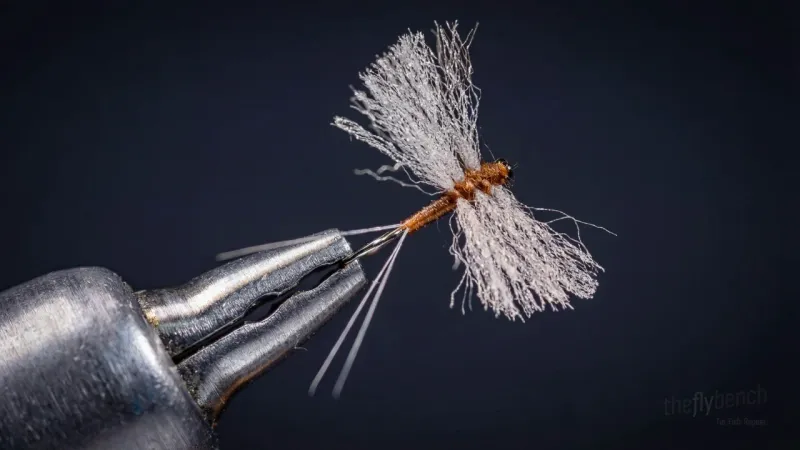
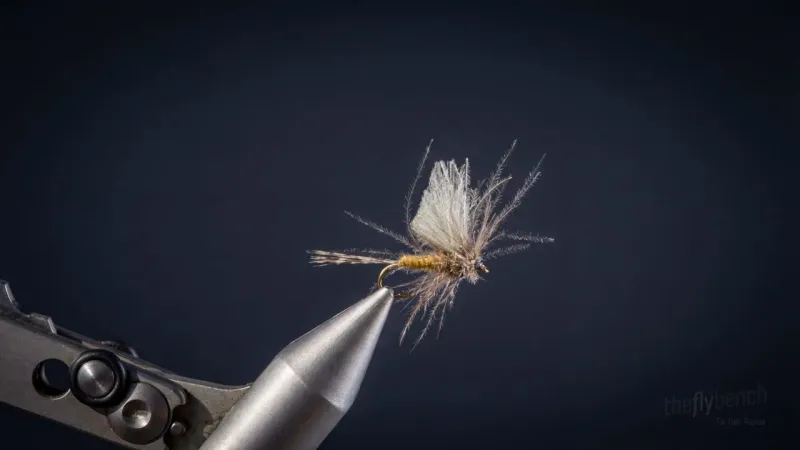
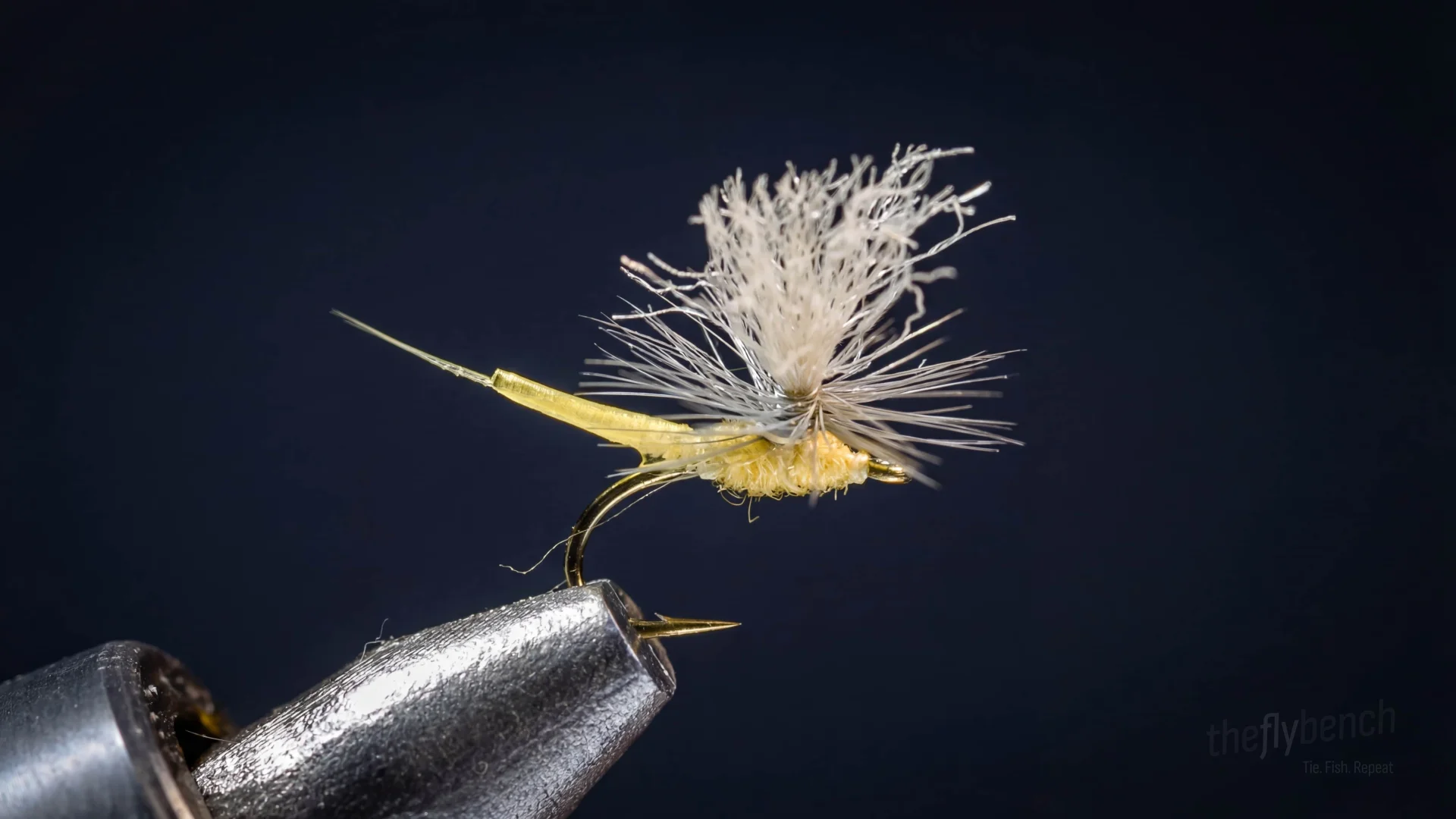
The Iwan-E-Dun is an innovative parachute-style mayfly pattern that incorporates a unique monofilament tail system for unprecedented stability and a realistic silhouette. This elegant design features a precisely split mono outrigger tail with pale yellow mayfly tail fibers, a pale yellow dubbed thorax, a buoyant macrame yarn post, and blue dun hackle wrapped parachute-style. The result is a fly that sits perfectly in the surface film like a natural mayfly dun.
Spring, Summer
Advanced
Trout
Dec 2025
Overview
This Charlie Craven pattern from Charlie's Fly Box showcases an innovative approach to parachute mayfly imitations. The Iwan-E-Dun's most distinctive feature is its monofilament outrigger tail system, which spreads the tail fibers and provides remarkable stability on the water. This tail design creates a more realistic silhouette than traditional tail fibers while helping the fly land upright virtually every cast. The blue dun hackle over the pale yellow body perfectly matches PMD and sulphur hatches.
Where to Buy This Fly
We only link to fly shops we trust. Some links are referral links, which may earn us a commission at no extra cost to you.
Materials
- Hook:
- Tiemco 2488, #16-20
- Thread:
- Veevus 14/0, light cahill
- Tail:
- Mono (.013") with Mayfly Tails (pale yellow)
- Thorax:
- Superfine Dubbing, sulphur or pale yellow
- Post:
- McFlylon (or Polypropylene Macrame Yarn)
- Hackle:
- Rooster Cape (or Saddle), blue dun
- Glue:
- Solarez Bone Dry Plus and Superglue
Behavior & Presentation
Natural Behavior: Ephemerella duns emerge and ride the surface film, drying freshly-formed wings before their maiden flight. Fish recognize this vulnerable drift stage and establish selective feeding rhythms when hatches are dense.
Where Trout Eat It: Trout take this during PMD and sulphur hatches when feeding rhythmically in concentrated emergence zones.
How to Fish It: Dead drift on 5X-6X tippet. The mono outrigger tail spreads fibers and provides stability for upright landing.
Best Water: Spring creek tail-outs and seams where delicate presentation is critical for selective trout.
Strike Type: Observe the trout's head break the surface in a head-and-tail rise, the dorsal fin often visible as fish confidently sip the floating dun.
Fishing Strategy
Rigging Suggestions: Fish on a 9-12 foot leader tapering to 5X-6X tippet for delicate presentations. The light wire hook and sparse design require careful casting but reward with natural drift.
Seasonal Timing: and summer mayfly hatches, particularly PMD (Pale Morning Dun) and sulphur emergences from May through August.
Pro Tips: The mono outrigger tail adds stability without adding bulk.
Entomology
Pale morning dun mayflies ride the surface film after emergence, drying their delicate wings before attempting flight during morning and evening hatches. Fish selectively sip these predictable, protein-rich insects as they drift helplessly downstream in concentrated numbers.
- Order
- Ephemeroptera
- Family
- Ephemerellidae
- Common Name
- Pale Morning Dun
- Organism Type
- insect
- Life Stage
- dun