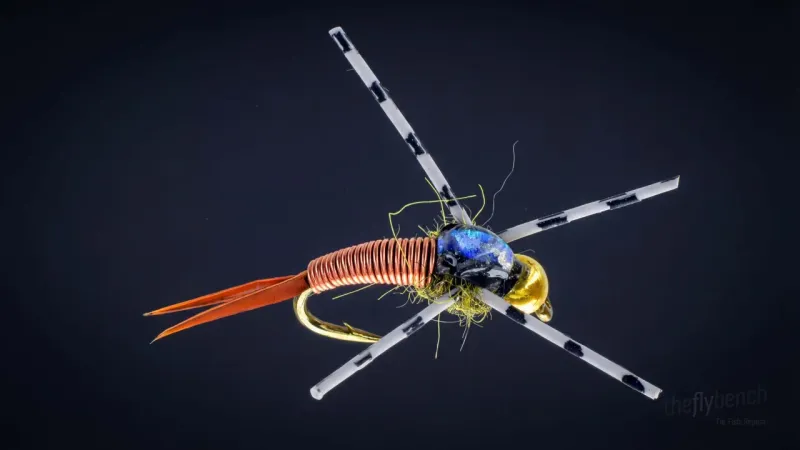
NymphHipster Dufus Carp
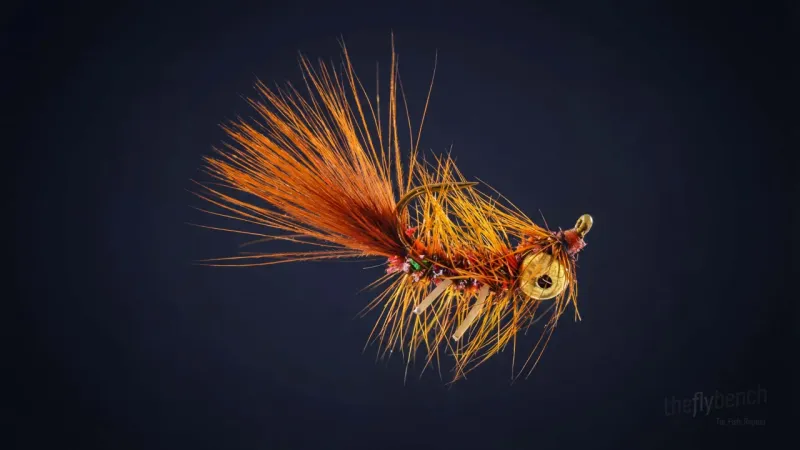
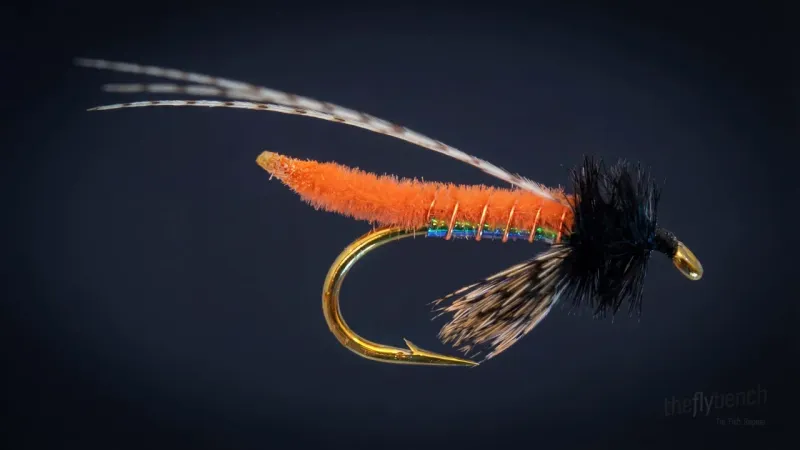
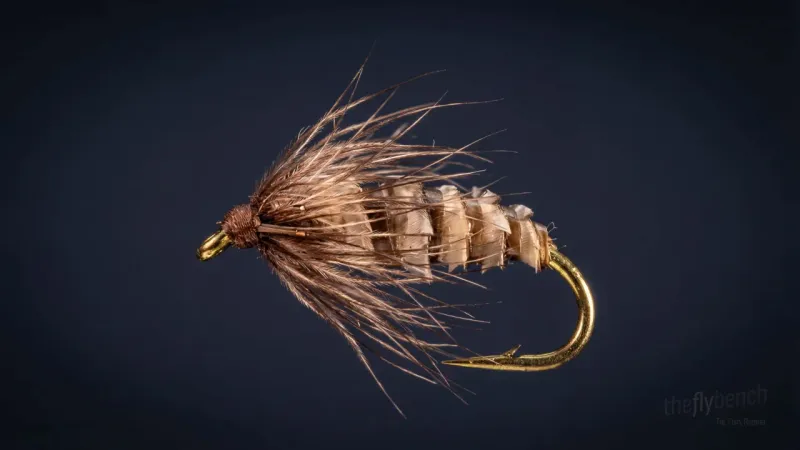
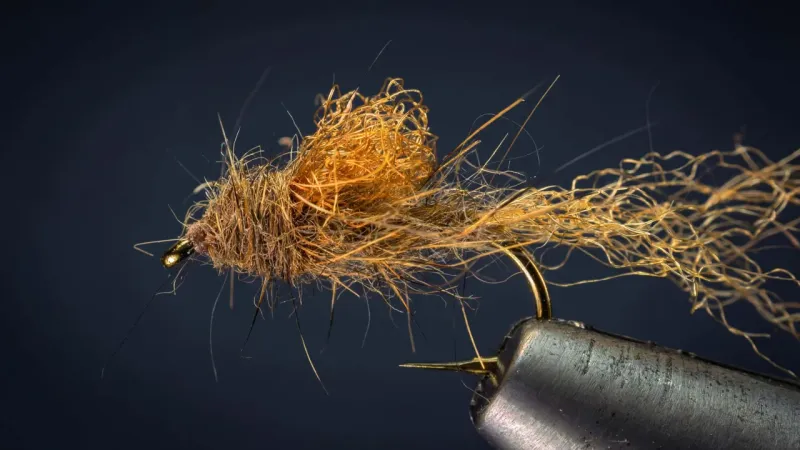
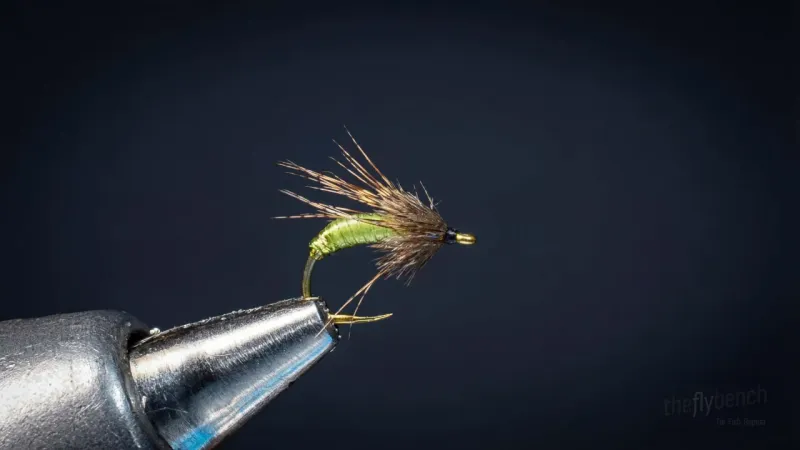
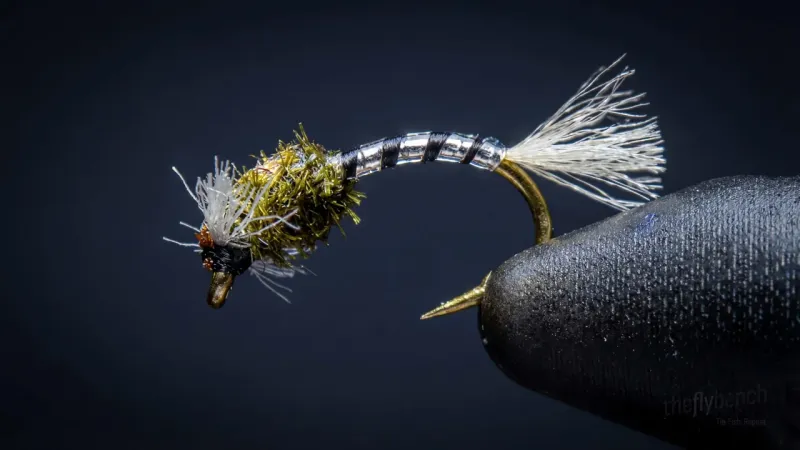
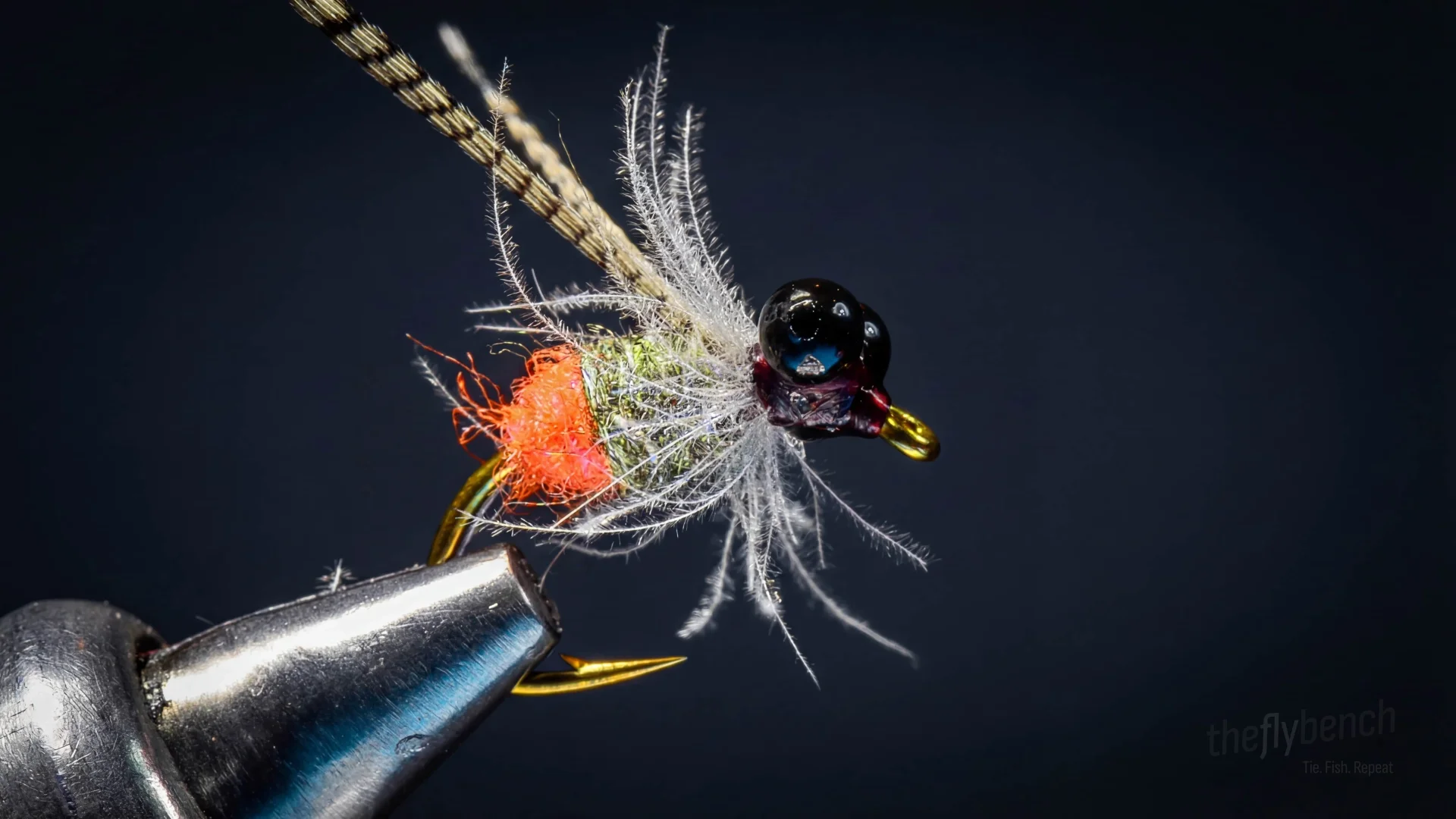
Purpose-built carp pattern designed by Daryl Eakins incorporates an ingenious lift kit weighting system ensuring the fly always lands and rides hook point up. Features prominent two-tone dubbed body with bright orange abdomen creating a hot spot, olive laser dub thorax, stabilizing wood duck flank wings, and CDC collar that adds subtle movement.
Spring, Summer, Fall
Advanced
Carp
Dec 2025
Overview
This Charlie Craven pattern from Charlie's Fly Box developed in the early 2010s showcases Daryl Eakins' innovative approach to carp fly design. Eakins credits Jay Zimmerman's Banksia Bug as the inspiration behind the Hipster Dufus, particularly the intricate internal weighting system that guarantees the fly always flips over with the hook point up. The lift kit uses two precisely measured pieces of lead wire to lift the bead chain eyes away from the shank, making the pattern top-heavy. The reverse-tapered body creates a profile reminiscent of a free-living caddis larva, while the hot spot at the bend and the CDC collar add the finishing touches.
Where to Buy This Fly
We only link to fly shops we trust. Some links are referral links, which may earn us a commission at no extra cost to you.
Materials
- Hook:
- Tiemco 2457, #8
- Thread:
- UTC Ultra Thread, wine (70 and 140 denier)
- Weight:
- Lead Wire .030", two 4mm sections (lift kit)
- Eyes:
- Bead Chain, medium black
- Abdomen:
- Senyo's Laser Dub, fluorescent orange
- Thorax:
- Senyo's Laser Dub, olive
- Wing:
- Wood Duck Flank Feather, barred black and white
- Collar:
- CDC, white
Behavior & Presentation
Natural Behavior: Free-living caddis larvae and small crayfish move along muddy bottoms with crawling, backward-scuttling motions, disturbing sediment as they forage. Carp actively root through soft substrates to uncover these invertebrates, their downward-facing mouths perfectly adapted to vacuum bottom-dwelling prey from silt and detritus in shallow flats and bays.
Where Trout Eat It: Carp feed head down and tailing in shallow flats and near-shore areas where they actively root through sediment for invertebrates and crustaceans at 1-3 feet deep. Target fish when they're actively feeding on bottom structure.
How to Fish It: Sneak the fly into an approaching fish's zone by casting beyond its path and dragging it into the feeding lane, or drop it right above them when they're tailing. Use a no-slip loop knot so the fly sinks head down with increased sink rate.
Best Water: Muddy flats, shoals, and sandy drop-offs in South Platte River and Chatfield Reservoir where carp cruise and feed on bottom structure in warm, shallow bays.
Strike Type: Feel for subtle weight or gentle pulls as carp inhale from the bottom—watch the leader angle and set firmly when the fish tips downward or moves away with the fly in its mouth.
Fishing Strategy
Rigging Suggestions: Fish on a 9-12ft 2X-3X fluorocarbon tippet for abrasion resistance. The built-in weight eliminates the need for additional split shot, allowing for cleaner presentations.
Seasonal Timing: Most effective April through October during spring through fall when carp are actively feeding in shallow water, with peak effectiveness during June-August when water temperatures reach 65-75°F because carp cruise flats and near-shore areas most actively during this period. Fish when water temperatures are 54-68°F.
Pro Tips: The fluorescent orange abdomen serves as a hot spot that triggers strikes while making the fly visible to the angler. The CDC collar adds subtle movement and life to the fly when it rests on the bottom. The lift kit weighting ensures hook-point-up presentation on every cast.
Entomology
Caddis larvae crawl along substrates searching for algae and detritus, while crayfish scuttle backward when disturbed, both creating bottom disturbances that attract foraging carp. These omnivorous fish actively root through sediment to consume any available protein source, making bottom-dwelling invertebrates and crustaceans staple foods in their diet.
- Order
- Trichoptera
- Common Name
- Caddisfly
- Organism Type
- crustacean
- Life Stage
- larva