Dry FliesGrbica
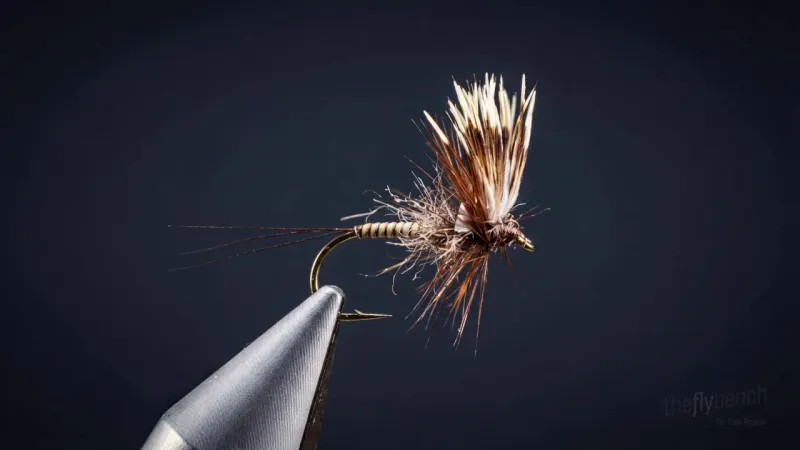
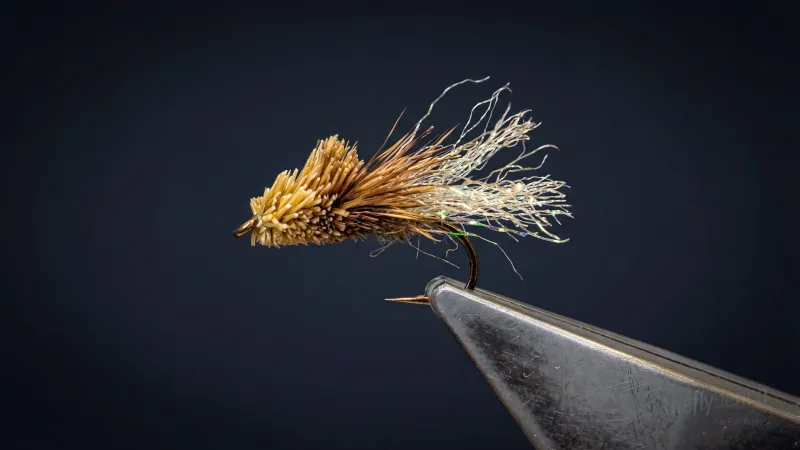
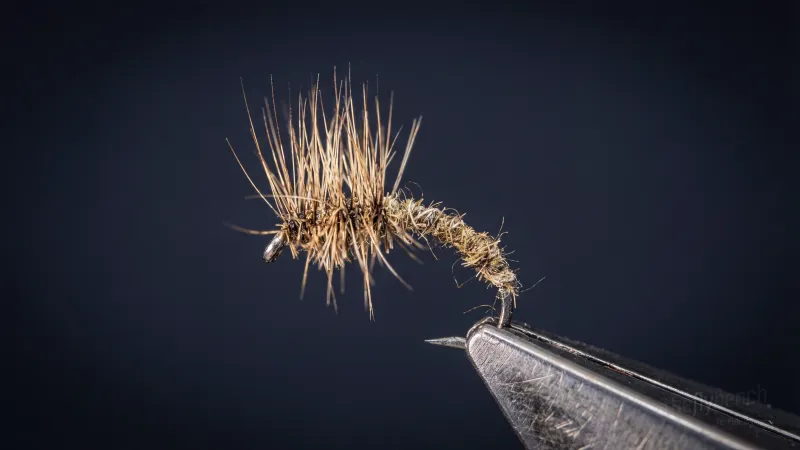
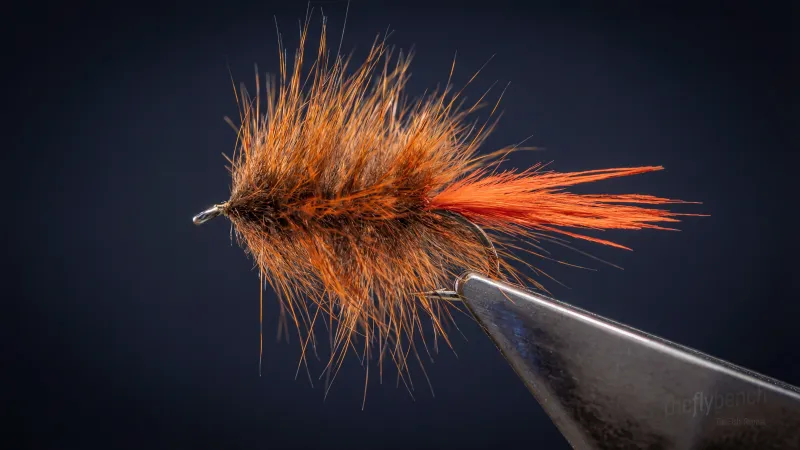
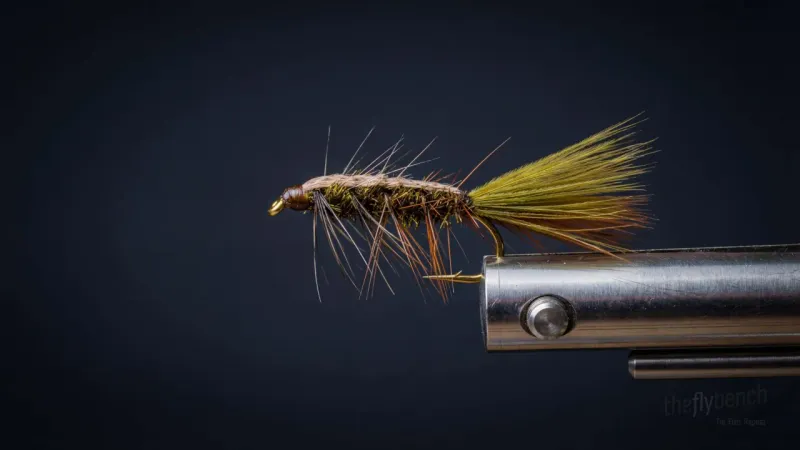
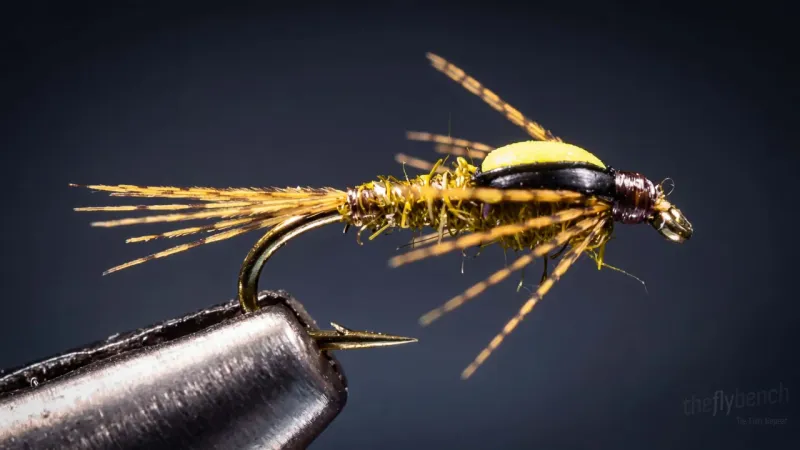
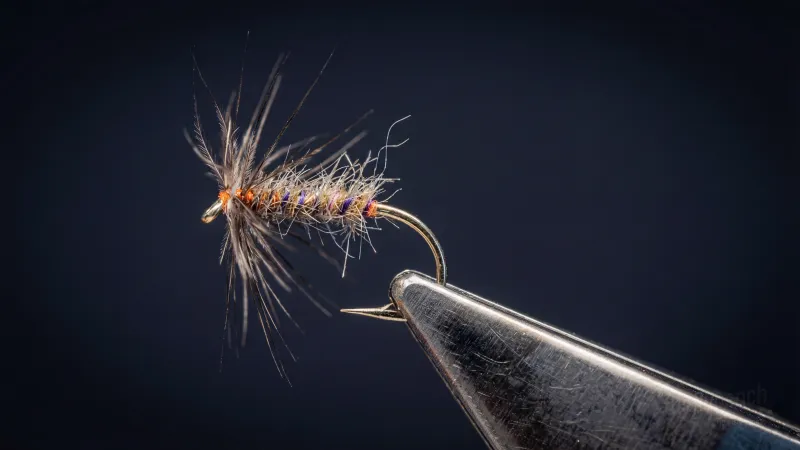
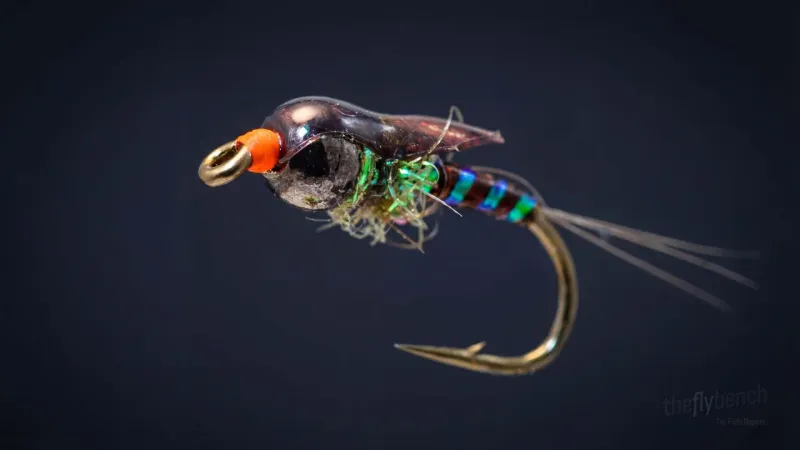
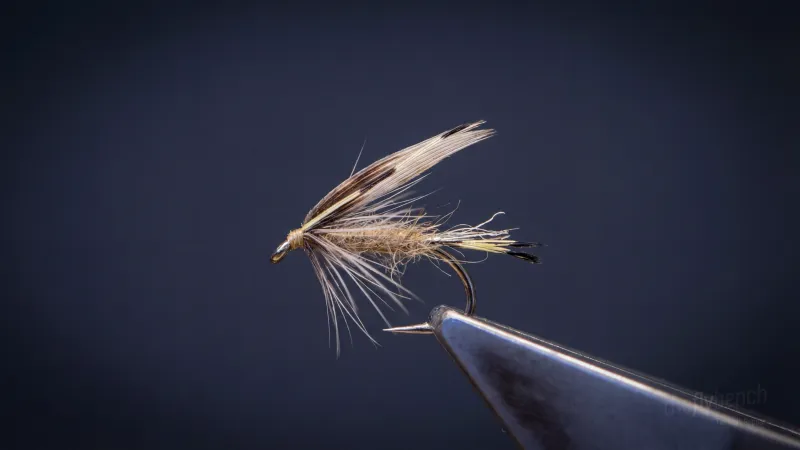
The Grbica builds a segmented body from mole and hare dubbing under a duck or turkey biot shellback, with wingbuds of the same biot and a boar-bristle tail. That low, hard-backed profile reads as a generic mayfly or caddis nymph pushing toward the surface rather than a fully hatched adult. It is a simple, durable tie suited to riffles and runs.
Spring, Summer, Fall
Beginner
Trout
Feb 2026
Overview
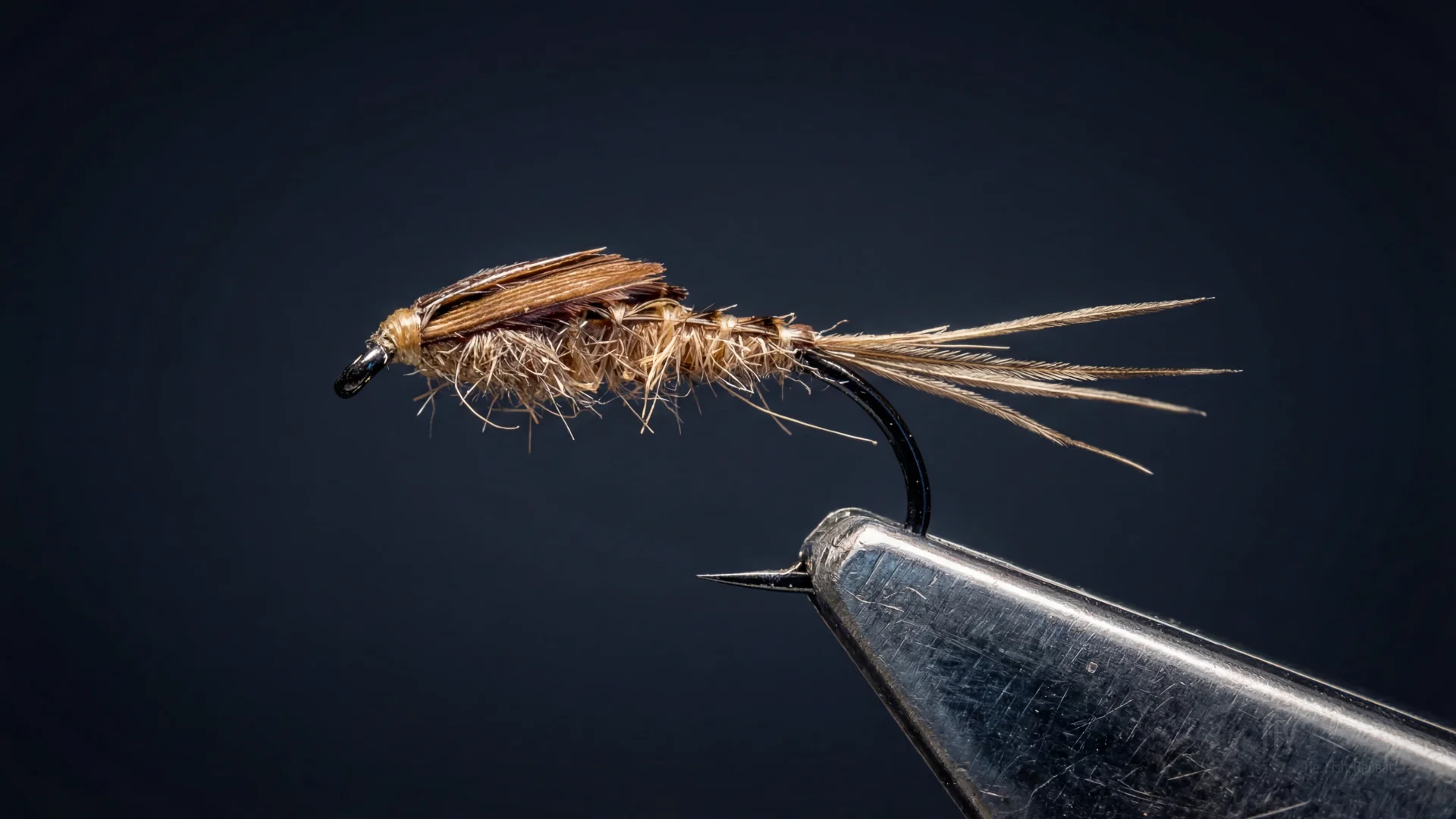
A biot shellback runs over a two-part dubbed body, mole and cream hare blended 1:2 in the abdomen and 2:1 in the thorax, with a matching pair of biot wingbuds marking where wings would emerge and a boar-bristle or hackle-barb tail for balance. The thread-tag rib holds the segments in place without adding bulk. That shellback-and-wingbud construction is built for a nymph or emerger reading rather than an upright dry silhouette, so it suits fish keying on insects still under or just breaking the surface. Its sparse, tough materials make it an easy pattern to tie in a range of sizes and colors for riffles and runs.
Where to Buy This Fly
We only link to fly shops we trust. Some links are referral links, which may earn us a commission at no extra cost to you.
Materials
- Hook:
- Tiemco 102Y #11-19
- Thread:
- Benecchi 12/0, tan
- Rib:
- Thread tag end
- Tail:
- Boar bristle (or hackle barbs)
- Abdomen:
- Mole, dyed brown; hare, cream - 1:2 ratio (or color of your choosing)
- Shellback:
- Duck (or turkey) biot
- Thorax:
- Mole, dyed brown; hare, cream - 2:1 ratio (or color of your choosing)
- Wing Buds:
- Duck (or turkey) biots
Behavior & Presentation
Natural Behavior: Mayfly duns sit motionless on glassy tailwater surfaces while their wings expand and stiffen, their upright wings and segmented abdomens creating a classic dun silhouette. The balanced hackle and wing proportions allow the fly to ride upright with stability, matching the static posture of drying Ephemeroptera.
Where Trout Eat It: Trout target caddis in Gacka River turbulent zones, using lateral line to track surface wakes in fast pocket water.
How to Fish It: Achieve drag-free drift through pocket turbulence, relying on deer hair wing visibility and buoyant construction.
Best Water: Focus on spring creek pockets with exposed boulders, riffle crests over structure, and foam-line convergence zones in fast currents.
Strike Type: Tailwater risers feed rhythmically on drifting duns; observe the rise timing and set gently when you see the fly taken.
Fishing Strategy
Rigging Suggestions: Use a 9-12 foot leader tapering to 5X tippet for delicate presentations. Apply floatant to the body and hackle.
Seasonal Timing: Most effective during peak feeding periods at dawn and dusk. Water temperatures between 45-65°F typically produce best results.
Pro Tips: The CDC wing provides excellent visibility for anglers while maintaining a natural profile for fish. This pattern works best when fished with confidence through likely holding water rather than specifically to rising fish.
Entomology
Adult caddis skate and slide across fast-moving currents during egg-laying behavior, creating small surface wakes that fish detect through lateral line vibrations even in turbulent water. Trout in pocket water and riffles target these active insects because the high-energy environment concentrates caddis activity in specific feeding zones where ambush predation is most efficient.
- Order
- Trichoptera
- Common Name
- Caddisfly
- Organism Type
- insect
- Life Stage
- adult