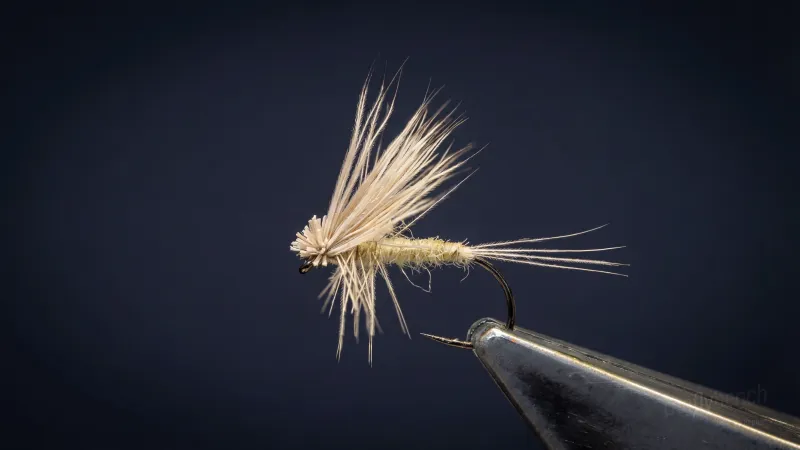
Dry FliesFootprint Dun
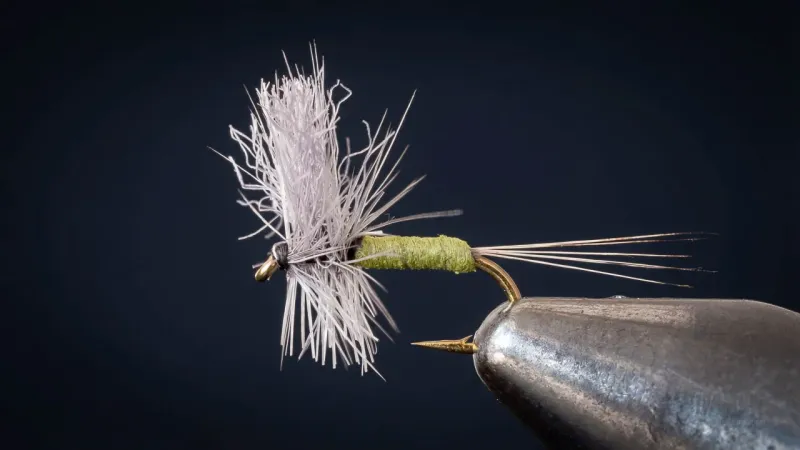
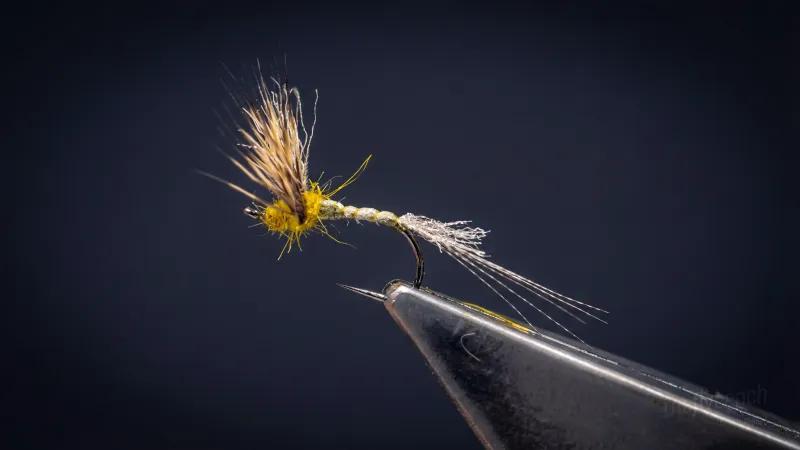
Oliver Edwards designed the Footprint Dun to imitate the dimple a mayfly leaves in the surface film rather than the insect's full body. Coarse Argentinean hare dubbing and a sparse polypropylene wing keep it low, while stiff moose body fibers serve as both tail and legs. It suits slow, flat pools where picky trout study a fly's exact silhouette.
Spring, Summer, Fall
Intermediate
Trout
Feb 2026
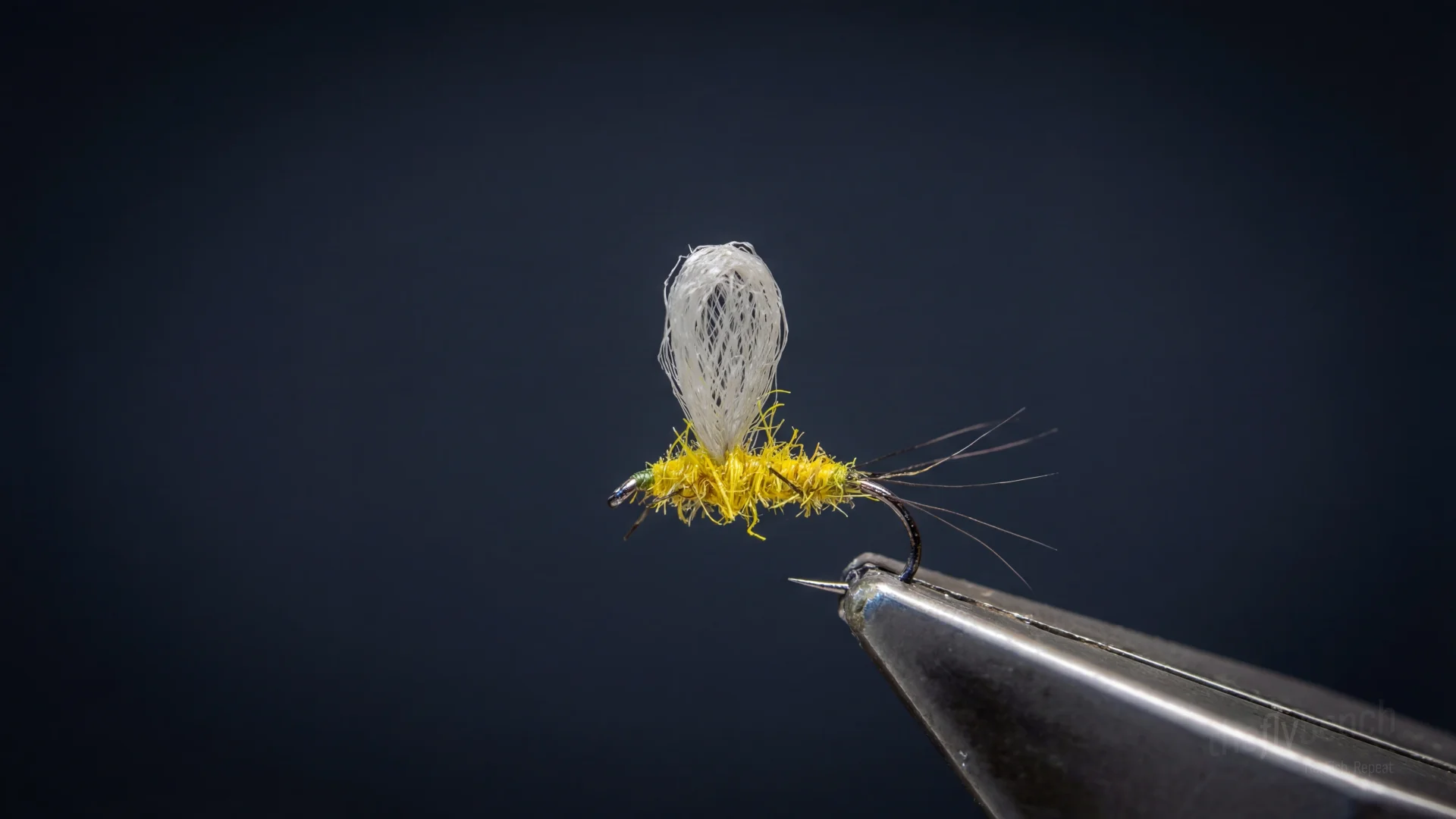
Overview
Built on a Partridge SLD hook, the fly pairs an olive Argentinean hare body with a light grey siliconised polypropylene wing and moose body fibers standing in for both tail and legs. The coarser hare dubbing floats better than finer material and holds the fly just in the surface film, so trout see the dimpled footprint of a natural dun rather than a full three-dimensional insect. That low posture suits slow, flat pools where fish have time to inspect a natural mayfly before rising. Oliver Edwards originated the concept, and Hans Weilenmann's dressing keeps the material list sparse.
Where to Buy This Fly
We only link to fly shops we trust. Some links are referral links, which may earn us a commission at no extra cost to you.
Materials
- Hook:
- Partridge SLD #16
- Thread:
- Benecchi 12/0, olive
- Wing:
- Siliconised polypropylene, light grey
- Tail/Legs:
- Moose body
- Body:
- Argentinean Hare, olive
Behavior & Presentation
Natural Behavior: Mayfly duns balance delicately on their legs, creating characteristic dimples or footprints on the water's meniscus as they rest after emergence. The splayed hackle fibers create authentic surface tension disruptions rather than a bulky fly body, triggering strikes from trout focused on surface footprints rather than silhouettes.
Where Trout Eat It: Trout focus on surface footprint dimples in chalk stream feeding lanes, rising to authentic surface tension patterns.
How to Fish It: Emphasize drag-free drift allowing splayed hackle to create natural dimples matching mayfly footprint triggers.
Best Water: Focus on chalk stream pool necks with glass-smooth surface, spring creek flats under 18 inches, and slow inside bends.
Strike Type: Chalk stream trout inspect footprint patterns carefully before sipping with gentle rises; set smoothly when you observe the rise or feel tension.
Fishing Strategy
Rigging Suggestions: Fish on 12-15 foot leader tapering to 6X-7X fluorocarbon tippet. Ultra-fine tippet supports delicate presentation needed for footprint design to fool technical feeders.
Seasonal Timing: Most effective during major mayfly hatches April through June and again September through October when water temperatures range 48-58°F. Peak selectivity occurs during heavy emergence periods when trout focus on subtle presentation details.
Pro Tips: Splayed hackle fibers create authentic surface dimples matching natural mayfly footprint. Focus on drag-free drift rather than exact size matching, as the footprint triggers recognition from selective trout.
Entomology
Mayfly duns rest motionless on the water surface after emerging from their nymphal shucks, drying their delicate wings before taking flight while leaving characteristic dimples or footprints on the meniscus. Trout selectively feed on these vulnerable insects during this critical window because the mayflies are completely defenseless and highly nutritious during their extended surface drift.
- Order
- Ephemeroptera
- Common Name
- Mayfly
- Organism Type
- insect
- Life Stage
- adult