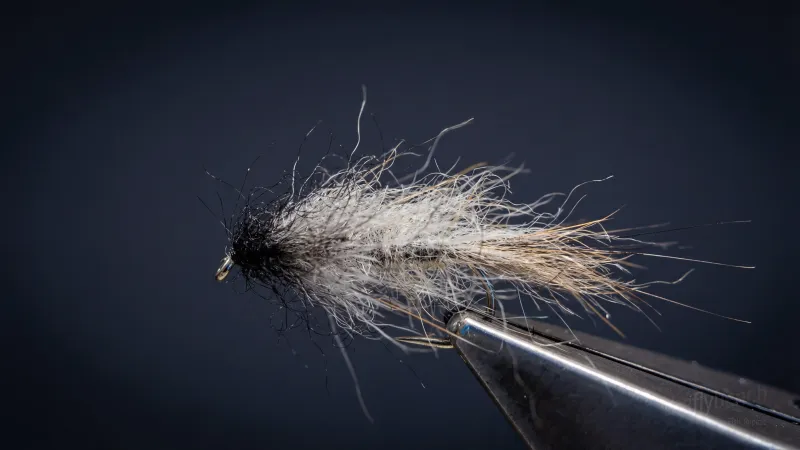
Dry FliesHatching Olive Variant
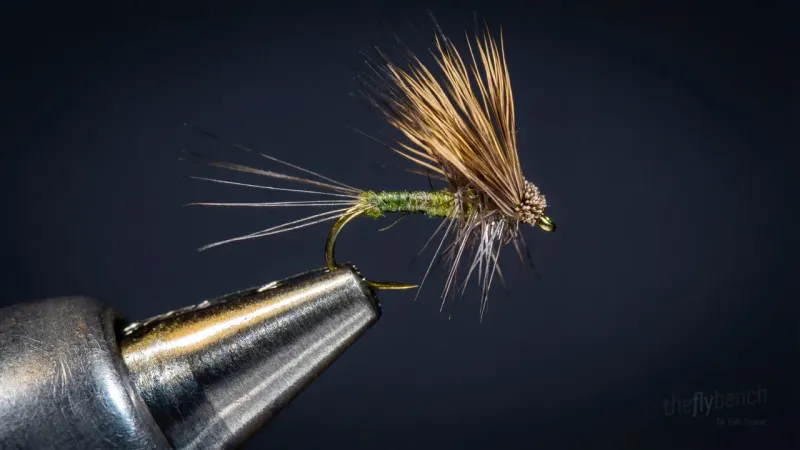
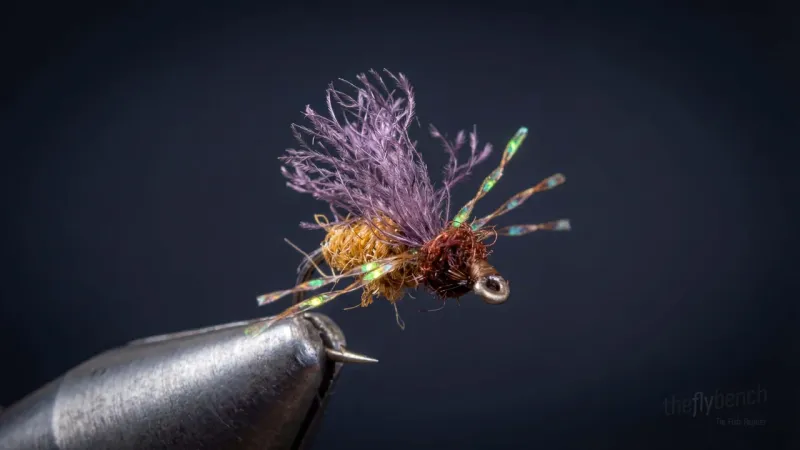
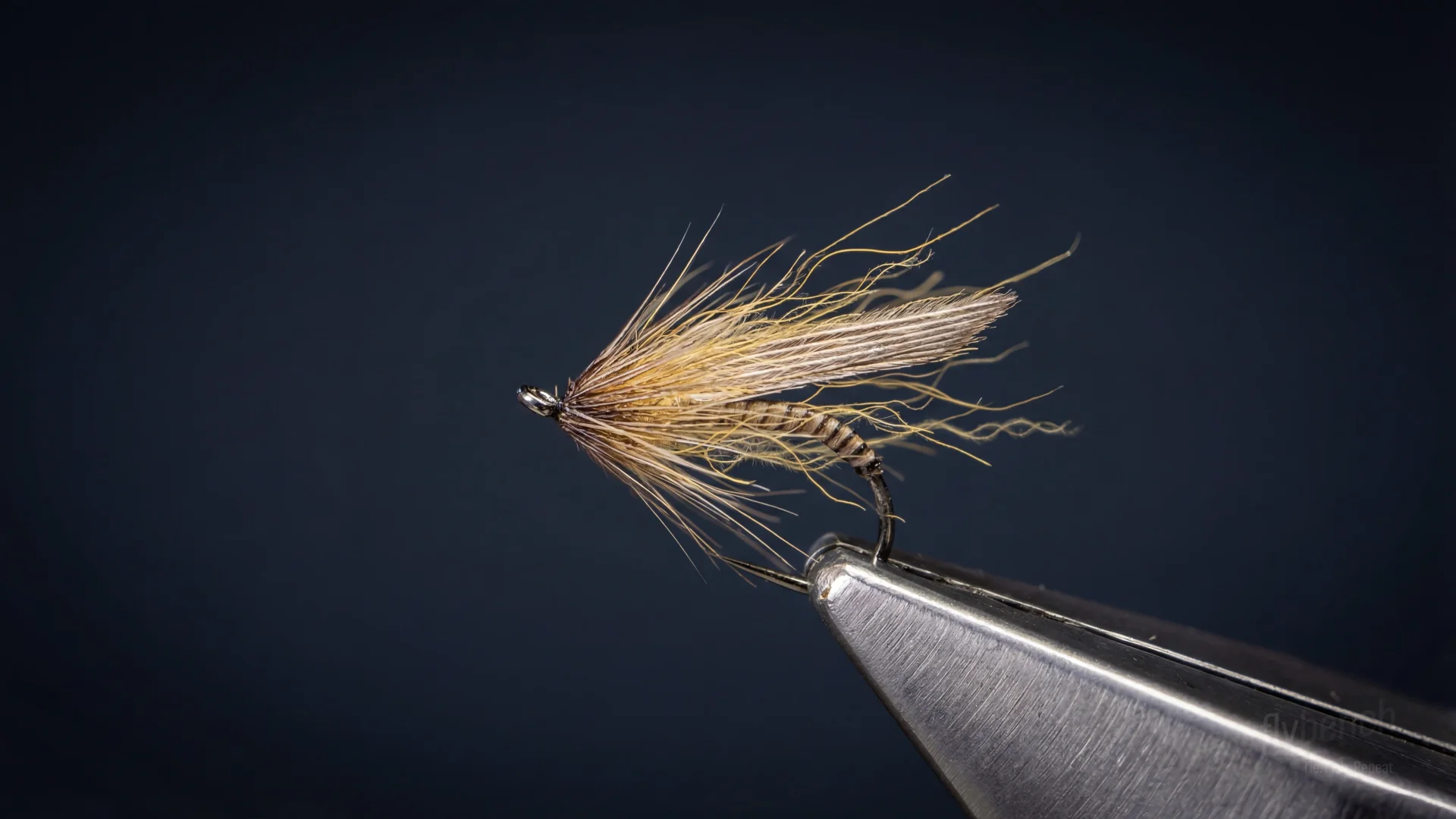
Hans Weilenmann built this Blue-Winged Olive emerger around a lacquered, stripped peacock quill abdomen for a hard, segmented shine, paired with a duck quill wing and a dark grey hen hackle. The thorax blends olive-dyed Argentinean hare with orange arctic fox underfur, spun in split thread for a touch of color low in the water.
Spring, Summer, Fall
Intermediate
Trout
Feb 2026
Overview
The stripped peacock quill abdomen is coated in clear varnish, giving it a hard, glossy segmentation that a soft dubbing can't match. A duck quill wing lies over the back while a dark grey hen hackle adds support and movement at the surface. The mixed olive-and-orange thorax dubbing, spun in split thread, adds a hint of color without adding bulk to the slim profile. It represents a Blue-Winged Olive struggling to shed its nymphal shuck in the film, a stage that can trap the natural for long stretches on cold, overcast days. Fish it dead drift during a Baetis hatch on moving water or stillwater.
Where to Buy This Fly
We only link to fly shops we trust. Some links are referral links, which may earn us a commission at no extra cost to you.
Materials
- Hook:
- Grip 14723BL #14
- Thread:
- Benecchi 12/0, black
- Abdomen:
- Peacock quill, stripped - coated with clear varnish
- Wing:
- Duck quill
- Thorax/veiling:
- Argentinean hare, dyed olive; arctic fox underfur, dyed orange - equal parts, in split thread
- Hackle:
- Hen, dark grey
Behavior & Presentation
Natural Behavior: The stripped peacock quill abdomen gives a segmented, translucent look while the dark grey hen hackle and duck quill wing sit low and slightly cocked, suggesting a dun still working free of its shuck.
Where Trout Eat It: Fish key on these emergers in slower current and back eddies where a long, unhurried drift gives them time to inspect and sip a vulnerable insect.
How to Fish It: Present it with a long, drag-free drift, letting the fly sit low in the film rather than riding high, and cover the same lane repeatedly during a hatch.
Best Water: Focus on back eddies, slick water, tail-outs, and current seams where emerging olives collect and drift slows enough for selective feeding.
Strike Type: Expect quiet, deliberate sips with little surface disturbance as fish target an insect that cannot easily escape.
Fishing Strategy
Rigging Suggestions: Use a 9-12 foot leader tapered to 5X or 6X, and treat the hackle and wing lightly so the abdomen still rides low in the film.
Seasonal Timing: Most productive during spring and fall Baetis emergences, especially on overcast, drizzly days when hatches are heaviest.
Pro Tips: Fish it as the trailing fly behind a Baetis nymph to cover both the emerging and mature stages of the same hatch.
Entomology
Blue-winged olive duns struggle to shed their nymphal shuck at the surface, often drifting for long distances on cold, overcast days before their wings dry enough to fly. Trout single these emergers out because they are trapped and vulnerable far longer than a fully hatched dun.
- Order
- Ephemeroptera
- Family
- Baetidae
- Common Name
- Blue-Winged Olive
- Organism Type
- insect
- Life Stage
- emerger