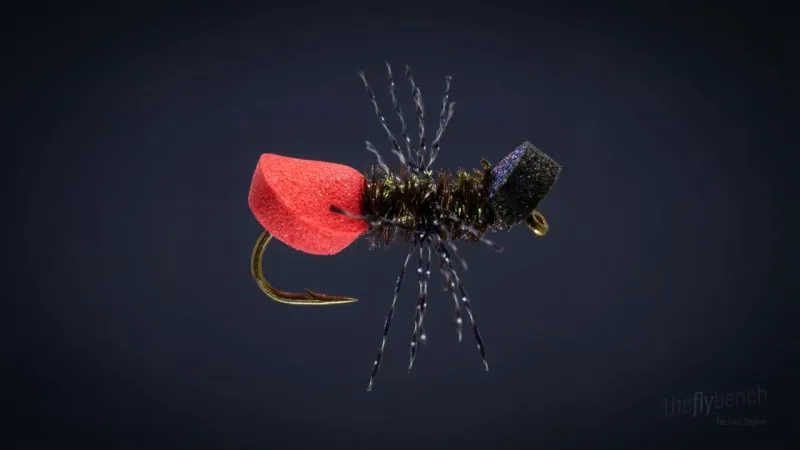
Dry FliesGeehi Beetle Variant
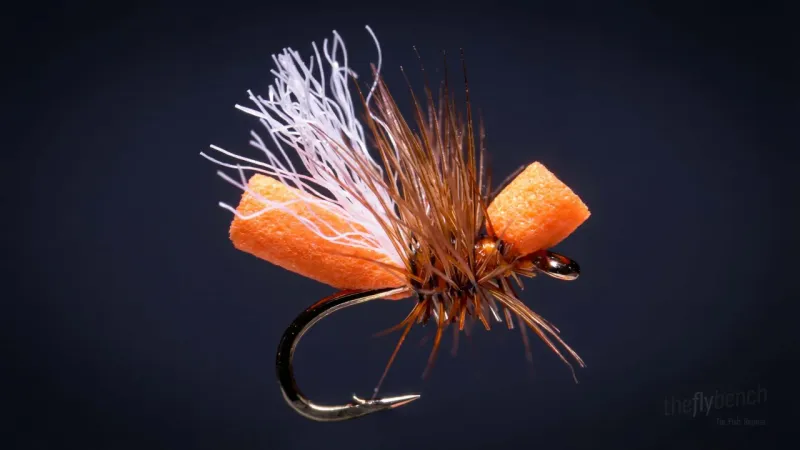
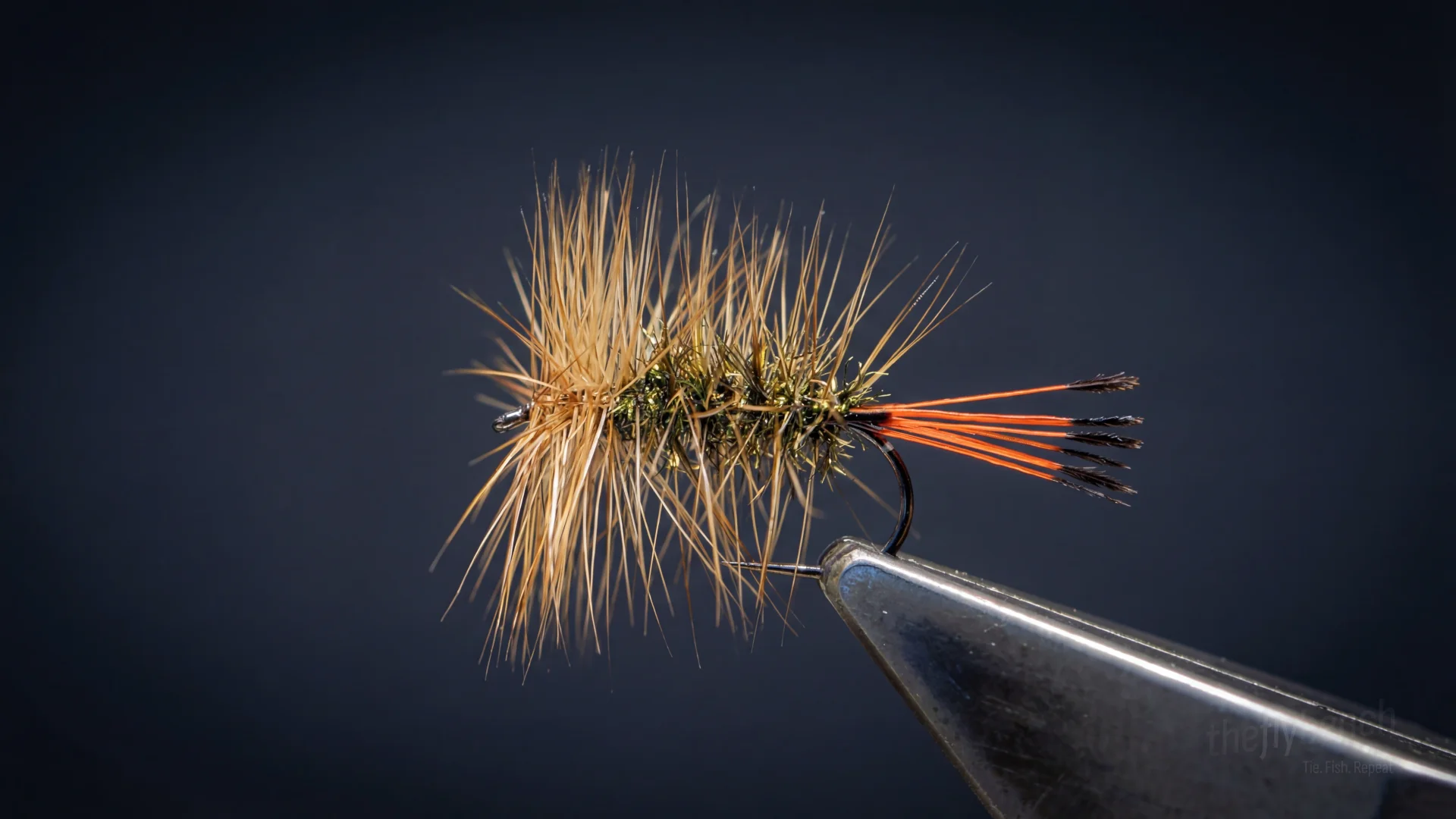
This beetle pattern from Dr. Keith Zwar and Malcolm Gillies, tied here as a Hans Weilenmann variant, builds a peacock herl body under a palmered cree hackle with a second cree hackle at the front. A hot-orange Lady Amherst tippet tail and fine gold wire rib break up the dark silhouette. The dense double hackle keeps it floating through pocket water and along grassy banks where beetles fall in.
Spring, Summer, Fall
Intermediate
Trout
Feb 2026
Overview
The body is peacock herl ribbed with gold wire, wound through with a palmered cree body hackle and finished with a second cree hackle at the head, so the fly floats on hackle points rather than foam or hair. The hot-orange Lady Amherst tippet tail adds a visible strike point without changing the beetle's dark, compact outline. Dr. Keith Zwar and Malcolm Gillies originated the pattern, and this dressing is Hans Weilenmann's variant on it. It earns its place along brushy, grass-lined banks and pocket water during summer, when wind and clumsy flight knock beetles off streamside vegetation.
Where to Buy This Fly
We only link to fly shops we trust. Some links are referral links, which may earn us a commission at no extra cost to you.
Materials
- Hook:
- Partridge SUD #12
- Thread:
- Benecchi 12/0, tan
- Hackle:
- Cock, cree
- Body Hackle:
- Cock, cree
- Rib:
- Wire, gold
- Tail:
- Lady Amherst tippet barbs, dyed hot orange
- Body:
- Peacock herl
Behavior & Presentation
Natural Behavior: Adult beetles spend most of their life on land and only reach the water by accident, falling from overhanging brush, grass, or trees, then kicking and struggling against the surface tension without any ability to skate or fly free.
Where Trout Eat It: Fish hold tight to undercut banks, grassy edges, and overhanging brush where beetles are most likely to drop, taking them within a foot or two of the bank rather than out in open current.
How to Fish It: Cast tight to structure and let the fly sit nearly still, giving it an occasional small twitch to mimic a struggling beetle rather than a steady dead drift.
Best Water: Grass-lined banks, brushy overhangs, and pocket water adjacent to terrestrial cover on freestone streams and spring creeks.
Strike Type: Trout often take confidently and close to the bank, producing a solid, splashy rise rather than a sipping take.
Fishing Strategy
Rigging Suggestions: Fish it alone on a short, stout tippet so it turns over tight to the bank, or trail it a foot or two behind a larger attractor as a dropper.
Seasonal Timing: Most productive in mid-to-late summer when terrestrial beetle numbers peak along streamside vegetation.
Pro Tips: Target the first foot of water off an undercut bank and let a light breeze do some of the work by rocking the fly against the bank.
Entomology
Adult beetles are clumsy fliers that get blown or knocked from streamside brush and grass into the water, where they float low and struggle rather than drift passively like a hatching insect. Trout treat a struggling beetle as an easy, calorie-rich meal and often take it with a confident, splashy rise.
- Order
- Coleoptera
- Common Name
- Beetle
- Organism Type
- terrestrial
- Life Stage
- adult