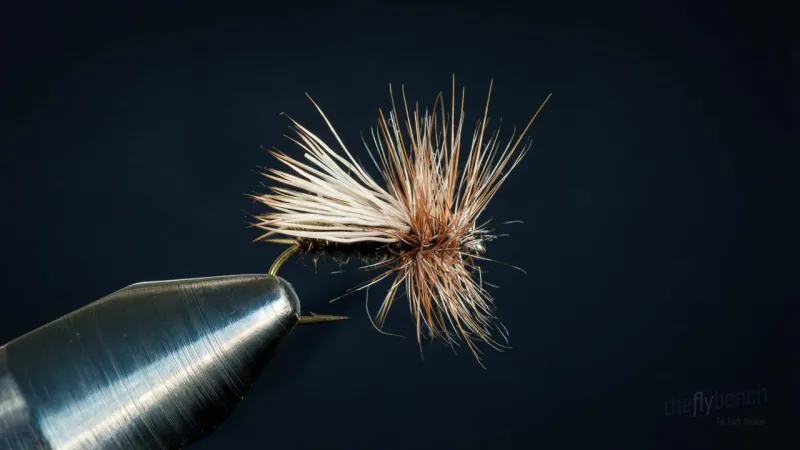
Dry FliesElk Hair Caddis
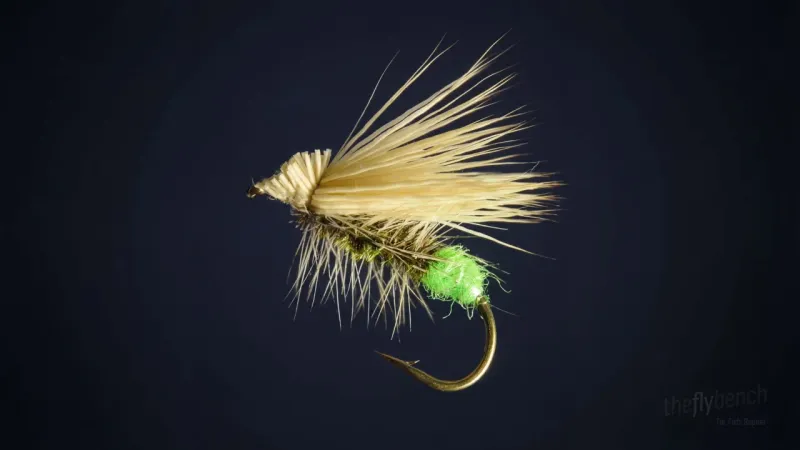
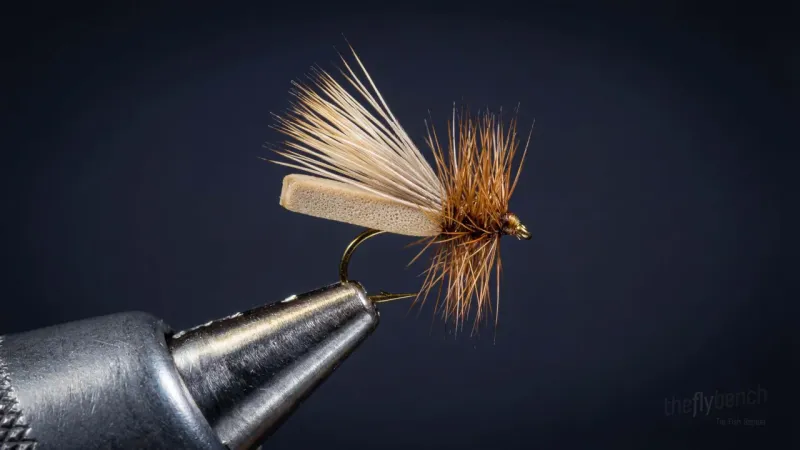
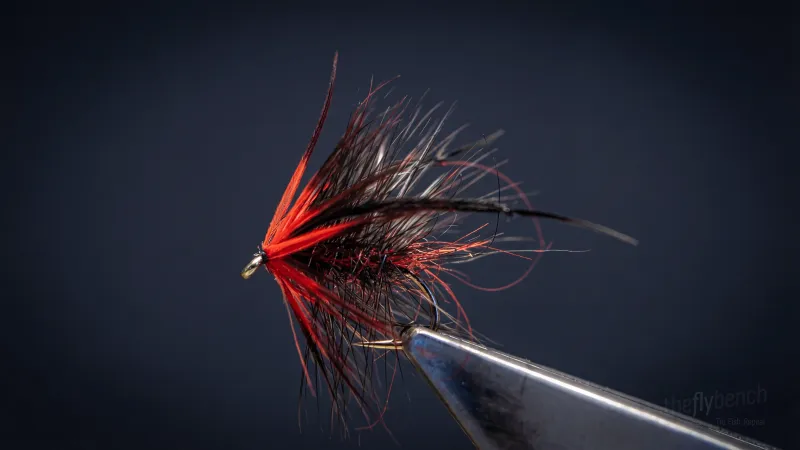
The Elk Hair Caddis is a classic dry fly pattern that imitates a variety of caddis species. Its buoyant elk hair wing and hackle make it highly visible and keep it riding high on the water, making it ideal for fishing in fast-moving water.
Spring, Summer, Fall
Beginner
Trout
Dec 2025
Overview
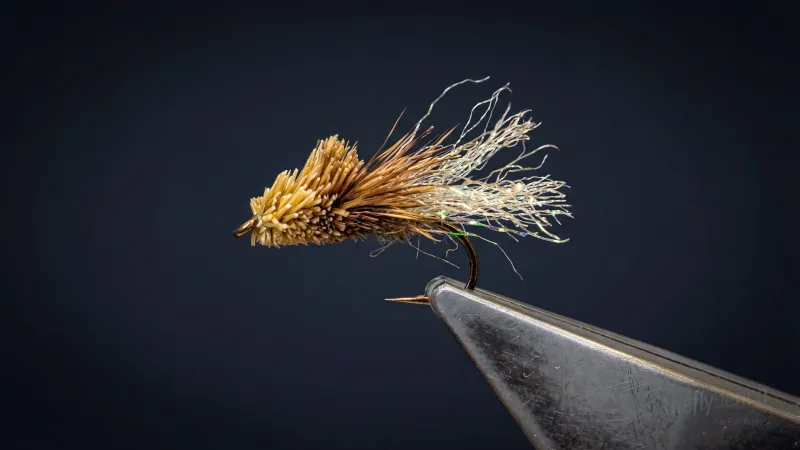
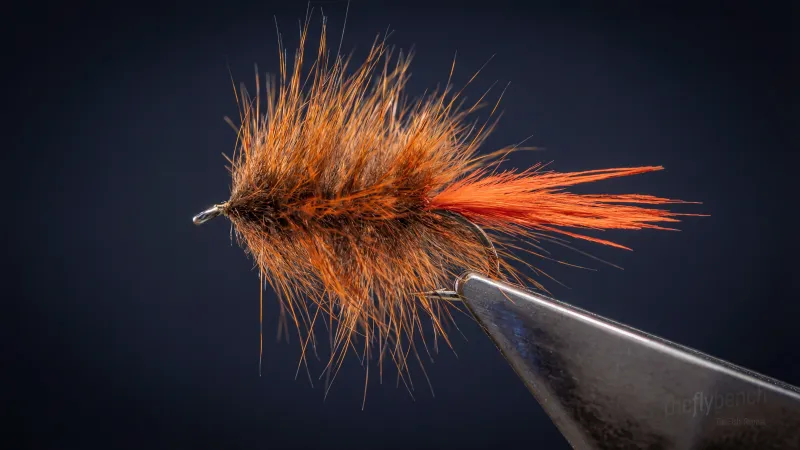
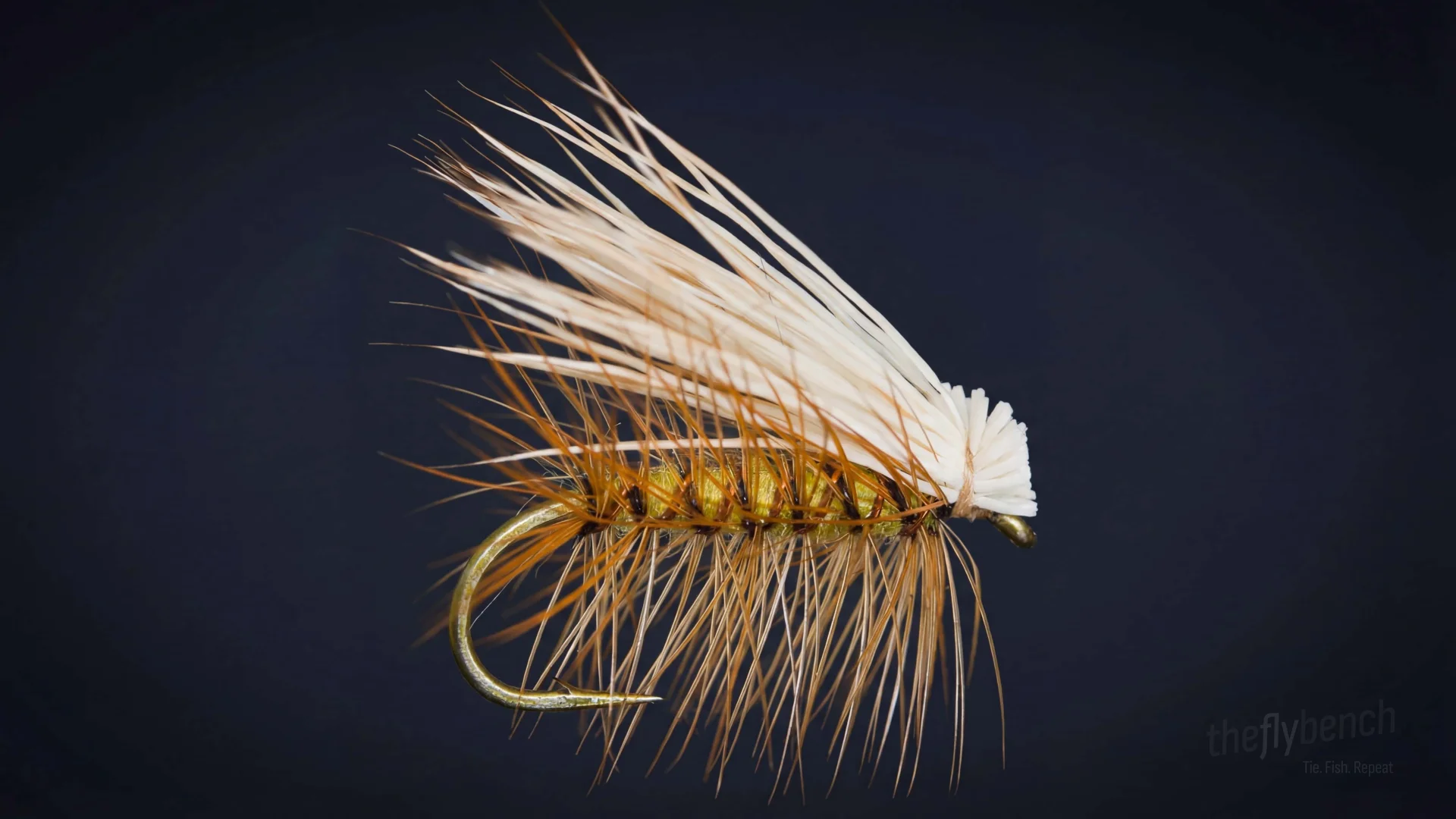
A foundational dry fly using elk hair for a buoyant down-wing, paired with a dubbed body and palmered hackle. It's quick to tie, floats high, and can be customized in size and color to match caddis hatches. Great pattern for beginners learning hackle control and wing stacking.
Materials
Hook: TMC 100 #12
Rib: UTC ultra wire #XS
Body: Super Fine dry fly dubbing
Hackle: Brown
Wing: Elk hair
Behavior & Presentation
Natural Behavior: Adult caddis skitter and flutter on the surface, wings held tent-like as they prepare to take flight or lay eggs. This active movement creates surface disturbance that fish key on.
Where Trout Eat It: Fish rise actively in riffles, runs, and foam lines where caddis activity concentrates during emergence.
How to Fish It: Dead drift or twitch occasionally to mimic the caddis' natural skittering. The buoyant elk hair keeps it riding high.
Best Water: Target riffles with broken surface, foam lines collecting insects, and current seams where caddis emerge.
Strike Type: Aggressive rises with splashy takes as fish attack the active adult caddis.
Fishing Strategy
Rigging Suggestions: Use a 9-foot leader with 4X or 5X tippet for most situations. Can be fished as a single dry or as indicator for a dropper nymph 18-30 inches below.
Seasonal Timing: Prime season runs from May through September, with peak effectiveness during June-July caddis hatches. fishing from September-October can be exceptional on freestone streams.
Pro Tips: The elk hair wing provides excellent floatation in turbulent water. High-stick the fly through pocket water for precise presentations. Vary retrieve speed to match natural insect behavior.
Entomology
Adult caddisflies skitter and flutter erratically across the water surface during egg-laying runs, alternately touching down to deposit eggs before bouncing upward in rapid escape attempts. This frantic surface activity creates audible splashes and visual disturbances that draw aggressive strikes from opportunistic feeders. The abundance of adult caddis throughout summer months and their active surface behavior make them one of the most reliable food sources that fish key on during daylight hours.
- Order
- Trichoptera
- Common Name
- Caddisfly
- Organism Type
- insect
- Life Stage
- adult