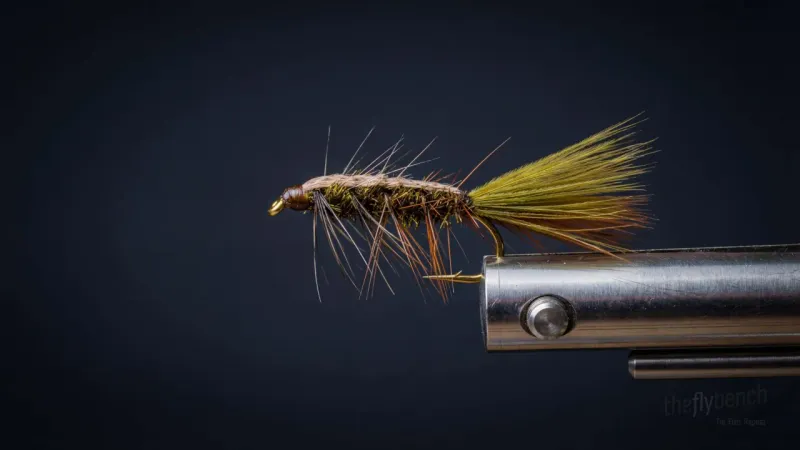
Dry FliesCorixa
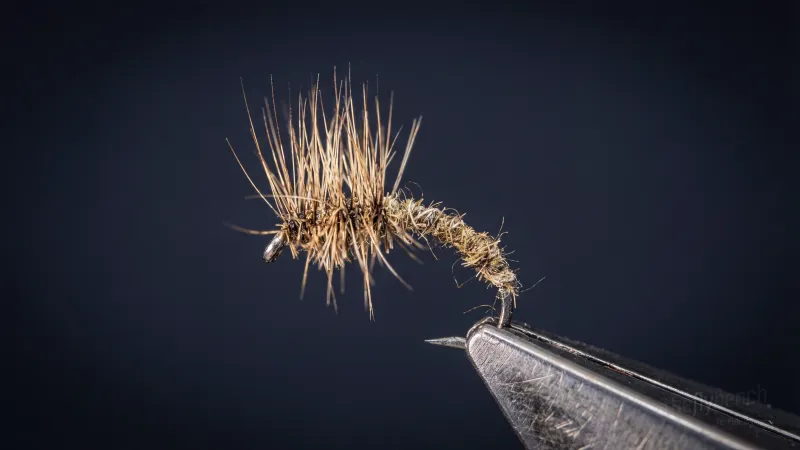
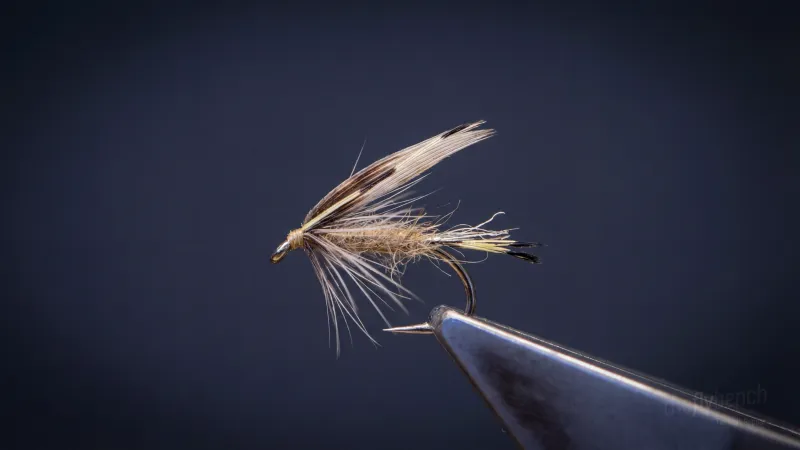
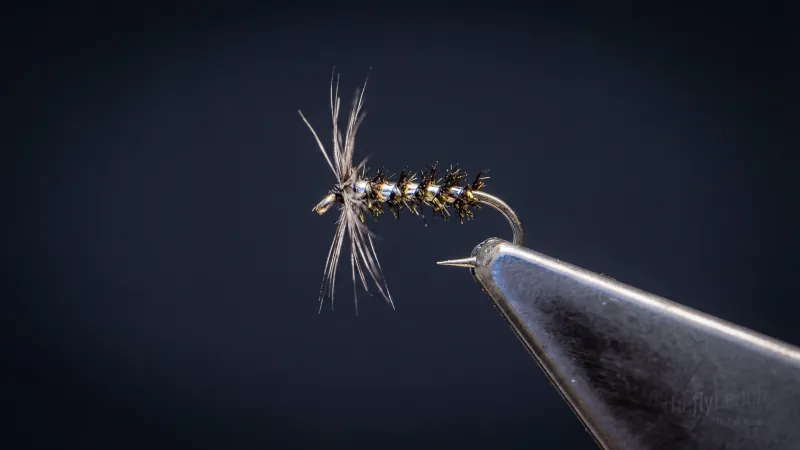
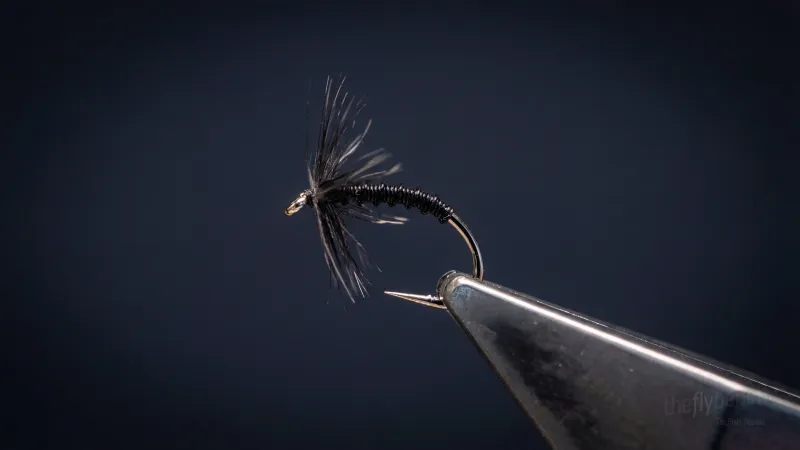
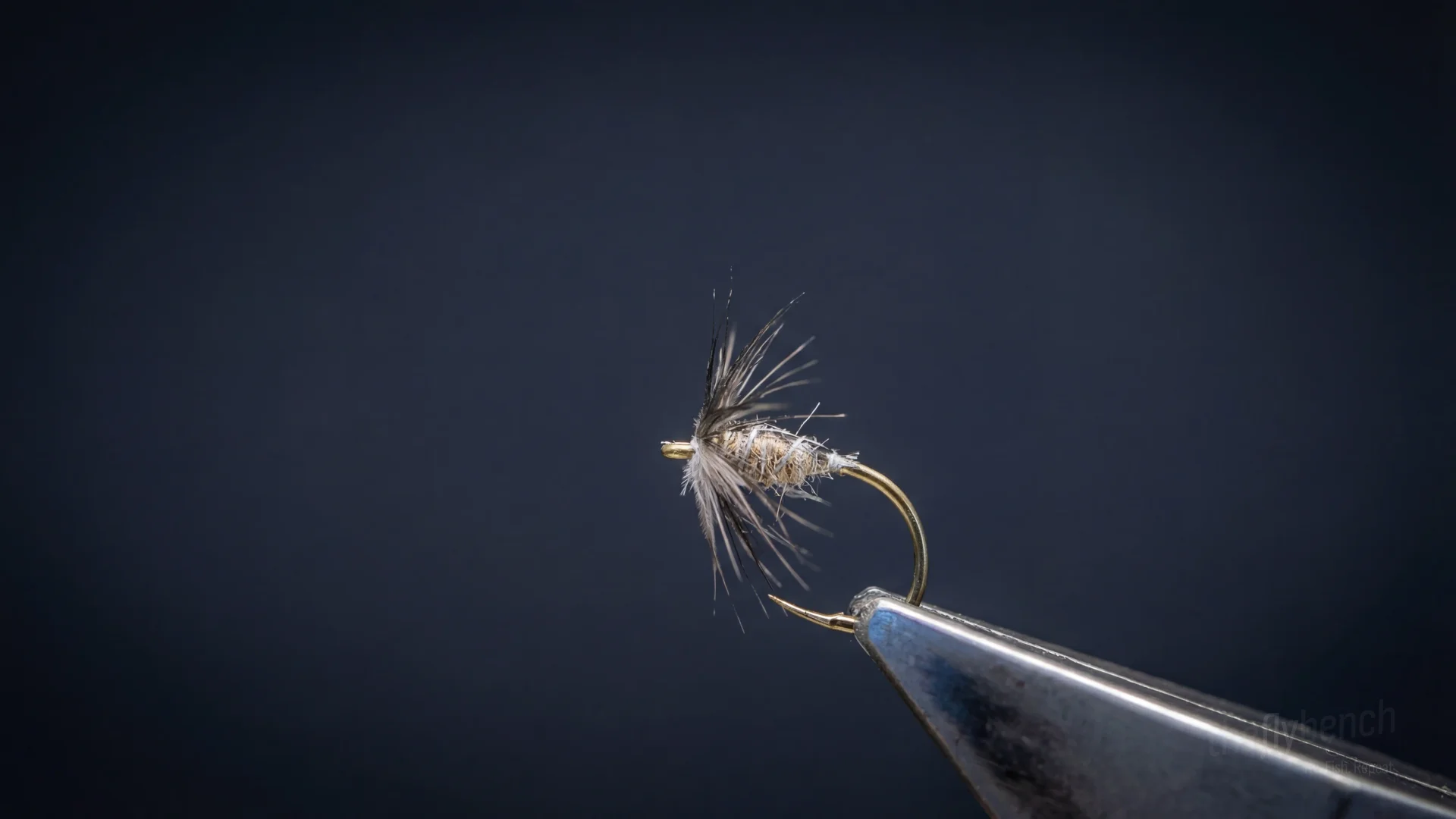
Paul Slaney's Corixa pairs black Krystal Flash with silver Mylar over a pale hare's ear body, finished with a sparse starling hackle. The layered flash suggests the flicker of naturals diving to lay eggs, giving trout a bright, active target during caddis activity.
Spring, Summer, Fall
Intermediate
Trout
Feb 2026
Overview
Slaney's original calls for two different flashes, black Krystal Flash and silver Mylar, layered so the fly catches light the way a natural does while working underwater to oviposit. The pale hare's ear body keeps the overall profile understated despite the flash, and the sparse starling hackle adds a touch of movement without adding bulk. It's a useful searching pattern whenever egg-laying caddis are on the water.
Where to Buy This Fly
We only link to fly shops we trust. Some links are referral links, which may earn us a commission at no extra cost to you.
Materials
- Hook:
- Tiemco 2499SP #14 (or equivalent scud hook)
- Thread:
- Gudebrod 8/0, white
- Flash 1:
- Krystal Flash, black
- Flash 2:
- Mylar, silver #14
- Underbody:
- Tying thread
- Body:
- Hare's ear, pale
- Hackle:
- Starling
Behavior & Presentation
Natural Behavior: Adult caddisflies dive beneath the surface to attach eggs to submerged rocks and vegetation, creating subsurface flashes and bubble trails that attract predatory attention. Fish strike at these swimming adults as they move awkwardly underwater before resurfacing exhausted and disoriented.
Where Trout Eat It: Trout strike this as water boatmen swim erratically through stillwater mid-depths or dive toward bottom. The naturals row with distinctive motion using oar-like legs, and trout intercept them during active swimming phases and momentary pauses when boatmen appear stunned.
How to Fish It: Cast with deliberate slap to surface mimicking diving entry. Let sink briefly then retrieve with fast erratic 1-2-3 count strips, pause, repeat. Quick 2-4 inch jerks per second with pauses every 5-10 jerks replicate boatmen's rowing and stunning behavior. Vibrate rod to animate legs.
Best Water: Effective in stillwater with vegetation - weed edges, shallow bays, and over weed beds. The pattern works best where boatmen migrate or during flight-crash events when they hit surface creating commotion. Also effective along pond margins where boatmen move between surface and bottom.
Strike Type: Feel a sharp grab mid-retrieve as fish intercept the swimming pattern. Strikes often come during the pause between strips when the fly appears stunned.
Fishing Strategy
Rigging Suggestions: Use a 9-12 foot leader tapering to 5X tippet for delicate presentations. Apply floatant to the body and hackle.
Seasonal Timing: Most effective during peak feeding periods at dawn and dusk. Water temperatures between 45-65°F typically produce best results.
Pro Tips: Water boatmen are high-protein food sources that trout key on in lake. The erratic swimming motion is critical to the pattern's effectiveness.
Entomology
Adult caddisflies dive beneath the surface to attach eggs to submerged rocks and vegetation, creating subsurface flashes and bubble trails that attract predatory attention. Fish strike at these swimming adults as they move awkwardly underwater before resurfacing exhausted and disoriented.
- Order
- Trichoptera
- Common Name
- Caddisfly
- Organism Type
- insect
- Life Stage
- adult