

Overview
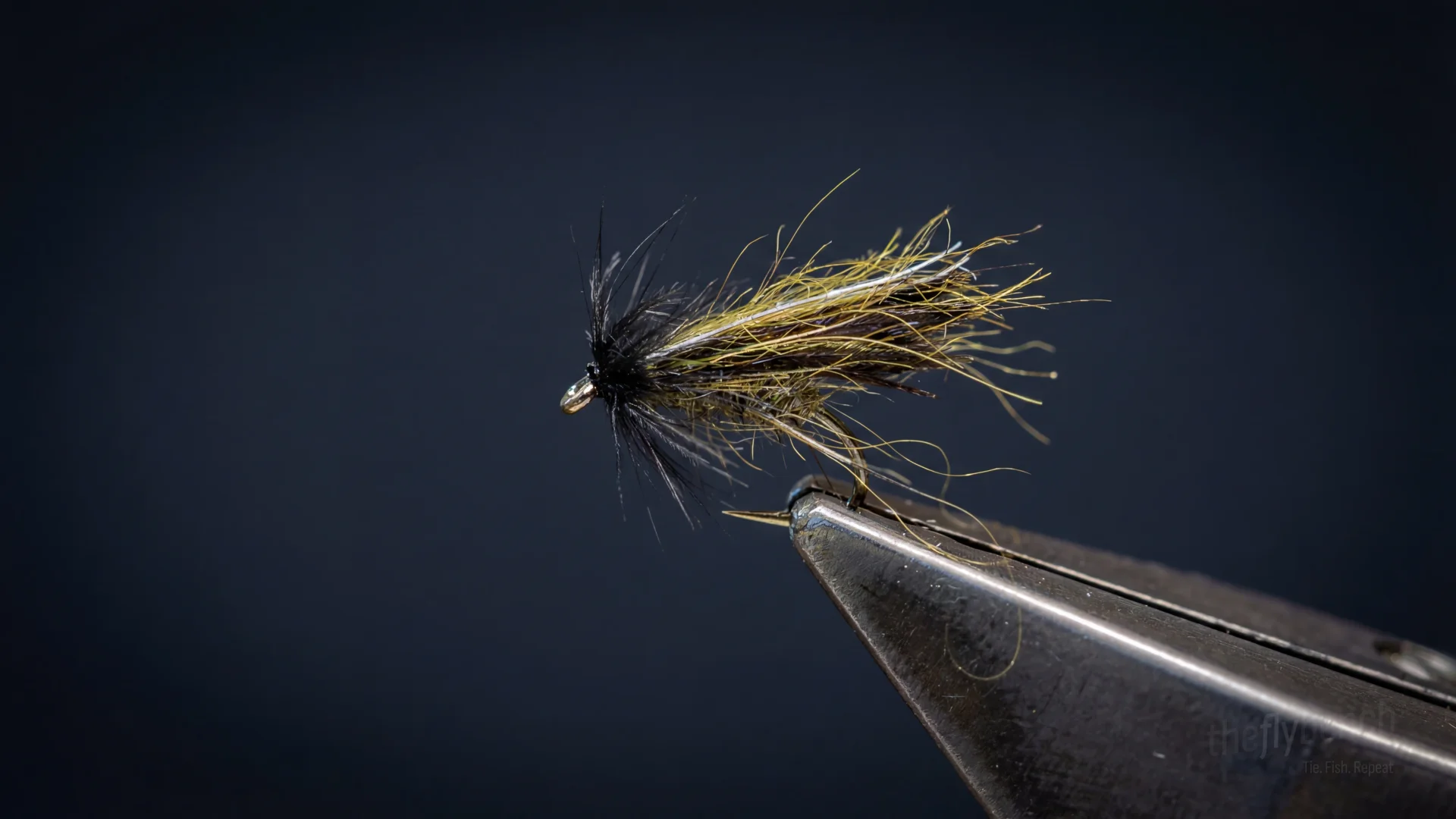
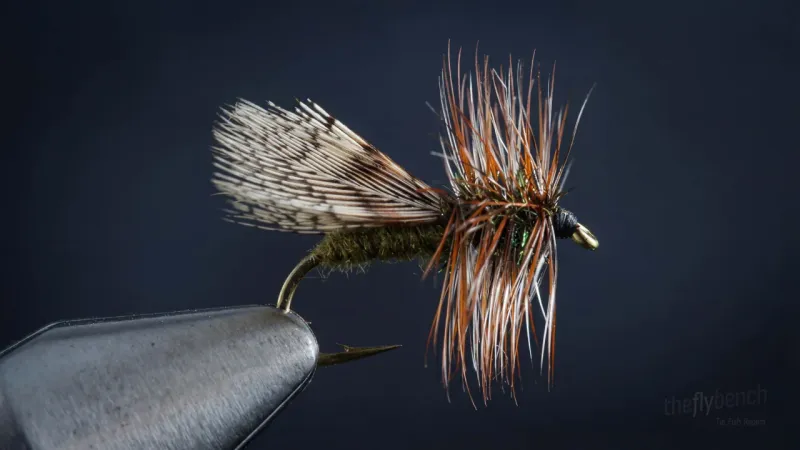
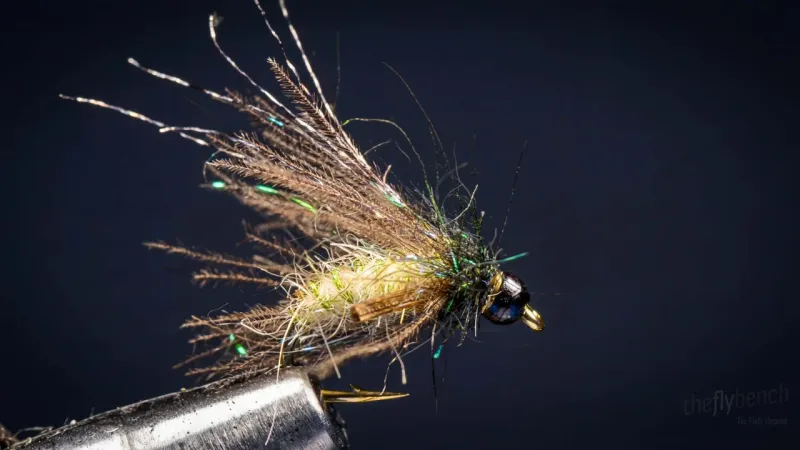
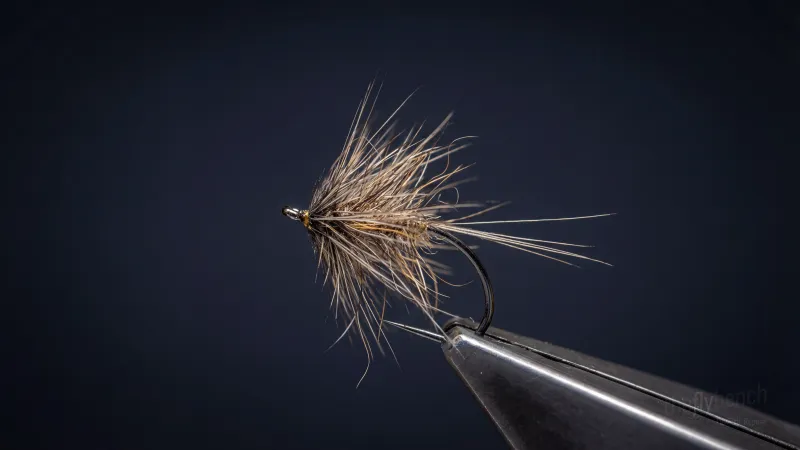
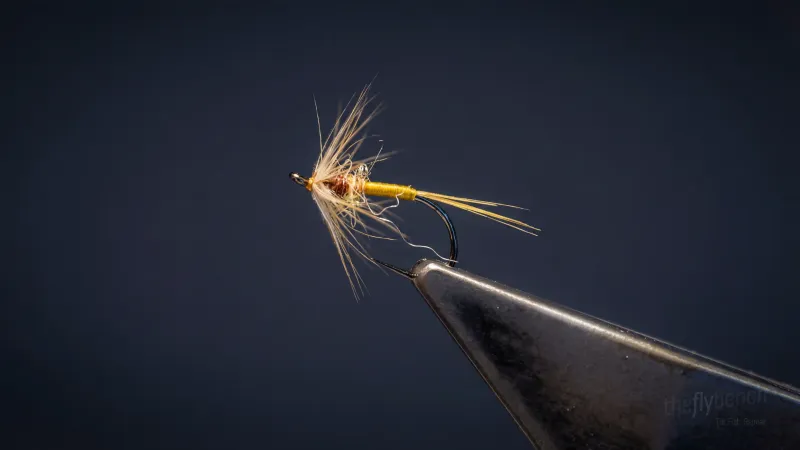
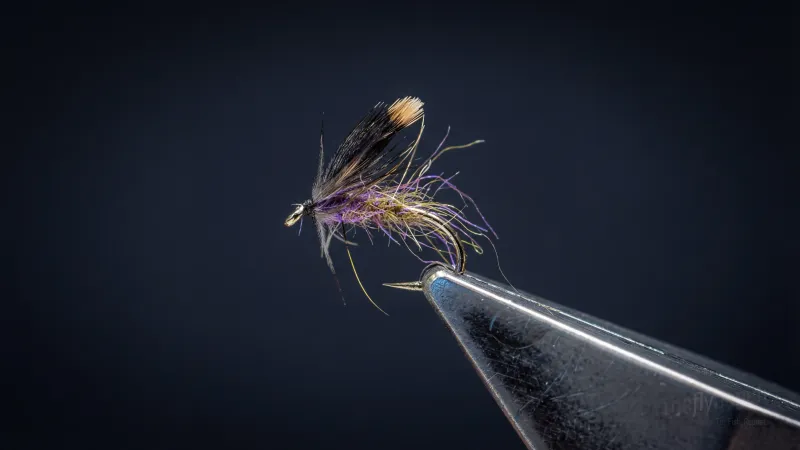
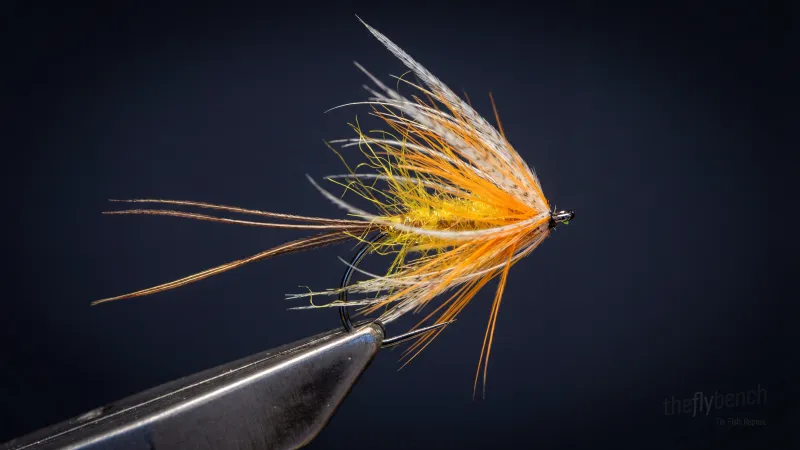
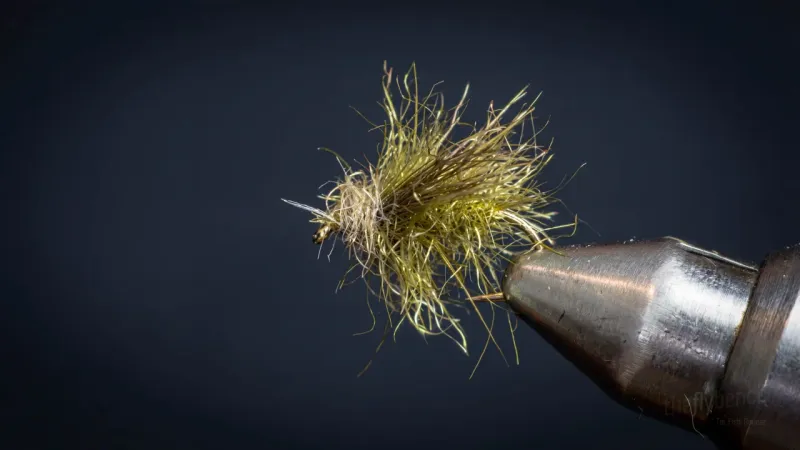
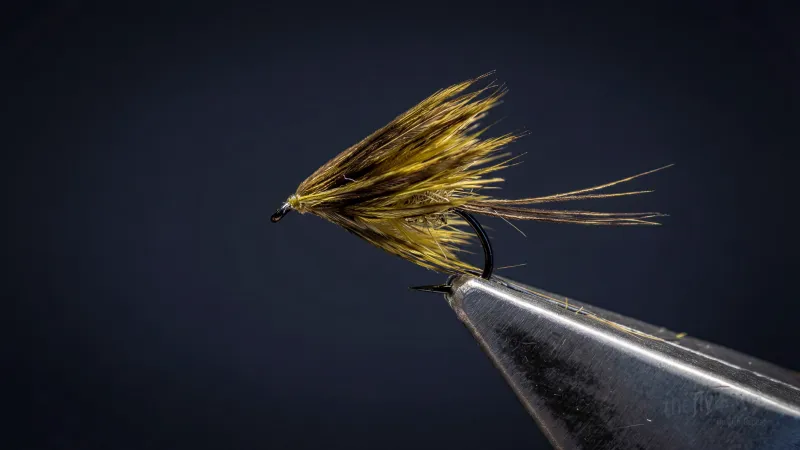
Black Benecchi thread carries the dyed-olive rabbit body while a black wild turkey slip is folded flat rather than tented upright, and a rope of twisted turkey fluey barbs forms the collar under a sparse veiling of olive Llama Mix. That flattened wing and heavier collar sit the fly lower and more waterlogged than a standard dry caddis. It represents adult caddis that get caught in rain or wind, take on water, and sink partway into the film while struggling to right themselves. It fishes moving water and stillwater in spring through fall, best worked dead drift when recent weather has knocked naturals down.
Related patterns
Behavior & presentation
- Natural Behavior
- Adult caddis knocked down by rain or wind, or spent after egg-laying, become waterlogged and drift just under the surface. They cannot escape, and fish eat them with little effort.
- Where Trout Eat It
- Trout take drowned adults a few inches below the surface, often in the same lanes where they were rising earlier.
- How to Fish It
- Fish it untreated, dead drifting it just under the film or letting it swing slowly across the current. In lakes, cast to the wind lane and retrieve with a slow figure-eight.
- Best Water
- Foam lines, back eddies below riffles, and the wind lanes along lake shorelines where drowned insects gather.
- Strike Type
- A swirl under the surface or a gentle draw on the line; tighten without a hard strike.
Fishing strategy
- Rigging Suggestions
- Use a 9-foot leader to 5X tippet with no floatant, alone or on a dropper below a dry caddis.
- Seasonal Timing
- Spring through fall, best after a caddis fall or a rain shower that knocks adults onto the water.
- Pro Tips
- The folded turkey wing and twisted collar soak up water quickly, so a few false casts are not enough to dry it. Fish it where you saw caddis on the water earlier in the day.
Entomology
Caddisflies caught in sudden rain or wind become waterlogged and sink partially below the surface film, their wings absorbing water while they struggle feebly to right themselves. Trout target these drowning adults that hang subsurface, recognizing the distinct profile of insects too compromised to escape or dive effectively.
- Order
- Trichoptera
- Common name
- Caddisfly
- Organism
- insect
- Life stage
- adult
Pattern details
- Moving Water
- Stillwater
- United Kingdom
- dead-drift
- swing
- caddis-hatch
- modern