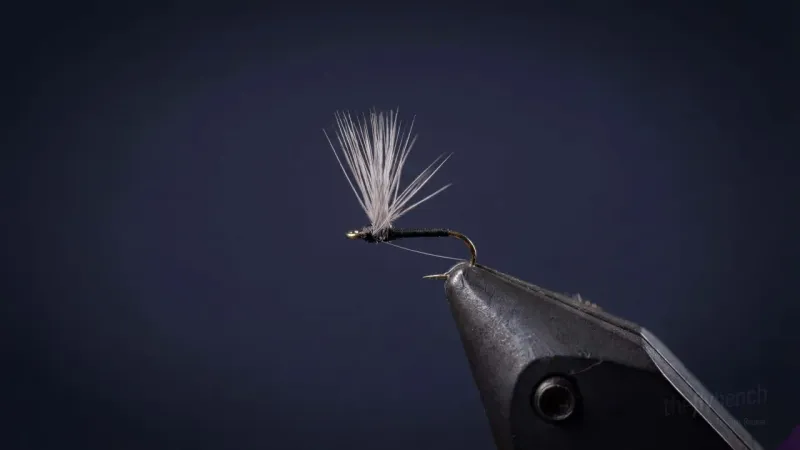
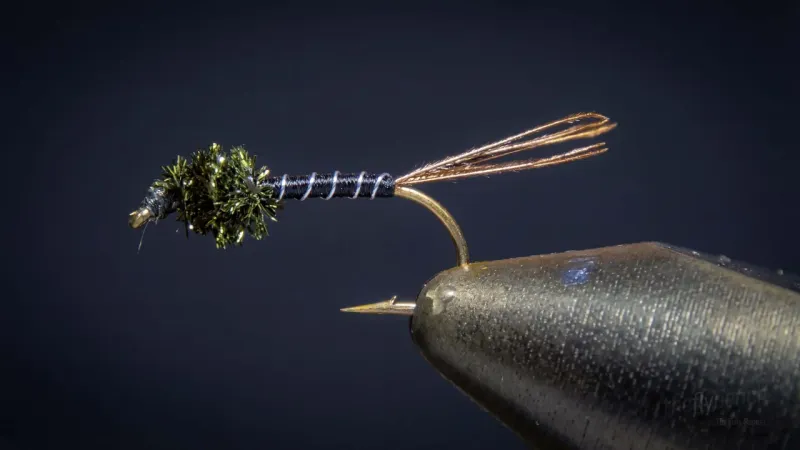
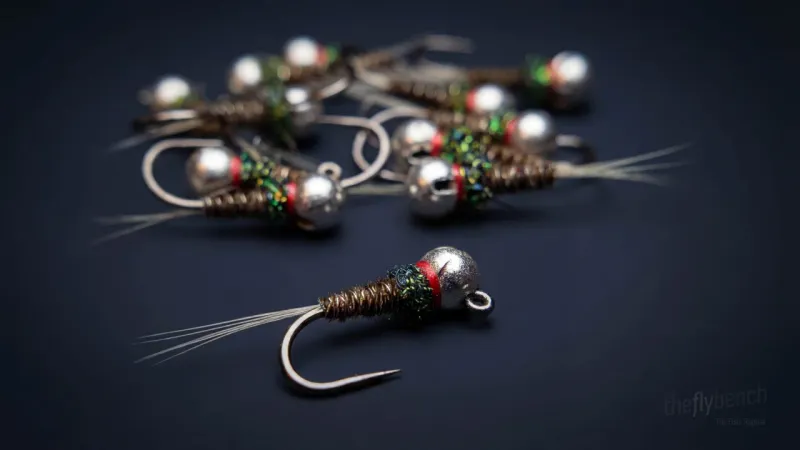
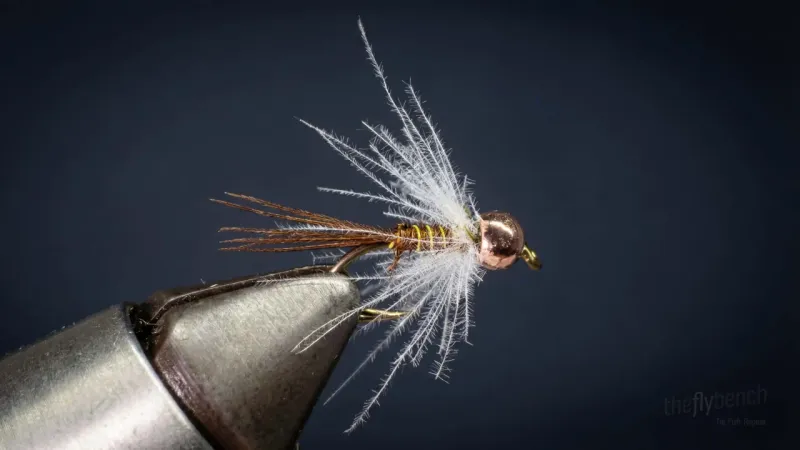
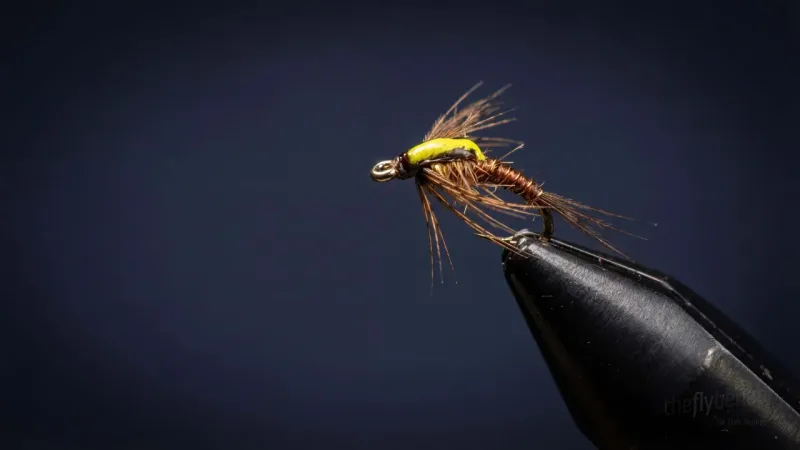
NymphBead-head Soft Hackle Pheasant Tail
The Bead-head Soft Hackle Pheasant Tail is a highly effective nymph pattern that imitates a wide range of aquatic insects. It's easy to tie and its beadhead helps it sink quickly, making it perfect for fast-moving waters.
Spring, Summer, Fall
Intermediate
Trout
Apr 2025
Overview
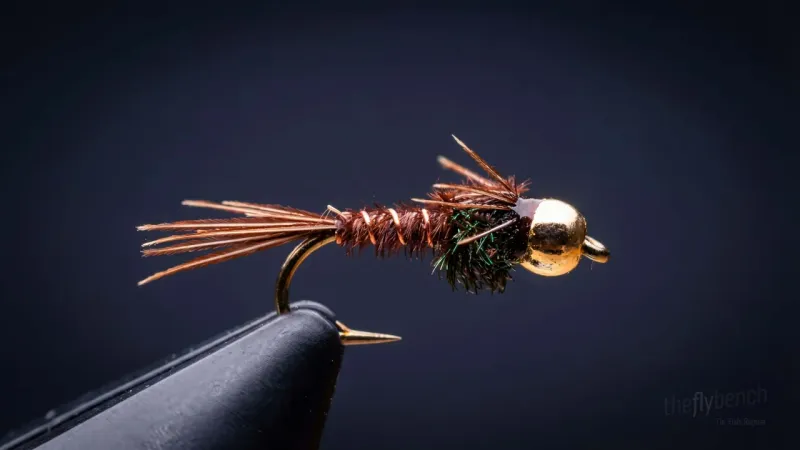
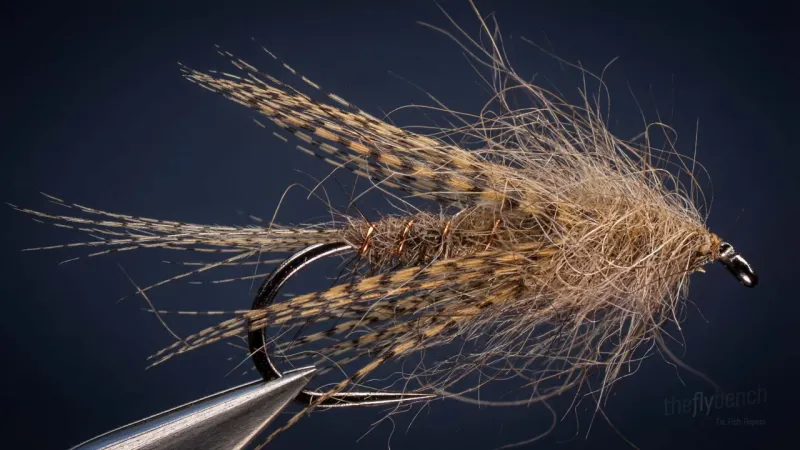
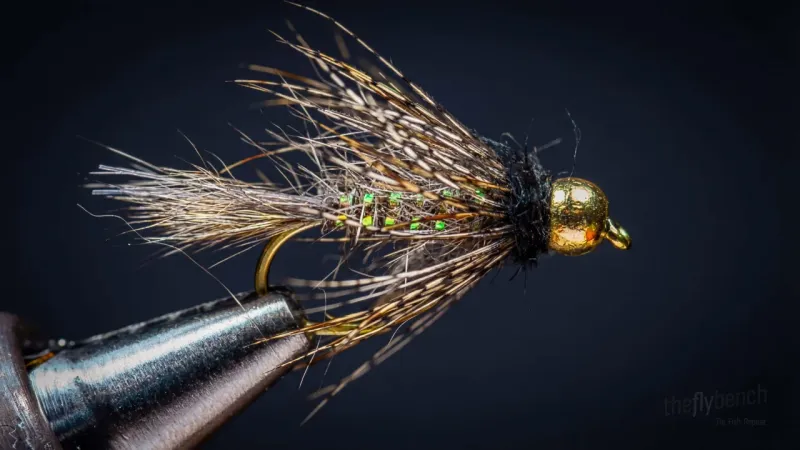
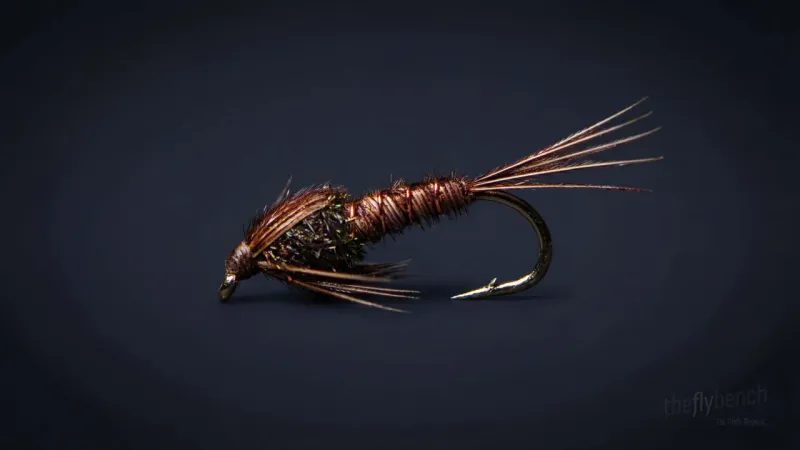
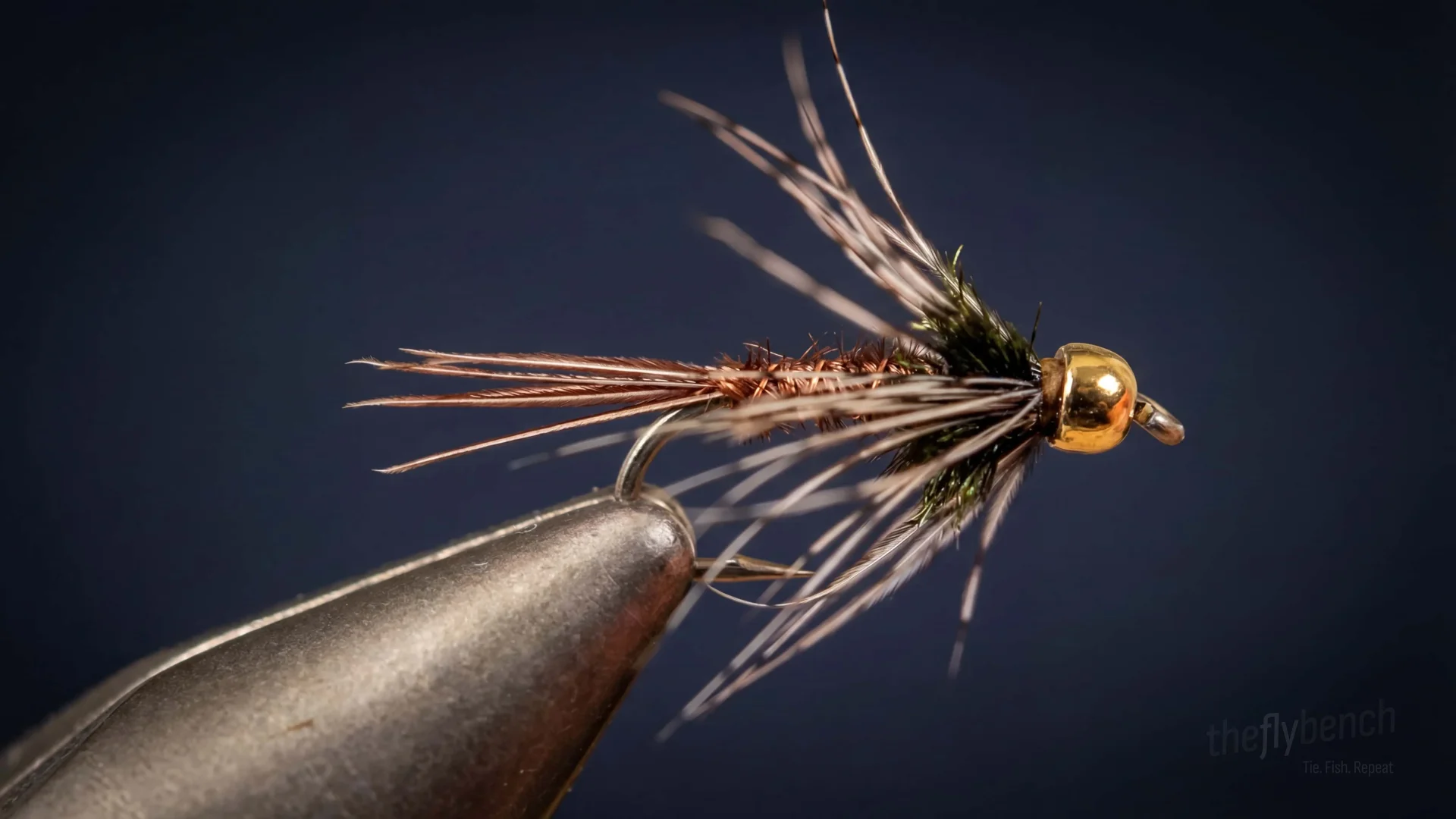
This variation of the classic Pheasant Tail Nymph adds a soft hackle collar for subtle movement and a tungsten or brass bead for depth. Tied with pheasant tail fibers for the tail and body, a fine copper wire rib for durability, and partridge or hen hackle for the soft hackle, it blends realism with motion. It's a simple tie, but attention to sparse, even wraps and proportional hackle is key.
Where to Buy This Fly
We only link to fly shops we trust. Some links are referral links, which may earn us a commission at no extra cost to you.
Materials
- Hook:
- Tiemco 3769, size #12–#16
- Bead:
- Gold or copper bead, size to match hook
- Thread:
- Brown 8/0
- Tail:
- Pheasant tail fibers
- Body:
- Pheasant tail fibers
- Ribbing:
- Copper wire
- Thorax:
- Peacock herl
- Hackle:
- Partridge feather
Behavior & Presentation
Natural Behavior: Nymphs enter the drift during behavioral periods, actively swimming or tumbling while feeding, their bodies undulating to create subtle motion that differentiates them from passive drift.
Where Trout Eat It: Fish target these actively drifting nymphs throughout the water column, from bottom bouncing to mid-column swimming presentations.
How to Fish It: Swing or dead drift with induced movement to imitate the undulating, active behavior that signals high-value food items.
Best Water: Effective in current seams, riffle edges, pocket water, and runs where behavioral drift concentrates active nymphs.
Strike Type: Solid strikes as fish respond to movement patterns, often grabbing during swings or induced motion rather than passive drifts.
Fishing Strategy
Rigging Suggestions: Fish on 5X tippet in a two-fly nymph rig, or as a dropper 18-24 inches below a buoyant dry fly in a dry-dropper setup. The tungsten bead sinks quickly to the feeding zone.
Seasonal Timing: Particularly effective from April through October when mayflies and stoneflies are abundant, with peak productivity during May-June hatches. Works well when water temperatures are 48-62°F.
Pro Tips: The soft hackle pulses with the current, imitating swimming insects or emerging nymphs. Allow the fly to swing at the end of the drift—many strikes occur during this movement phase.
Entomology
Stonefly nymphs typically crawl along the streambed but enter the drift during behavioral periods when they actively swim or tumble while feeding or relocating. The soft-bodied nymphs undulate their bodies during these drift periods, creating subtle motion that triggers strikes. Fish target drifting stonefly nymphs because the combination of movement, size, and irregular drift patterns differentiates them from passive dead-drift mayfly nymphs, signaling a high-value food item.
- Order
- Plecoptera
- Common Name
- Stonefly
- Organism Type
- insect
- Life Stage
- general